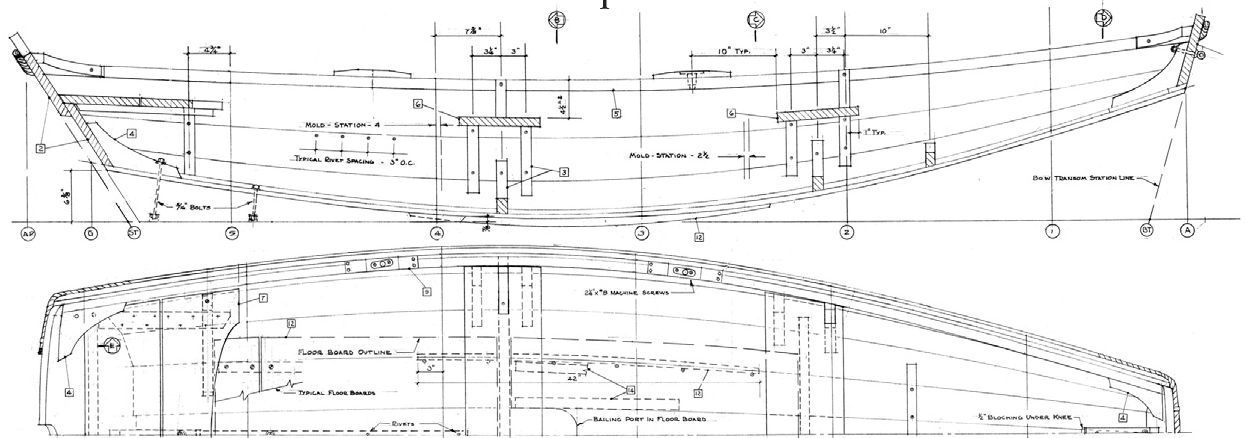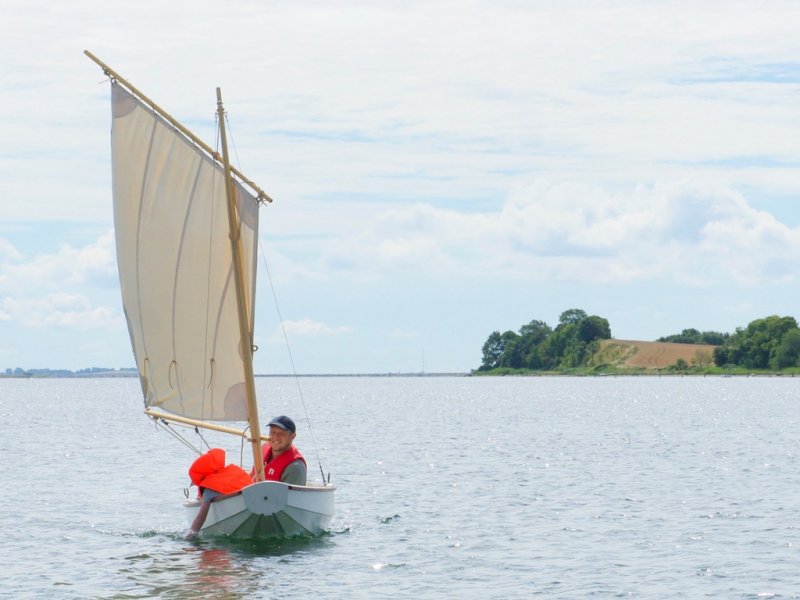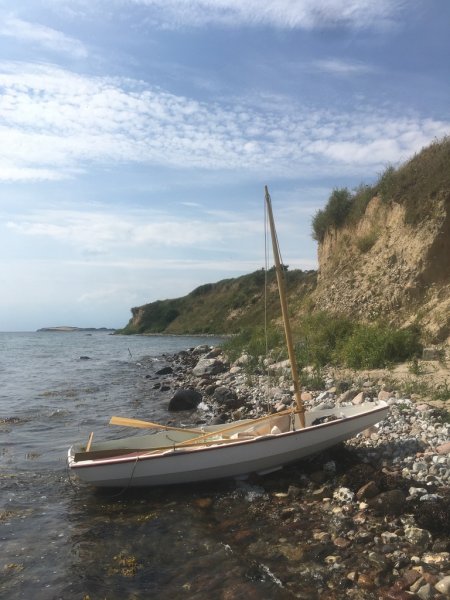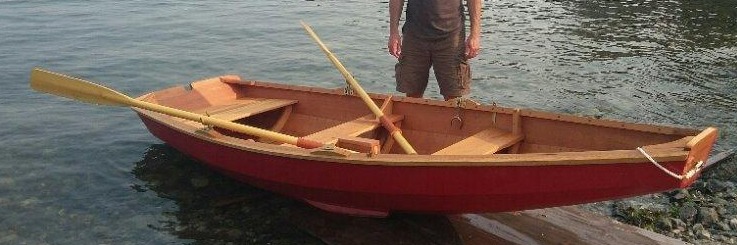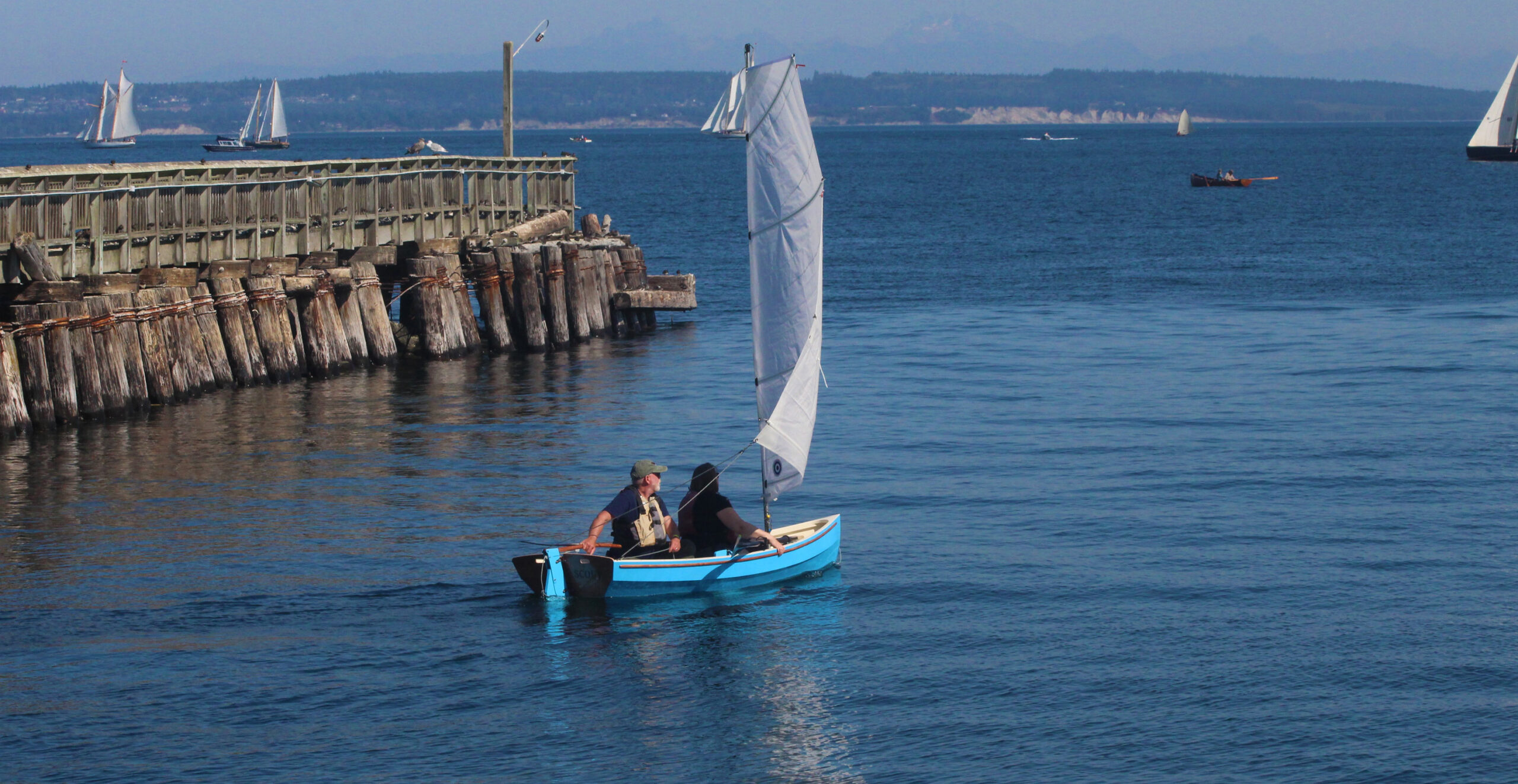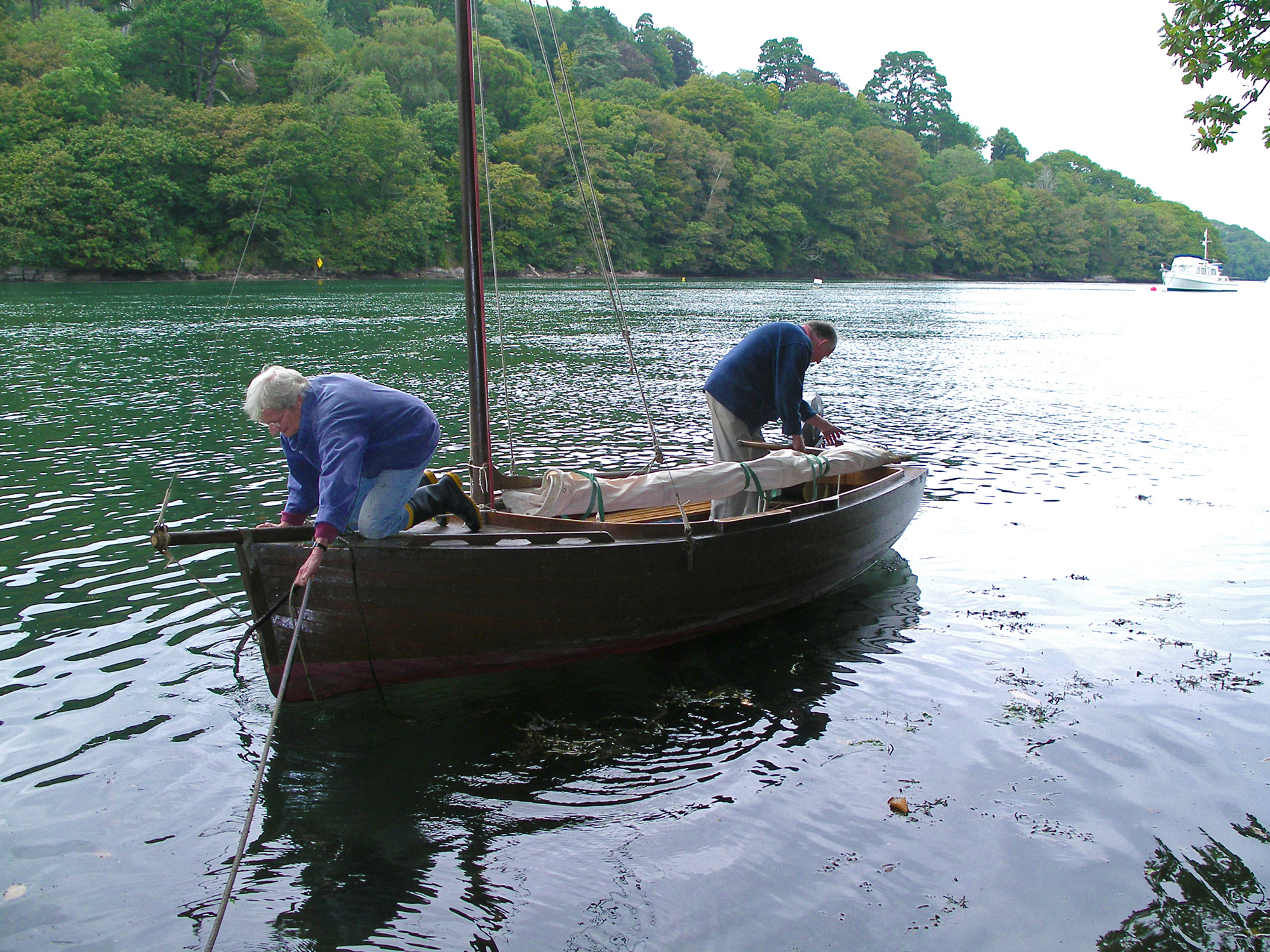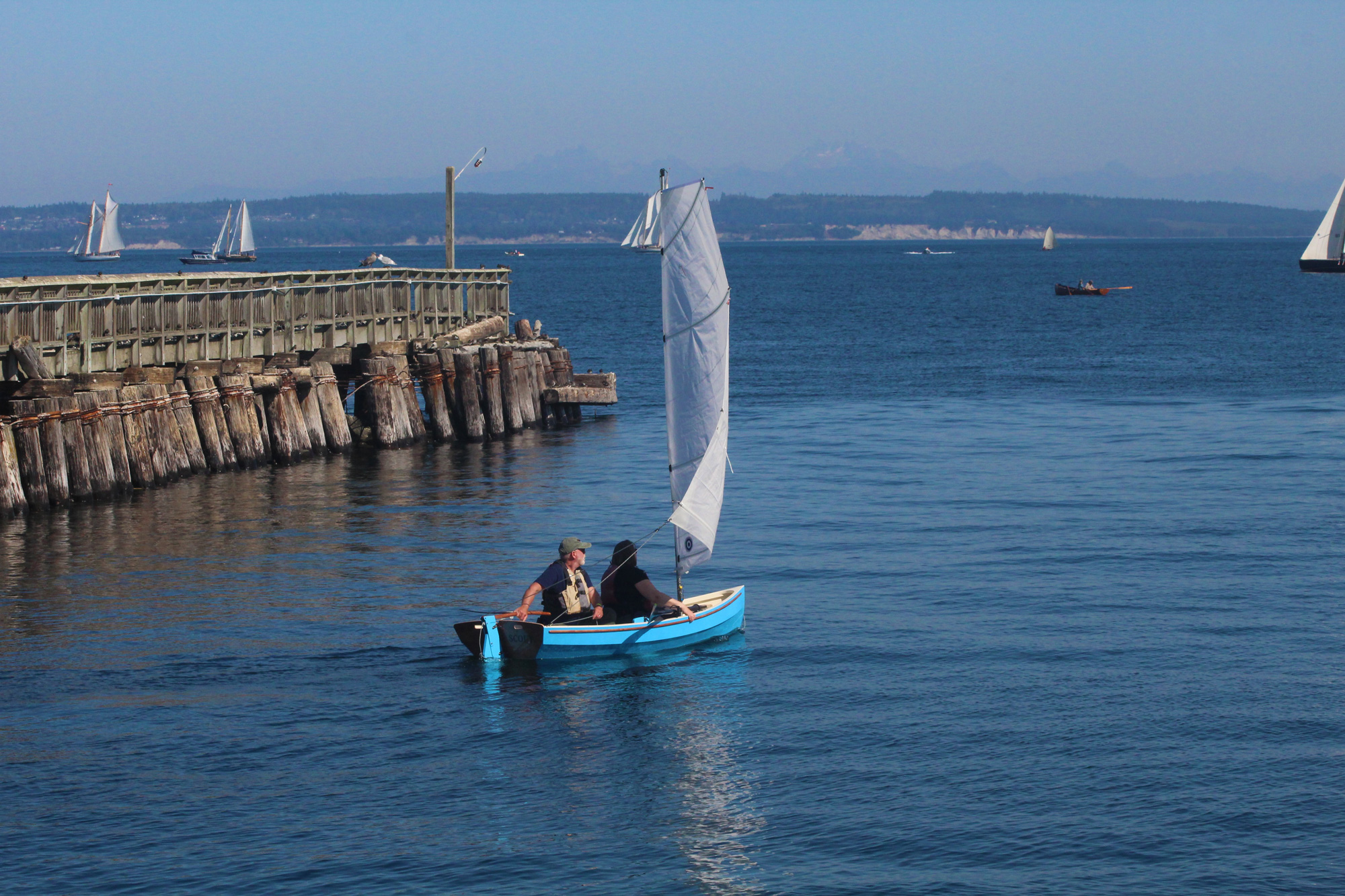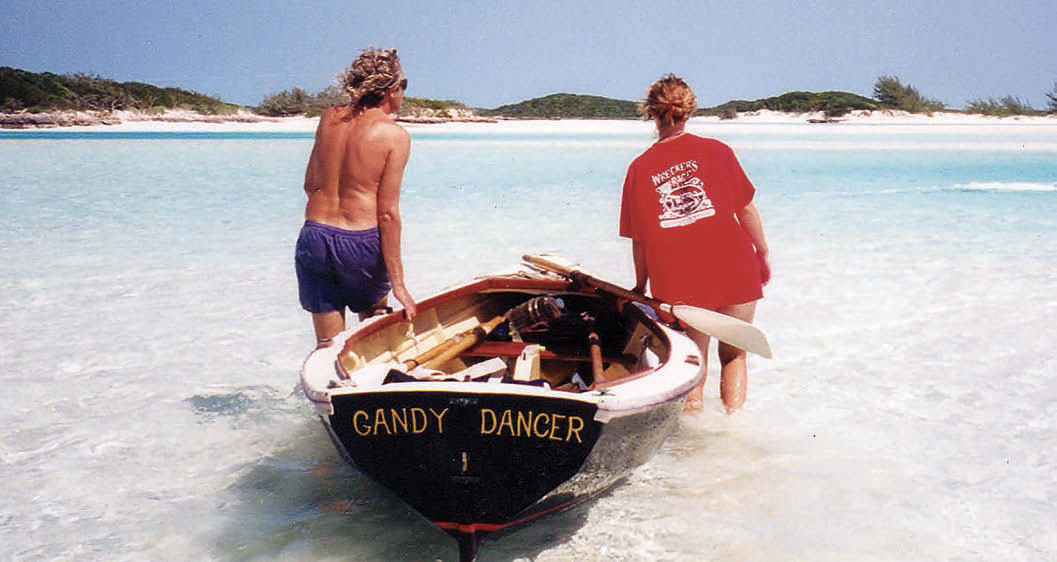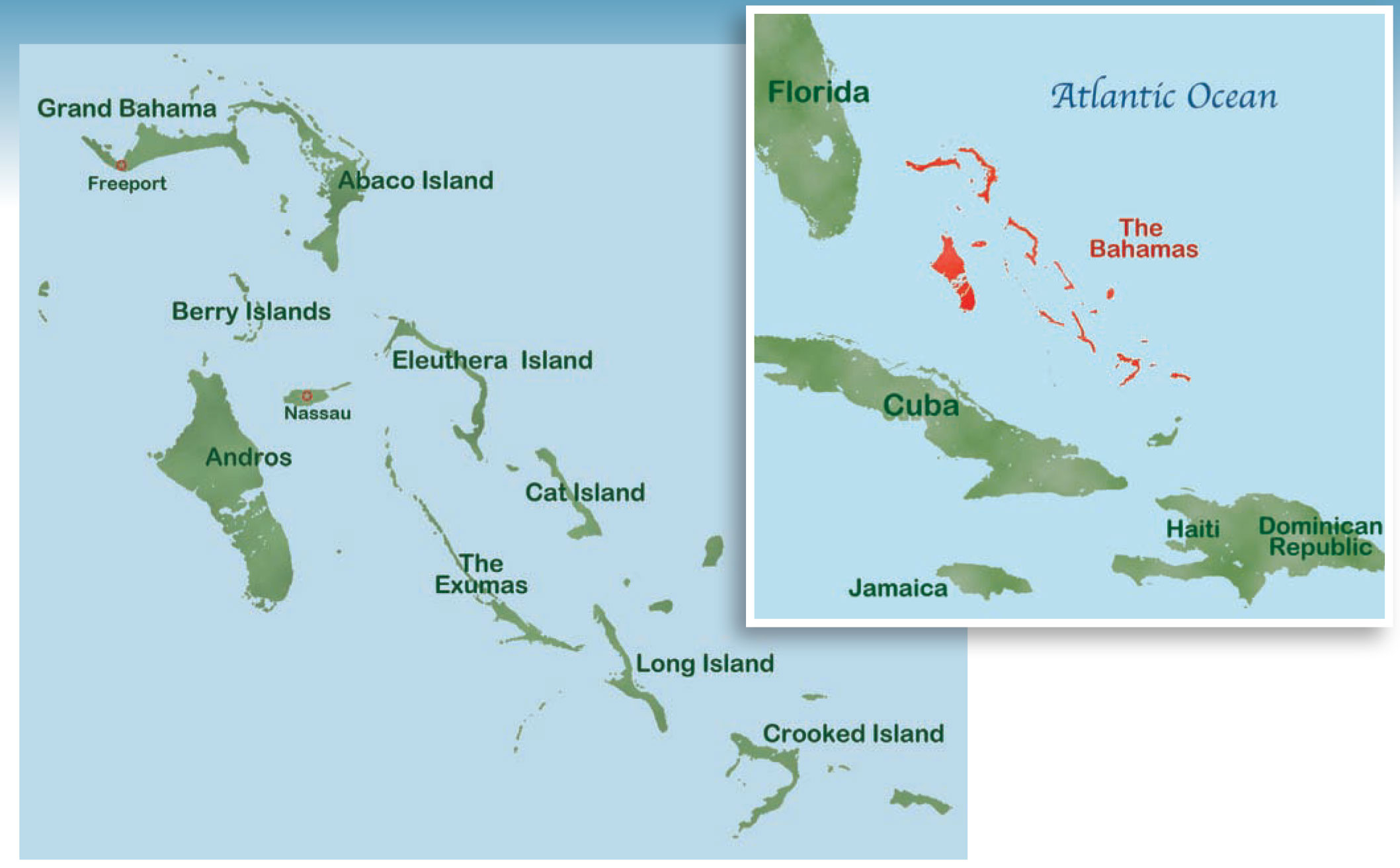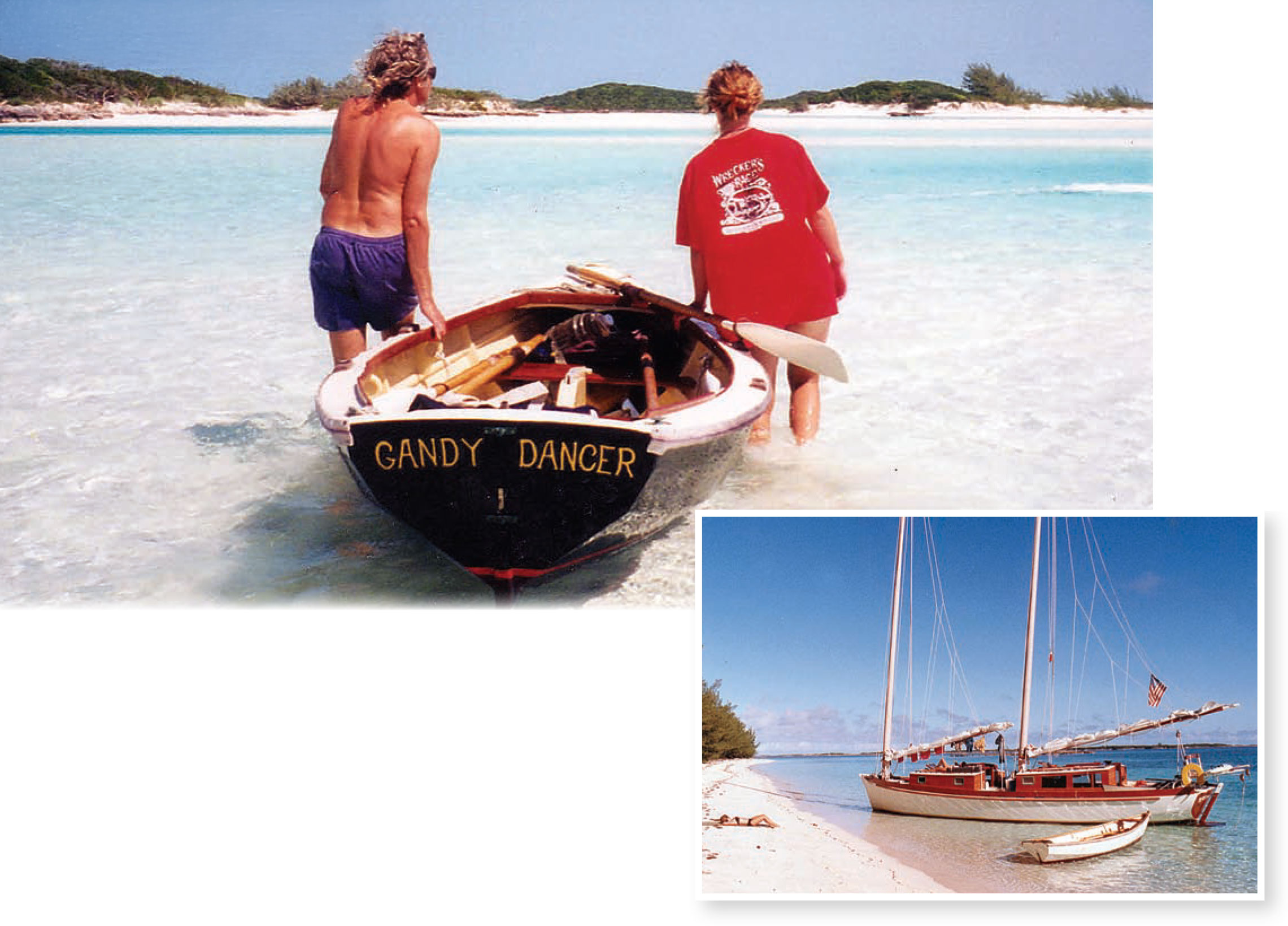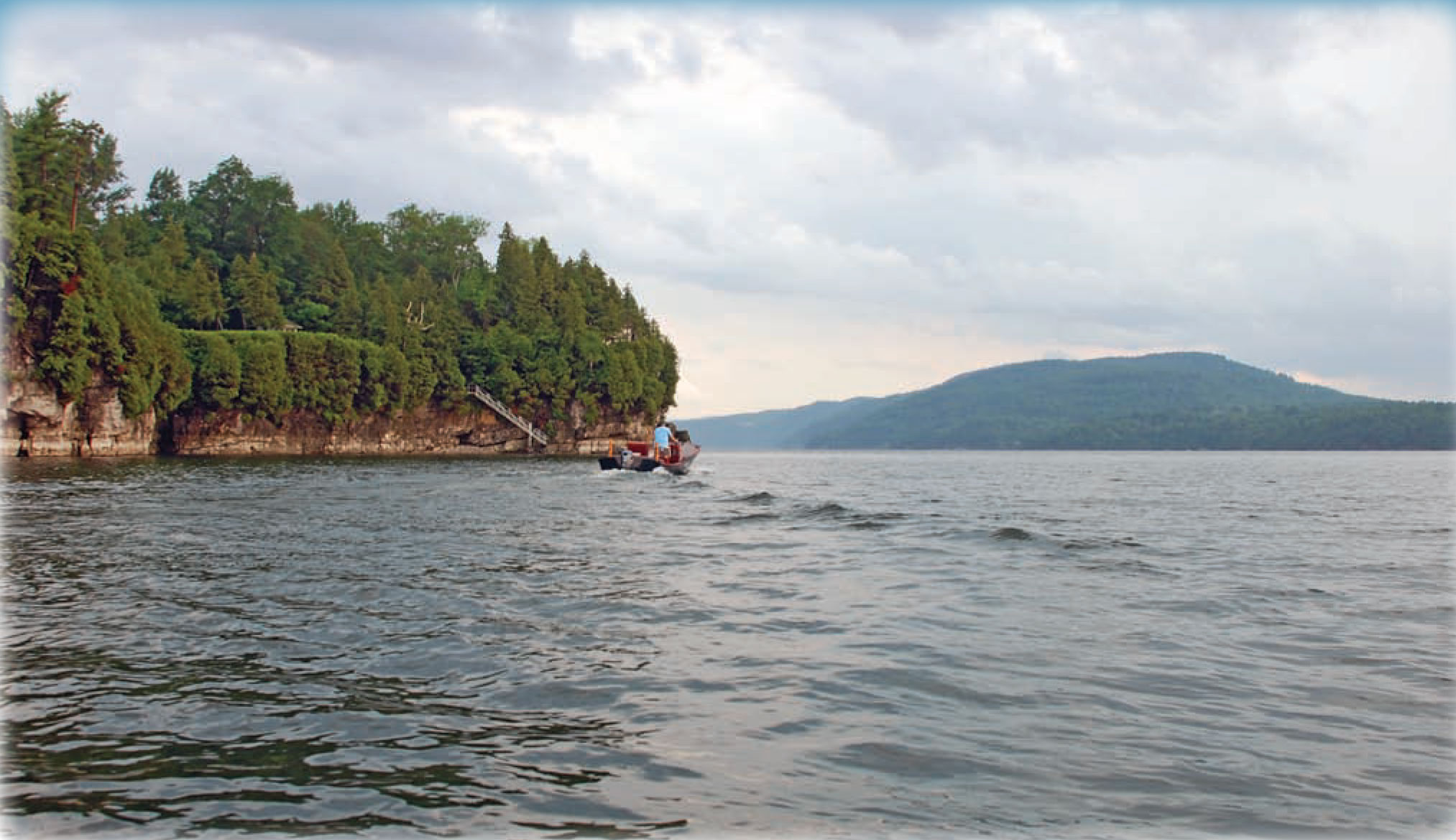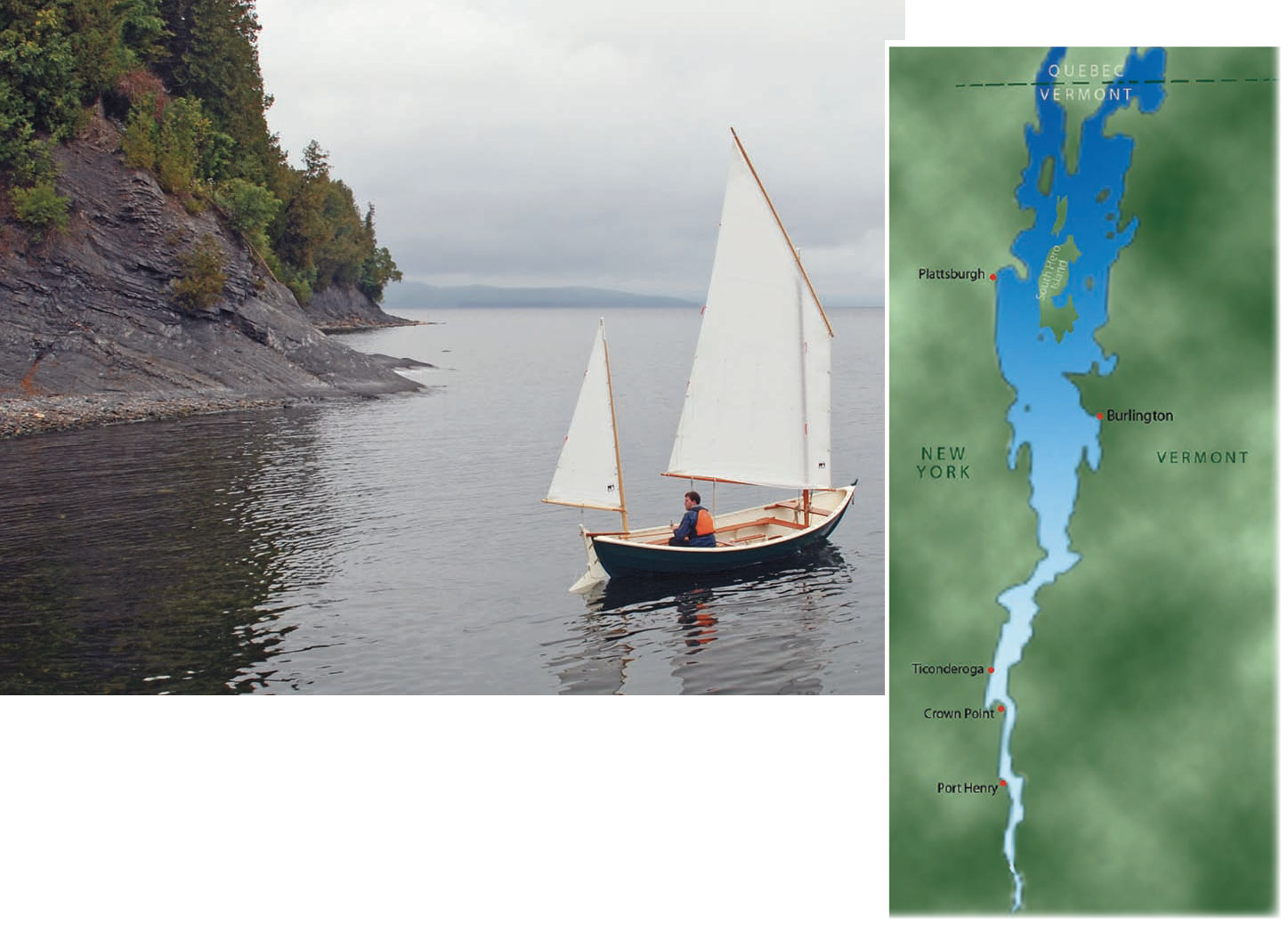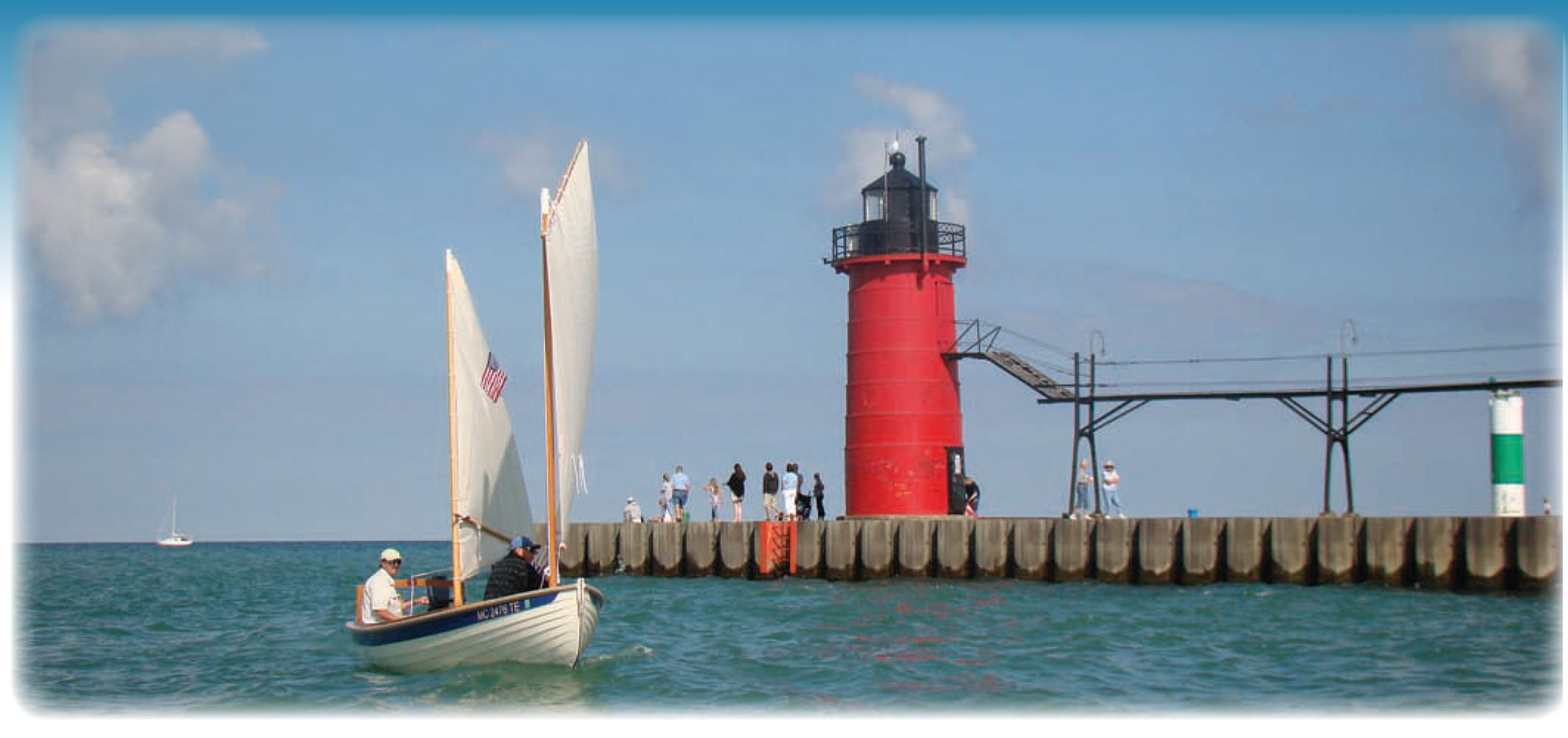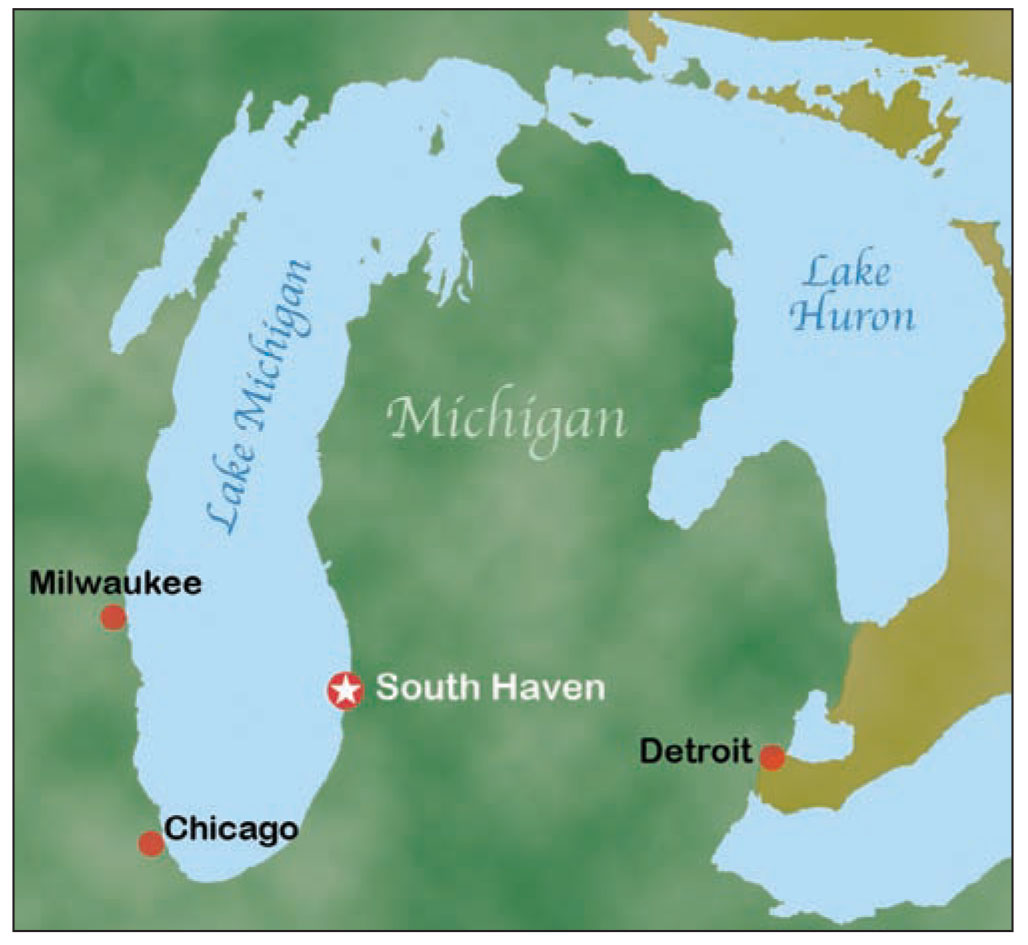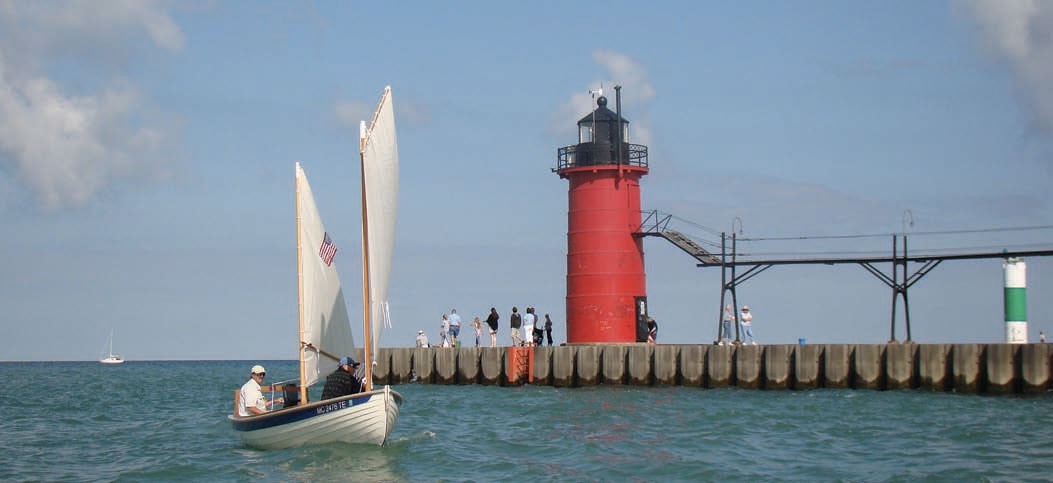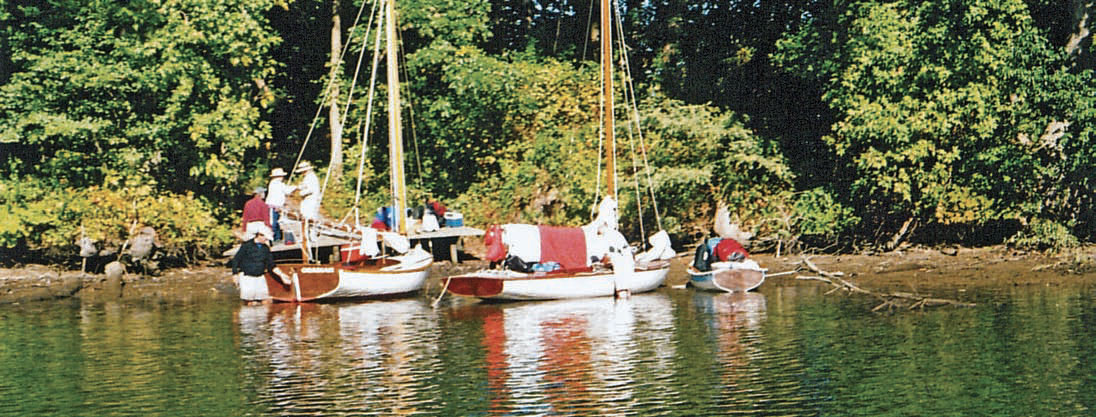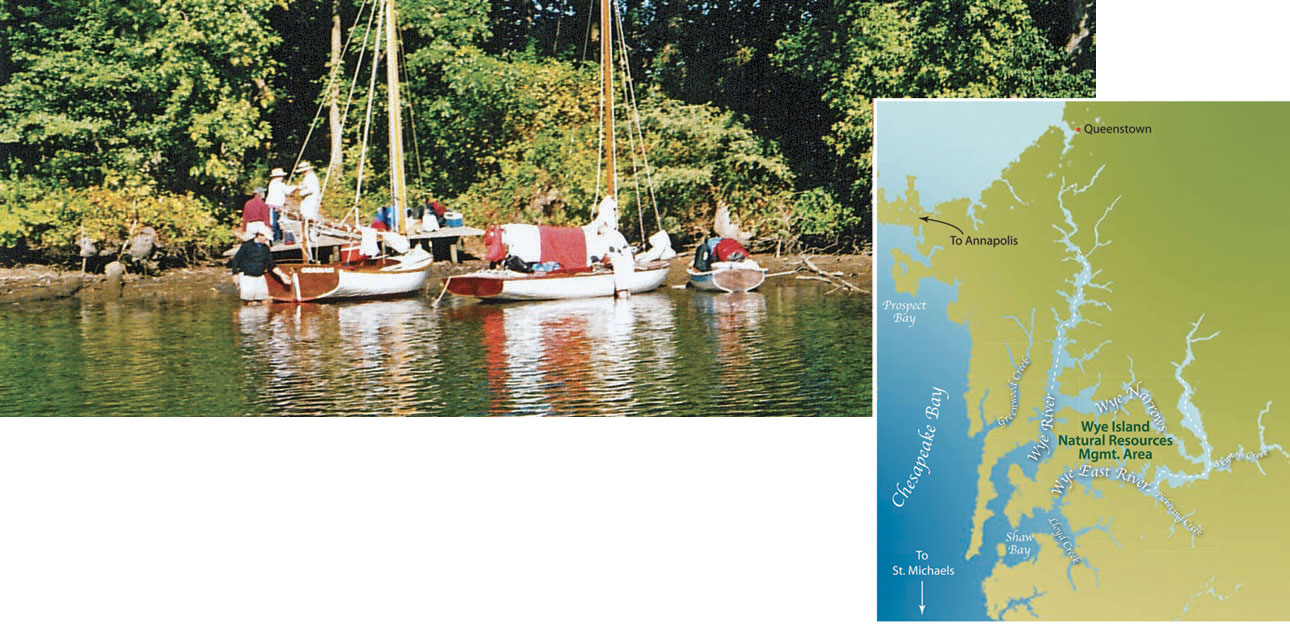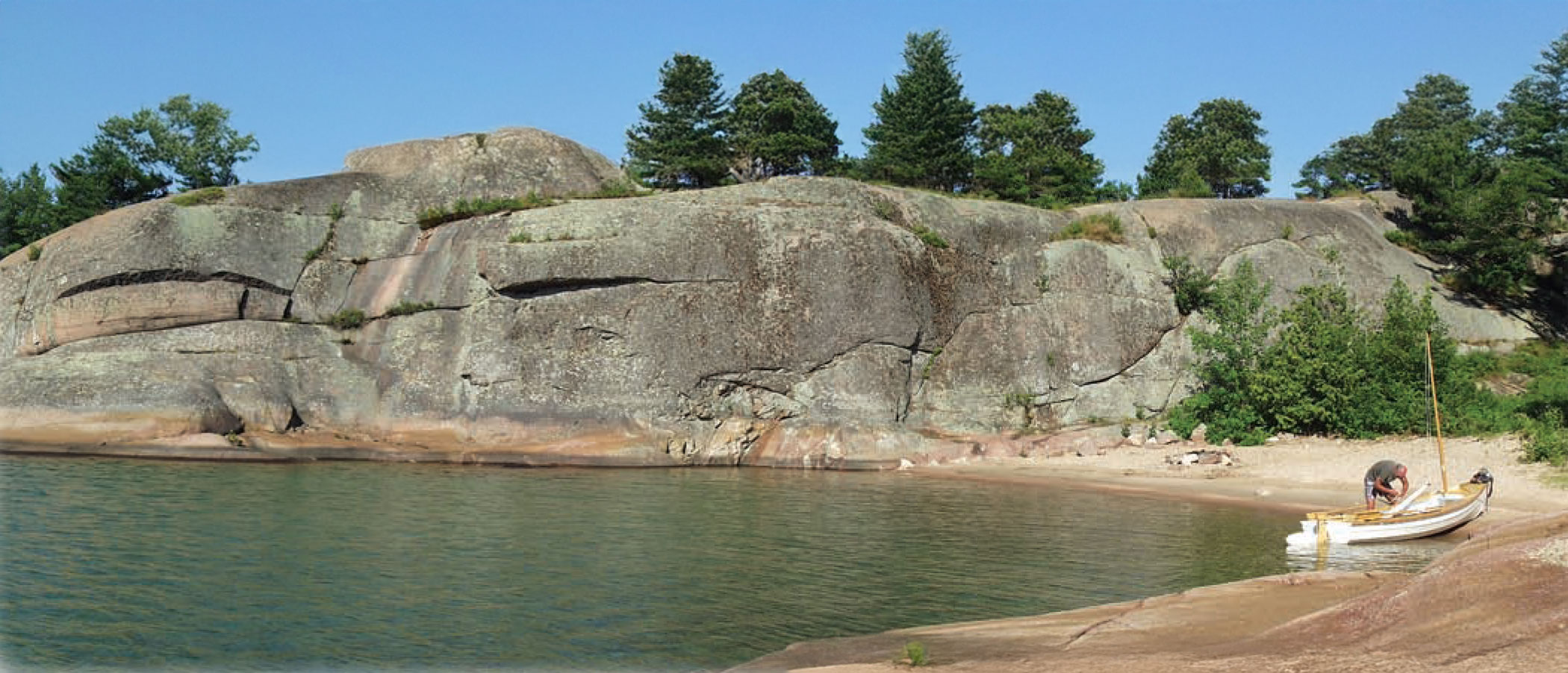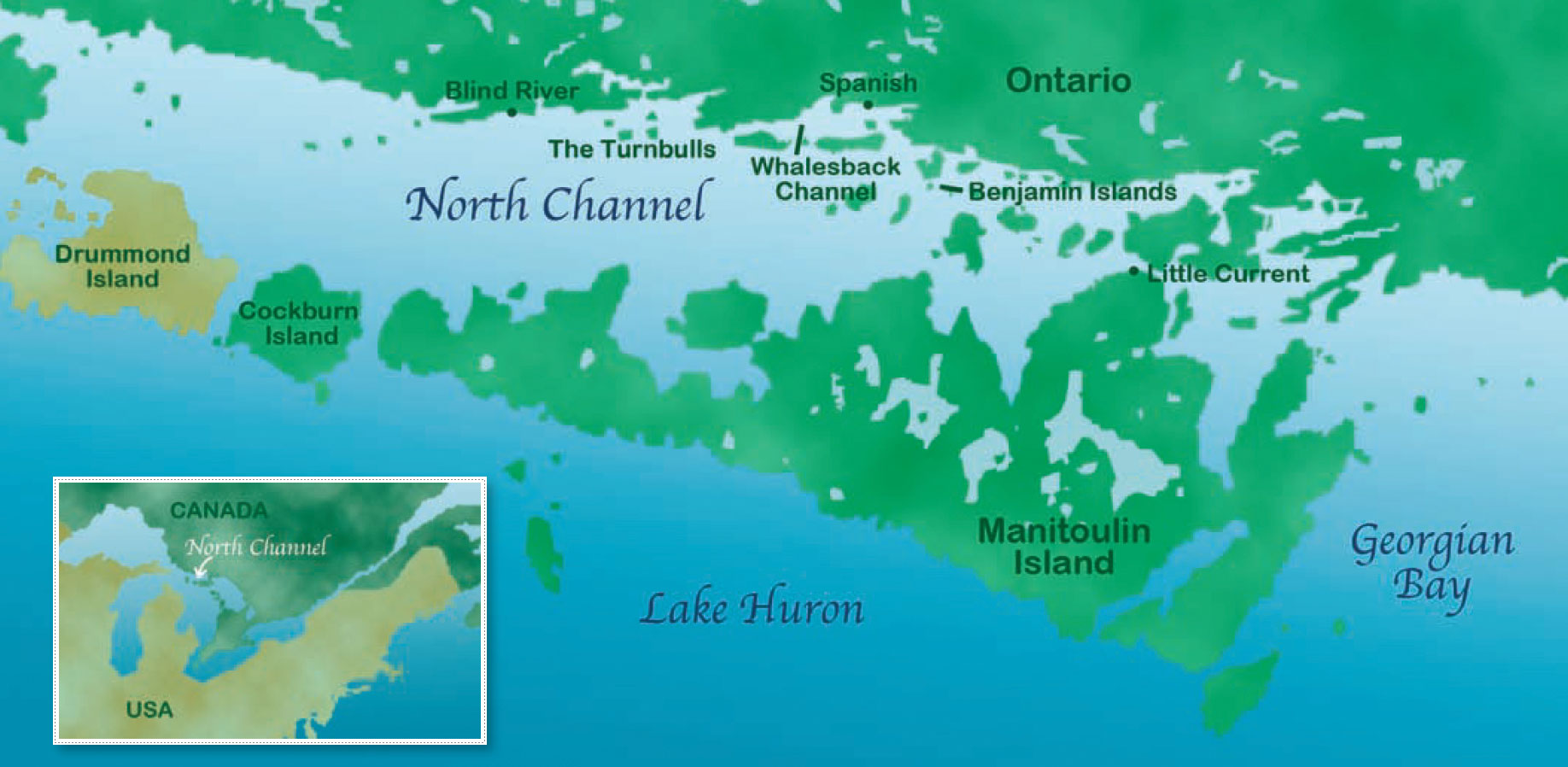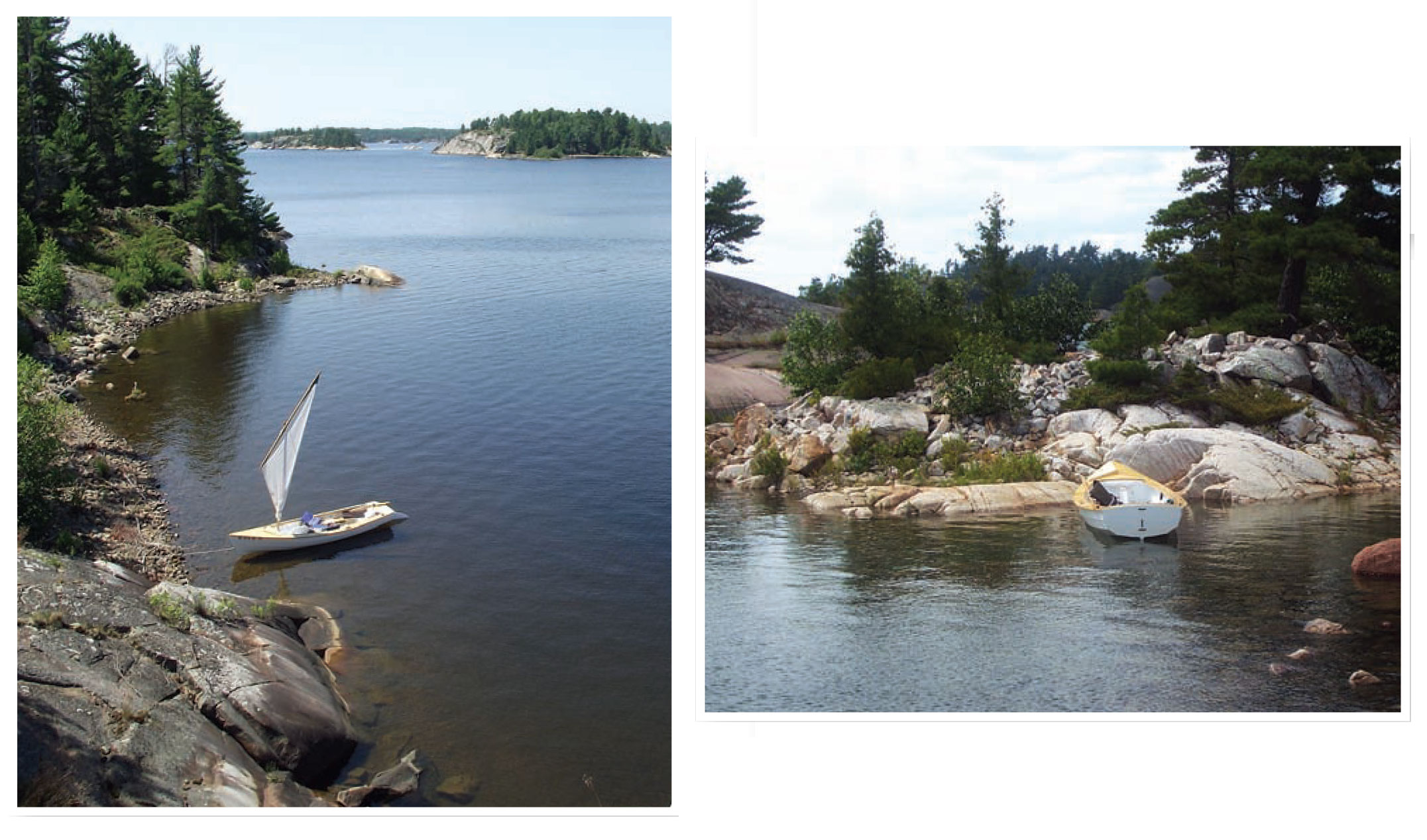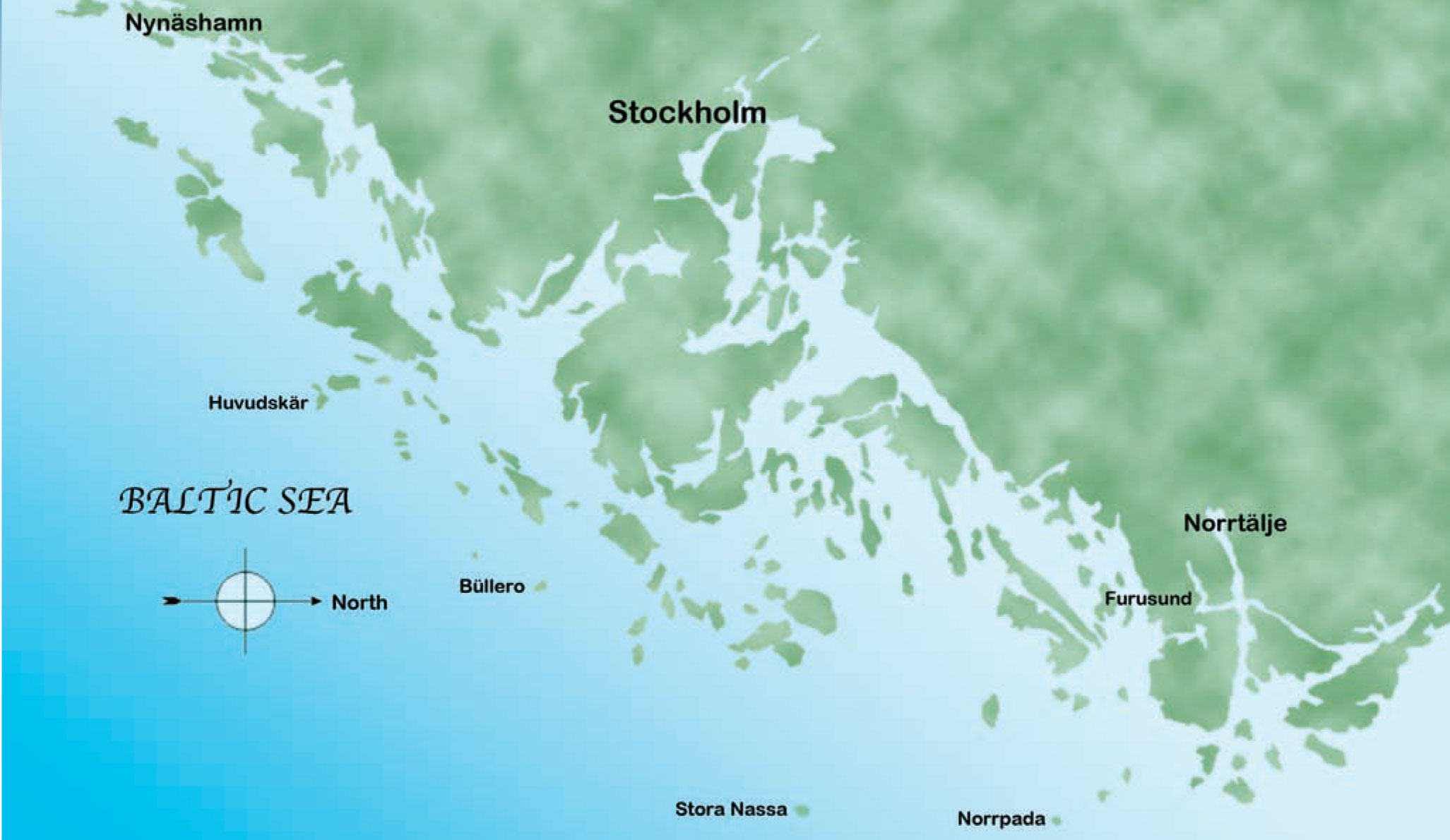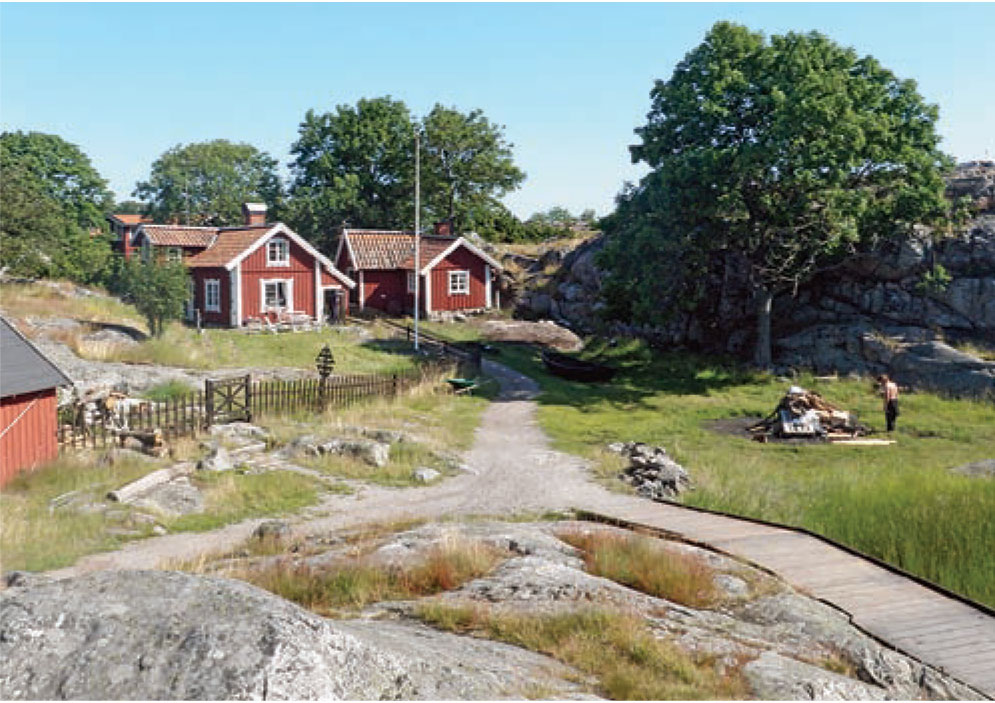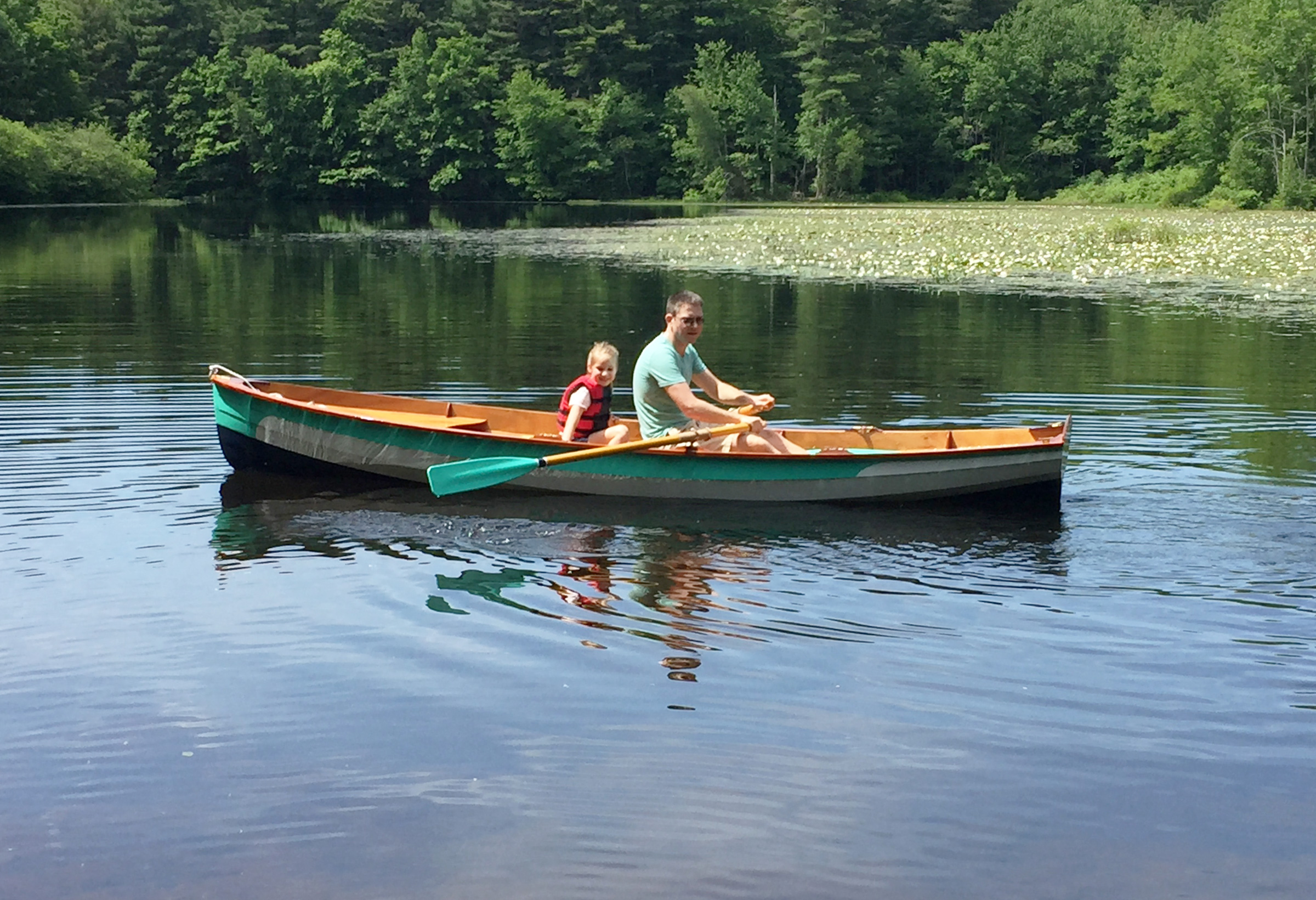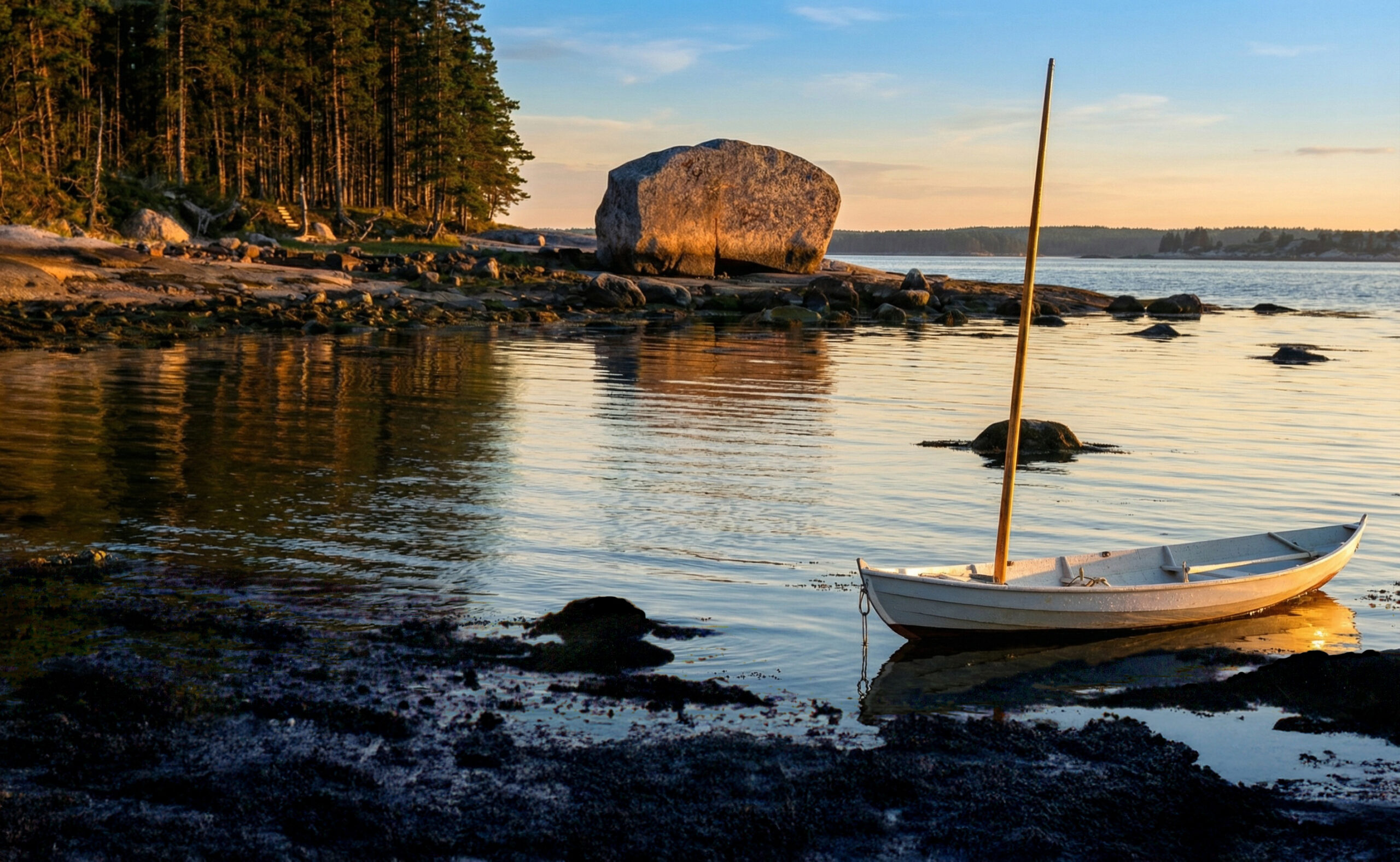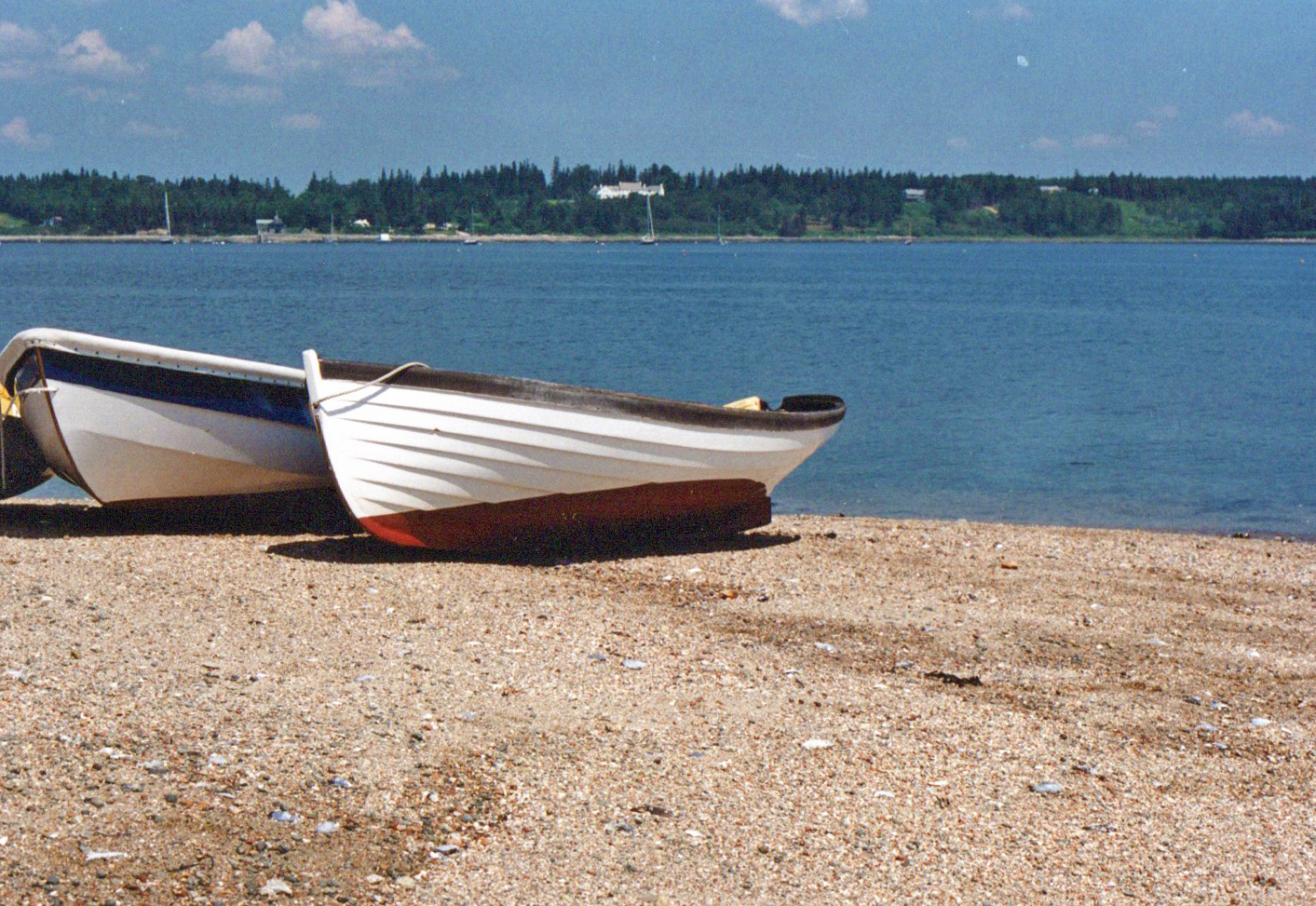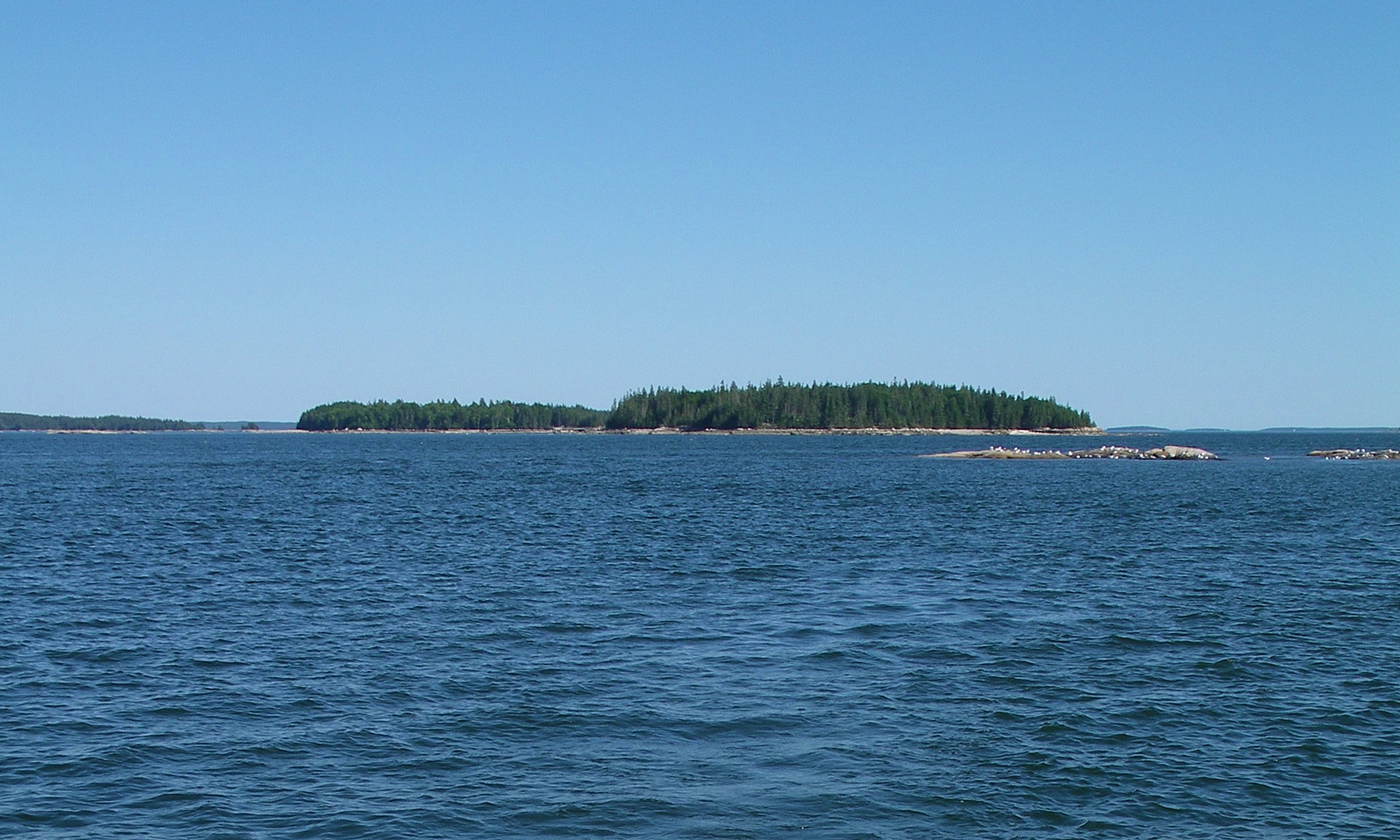
The archipelago stretches more than 90 miles north to south and 50 miles east to west, with a wide variety of cruising destinations. The author’s favorites are in the more remote outer islands of the archipelago.
The 35,000 islands of the Stockholm Archipelago seem to have been created to please small-boat owners during the summer.
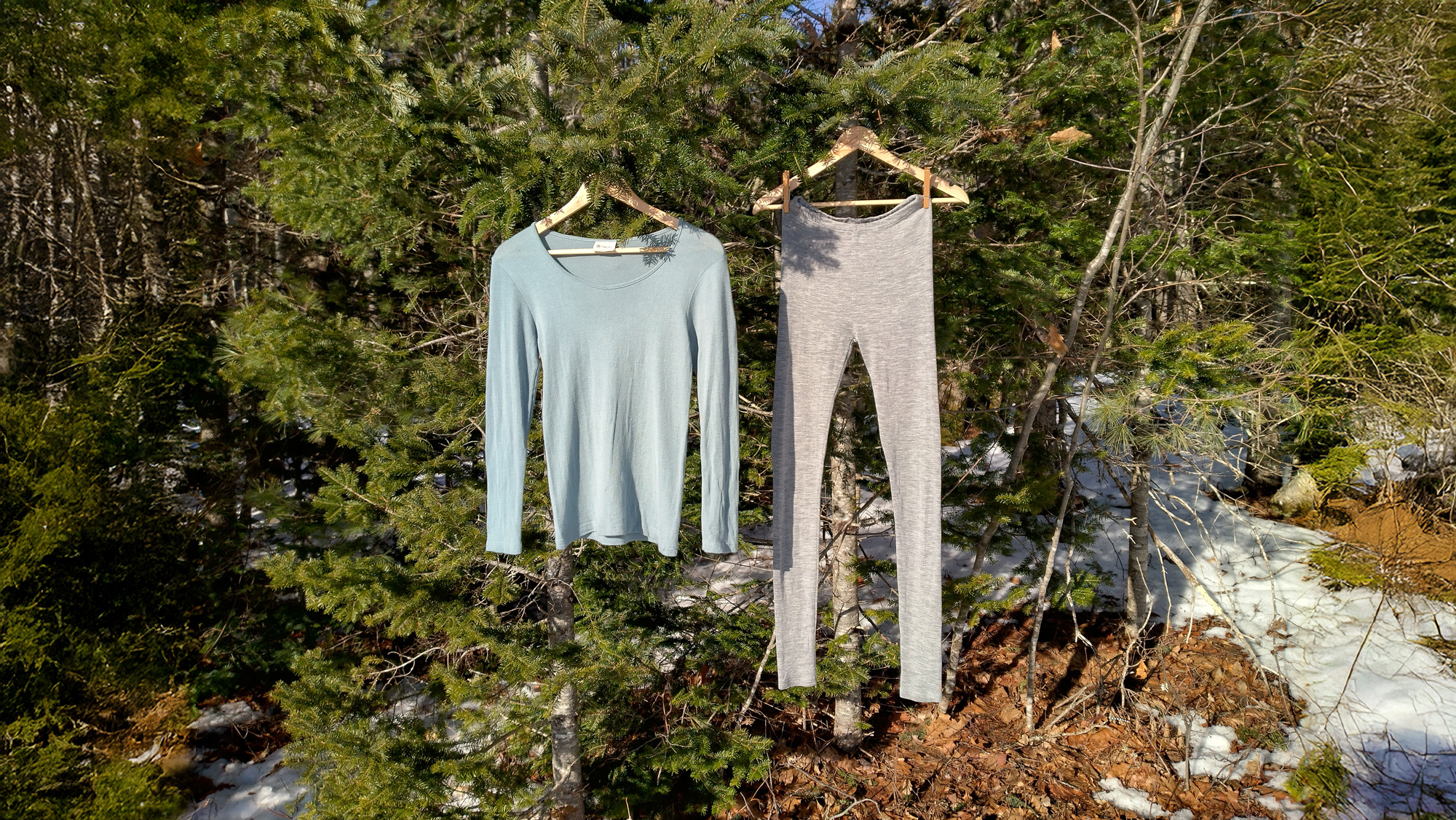
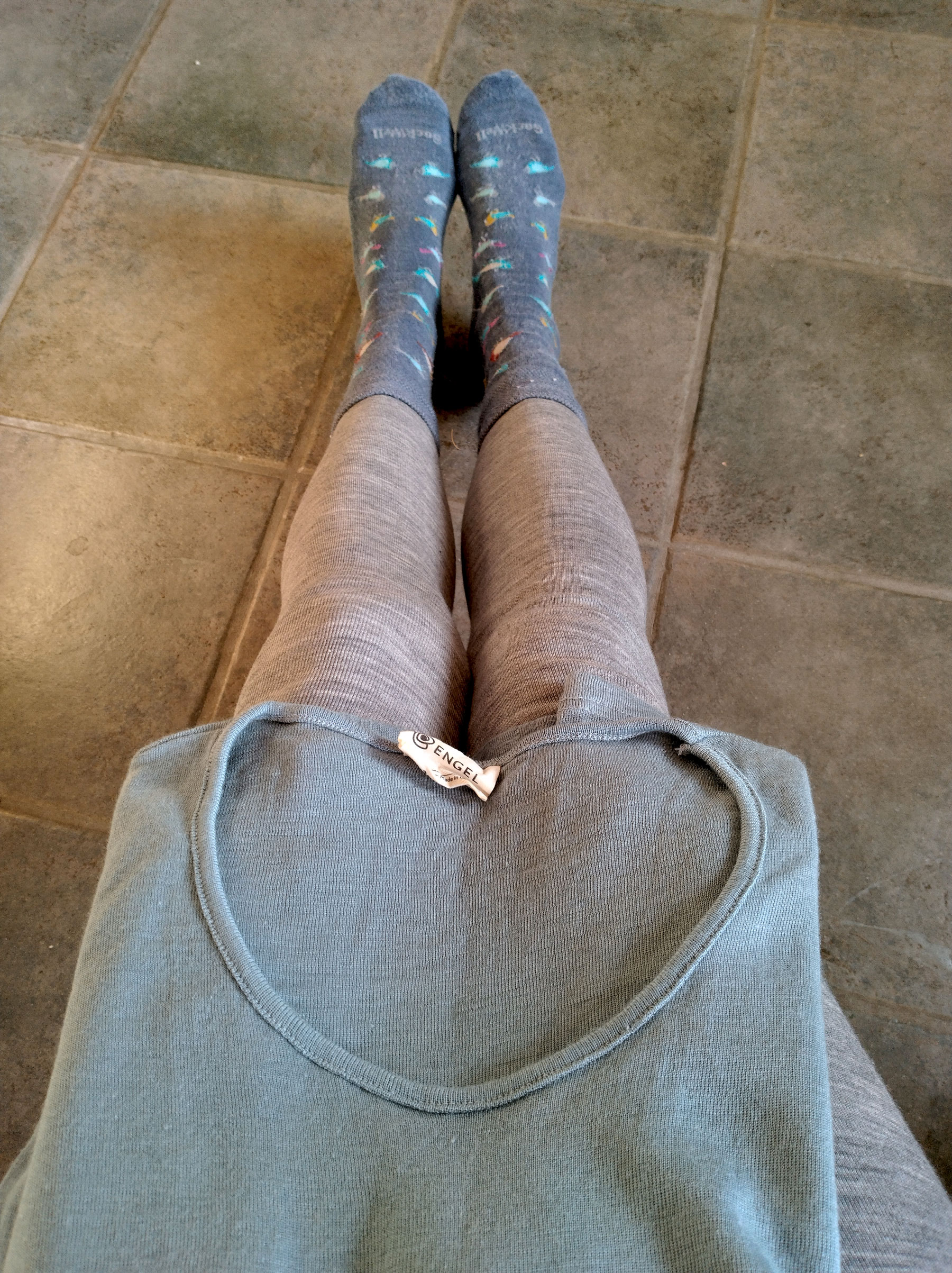
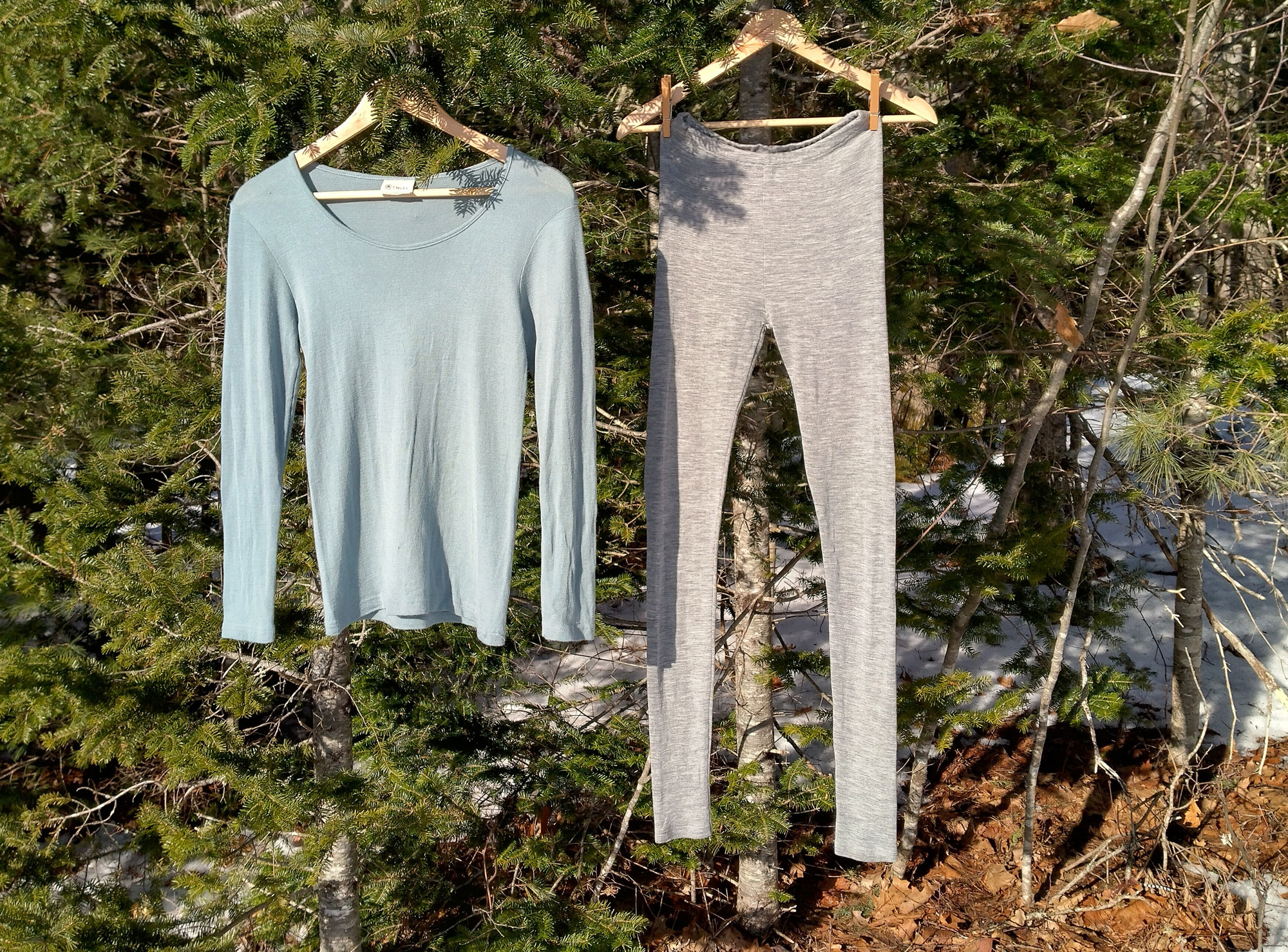
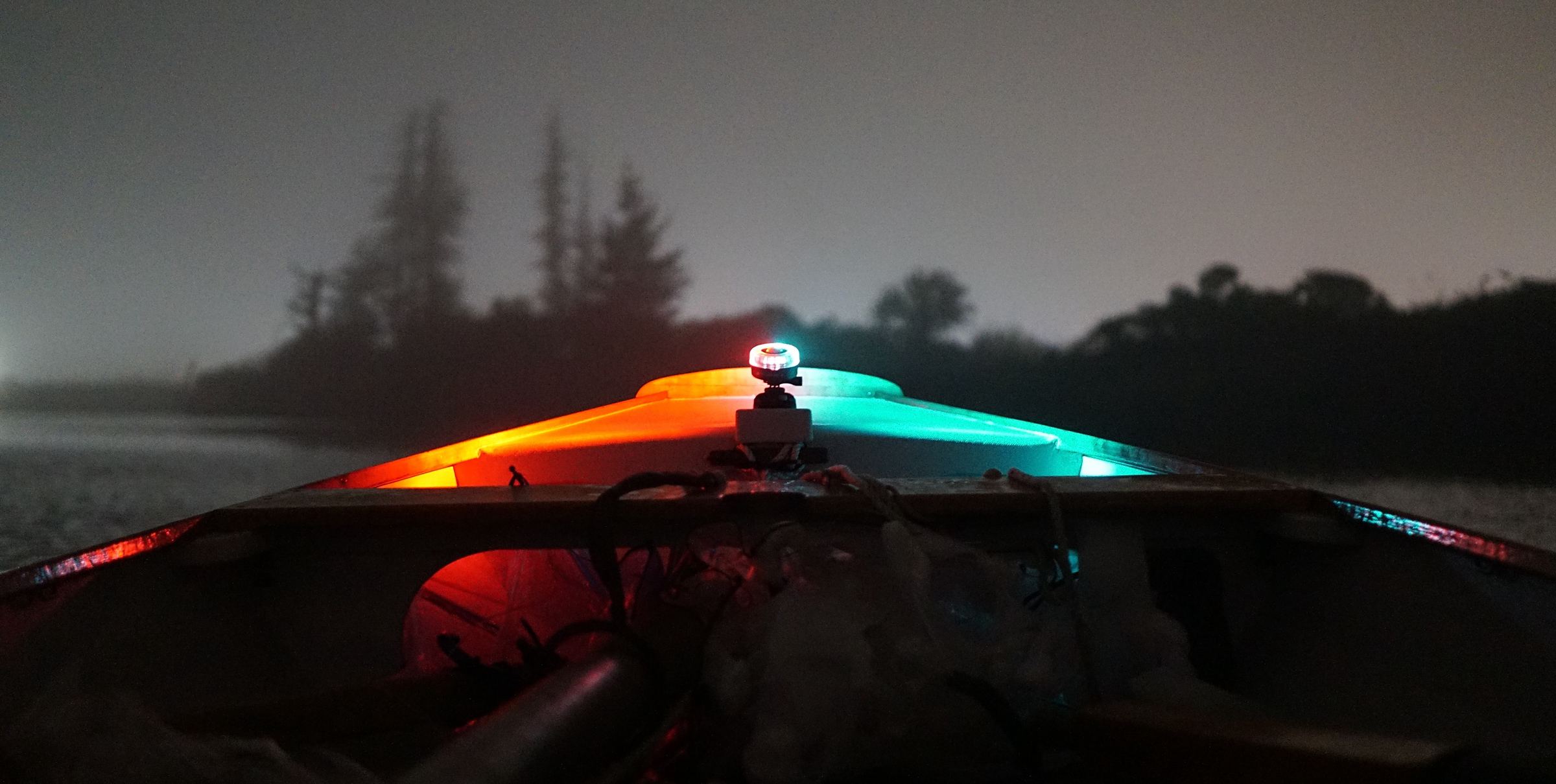
Although the sea breeze can reach 20 knots, the wind is seldom too strong, and seas generally remain calm. At the same time, the sailing is never boring. During the longest days in June, it never really gets dark, and you can even sail at night without lights. Late July is the warmest time but also the most crowded. Weather here can be unpredictable, so rain-gear is essential, along with warm clothes like wool underwear, gloves, and hat—but also a bathing suit.
In Sweden, everyone is assured of access to nature, within the bounds of common sense and courteous practices explained at the very useful website of the Swedish environmental protection agency. You can put in at any island. You can pitch a tent more or less anywhere. When camping, bring a warm sleeping bag and guard against mosquitoes and ticks, and consider being vaccinated against tick-borne encephalitis, too.
Roger Ericsson
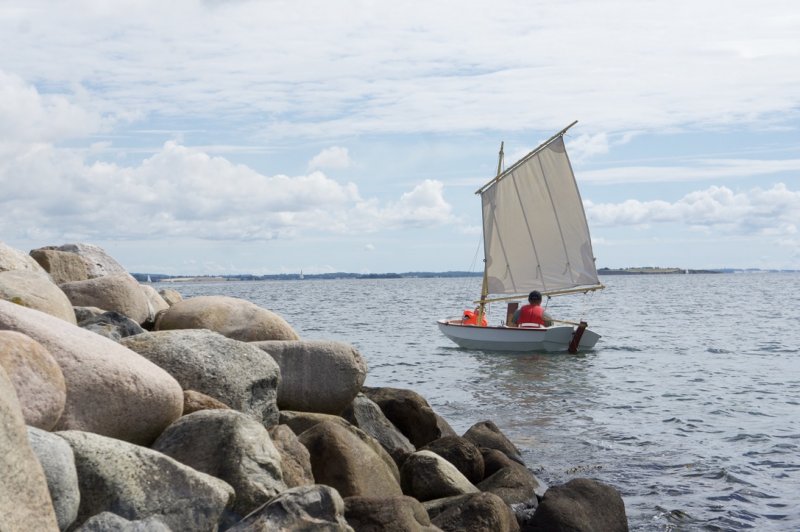
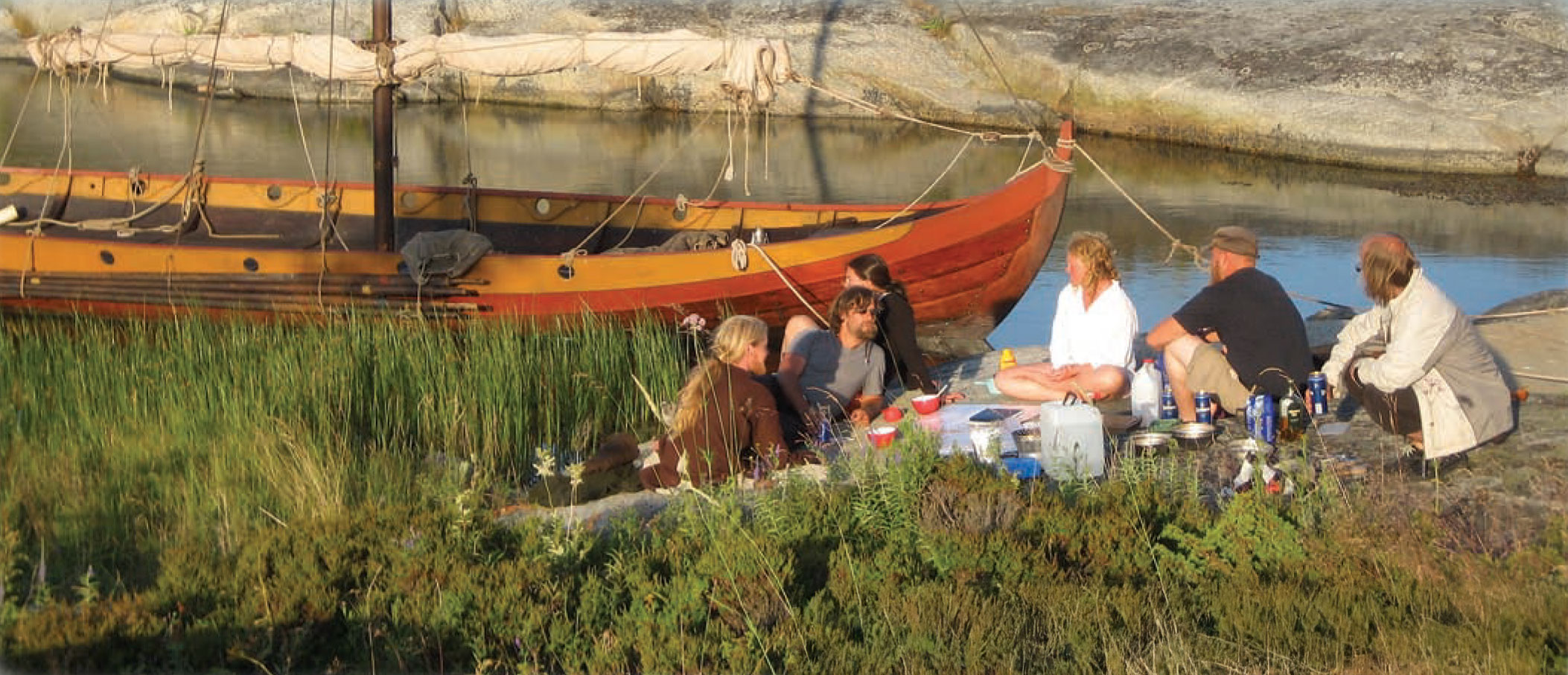
The author and friends built REGIN to take advantage of the Swedish “everyman’s right” to land on islands, among them Stora Nassa, to enjoy scenery and unspoiled nature.
Ferries serve many of the islands. The larger islands have stores and fresh water, and inns and guest harbors for those who don’t wish to camp. There are many submerged rocks, so a good chart is a must and GPS is wise. Shallow-draft boats have many advantages here, one of which is searching out the best places to camp for the night among the islands. In the more remote outer islands—my favorite—you can find your own island and see seals, eagles, even porpoises if you are very lucky. And if you are extremely lucky, you can meet a swimming elk.
But in this part of the archipelago, there are no stores or facilities, so you have to bring everything with you and leave nothing behind. If I had only a few days, I would take the boat on a trailer as far out into the archipelago as possible, to set out perhaps in the north from Furusund towards Norrpada, in the midsection from Stavsnäs toward Stora Nassa, or in the south from Nynäshamn toward Huvudskär.
A day’s voyage might be well rewarded if you come to one of the many islands that has a sauna that you can use for free!
Anne-Claire Bregnac
At remote outer islands such as Bullerö, small villages recall formerly common lifeways of fishing and farming.
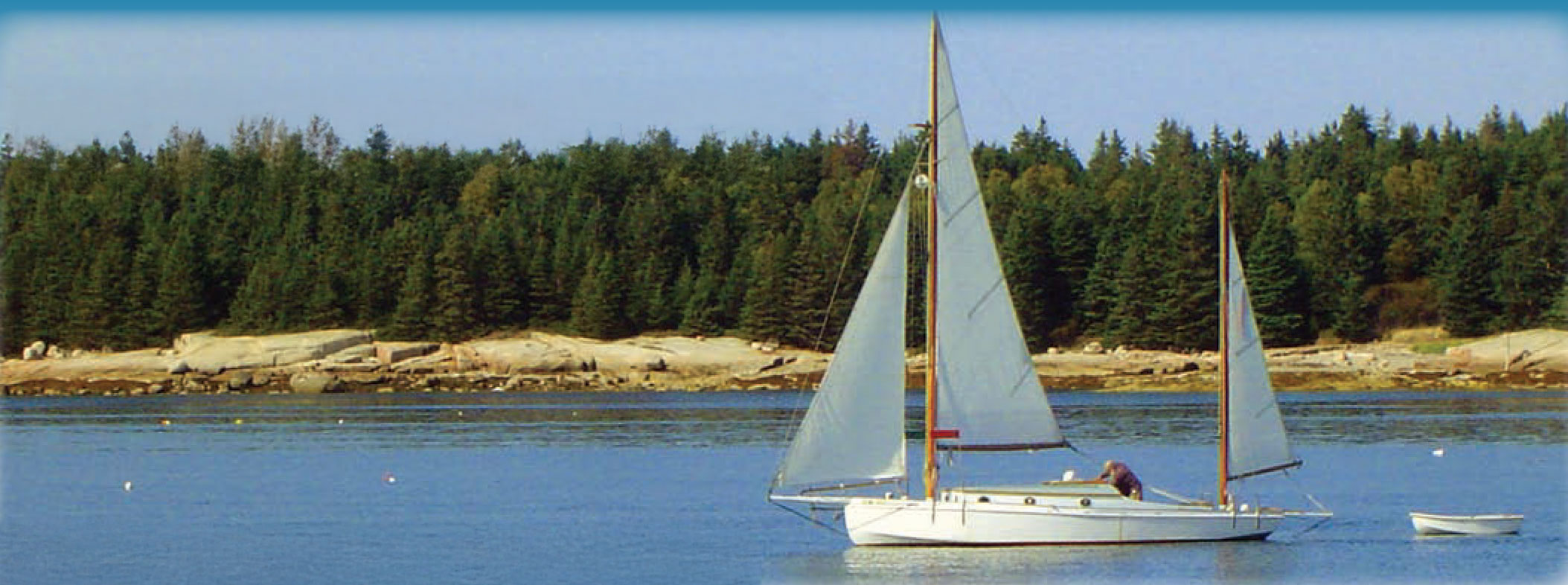
The Maine coast is a ragged one, with some 3,000 miles folded into 375. Summer breezes provide pleasant predictable conditions with just enough fog to make it interesting. Thanks to the Maine Island Trail, a network of islands and mainland sites, this coast is available to boats large and small.
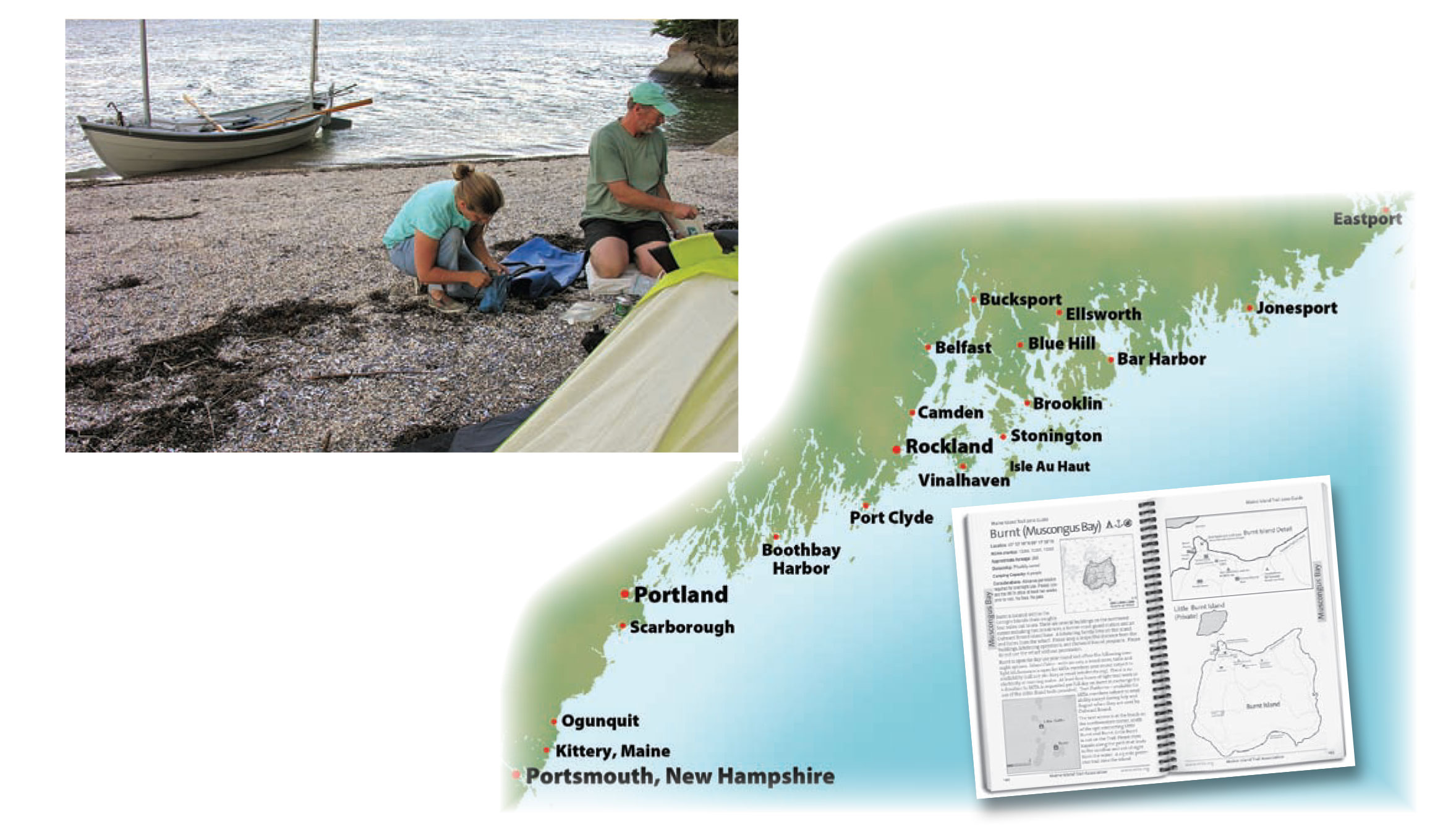
This was the United States’ first water trail, and it opens the gates to a paradise for small boaters. There are islands for camping, islands for visiting; some are public and some, accessible due to the generosity of their owners, privately owned. The trail starts at the New Hampshire border and ends in Eastport, with sites generally no more than 10 miles apart. Its terrain varies from the open beach country in the southwest to granitic boulders in the east. It’s best to think of it in several sections.
Its creator and sustainer is the Maine Island Trail Association, which has a volunteer stewardship network and publishes an annual guide to the trail. Membership provides the guide and allows access to the privately owned islands. (Maine and Massachusetts colonial law prohibits landing above the low tide line without permission, except for the purposes of “fishing, fowling, and navigation.”) Put-ins are outlined in the guide, and range from state- or town-paved boat launching ramps and parking areas to spots that you can only access with a hand-carried boat.
Courtesy of MITA
The 375-mile Maine Island Trail runs from the New Hampshire border eastward to Machias Bay. It includes more than 190 islands and mainland sites, which can be used for day visits or camping.
My favorite sections are those you can explore for days, leave, and then return to the spot you left from to continue the journey; these include Muscongus Bay, where the islands run in long rocky strings, and the round granite islands off Stonington that lead you down to Isle au Haut. Stonington’s archipelago is suited especially well to sea kayaks but also to small sail and power craft.
Its surrounding islands are within an easy day’s paddle of each other; the longer legs of a small shoal-draft sailing boat allow you to venture beyond the immediate islands over into Eggemoggin Reach or farther into Penobscot Bay. A small powerboat can easily round Isle au Haut, weather permitting, for a look at its wild southern end, a trip that is a major adventure in a sea kayak.
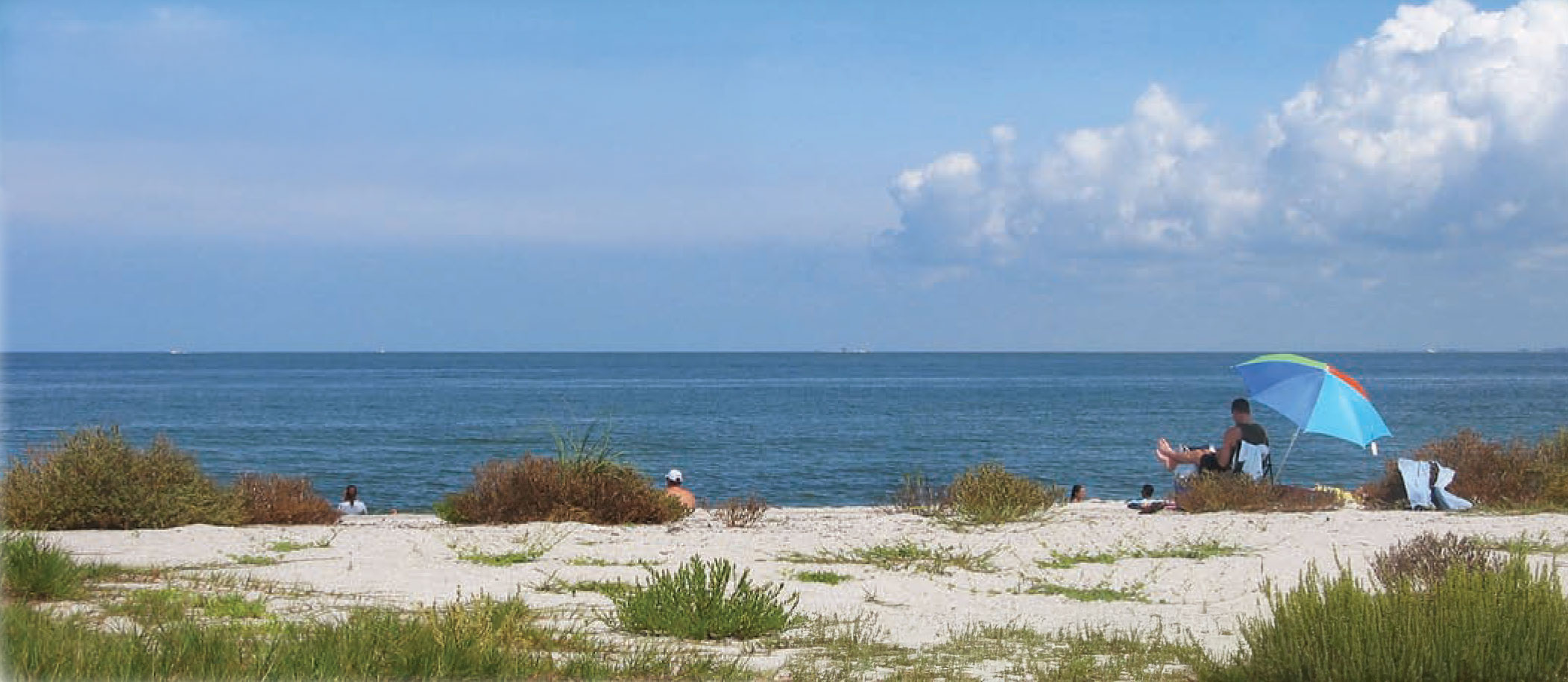
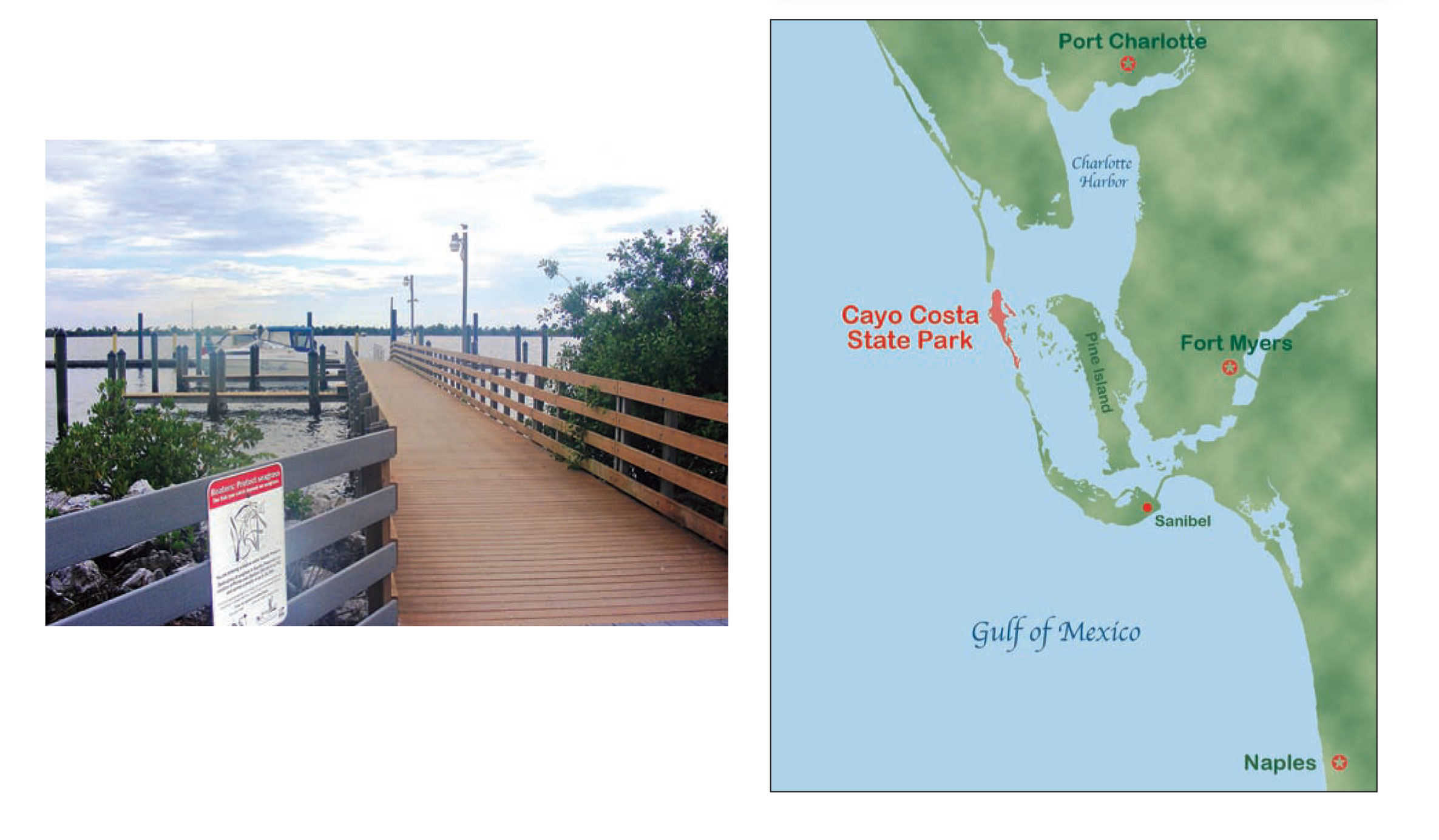
Cayo Costa, with its shoal waters and long beaches, is classic sharpie territory.
The waters of Charlotte Harbor and Pine Island Sound in southwest Florida are a perfect place to spend a winter week cruising in a small boat.
For over 2,000 years, native people have enjoyed a sea-food smorgasbord from these waters, as attested to by the numerous shell mounds dotting the surrounding islands. Small boaters can enjoy the same feast today. Cayo Costa is a barrier island south of Charlotte Harbor and west of Pine Island, the west side consisting of six miles of sand beach exposed to the Gulf of Mexico.
With a good easterly wind, which always occurs after a norther, one can reach along this beach and land with ease. When a northwest wind blows, it’s best to be on the back (east) side where there are numerous coves and spits for shelter. Be aware that tides are low during and after a norther because the water gets blown out of the Gulf. This low water is perfect for locating oysters, which are the tastiest on the Eastern Seaboard.
Florida DEP (Pier image)
Cayo Costa
There is a state park on the northern end of Cayo Costa with a sheltered approach through Turtle Bay. Reservations are required for tent camping or use of the rustic cabins. Pathways from the eastern side of the island to the Gulf beach are maintained, and this is a good choice when the northers are blowing. This is definitely shoal water and beach cruising.
My “messing about” here has been in small cabin sharpies and small fast outboards, but kayaks, camp cruisers, and sailing canoes are perfect for exploring here, too.
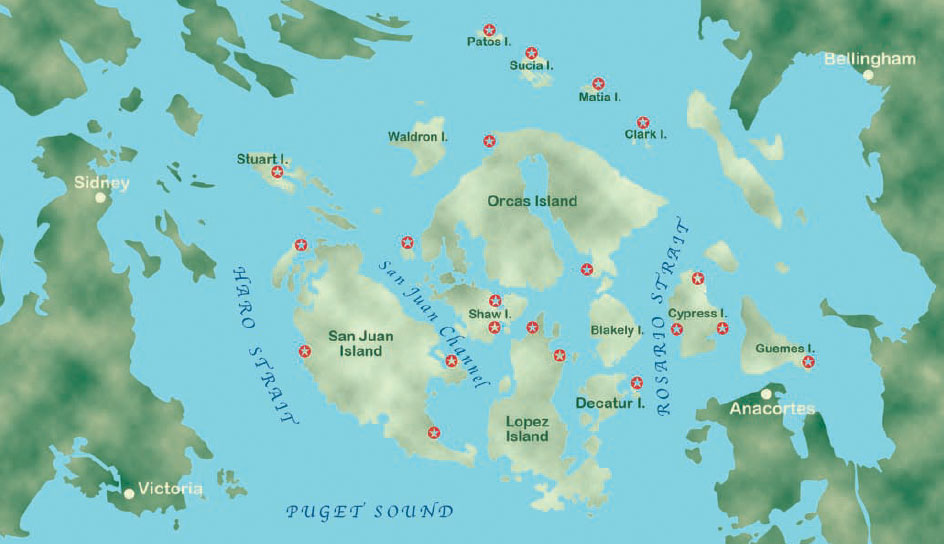
Frequent ferries from Anacortes serve Lopez, Shaw, Orcas and San Juan Islands, and numerous public parks and camping grounds (some indicated by red stars) provide both easy-to-reach and more adventuresome destinations.
The San Juan Islands are at the center of a remarkable inland sea surrounded by towering mountains. With the network of state parks and campsites of the Washington Water Trails, one can kayak, row, or sail from Olympia in the south all the way to the Canadian border…and beyond.
Strong tidal flows swirl and eddy in complicated pat-terns all through the archipelago. Even large boats take care in some passes and straits, but for small boats such attention is absolutely essential, since it will often be impossible to make any headway “upstream.” A current atlas and a tide table are “musts,” along with a willing-ness to adjust your route and schedule to suit conditions.
James McMullen
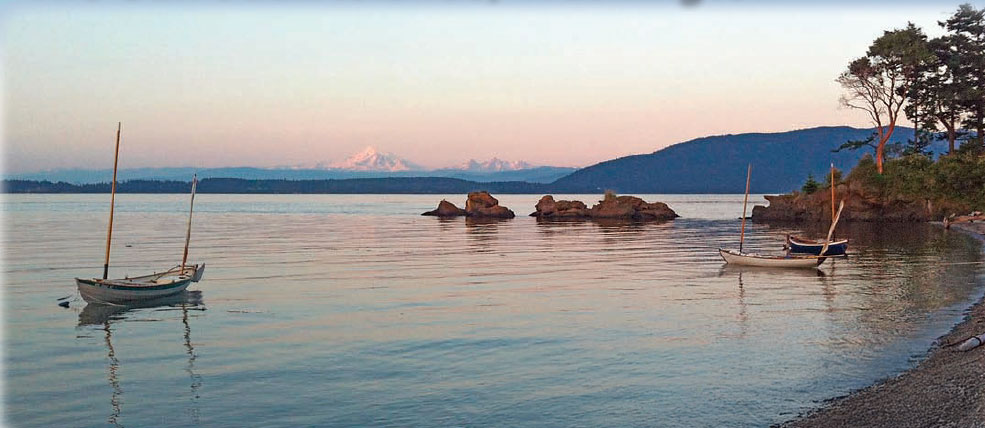
Rocky islands with high mountains ringing the horizon make the San Juan Islands a popular cruising destination.
Launching ramps and hoists in Anacortes or Bellingham serve those starting out for the islands from the mainland. Or, via the Washington State Ferries a car-top or trailer boat can be taken to the San Juan, Orcas, Lopez, or Shaw Island to avoid crossing busy shipping lanes.
Public parks are numerous, some with moorings and docks. Being able to put into a beach with a small boat, however, opens up access to an even greater number of possible destinations. Designated campsites with campfire rings, tent sites, and pit toilets are liberally scattered throughout the area.
James McMullen
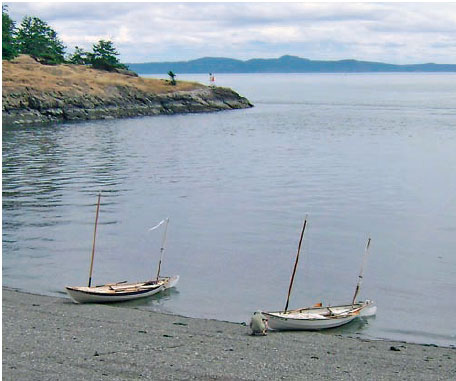
Small craft (including the author’s Iain Oughtred–designed ROWAN, foreground) can reach choice out-of-the-way coves.
The busiest months are July and August, when the weather is hot and sunny. But intrepid adventurers with good gear, especially for rain, can sail anytime during the entire year. The off-season is my favorite, with minimal crowds yet undiminished views and natural beauty. Seals and otters, eagles and porpoises, and the famous resident pod of orca whales are all common sights and, with a license, you can fish for salmon, go crabbing, and dig clams in season.
For a short voyage, consider circumnavigating Guemes Island, departing from Washington Park or from the hoist at Cap Sante, both in Anacortes. For trips of a week or more, plan carefully to use tides and currents to advantage—but there are so many places to go that there really are no bad choices.
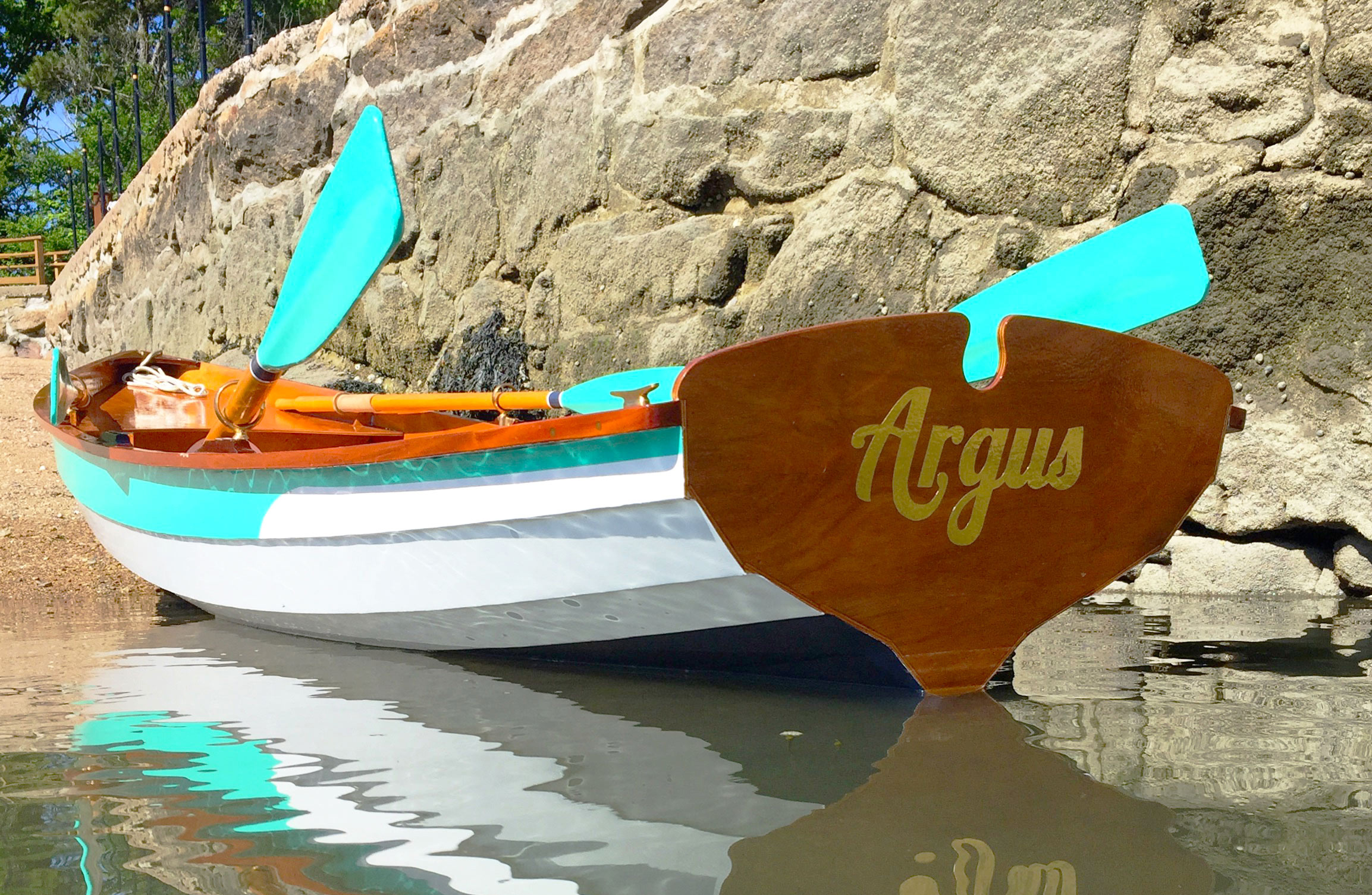
ARGUS is a kit built Chester Yawl from Chesapeake Light Craft. Argus was a many-eyed creature in Greek mythology.
James Fullton grew up in Alabama. His dad, Jim, grew up on the banks of Dog River, an estuary that rises and falls with the tides of Mobile Bay, and his grandparents, on both sides, were Alabama river people. Boats were a part of the family’s daily life. Grandpa Fulton built and restored boats for Jim and his two older sisters in their younger years, and when they had families of their own there were boats for the grandchildren.
By the time James was seven years old, he had learned to row in a dinghy that his grandfather had restored. His early sailing experiences were in his father’s Fish-class gaff-rigged sloop, and the first time they took it out James was alarmed by how much the boat heeled under the press of sail. He told his father: “If momma sees us doing this, she’s gonna fuss.” From that day forward the boat was called MOMMA’S GONNA FUSS. Jim moved his family away when James was eight years old, but they continued to visit Alabama, spending summer vacations on Dog River. In his ’tween years, James graduated to an outboard skiff and expanded his exploration of the river. The family made several more moves in his teen years, and the gap separating him from the river and boats widened.
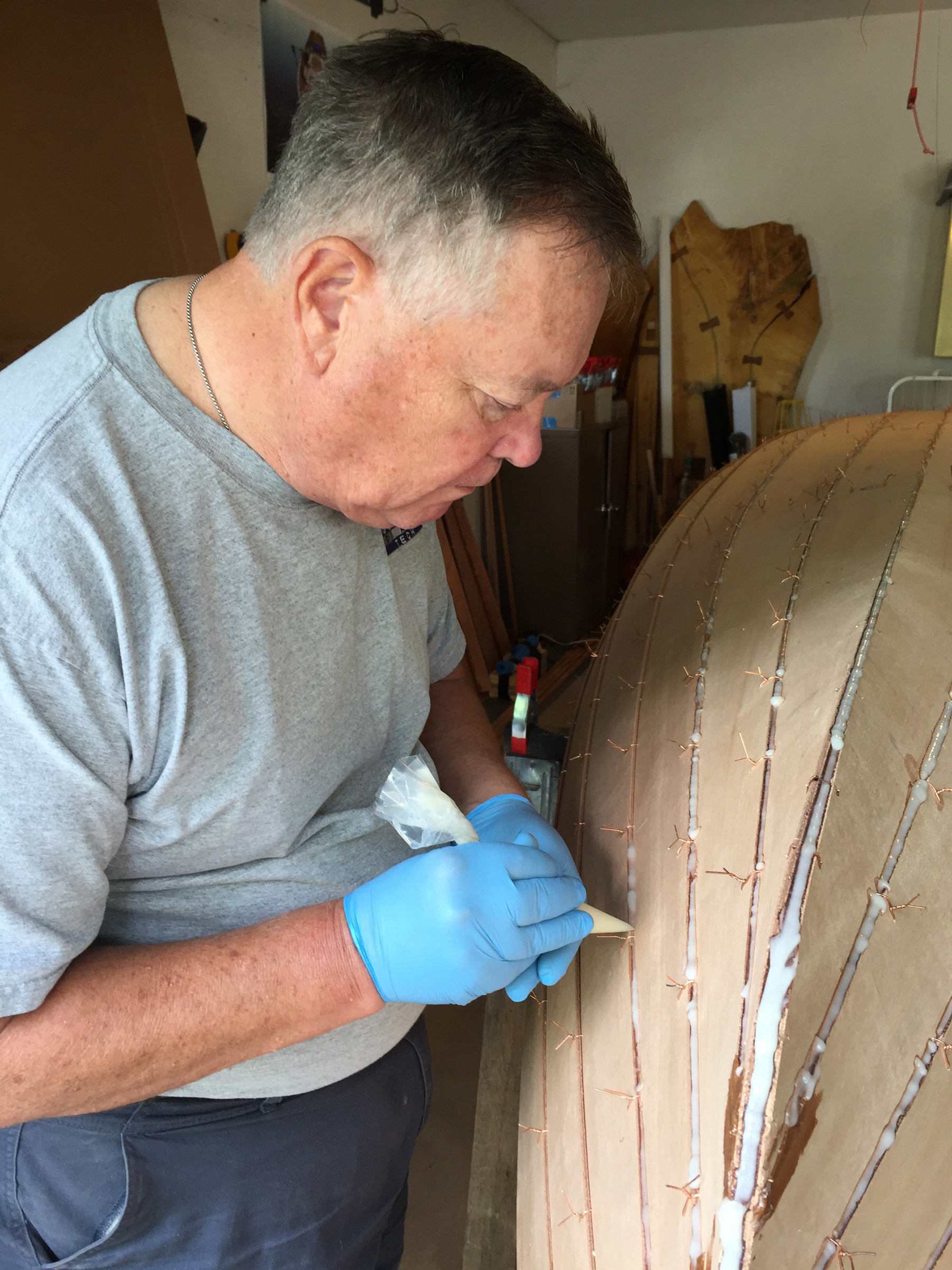
Jim squeezed out beads of thickened epoxy along the laps prior to pulling the wire stitches out.
Some 16 years ago, James settled in New Haven, Connecticut, to raise a family of his own. The proximity to Long Island Sound and to the state’s lakes and rivers rekindled his interest in boats, and for several years he harbored a wish to build a boat. In 2016, he talked it over with his wife and they ordered a Chester Yawl kit from Chesapeake Light Craft. Soon after, as a Father’s Day gift, he took his dad to The WoodenBoat Show at Mystic Seaport, where the kit was waiting for them at the CLC booth.
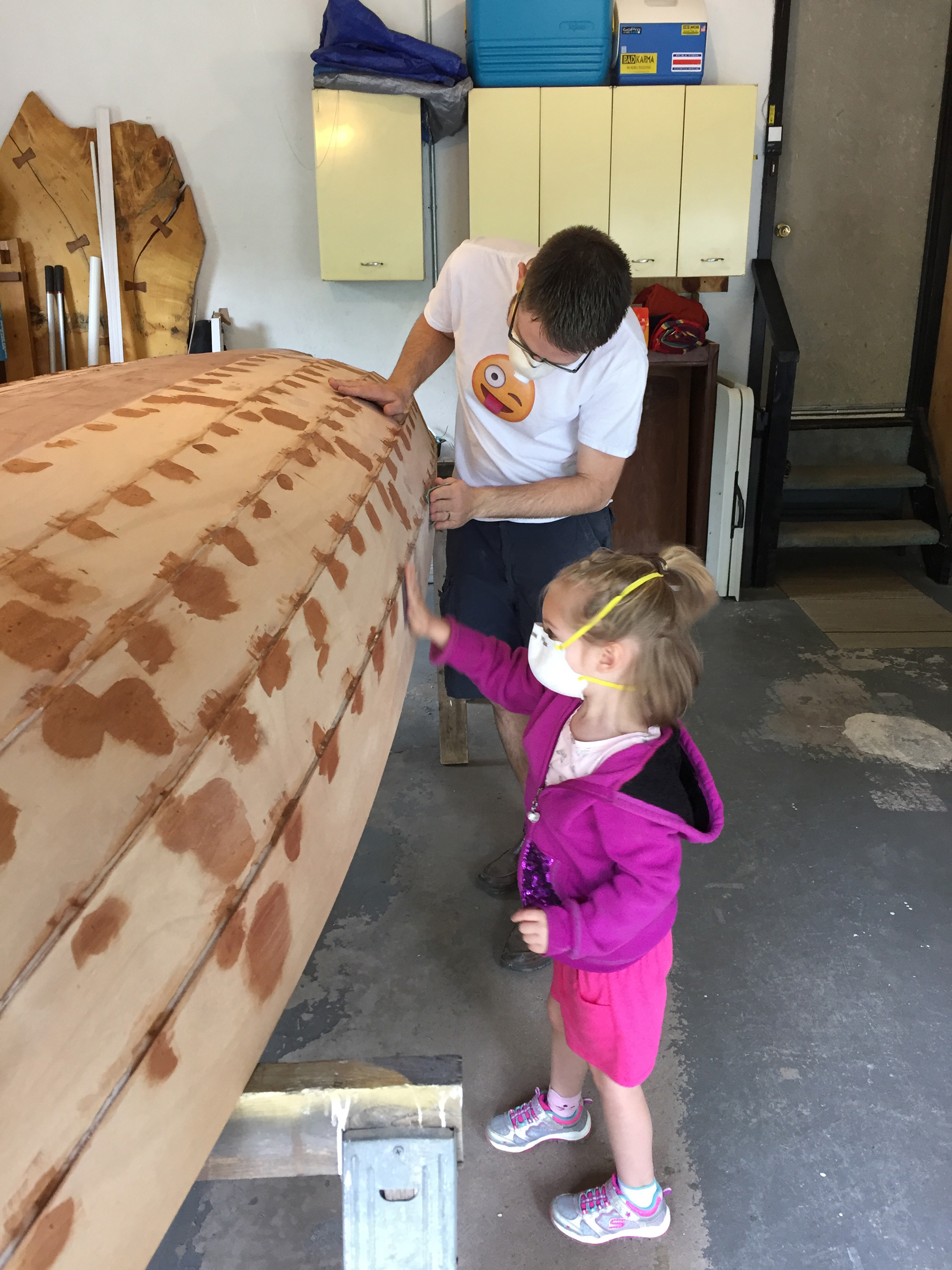
James’ daughter Kyrie was three when construction began. By the time she had turned four, she had taken an interest in helping build the boat.
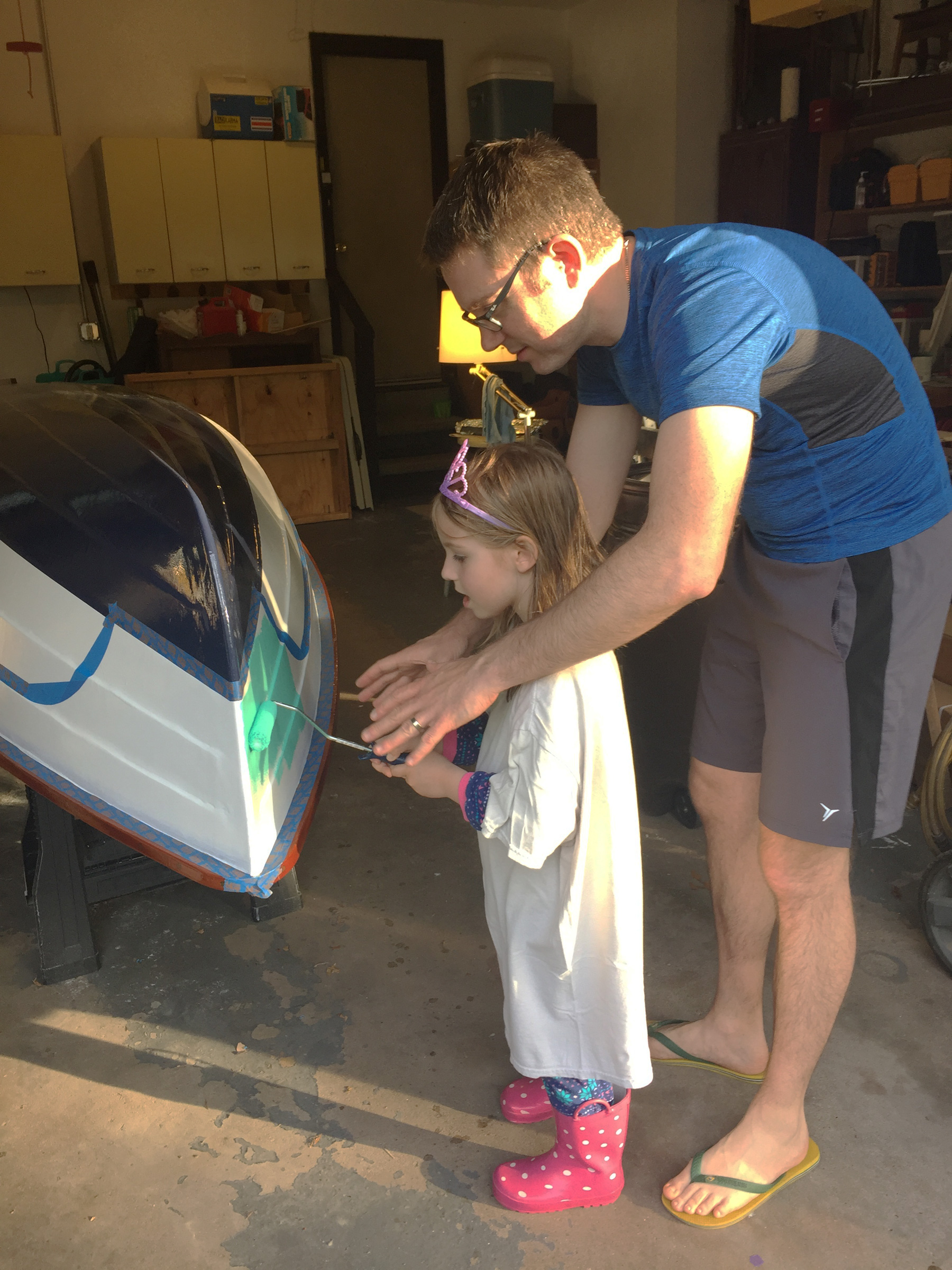
In the months that followed, Jim and James, father and son, assembled the 15′ hull, enjoying the other’s company as much as seeing the curves emerge from the flat plywood panels they stitched together. Jim eventually ceded his role as co-boatbuilder to his granddaughter, four-year-old Kyrie, the youngest of James’s five children. Kyrie had her own toolbox and projects to work on, but often suited up with the proper protective gear to help with the sanding and painting of the Chester Yawl.
Kyrie, here practicing coloring inside the lines, had turned five years old by the time the boat was finished and ready to launch.
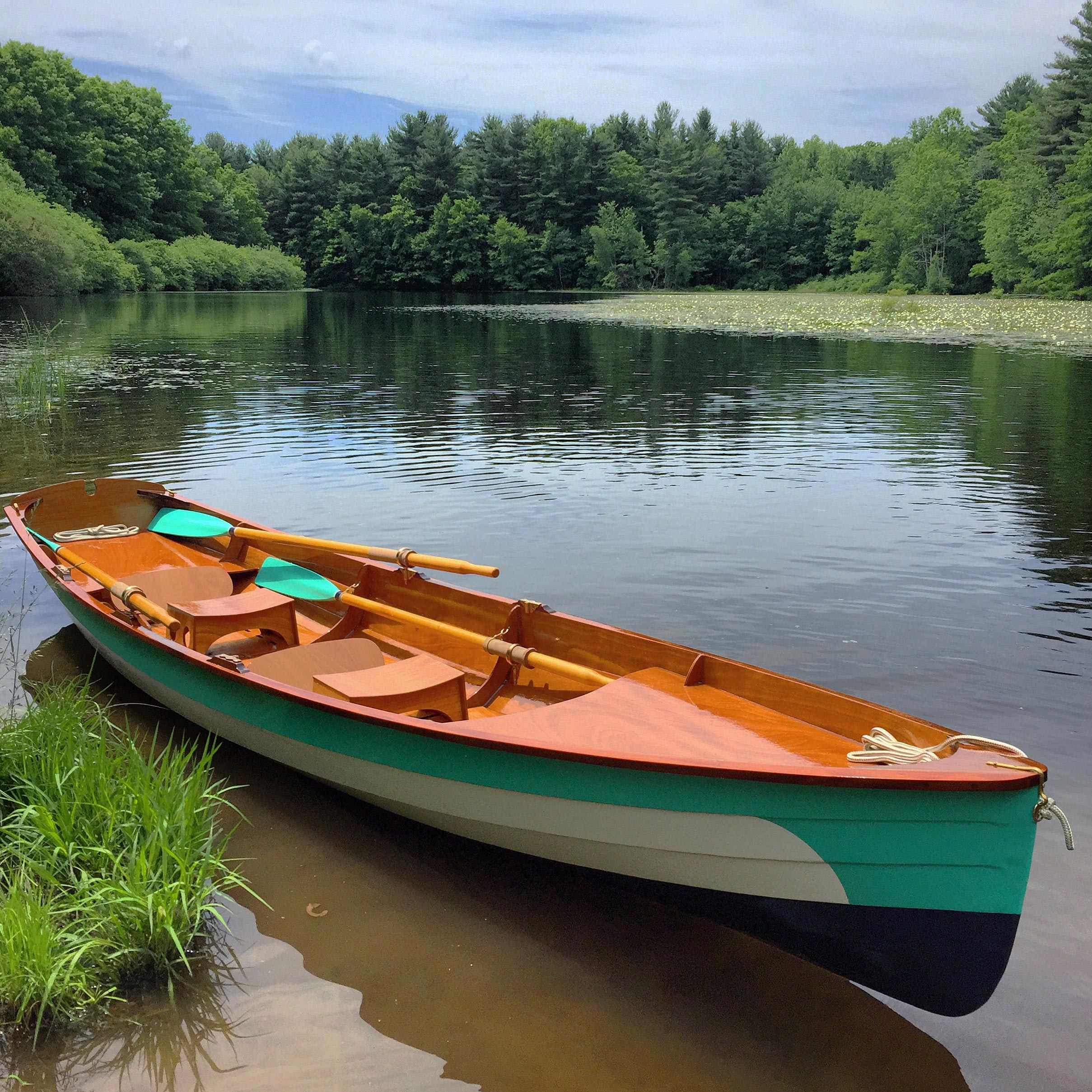
The boat was launched on June 10, 2018, on Lake Wintergreen at West Rock Ridge State Park in Connecticut, and christened ARGUS. Kyrie had earned her place aboard with James for the first row from shore.
The boat was launched on Lake Wintergreen in Connecticut’s West Rock Ridge State Park. James and Kyrie take the first row.
Father’s Day fell on the following weekend. James’s two sons, 12 and 16 years old, gave him a note saying they both wanted to spend some “just us men” time with him aboard ARGUS.
James and his family have been taking ARGUS out at every opportunity, exploring the Thimble Islands just off the Connecticut coast east of New Haven, and Colebrook River Lake on the state’s northern border. They have their sights set on the Berkshire lakes of western Massachusetts. James shared photos of the boat with his extended family and recently received this reply from my aunt: “When I close my eyes I can see Daddy and your great-grandfather Poppee in ARGUS with you, all gathered together sharing giant smiles. James, you have carried on and passed on the Fullton family love of boats.”
Father and daughter enjoy the fruits of their labor; another generation is brought into the fold.
Have you recently launched a boat? Please email us. We’d like to hear about it and share your story with other Small Boats Monthly readers.
In August 2025, Davis Taylor set off in his Tango 17 Whitehall from Bass Harbor on Mount Desert Island in Maine for a four-day rowing cruise through the nearby islands.
As I worked with Davis on his article, I was reminded of an overnight Maine Island trip I’d made 30 years before, in August 1995. Like Davis I had had perfect weather, but unlike Davis I had done little to prepare for my trip, beyond checking the weather and leaving a note saying where I’d be going.
Photographs by the author
The WoodenBoat magazine and school offices are still housed in the 1900s brick-built “summer cottage,” which I first saw in 1994. Situated on a small rise, it looks south across Great Cove to Jericho Bay.
I had been in Maine for less than a year, having arrived from England the previous fall to take up an editorial position at WoodenBoat magazine in Brooklin. It was my first time in the U.S. and I could not believe my luck to have arrived in such an extraordinary place. The WoodenBoat offices occupied a rambling early-1900s painted-brick mansion that stood beside a field overlooking the waters of Great Cove. From the house, a dirt road descended a gently sloping hill to the WoodenBoat School workshops, forking off around the bottom of an orchard to lead down to the water’s edge and a hundred-year-old shingled boathouse built on a fieldstone foundation. Stone steps led from a small garden at the side of the building to a long wooden dock, sloped ramp, and float. Close inshore, a fleet of some 15 or 20 small boats bobbed to moorings, while across the cove and beyond were islands, as far as you could see.
The boathouse, built in 1910, was an Aladdin’s cave. Beneath the living space, behind the double doors, was all manner of boat gear and equipment, and at one time even a couple of ultralight canoes.
Coming from the crowded waters of southwest England, I was enchanted by the feeling of uninhabited space, the long vistas, the possibilities for day-sailing, and, as I would come to appreciate, the protection of Eggemoggin Reach, and the shoal waters between the myriad islands all around. Even the names of those tree-covered granite outcroppings were whimsical to my ears: Bear and Little Bear, Smuttynose, Potato, Babson and Little Babson.
Then, I learned that as a member of staff I could use the boats when they were not needed for WoodenBoat School classes, and I realized with delight that not only had I landed in small-boat paradise, but I had also been handed the keys.
During my first summer I would often row across to Babson Island with friends or WoodenBoat School students. Here, looking back across Great Cove from the island’s gently sloping beach, you can see WoodenBoat’s house in the trees above the cove.
I spent much of my first summer taking boats out for a short row in the morning before work, or a longer sail in the afternoon after work, and, more often than not, on at least one weekend day a week for longer excursions around the islands—charting a different course to new waters each time. Early in the season I sought out the waterfront director: Could I take one of the boats for an overnight? His answer was unequivocal: Absolutely not, the boats were for day use only and must be back on their moorings before sunset. I understood but was disappointed. Then, one Monday late in August, he called me in the office. If I wanted to go for a night later in the week, I could, assuming the weather was fair, and I didn’t mind taking the Shearwater. I was thrilled. The Shearwater, a double-ended narrow-beamed 16′ rowboat with an auxiliary lug rig, had about it a touch of class. Designed by Joel White but heavily influenced by the traditional working boats of Norway, it was low, and sleek, and, with a shallow draft, ideal for some introductory island-hopping.
Over the coming days, I studied the NOAA weather reports with keen interest. For a while all looked good, but by mid-week the weekend forecast began to look far from settled. If I was going to go, it would have to be overnight on Thursday. And so it was that after work on the appointed day, I left the office, drove down the hill with my tent, sleeping bag, food for a couple of meals and snacks, a PFD, extra sweatshirt, and rain jacket, and got a ride out to the Shearwater in the School launch. I tossed my gear up forward, set the sail, and cast off, bound for a beach on the west side of Hog Island, less than 2 miles distant.
Beyond the low rocky tip of Babson Island is the eastern end of Eggemoggin Reach and Jericho Bay. The land to the left of the picture is Hog Island, my destination for the night.
Halfway to my destination the wind died. I lowered the sail and rowed around the northern headland of Hog and into the beach. Hog is an island of two halves, north and south, separated by a low narrow isthmus, and it was there that I landed and pitched my tent just beneath the tree line on the western shore. I dined looking west into the sunset over Deer Isle, turned in as the day grew dark, and was lulled to sleep by the sound of lapping water. I would, I mused as I drifted off, sleep late, rise slowly, and push off sometime around mid-morning when the wind picked up.
I had not accounted for the commercial fishermen.
Making landfall on Hog Island close to low tide was straightforward and, with the Shearwater’s shallow draft, gliding into the muddy shore was uneventful. The massive granite boulder is an erratic left behind by the receding ice cap at the end of the last ice age.
Before dawn I was awakened by the roar of diesel engines and the accompanying discordant sounds of Kiss FM. I poked my head through the tent door and saw two white-hulled lobsterboats, powering through tight circles, stopping abruptly to pick up a pot buoy, pulling away, circling, stopping, weaving in and out, in perfect disharmony. And all the while the engines roared and the radios blasted. Ten minutes later they were gone. I settled back to sleep.
Suddenly, something fell with a quiet thud on the tent roof above me. I looked up. Silence. Thud. Silence. Thud. Then came the unmistakable sound of a red squirrel laughing hysterically. In my memory this repetitive torment lasted for at least 30 minutes; in truth it was probably less than five before the rodent tired of its game and went about more serious work. But between nature and man, I was now wide awake. I walked through the trees to the eastern shore of the isthmus and sat down to watch the dawn spread slowly across the silver-calm waters of Jericho Bay.
Maine’s coastline is a maze of islands and inlets; you could spend a lifetime exploring in a small boat and not discover every cove or beach. Jane Crosen, Small Boat’s proofreader, has mapped much of the region.
Later that morning, I followed a circuitous route home, rowing first around the southern tip of Hog Island to Sellers Island and then, as the breeze picked up, sailing west down Eggemoggin Reach south of the Babsons and the Torreys before turning east to come back into the western end of Great Cove and finally to the mooring field. I had covered barely 10 miles, spent less than 24 hours adventuring, but had come back to the mainland refreshed, fulfilled, and, quite honestly, triumphant.
My return voyage took me along the south side of the two Babson islands—seen here with Little Babson on the right and Babson, beyond it, on the left—and the Torreys. The rocky ledge in the foreground to the right of Little Babson, is off the eastern end of Lower Torrey and marks the outer edge of a narrow channel into Great Cove; at mid-tides the currents here can be challenging and the entrance is known locally as the Guzzle.
I have been on longer sailing trips—both before and after the Hog Island expedition—but I can’t think of a single one that I look back on with such vivid memories nor with such a sense of achievement. There is nothing, it seems, quite like taking a small engineless boat to a small island, and coming back in one piece, to make you feel whole… ask Davis Taylor, he’ll tell you.
Since it was first published in 2007, Small Boats has inspired numerous readers to dream of building their own small wooden boats. Here, we celebrate those readers who made that dream a reality. Be sure to check out our Reader Built Boats section for more.
MENDE LIBERTÉ
Photos by Deborah Simmons and Anne Bryant
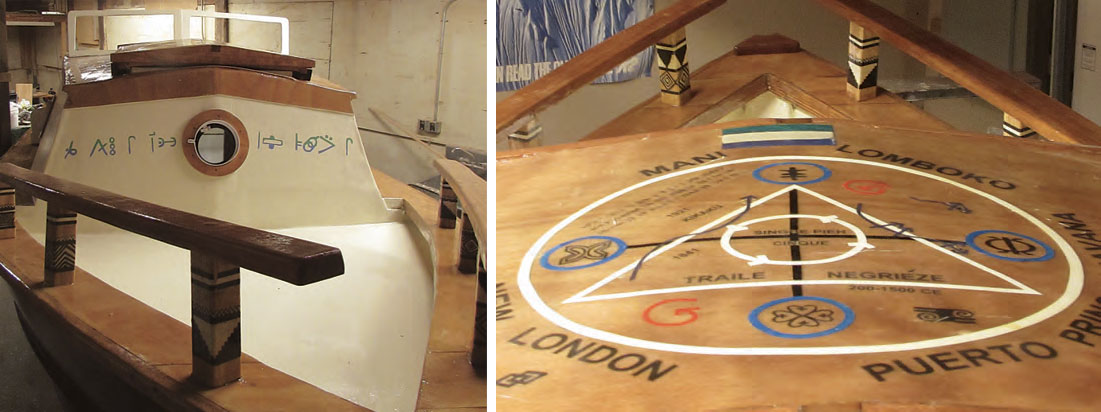
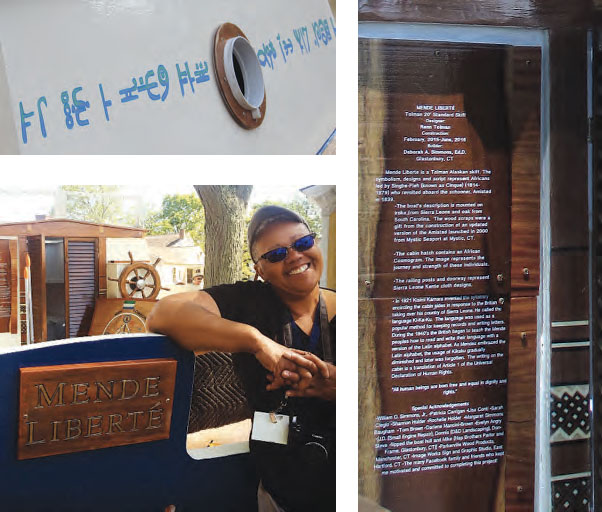
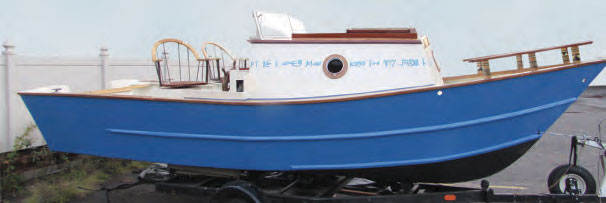
In April 2015, Deborah Simmons of East Hartford, Connecticut, started building this 20′ Tolman skiff. Soon after she began, she received a gift of iroko wood that had been used in the construction of the topsail schooner AMISTAD, launched at Mystic Seaport in 2000. That and her work as an arts educator inspired her to adorn her skiff with images and symbols that honored Singbe Pieh (also known as Joseph Cinque) who led the revolt of 53 Mende captives who were illegally taken from Sierra Leone, Africa, as slaves aboard the Spanish ship LA AMISTAD in 1839. Eventually captured off the coast of Connecticut, the slaves were brought to trial for murder and mutiny in a case that went all the way to the Supreme Court, which awarded the Mendes their freedom in 1841.
The hull of MENDE LIBERTÉ is built from fir marine plywood covered with fiberglass cloth set in epoxy. The iroko became her helm seat and the base for a plaque. Deborah drew an African cosmogram (ground drawing) on her sliding hatch that depicts the journey and strength of Singbe Pieh and his followers on LA AMISTAD. On the bulkhead and bow rails, she painted Mende Kente cloth patterns.
Deborah encircled the cabin with Kikakui, which was the written syllabary language of the Mende people at that time. It is Article 1 of the Universal Declaration of Human Rights. Translated it says, “All human beings are born free and equal in dignity and rights.” MENDE LIBERTÉ is powered by a 40-hp outboard motor. Deborah cruises on the Connecticut River and Long Island Sound along Connecticut’s coast.
PRESTO
Photos by Gavin Garbutt and Mike Mesheau (inset)
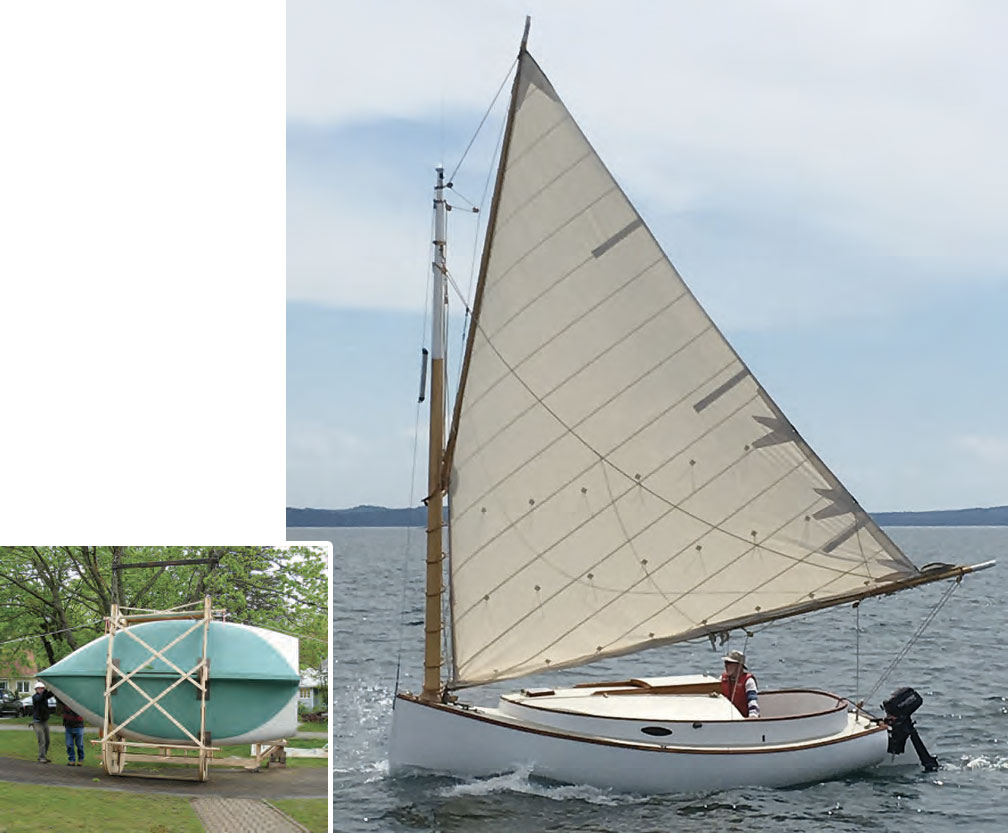
After more than four years of building, Frank Camm launched PRESTO, an 18′ × 8′ 6″ Fenwick Williams catboat designed in 1932. Frank built the boat with a Douglas-fir backbone and strip planks of western red cedar. Then he covered the hull with Xynol fabric set in epoxy. He made a few modifications, rounding the cockpit coaming and widening the keel so the centerboard trunk could be built on the center line instead of off to one side. The decks are marine plywood covered with Dynel. Nat Wilson made PRESTO’s sail.
Frank lives in Fredericton, New Brunswick, and sails on Passamaquoddy Bay and the Bay of Fundy. He is a member of the Catboat Association; at the 2016 annual meeting he received the Broad Axe Award for his work on PRESTO. Frank would love to share what he learned during this project with any interested readers; contact him at [email protected].
MY PASSION
Photos by Rob Riedel
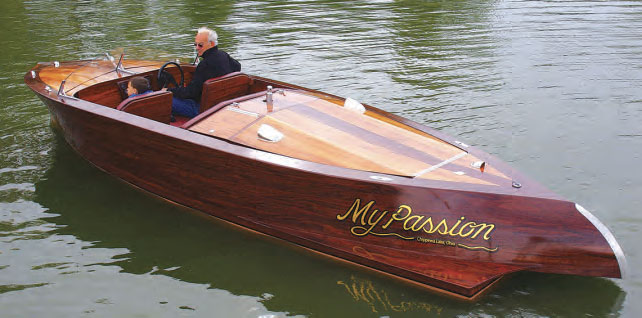
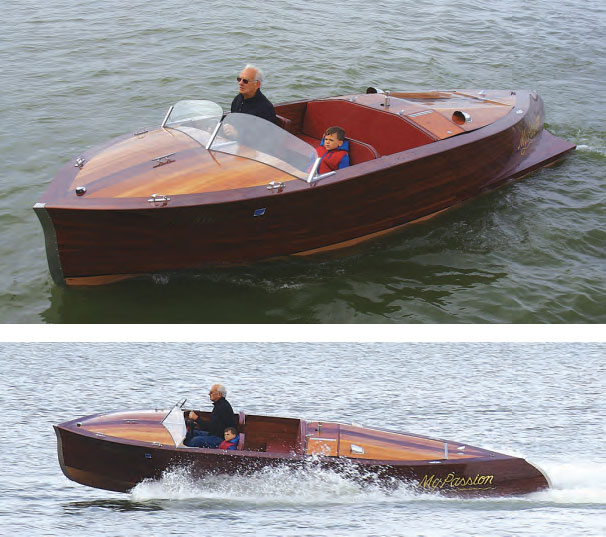
Keith Riedel of Chippewa Lake, Ohio, has long held a passion for torpedo-backed boats. He spent the past five years building MY PASSION, which he launched in June. He started with Glen-L Marine’s 19′ Barrelback design, which he stretched to 22′ 6″, at the same time reshaping the transom to create a dramatic torpedo stern.
Her hull is cold-molded on white oak frames, with two layers of 1⁄4″ marine plywood laid diagonally and covered by one longitudinal layer of 1⁄4″ African mahogany. On the outermost layer, Keith combined horizontal strips of sapwood and heartwood to create an attractive hull.
Keith installed an Excalibur 350 engine made by Pleasurecraft Marine Engines. He and his family cruise at speeds of up to 55 mph on Chippewa Lake. They have also visited Lake Erie, Tappan Lake, and the Portage Lakes. At the Portage Lakes Antique & Classic Boat Society Show in June, they won the Home-built Contemporary Classics category.
HONEY BADGER
Photos by Brian Zabriskie (above) and Nancy Zabriskie
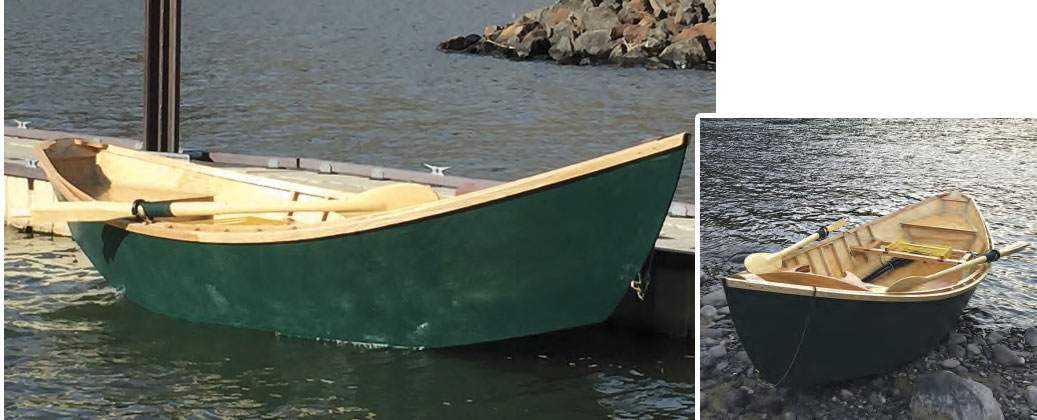
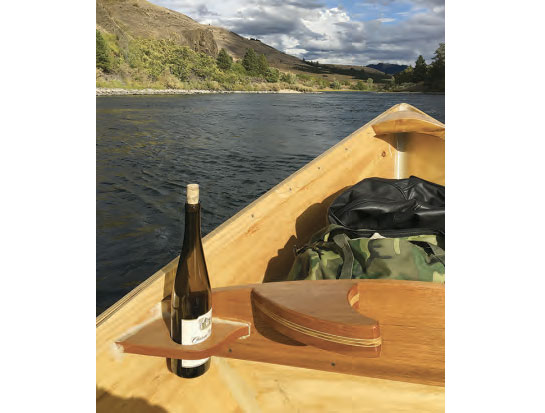
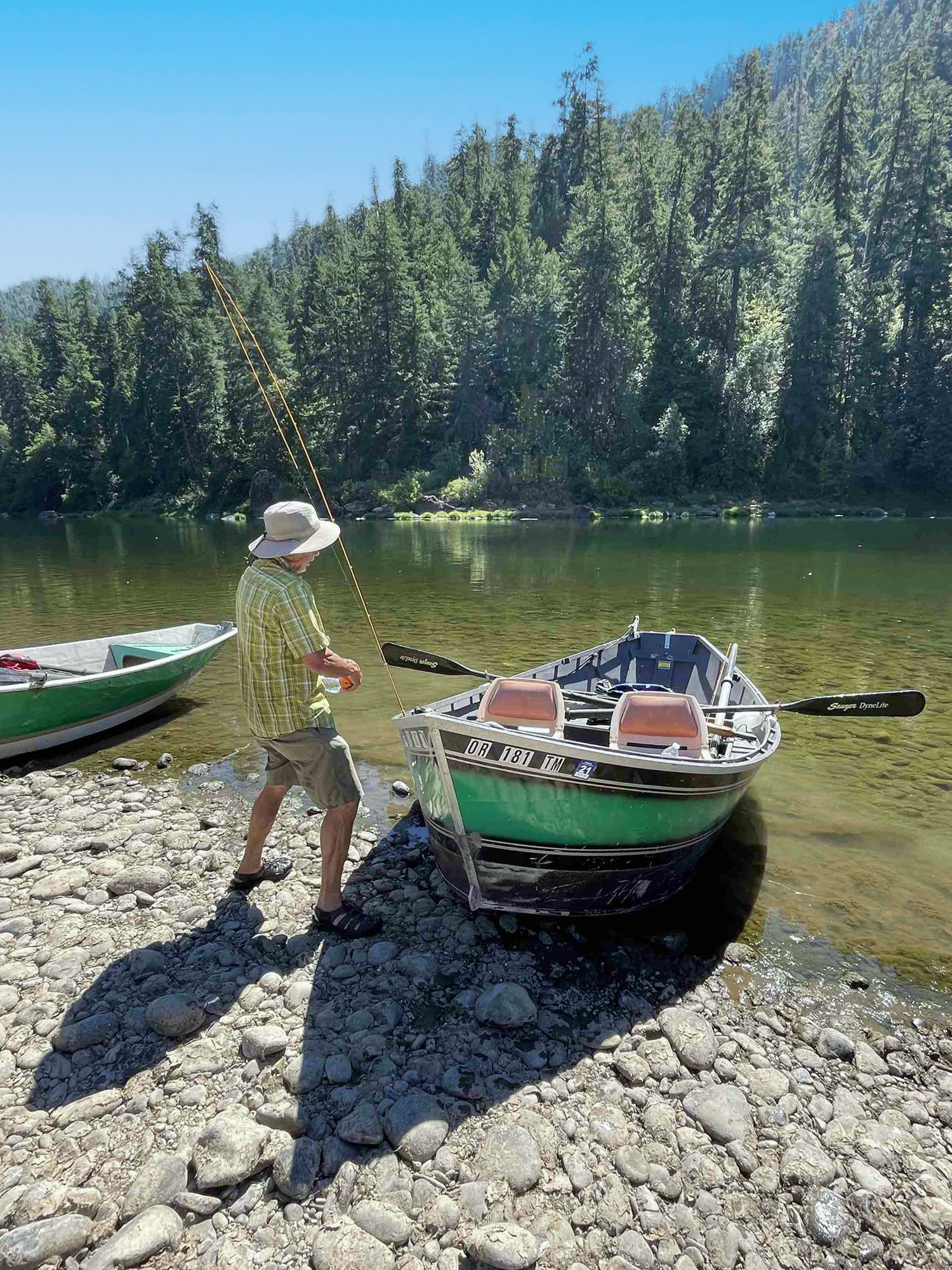
Brian Zabriskie of Blue Monkey Boats in Moscow, Idaho, built this 14′ Headwater driftboat for Ken Johnston, also of Moscow. The boat is a stitch-and-glue design by Tracy O’Brien built from 1⁄2″ and 3⁄8″ ACX plywood. Brian made the rails and quarter knees from ash, bow and stern seats from oak, knee braces from mahogany, and the breasthook from a piece of myrtle grown on the Oregon coast. Brian is from that area and puts a myrtle breasthook in every boat he builds.
The oarsman’s seat amidships is made from 50′ of woven rope. He made the 8′ oars following directions from Andrew Steever’s book Oars for Pleasure Rowing. They are pine covered with a layer of fiberglass cloth set in epoxy. Brian kept a blog of the construction at bzdrift.blogspot.com. Brian built the boat for Ken so they could connect with college buddies who also like to fish. They have rowed the boat on the Spokane, Snake, Clearwater, Rogue, and Grand Ronde rivers. These pictures are from the boat’s maiden voyage on the Clearwater River. They named her HONEY BADGER because she doesn’t care about rapids; she’ll go through anything.
MR. BLAKE
Photos by Patti Danison
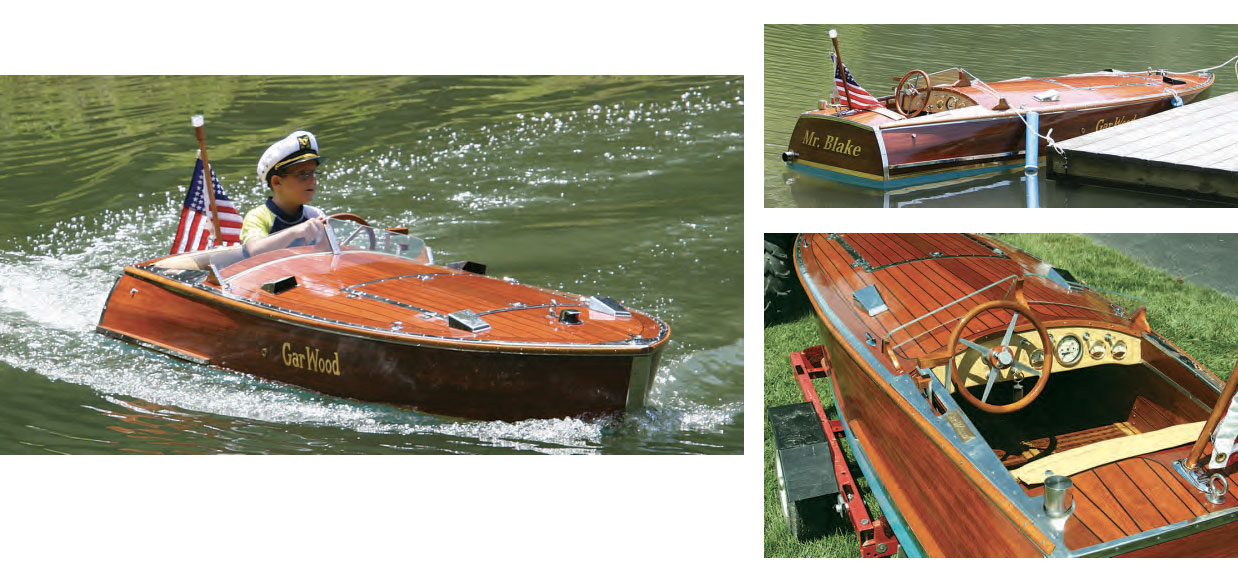
Brothers Terry and Ted Harder have enjoyed being around wooden boats for much of their lives. When Terry’s grandson, Blake, was born eight years ago, they decided the young boy needed a boat of his own. Though Ted was an architect, neither of them had any boat design experience, so they discussed the design for quite a while. Building the boat took some more time, of course, but last summer, after more than six years of planning and building, they launched MR. BLAKE, a 9′ 3″ runabout patterned after a Gar Wood Speedster.
Nearly every part of MR. BLAKE was hand-made, from the double-planked ship-lapped mahogany hull to the 48-star American flag. Young Capt. Blake has a dashboard full of instruments including a tachometer, gas gauge, temperature gauge, ammeter, lights, and a switch for the electric bilge pump. With a leather seat, gold-leaf trim, and a 13-hp Honda inboard motor, Blake and MR. BLAKE cruise the lakes of Ohio in elegance at a top speed of 16 mph.
Five Voyager Canoes
Photos by Marge Eckert
In the summer of 2014, Mike Eckert of Perry, Michigan, brought a 13′ canoe that he designed and built—the Voyager 13HD model—to The WoodenBoat Show in Mystic, Connecticut, where she won the Concours d’Élégance in the category for owner-built manually powered boats.
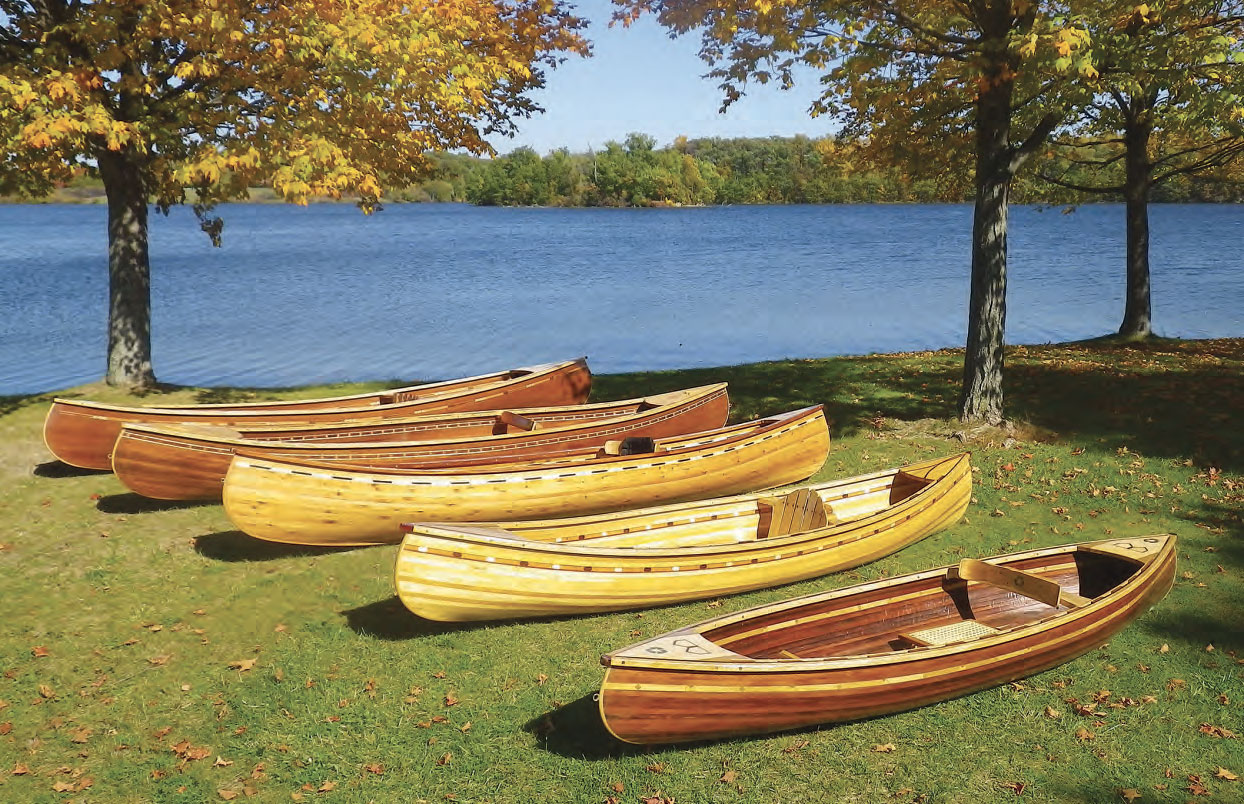
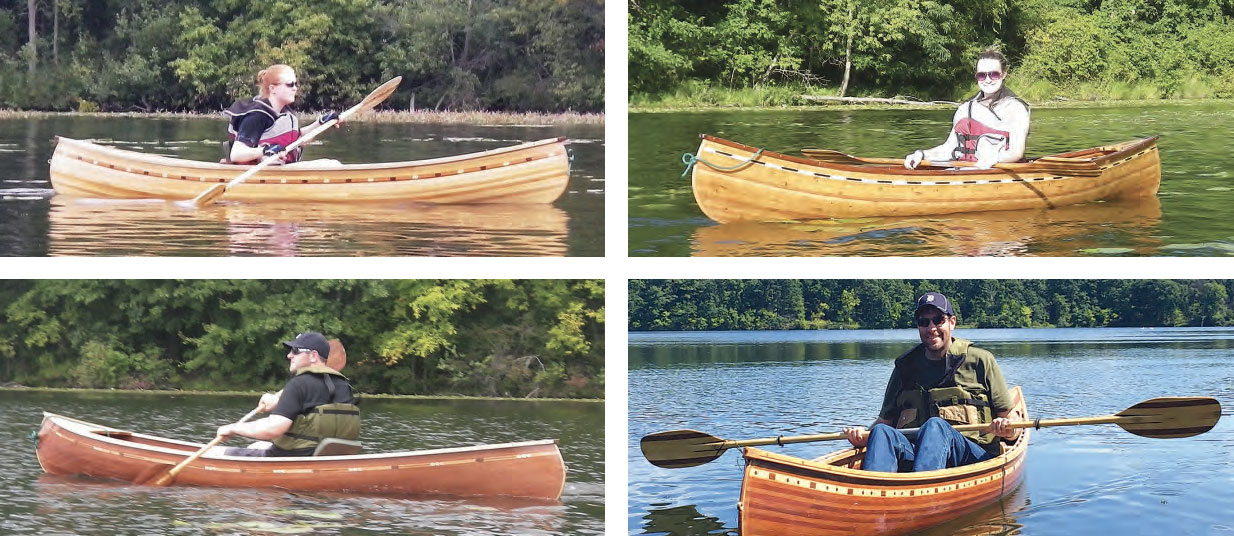
Since then, Mike has designed and built four more canoes, all of western red cedar, Atlantic white cedar, and redwood. All of them are strip-built with decorative feature strips just below the sheerline. Mike recently launched all five canoes at Seven Lakes State Park in Holly, Michigan. The canoes range in length from 10′ to 14′, determined by the size requirements of his family members. Mike and his sons are quite tall, but his daughters-in-law are not.
Shown here are his daughter-in-law Christie in the Voyager 10 (upper left), niece Beth Busk in the Voyager 12 (upper right), son Michael Jr. in the Voyager 13HD (bottom left), and youngest son, 6′ 11″ Matthew, in the Voyager 14 (bottom right). The family usually paddles on local rivers such as the Shiawassee and Au Sable, and lakes in the state parks.
Have you recently launched a boat? Please email us. We’d like to hear about it and share your story with other Small Boats readers.
In the late 1950s, my dad built a boat. I wasn’t around yet, but he constructed a plywood runabout from a Sears & Roebuck kit, and through my childhood the old black-and-white photos he took as a record of that project made me long to build a boat of my own. In college I procured plans for a 9′ plywood sailing dinghy with the idea of building it in the basement of my dad’s house. It never happened, but the dream never died. Then, a few years ago, I read somewhere that “if you never start, you’ll never finish.” I began scouring the internet for a suitable build and settled on Heidi, a flat-bottomed, lapstrake skiff described in Richard Kolin’s book, Traditional Boat Building Made Easy: Building Heidi, a 12 foot skiff for oar and sail.
The reasons for my choice were many. I wanted a boat that was easy to build but was traditionally constructed out of solid wood rather than plywood. It had to fit up the stairs from my basement, where it would be constructed. I believed a flat bottom would facilitate moving around the cockpit while fishing and would also lend more initial stability. I liked the lapstrake design, and the sweeping curve of the sheer. Finally, many people praised the boat, the book, and the building technique. But was Heidi too small? I was unsure. Then, in a WoodenBoat Forum post, “Kermit” described stretching Heidi from the 12′ original to a 14′ version he had seen in Richard Kolin’s shop. That was it… I was hooked. I would build a 14′ Heidi.
Photographs by the author
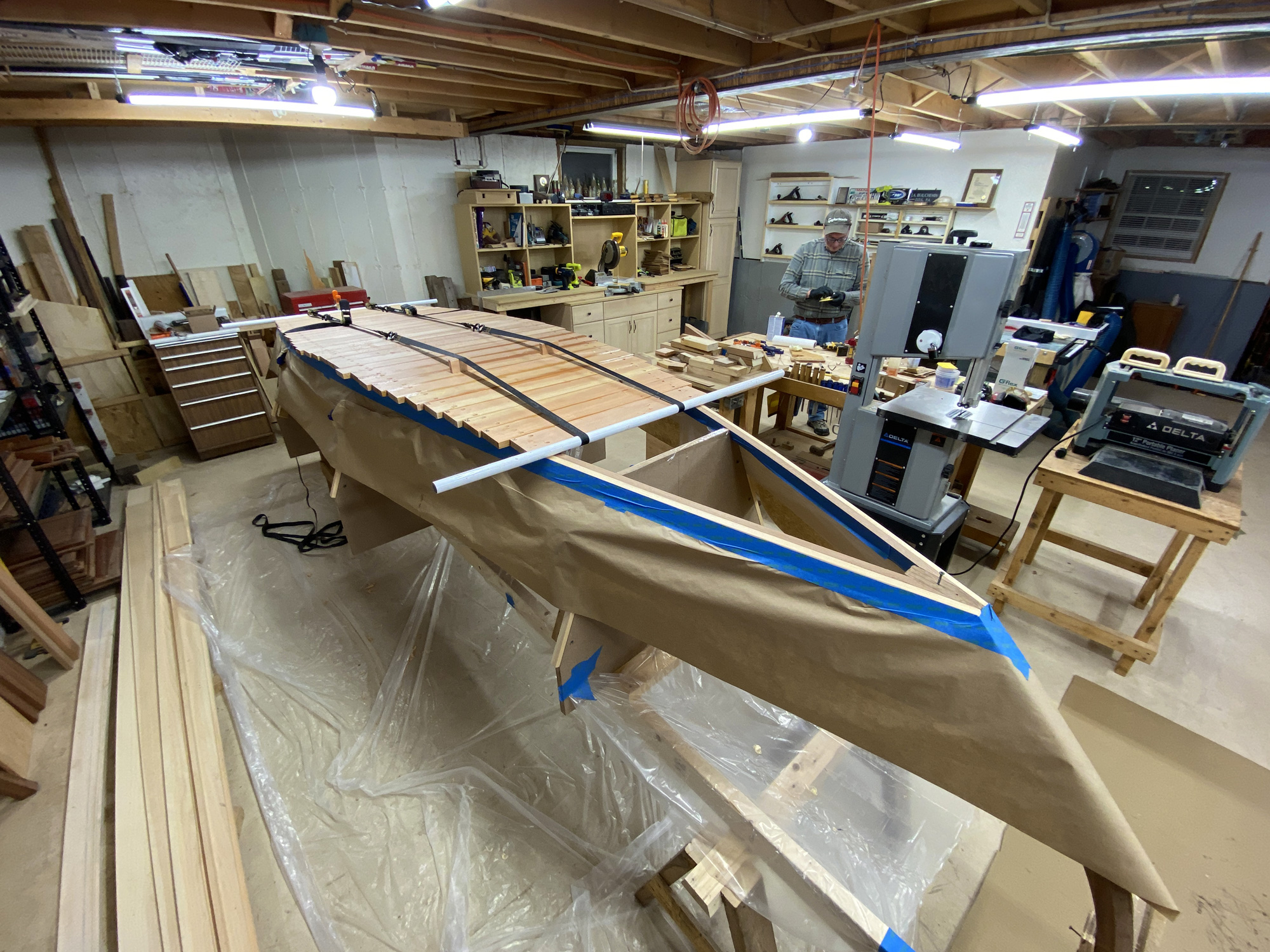
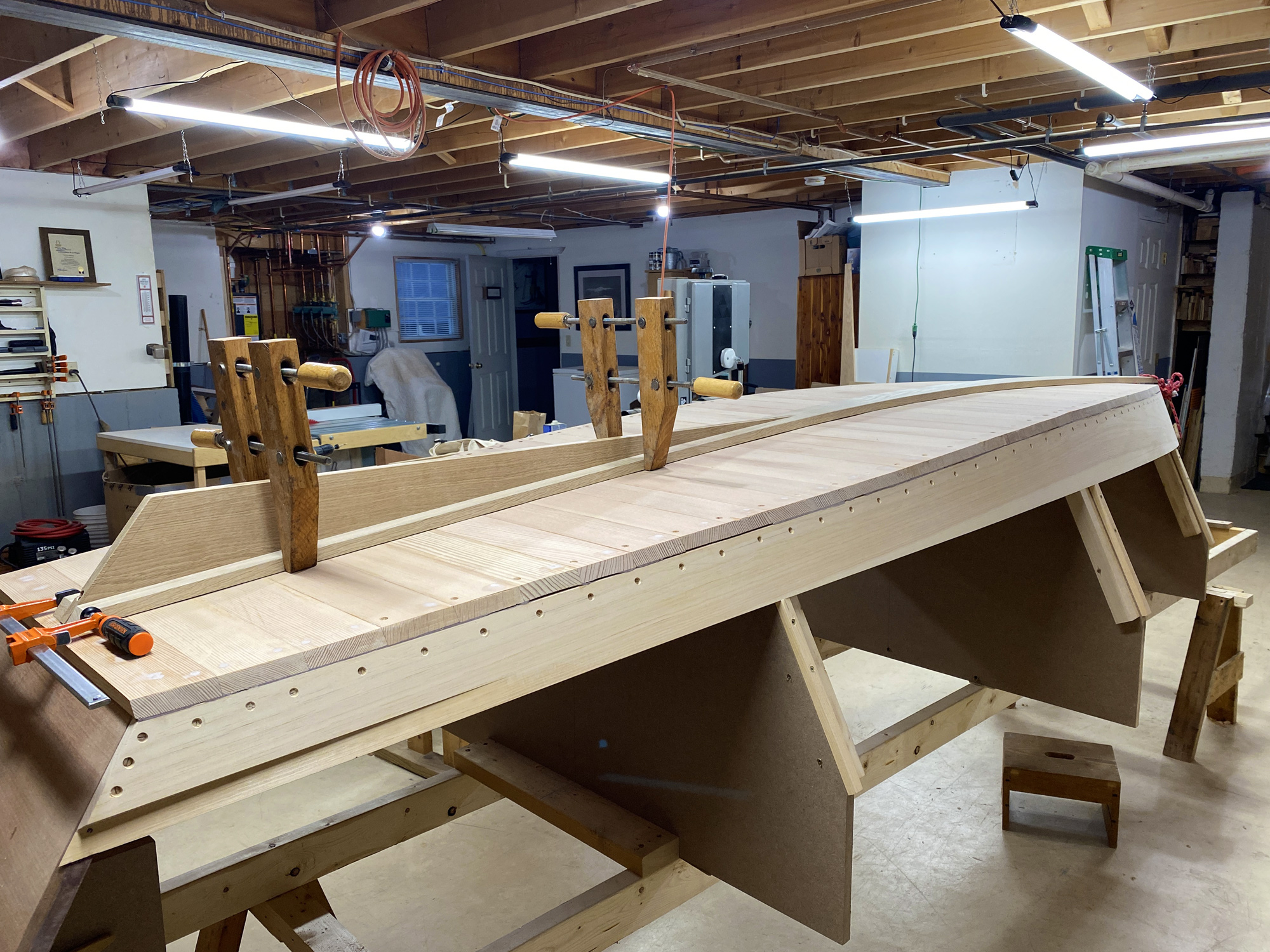
Richard Kolin offers two alternatives for the bottom of Heidi—plywood panels or cross planking. The typical recommendation for boats that will not be kept in the water for long periods is to use plywood, but I wanted my skiff to be closer to traditional, so elected to use glued-edge cross planking. To apply constant pressure while the glue cured, I used tensioned cargo straps.
Building the Heidi skiff
Kolin’s book is very well laid out, beginning with information on necessary skills and tools, cost, space, procuring materials, and other important considerations for the amateur—perhaps first-time—boatbuilder. Chapter Two focuses on tools, materials, and sharpening, and provides detailed lists of all that is needed, from wood—cedar, white pine, or spruce for the planking, bottom, and seats; mahogany or oak for the keel, transom, stem, frames, and chines—to fastenings to glue to fittings. For my build, I chose northern white pine for the planking and Douglas fir, sold as household decking, for the cross-planked bottom. Mahogany would serve for the transom, stem, and chines, and I cut the sawn frames from white oak.
As I moved through the project I followed the book closely. Chapter Three carefully lays out how to build the strongback and set up the three molds (shown in measured drawings) for building the boat upside down. The instructions are particularly detailed for the assembly of the transom and stem, and I had little trouble understanding and carrying out the necessary steps. Of course, since I would be building a 14′ boat I did need to adjust the position of the station molds to accommodate the extra length. There are four spaces between the three molds, transom, and stem, so adding 6″ between each extends the overall length by the required 2′.
After completing the bottom planking, I installed the keel and skeg. The ample skeg helps the boat to track well under oar. After this, I would fit the two upper planks on each side and then turn the hull over to complete the interior.
Having set up the strongback, molds, and frames, I moved on to fitting the garboards, chines, and bottom boards. The book suggests fitting the garboard before the chines. Instead, I chose to fit the garboard planks only after the chines were installed. That way I could use the chines to scribe a line along the planks, and then cut and plane to that line with finishing touches done after installation.
After the chines, I resumed following the book’s instructions. Kolin specifies that the garboards are straight on their upper edges. After they’re installed around the molds, the flare of the hull’s sides will curve the garboards’ top edges when seen in profile. And, since the sides of the boat are straight, the planks do not require beveling. Instead, spacers are placed under each of the two remaining planks, one spacer for plank two and two for plank three. This makes plank fitting and installation quite simple—ideal for a first-time builder.
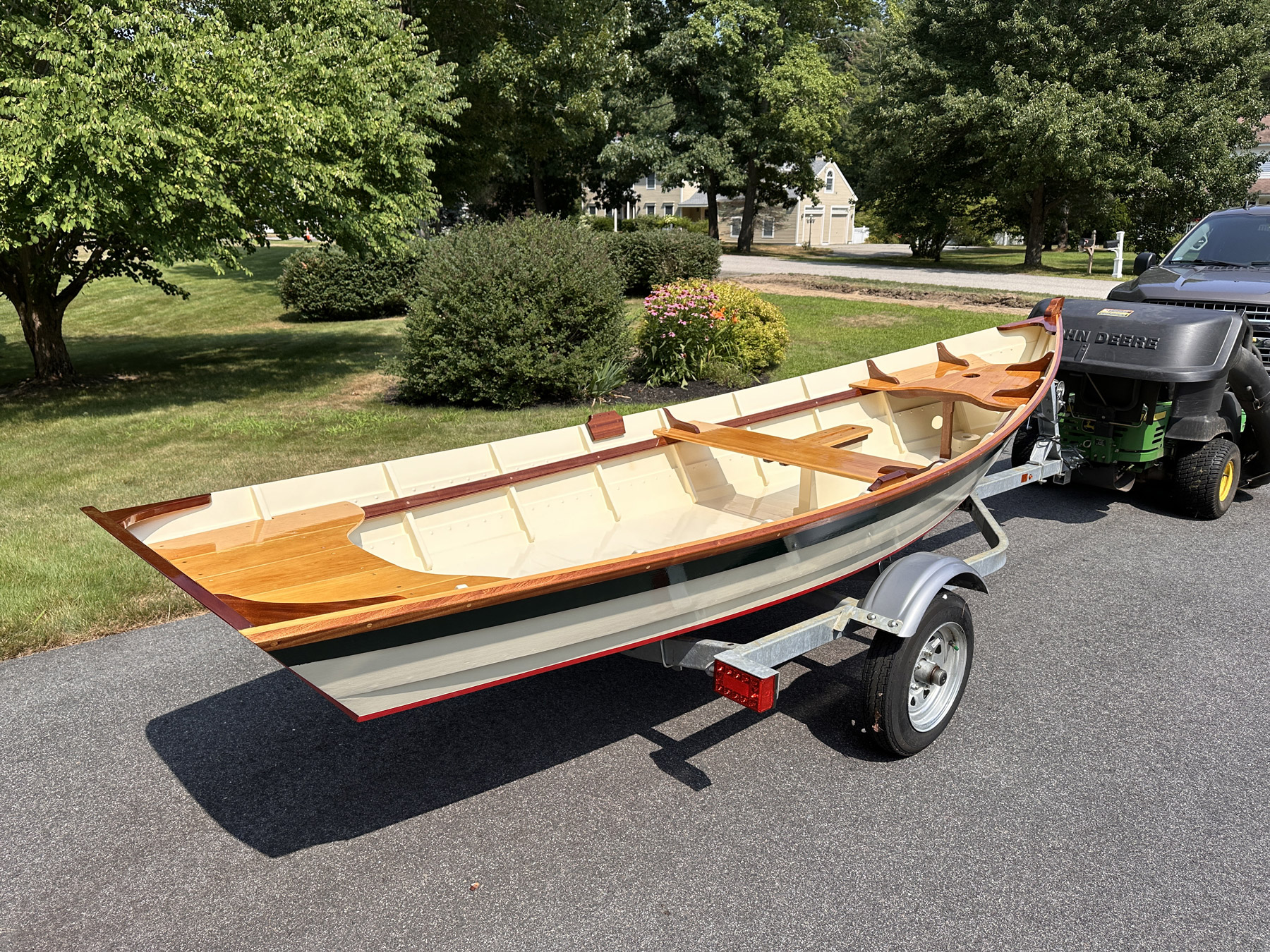
With no frames crossing the bottom, the skiff has plenty of unobstructed open space so that, when sailing, the crew can sit comfortably on the floor; the flare of the hull’s sides provides the perfect angle for a sloped backrest.
In Chapter Five, Kolin describes two methods for planking the bottom. The first is to use traditional cross planking with ring nails to fasten the boards to the chines—this, he says, “is suitable for those who will be leaving their boat in the water or will otherwise be able to keep the planking from drying out.” The other method, suitable if the boat is to be trailered or cartopped, is to use a plywood bottom with epoxy and fiberglass tape along the edges. After researching both methods, I decided on a third: using West System’s G-Flex epoxy, I glued the bottom boards together and bedded them at the chines in polysulfide BoatLife caulk. Then, to fasten the boards to the mahogany chines, I used bronze screws instead of bronze ring nails. I really wanted a traditional appearance for my trailered boat, and after speaking to a few people and reading the article “Glued-Edge Carvel Planking” by Matthew Murphy in one of WoodenBoat’s Mastering Skills supplements, I decided this would be an appropriate way to build the bottom. One of the attractions of the method is the simplicity of repairs should a plank split: simply rout or saw a kerf, cut a spline, and epoxy it in. I did paint the bottom inside and out with a two-part epoxy primer, followed by topside paint on the inside and a hard ablative antifouling paint on the bottom. In hindsight, because the boat is trailered, I could have used topside paint for the bottom as well. The finished boat has now been used for two seasons, going in the water for a few hours at a time, and being stored under a boat cover on a trailer; there are no signs of leaking or splitting in any of the bottom planks.
Once the chines, bottom boards, keel, skeg, and garboards were in place, it was time to lay the remaining strakes. Because I had changed the overall length of the boat, this was quite tricky as the dimensions Kolin gives in the book had to be altered. The widths of the planks remained the same at each station, but the positions of those dimensions along the length of the planks were different. I think if I had built to the 12′ length, Kolin’s dimensions and instructions would have made this part of the process as easy as the rest of the boat. I got there in the end, though, and the remainder of the build came together nicely.
Karen Hall
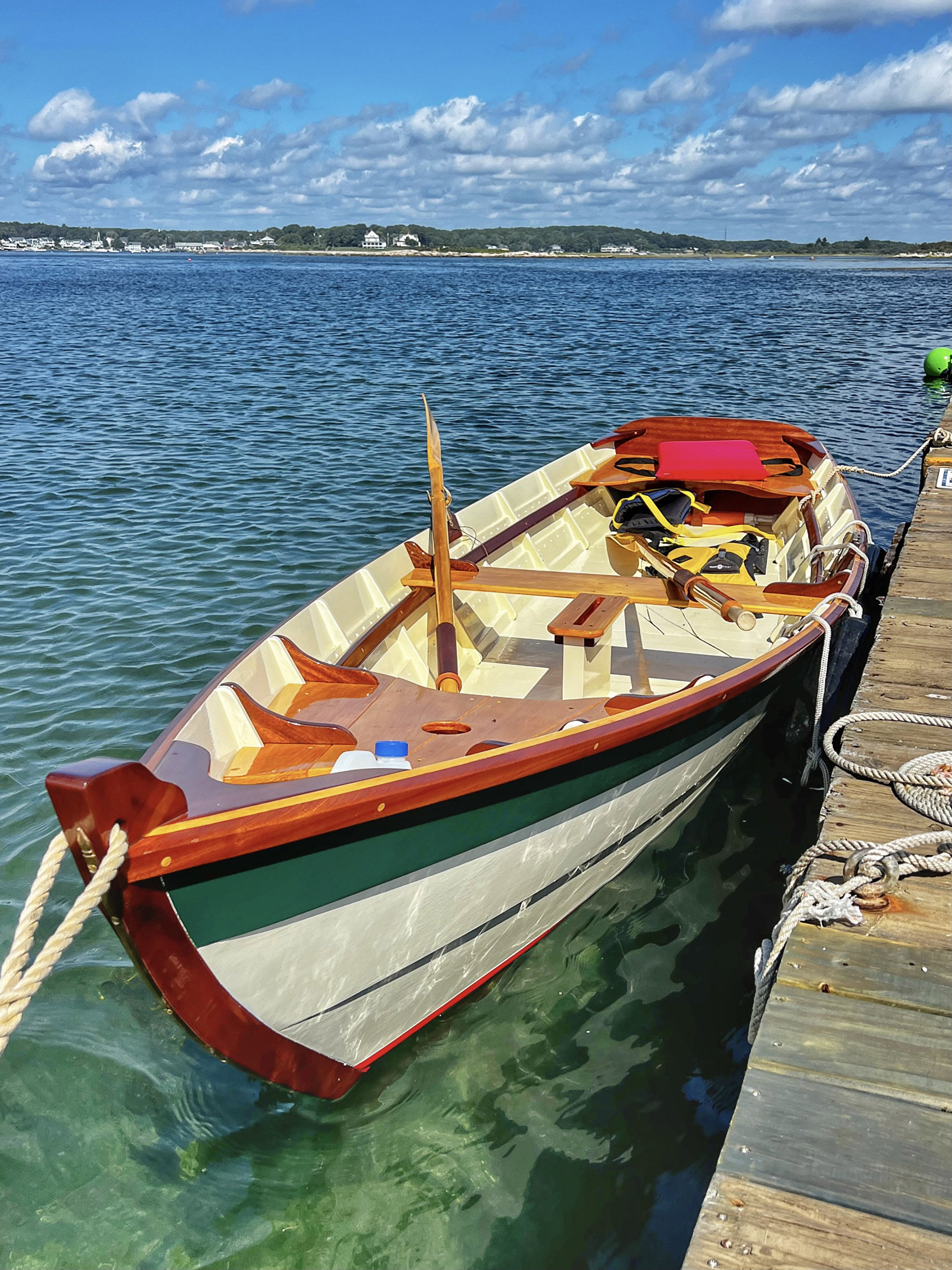
Despite the low freeboard, Heidi can comfortably accommodate three adults when under oar. When sailing there’s room for one or two.
I fitted the interior almost exactly as described in the book and opted for a spritsail rig, which necessitated the construction of spars, a daggerboard (and trunk), and rudder and tiller. Again, as my boat was longer than the original, I commissioned Sailrite to design a new sail adapted from the book’s sail plan, which I built on a heavy-duty Singer sewing machine. I added reef points and a brailing line. I received excellent advice from Ben Fuller, both through his writings and during an in-person conversation at the 2025 WoodenBoat Show, and was happy with how the sail and rig worked out—I will be adding a traveler and mainsheet block to replace the designed port and starboard cleats that I’ve used hitherto. This will improve the sail’s sheeting angle and allow me to move my weight farther forward.
Heidi in the water
I launched my Heidi before the sailing rig was completed. I hadn’t rowed a boat for perhaps 40 years, and even then the few I rowed were prams or very small skiffs. The skiff was neither sluggish nor tender, and for a rusty oarsman, the initial stability was comforting. In spite of the sizable skeg, which does help with tracking, the skiff is quite nimble and easy to maneuver under oars. The boat can carry three adults and still row well despite the minimal freeboard when so laden—although with such a load I wouldn’t want to row several miles nor be caught in a squall with chop. However, when solo or joined by one passenger, the boat is a pleasure to row. It has only one rowing station, as per the design of the 12′ version.
For a novice sailor, Heidi is an uncomplicated and forgiving boat. The simplicity of the sprit rig makes it easy to set sail, and the brailing line allows me to gather the sail quickly when beaching, anchoring, or docking.
I am a novice sailor and so, when it comes to the 14′ Heidi’s performance, I have limited experience on which to base any comparison. However, I can confidently espouse the ease with which the boat sails and the benefits of the sprit rig. I have mostly sailed my Heidi in light winds under 10 knots, and in such conditions have found the skiff’s windward performance good. With one or two people aboard it doesn’t heel much, and the initial stability is a comfort if moving around to fish or adjust the rig. Fore-and-aft trim is important, however, and I have found that if there is too much weight forward it does get a little tippy. Only once have I had to deal with waves—the wake of a motorboat passing close and fast—and I was pleasantly surprised by how comfortably Heidi rode the waves broadside. I have been delighted with the simplicity of the rig but highly recommend the inclusion of a brailing line—it has been indispensable when quickly gathering up the sail to beach, dock, anchor, or simply take down the rig. I do have a halyard but will likely only need it when putting in a reef.
Thanks to Richard Kolin’s book, building Heidi was very enjoyable, and the boat came together well. I love the skiff’s lines, the way it floats, rows, and sails. It always elicits admiration and praise at the dock and out on the water. And even though I was first attracted to the 12’ version, I’m happy with the extra space provided by the 14-footer. I would encourage anyone who, like me, has been thinking of building a boat for a while, to buy Richard Kolin’s book and build a Heidi… you’ll never finish if you don’t start!
Jay Beauchemin is a retired dentist and dental educator from Saco, Maine. He greatly appreciated the help from his friend Mike on this build, as well as his wife’s patience. He exhibited his 14′ Heidi at the 2025 WoodenBoat Show.
Heidi Particulars
LOA: 12′/14′
Beam: 4′
Draft: 4″
Weight: 150/200 lbs (approximate) with sailing rig
Sail area: 58/72 sq ft
Is there a boat you’d like to know more about? Have you built one that you think other Small Boats readers would enjoy? Please email us your suggestions.
For more sail-and-oar boats you can build at home…
Guppy 9, an all-around dinghy for a first-time builder, reviewed by Cameron Handyside.
Gartside’sSpitfire, a 10′ pram for sail and oar, reviewed by Ioanna Moutousidi and Giannis Bormpantonakis.
The Scout 10, the “smallest camp-cruising sailboat” from Duckworks, reviewed by Christopher Cunningham.
I first put my Shearwater 14 in the water two years ago. I have a garage full of kayaks and, while the Shearwater isn’t always my choice for speed, camping, or rolling, it is nevertheless the kayak I use the most. Like many kayakers, most of my time on the water is spent on impromptu day trips, sometimes from home, sometimes when on vacation. And for these most frequent excursions, nothing beats the Shearwater 14.
The kayak—built of plywood from kit or plans—is designed by Eric Schade. It is light (mine weighs 35 lbs) and short, but not too short; a boat that is quick and easy to load on the car and then offload to the water. It paddles easily and responds immediately and precisely to the kayaker’s inputs—paddle drive, a shift in weight, a brace. This is a boat that wants to perform, and will suit the paddler who wants to explore a backwater but who won’t be overwhelmed when conditions pick up. It’s a kayak as handy as a jackknife that has a blade for every need. And with its decidedly Greenland-kayak hull form, the Shearwater rewards paddlers who have developed their paddling skills. A newcomer to the sport might feel initially apprehensive as they settle into this lively, single-chine hull, but the Shearwater has strong secondary stability and is reassuring when edged.
Caroline Dawson
The Shearwater’s shape gives it all-around good performance. The deep V-shaped ends help it to track well, while the single chine holds an edge through turns.
Sixteen years ago I built a replica of a Greenland kayak. The light wood frame is lashed together in the traditional manner, covered with a Dacron skin, and sealed with paint. It’s sleek and fast and moves with an easy grace. Our modern touring kayaks evolved from such Inuit boats but have moved so far from the original shapes that their feel is totally different. Most are reassuringly stable though far heavier and less responsive than the native kayak. The Shearwater 14 stands out from the crowd. When I used it for the first time, I was delighted to find that it had much of the feel of my Greenland reproduction. The cockpit opening is generous, so getting in and out is easy, but once the boat starts moving the Greenlandic heritage can be felt—you are as much sitting on the water as in the boat, and response to the paddle is gratifyingly immediate.
The Shearwater 14 accelerates easily thanks to the combination of a light hull and relatively narrow waterline. At 14′ 6″ with good overhangs fore and aft, this hull won’t reach a top speed equal to that of a 17-footer, but it’s far quicker than, for example, the 14′ rotomolded polyethylene sea kayak we’ve had for years. The single-chine hull grips the water nicely and readily holds an edge through turns. Edging, however, is where the newbie paddler might be nervous. The Shearwater readily heels a few degrees. At rest, it can feel like a nervous Thoroughbred at the starting gate. When a paddler is new to such a boat, their own nervousness can cause the kayak to wiggle. But as the paddler grows in confidence and relaxes, such motion will disappear, even though the kayak remains quick to heel. It is not the solid platform one would want for fishing or photography. On the other hand, secondary stability is good, and once the paddler learns to take advantage of it, carving sharp, clean turns will become second nature.
David Dawson
Thanks to the full-sized patterns that come with the Chesapeake Light Craft plans for the Shearwater 14, cutting the panels for the hull sections and bulkheads is a straightforward process. Once all are cut out, the next step is to use wire or zip ties and a bit of glue to assemble the hull.
The deep V-shape formed by the ends of the bottom panels helps the kayak track well for its length; weathercocking is minimal. However, after a year’s use, I opted to add a small, fixed skeg so that the Shearwater would hold course while in a slow drift when I wasn’t paddling. It has been a welcome modification—especially when watching wildlife through binoculars—but was by no means necessary. Underway I never felt the need for a skeg or rudder—without either, this boat tracks better than some 17′ kayaks.
Building the Shearwater 14
Chesapeake Light Craft (CLC) is the source for plans and kits for the Shearwater 14. There’s a standard and a hybrid version. The standard boat has a three-panel plywood deck; the hybrid has a strip-built curved deck. Both share the same hull and can be expected to perform equally. The builder can order anything from study plans to a full kit, complete with precut plywood panels and everything else needed to build and equip the kayak. I ordered the instruction manual and full-sized plans for the hybrid version. Because I wanted to finish the boat with custom-patterned fiberglass, I used flexible 3mm okoume plywood for the curved hybrid deck rather than strip planking.
David Dawson
The hull comes together quickly. The plans call for a partial bulkhead that pulls some hollow into the forward sections, as would be seen in traditional Inuit kayaks. The plans also specify 4mm plywood or strip planking for the decks, but because I would be using 3mm plywood, I added a ring frame to stiffen the deck behind the cockpit where the forward edge of the hatch lands.
I built the hull directly from the full-sized patterns, which are delivered on a single, very long roll of paper. There are various ways to transfer the hull shapes to the plywood. I used tacky spray adhesive to stick the plans to the plywood, and then cut right through both paper and wood. The plans are sold with permission to build one boat. If the complete kit is purchased, all plywood pieces are precut, with puzzle joints to connect the long sections with total accuracy.
There are many variations on how these stitch-and-glue boats can be put together. The instruction manual from CLC is very detailed and has all the photos and tips a beginner might need to get the boat ready for the water. But there is room for customization.
David Dawson
The kayak’s Greenlandic heritage is visible in its graceful lines from the sharp raised ends to the sweeping decks and low freeboard.
After assembling the hull, I finished the deck with printed fiberglass, covered the bottom with a carbon/Kevlar blend, and used pigmented epoxy to paint the trim. Options for customization include the deck rigging, which is supplied in the kit but can be customized if building from plans. Pads and foot braces likewise are supplied with the kits but can be individualized. For a seat I chose a stock Happy Bottom Pad seat from CLC, which fits very well. In place of more commonly used adjustable foot braces, I cut a block of minicell foam to fit against the cockpit’s forward bulkhead—a simple, lightweight, and comfortable solution. The foam block is a press-fit and can easily be pulled out when washing out the boat.
The Shearwater 14 is described by CLC as “an elegant sea kayak for kids or small adults” and rated for paddlers up to 150 lbs. My weight falls just short of that limit, and the boat works very well for me. If the design appeals but you need a more capacious boat, there are several options. There are 16′ and 17′ versions for larger paddlers, and a Shearwater Sport that’s the same length as the 14 but wider and able to accommodate up to a 240-lb paddler. All can be built as standard or hybrid models. I have paddled the 17, and the extra length does give it some of the big-boat feel most sea kayakers will be accustomed to.
Caroline Dawson
The cockpit opening in the Shearwater is generous so that even for paddlers nearing the kayak’s maximum recommended size, getting in and out is easy.
CLC classifies the Shearwater 14 as a “light touring kayak.” This seems about right. I have met people who manage to put several days’ camping gear in a boat this size, but I need something bigger. The 17 is rated to take up to 270 lbs of paddler and gear, and would probably be the better choice for overnight trips for all but very light paddlers.
All in all, the Shearwater 14 is a capable and fun kayak, and a good choice for the single-boat owner. For that light, go anywhere, dance-on-the-water experience, you won’t go wrong with the Shearwater 14.
David Dawson is a retired newspaperman who has built a half-dozen kayaks over the past dozen years. He lives in Pennsylvania where he teaches kayaking skills and leads paddling trips for regional kayak clubs.
Is there a boat you’d like to know more about? Have you built one that you think other Small Boats readers would enjoy? Please email us your suggestions.
More articles by David Dawson…
The Shrike Kayaks, CNC’s modern sea kayaks steeped in Inuit tradition.
Looking out over Bass Harbor, Maine, from the Bernard launch ramp I could see riffles across the water, and the southerly breeze on my cheek felt consistent with the forecast 10 knots. To the north, low, broken cumulus clouds scudded over the high terrain of Mount Desert Island (MDI); to the south, the view was obscured by dozens of lobsterboats both moored and underway. It was late August. Even in summer, working lobsterboats moored in Bass Harbor vastly outnumber the pleasure craft.
The previous day, I had been forced to postpone my voyage due to high winds, but today the weather looked promising. The sun cut through the clouds, the temperature was comfortably cool, and the air smelled of seaweed with the hint of fishiness one often finds in the working harbors of Maine. As I launched AURELIUS, my Tango 17, a sliding-seat Whitehall, down Bernard’s narrow public boat ramp, the lobstermen unloading their catch at the town wharf paid me no mind. Indeed, as I pushed off, right at noon, and carefully navigated through the warren of moored boats, gear-laden mid-harbor floats, and slow-moving lobsterboats, I was barely noticed.
Photographs by the author
Bass Harbor on Mount Desert Island (MDI) is home to more commercial fishing boats than leisure craft. In the distance can be seen the high summits of MDI.
My plan was to explore the four islands directly south of Bass Harbor, with the possibility of then going farther south to the environs of Swans Island, the nearest island with a year-round community south of MDI. My first waypoint was Great Gott Island, about 2 1⁄2 miles away. As I rowed toward Bass Harbor Head, the harbor widened from barely 300 yards across to more than a mile. The moorings thinned out as I made my way past the large dock of the Maine state ferry to Swans Island and Frenchboro. The breeze picked up a few knots, and by the time I reached the green can at the harbor’s mouth, I was rowing into a light chop from the south. I stayed close to the bluff on the east side of the harbor, thinking I would be clear of boat traffic and that it would afford me the most direct route to Great Gott. It was my first mistake—it was, indeed, the shortest distance between Bass Harbor Head and Great Gott, less than 1 nautical mile, but it took me almost directly over the Bass Harbor Bar. As I realized my error, I weighed my options: I’d heard that the bar could be troublesome, but I was approaching at mid-tide, which according to the chart, would mean a depth of about 45′ to 50′ over the bar. Surely that would be OK. I continued on my way. Within minutes the light chop had become a confused sea with closely spaced 3′ to 4′ waves, mostly out of the south, but sometimes out of the east. I was in for a ride.
Roger Siebert
.
I rowed on, straining against the oars to make headway, and wondering, not for the first time, if AURELIUS and I belonged out there. But the boat seemed to be handling the confused seas well, Great Gott wasn’t that far off, and there were a number of boats under power nearby if things went badly. The tumult seemed to peak as I made my way past the red-and-white “WB” gong buoy a few hundred yards west of the shallowest part of the bar. A motoring sailboat was hovering about 300 yards away. Perhaps, like me, her crew was concerned about my situation. But deep down I was enjoying this early challenge, and as I turned to look forward over my shoulder I could see that the waves ahead had lessened considerably. I pushed on, rowing slightly west of south to avoid the shoals off the northwest end of Great Gott, and soon reached the relatively calm waters in the lee of Little Gott Island. I caught my breath and acknowledged a newfound appreciation of tides and bars.
I rowed south, to the west of Great and Little Gott islands. Navigating over Bass Harbor Bar had been stressful, but now, in the lee of Little Gott, I was relaxed and decided to continue southward to the Black islands.
Gott Islands to Black Islands
It was still only mid-afternoon, so I decided not to stop at Great Gott. Instead, I continued rowing mostly south. The nearby gold-and-russet granite ledges of Little Gott’s western shoreline rose out of the water beneath the deeply shaded forest; their flat surfaces would have made great spots for a late lunch, but the choppy waters breaking on the rocks made landing difficult, so I contented myself with grabbing a bite from a bagel whenever I paused to consult the chart. To the west of Little Gott was the northeast corner of Placentia Island, locally pronounced “PlaSENCH,” and well-known as the former home of Art and Nan Kellam. The Kellams purchased the 550-acre island in 1949 and lived there for more than 40 years, rowing to Bass Harbor in all seasons for groceries and befriending the local fishermen in the process. After Art’s death in 1985, Nan moved to MDI where she remained until her passing in 2001, and The Nature Conservancy, to which the Kellams had donated the island, took over Placentia’s upkeep. The conservancy permits day visits but no camping, and as Placentia was exposed to the southerly swell as I passed by, I stayed in the more protected water close to Little Gott, before crossing the channel to Black Island, a mile-long wooded island directly to the south.
As I neared the western shore of Black, I came upon a surreal sight: about 50 yards from the island, running in north–south lines for as far as I could see, were large circular aquaculture pens. Each pen was about 90′ in diameter, supported by 12″-thick black tubing lying on the water’s surface. Above the pens, black netting stretched across an inner circular ring that stood perhaps 10′ higher than the outer ring to approximate a cone, designed to keep seabirds away from the fish within. Close to shore, an austere-looking floating metal building stood next to one of the pens; and in lines equidistant between the rows of pens, large mooring cylinders anchored the whole setup in place. Surrounded by densely forested Maine islands, with no man-made structures along the rocky shorelines, the sudden appearance of this industrial-scale aquaculture was jarring. I kept my distance as I passed by.
The industrial fish-farming pens off the western shore of Black Island seemed out of place in this area of natural beauty. I gave them a wide berth.
Like Placentia, Black benefits from the strong conservation ethic shared by the communities of the Maine coast. The greater part of the island is owned or managed, via conservation easement, by Maine Coast Heritage Trust (MCHT). The Trust’s holdings include designated camping on 3-acre Little Black Island, just 70 yards off the southernmost tip of Black Island; this, I decided, would be my destination for the day. Through the afternoon, I had passed several places where I could have anchored off and slept on board, but none offered the combination of good protection from wind, wave, and tidal currents, with the necessary depth to avoid bottoming out. After my adventurous crossing of the Bass Harbor Bar, I was in no mood for anchoring and trying to sleep in a small rolling boat. Besides, Little Black looked like a gem. As described by MCHT and the Maine Island Trail Association (MITA), it is a petite island surrounded by granite ledge and covered with thick spruce forest and open heath with expansive views to the west toward Swans Island, and to the south Long Island, dozens of smaller islands, and the wide-open waters of the Gulf of Maine. Both organizations also note the tricky landing situation: the southern shore is steep and exposed, but it is possible to land within the modest protection of the channel between Little Black and its much larger sibling. High- or low-tide landings are recommended, which suited me well: I would be coming in right around the high tide a few minutes after 4 p.m.
My landing on Little Black was not particularly tricky, but it was certainly limited. Even in the relative protection of the north side of the island, the chop against the rockweed-covered ledge and boulders was considerable. I could only find one spot where the configuration of some smooth boulders sheltered a tiny patch of calm water a few feet deep, into which I could ease AURELIUS and hop over the side to unload my gear. Slipping and sliding over the rocks, I carried my gear up to dry ground on a beach of smoothed cobble rocks. I considered setting an outhaul, but it made little sense—beyond the protection of her postage-stamp harbor, AURELIUS would be subjected to considerable motion; and getting to the boat at a lower state of the tide would involve walking, gear-laden, across 30 or 40 yards of highly uneven, slippery ledge. I left AURELIUS where she was, and secured my anchor line up the shore.
A short trail on Little Black Island, where I landed for my first night, led to an open overlook just above the granite ledge. I had taken a snack with me, and for a while I sat to watch the sun set behind the islands before heading back to my tent.
Moving from the excitement and physical strain of being on the water to the relative calm of being ashore made me feel suddenly tired, but I was also excited to explore Little Black. I abandoned my gear and scouted out the island in the bright afternoon sunlight. About 40 yards west of my landing spot was a flat dry granite ledge, from which a narrow trail led into the dense green forest and the center of the island, while a second trail passed through chest-high forbs on its way to a panoramic overlook with views stretching from northwest to southeast. Taking the trail toward the interior, I soon came upon a neat little clearing with a small tent platform. I went back to the beach and, in a few trips, fetched my gear, before grabbing my headlamp, camp chair, chart and binoculars, and a few snacks, and heading out to watch the sunset from the end of the other trail. To the south, the sky was scattered with small cumulus clouds in the waning light, while the sea, subject to several miles of fetch, still roiled with a strong swell and chop. To the northwest, the long light of the setting sun turned the granite shore of Black Island a glowing light pink. I used the chart and binoculars to identify the small Sister Islands between Swans Island and Long Island, before settling down to watch as the wind moderated and the sun sank ever lower, casting its dappled, golden wake across the waters. When the planets began to appear in the sky, I switched on my headlamp and picked my way back to camp in the fading light of the bug-free late-summer evening. After a quick dinner, I erected my small tent, climbed into my sleeping bag, and was asleep in minutes.
An extra day on Little Black
I awoke early, the low sun cutting through the trees in pale shafts of light. I made coffee and walked out to the overlook. Gulls and other seabirds wheeled overhead, the skies were mostly clear, the air still comfortably cool, but the sea still looked unsettled to the south; as far as I could tell, the swells were about 2′ to 3′ high. It was no matter: I had already decided to spend a second night on Little Black. Having arrived at high tide, I would also need to depart at high tide, which that morning had been at 5 a.m. Sunrise was at 6 a.m., and as I had drifted off to sleep the night before, I’d decided that no matter the weather, stumbling around on the slippery ledges would be too tricky in the dim pre-dawn light. If I waited a day, high tide would be almost an hour later and the light considerably better.
AURELIUS’s overnight anchorage at Little Black was shallow even at high tide. But, having decided there was probably no safer place to land within easy distance, I chose to stay for two nights, hoping that the tide on the second morning would be high enough to float her off.
But there was another potential challenge. AURELIUS draws less than 2′ even when fully laden and I had never paid much attention to the water depths reported on the tide tables, but I now read that the high tide on which I had arrived was more than 1′ higher than this morning’s tide. Tomorrow morning it would be even lower. The depths were greater for the afternoon tides, but that would mean leaving around 5 p.m. when there would be only an hour of full daylight in which to row to an as-yet-unknown destination and find a suitable anchorage. With the rough seas that I’d seen from the overlook, even Gott Island Pool between Great and Little Gott Islands was a question mark, and I regretted not having paused to reconnoiter it the previous day. I made a decision: rather than head out into the unknown in fading light, I would stay on Little Black, but on the next afternoon’s high tide I would move AURELIUS into deeper water.
With a day in hand I decided to explore. From Little Black, the larger Black Island is normally accessible only by water, but about an hour and a half before low tide a narrow gravel bar emerged between the two. I threw some lunch into my day pack, scrambled down to the bar, made my way across, and clambered up the granite ledge that rings Black Island. I quickly located the MCHT trail, and headed down it, excited to see Quarry Wharf on the north end of the island, and perhaps spot a bald eagle or two.
Thirty yards in, I came upon a sign: the trail was closed due to eagles nesting in the vicinity. Disappointed but understanding, I made my way back to the shore. A large flock of seabirds had gathered several hundred yards out to sea, wheeling and diving into the water, no doubt feeding on a school of herring. I explored the warm granite ledge for a while before heading back across the bar. There would be no hiking today. Instead, I would have to make do with reading and relaxing, enjoying the bright sun and crystalline air under cloudless skies, and soaking up the sights, sounds, and scents of the two islands.
Little Black, seen here from the shore of Black Island, is joined to its much larger sister by a bar that is uncovered for about an hour and a half either side of low tide. I had wandered across to Black hoping to follow the trail through the trees but found it closed to protect some nesting eagles. Instead, I contented myself with relaxing on the sunbaked granite ledges at the shore.
Shortly before the 5:15 p.m. high tide, I made my way over the rocks to AURELIUS, weighed anchor, and rowed her out across the now-covered bar looking for a suitable anchorage from which I could depart at less-than-high tide the next morning. It was not to be: as soon as I left my protected micro-harbor, the sea state changed abruptly from calm to choppy swell. To land amid the ledge and boulders would be perilous and risked damaging AURELIUS. I turned around, rowed back to my original spot, and re-anchored. I’d have to trust my luck on the next morning’s tide.
Escape to Gott Island
I slept lightly, concerned about the following morning, and awoke at 5 a.m., before my alarm sounded. I made a quick cup of coffee, packed what gear I hadn’t stowed the night before, grabbed my headlamp, and started ferrying gear through the near darkness down to the edge of the rockweed nearest AURELIUS. High tide was predicted for 6 a.m. By 5:15 a.m. AURELIUS’s keel strip was submerged, but she seemed a long way from floating. I waited. At 5:45 a.m. with less than 15 minutes to go before high tide, I heaved my 200-lb boat off the bottom. Quickly, I ferried my gear aboard, not bothering to stow it properly. The keel touched bottom again. I heaved some more and dragged the boat into deeper water. Wading and dragging, I at last felt confident to climb aboard. She stayed floating. There were rocks all around and for a while I could barely use the oars, but after some partial strokes we made it into deep water and were away.
Breathing deeply—both with relief and with exertion—I became aware of the dawn around me. Golden light cut through a cloudless sky to a calm sea; islands, like forest-spiked strips of land, emerged scattered across the horizon; a half dozen lobsterboats worked near and far to haul their traps from the cold waters. I rowed slowly at first, but gradually picked up the pace, joyous in my escape, thrilled by the beauty of the day, and delighted by the ease and speed of rowing through flat water—so different from my experience on the first day.
In the small protected harbor of Great Gott Island, I pulled into the town float and left AURELIUS docked among the resident dinghies while I went ashore to explore.
I headed east, then north, curving around Black Island. I had considered rowing the 2 nautical miles south to West Sister Island, another MCHT island on which camping is permitted, but there would be limited protected anchorage, and I was more than a little leery after my experience at Little Black. Plus, the row from West Sister back to Bass Harbor on my final morning would be more than 6 miles—easily achieved if the seas and wind stayed as calm as forecast, but forecasts can be wrong. Besides, I had yet to visit Great Gott Island and wanted to explore the village there. I rowed through the still dawn. It was 3 miles to Gott Island Pool, where I would scout out a spot to anchor, or perhaps a mooring to borrow, before going ashore at the town dock.
I pulled steadily at the oars, soaking in the tranquil morning, and arrived at the pool by 7 a.m. Gott Island Pool—the channel between Great Gott and Little Gott Islands—is protected at its western end by a rocky spit that extends in a southerly direction from the west coast of Great Gott to join a 3⁄4-mile-long drying bar that reaches south to Little Gott. Behind the spit, and between it and the southwest point of Great Gott, lies the most protected part of the pool. The dock is a float that sits on the hard for a few hours around low tide, so I would have to keep an eye on the time, but I had at least an hour to explore. I tied AURELIUS to the float and made my way ashore. Beyond several outbuildings and small houses near the dock, a lawn opened up into a field of about 10 or 12 acres, climbing gradually upward from the shore, fronted here and there by modest one- and two-story houses, some well over 100 years old, others more contemporary. It was still early on a holiday morning, and the village—no more than two dozen widely spaced buildings—was quiet in the soft, slanting sunlight, the dew glistening on the mown grass.
The Gott Island cemetery was well cared for. Many of the headstones—not all commemorating Gott family members—dated back to the 1800s.
Great Gott Island is the northernmost of a group of relatively small, spruce-forested islands lying between MDI and Swans Island. It was first occupied by the Gott family in the late 1700s, and within a century had a year-round population of more than 100 people fishing, farming, and raising families. The last year-round family departed in the late 1920s, but there is still a substantial summer community. There is no electricity from shore, and no daily mailboat, but a few lobstermen still choose to summer on the island, living among the other residents and fishing into November.
As I walked up from the water on that quiet morning, I saw only one person, an elderly gentleman who was preparing to mow around some outbuildings. We chatted briefly about life in the village, and I asked if he thought anyone would mind if I picked up one of the unoccupied moorings that were a ways off from the town dock. One of them, he said, belonged to his grandson, a lobsterman who wouldn’t be back for a day or two; I was welcome to use it. We exchanged a few more words before I made my way up the grassy road that bisected the field. To the west, overlooking the shore and the pool beyond, was the Gott Island cemetery, a small plot of less than 1⁄4 acre surrounded by a white three-rail fence and containing perhaps 50 headstones, many from the 19th century.
The village on Great Gott Island reminded me of a bygone era. There was no electricity supply from the mainland, the roads between the properties were mown-grass or single-track dirt lanes, and I could hear no modern man-made sounds.
I strolled on up the slope to where the mown-grass road joined a more substantial dirt road. The village beyond was still cloaked in silence save for the hum of insects and the cries of a few gulls, and again I paused. I could have continued along the road, but the village was not a tourist attraction, and I felt that my presence would be intrusive. I backtracked, came to another dirt road, followed it for another few hundred yards until it disappeared into the thick spruce woods, and then backtracked again to the edge of the village. That such a quiet, seemingly timeless place still existed in our restless world seemed like something of a miracle, and for a while I stood and gazed. Then, I quietly made my way back down the field to the dock and AURELIUS.
By mid-morning, and still with the better part of the day before me, I rowed out of the pool and around the southeast end of Great Gott Island. I was headed to another MCHT holding, a day-use shore and forest on the northeast side of the island. The sky remained mostly clear, the sea calm, and as I rounded the eastern tip of the island, the mountainous terrain of MDI came into view to the north. I rowed for about 2 1⁄2 miles before spotting a patch of sand and pebble tucked into the shore that was otherwise ledge and boulder, and eased into the shallows. At last, a landing where I could truly relax: I hopped out into 2′ of water, pulled AURELIUS until her keel was dug into the sand, and walked my Danforth anchor up the beach for 100’ or so. The outgoing tide would leave her safely dried out for a few hours, and when she floated once more, I’d still have time for a leisurely row back to Gott Island Pool where I could enjoy a sunset dinner on the borrowed mooring. I had meant to hike some of the preserve’s 59 acres, or follow a trail up to the road in order to explore more of Great Gott, but the day was growing hot and, with the shade of the forest that grew close to the water, and an unbroken view of the mountain summits of MDI, I gave in to my languor and decided to make it a beach day.
I spent a relaxing day on the northeast side of Great Gott. I could have hiked through some of the 59 acres maintained by the Maine Coast Heritage Trust, but instead Ispent the hours dozing, reading, and enjoying the uninterrupted view north to Mount Desert Island, seen here on the horizon.
I dozed and read, investigated the considerable mounds of rockweed washed ashore, watched passing boats, and discovered shapes in the few overhead clouds. But in no time the water was once again lapping against AURELIUS’s hull. An afternoon breeze had picked up out of the southwest, but it wasn’t enough to create more than a light chop, and the row back to the pool was uneventful. I found the promised mooring, made AURELIUS fast, and by 5 p.m. was rearranging my gear so that I could unroll my sleeping deck—12 varnished 8″-wide tongue-and-groove pine boards, shock-corded together and cut to rest on the lips molded into the hull and surrounding the cockpit. Just as I was about to stretch out on the platform, a departing lobsterboat roared by. In its wake, AURELIUS rocked violently, and once more I questioned my judgment: Was sleeping aboard a small open boat in a possibly busy, albeit small, working harbor such a good idea? I looked around. There were no other boats preparing to get underway, and as far as I could see there was no traffic coming into the pool; I decided to take my chances. I was not let down: as I made dinner on my single-burner propane stove, the sky caught fire with orange, red, and purple light in a dramatic sunset. No other boats came or went, and the pool was quiet and calm. I crawled into my sleeping bag and fell asleep.
My sleeping deck rests on the molded lip that runs around the Tango 17’s cockpit. Topped with a slim air mattress, it is the perfect place to sleep on a quiet night. I have a one-person camping tent that I can pitch above the deck, but at Great Gott Island I decided to go without and sleep beneath the stars.
Safe return to Mount Desert Island
I had expected the lobsterboats to be out early, and they did not disappoint. I was awakened by the roar of a diesel engine at 3:30 a.m. Half an hour later, an outboard skiff, with several men onboard, tied up to the lobsterboat moored off my stern, and within minutes another diesel engine had roared into life and the lobsterboat was away. Now fully awake, I sat up in my sleeping bag and made coffee in a brilliant, yellow dawn, accented by a smattering of high cirrus clouds. The air was comfortably cool, the smell a mixture of salt water, hay, and forest, but there was no breeze, and the sea was a dead calm, save for the subtle rolling produced by the wakes of distant working boats; I was happy to be up so early. After coffee and breakfast, I packed my gear, rolled up the sleeping deck, and slipped the mooring just as the sun broke through the eastern horizon.
My return past the gong near Bass Harbor Bar could not have been more different than on my outbound trip—where once there had been rough seas and loud clanging from the navigational aid, now there was barely a ripple and no more than the occasional ding.
The tide was high, so I headed west out of the pool and over the bar between Great and Little Gott islands, before turning north to return to Bass Harbor. Working boats dotted the flat sea near and far in the golden light. By the time I reached the “WB” gong near the Bass Harbor Bar, I was sweating from the steady rowing and the lack of breeze. When I had passed this same gong a couple of days before it had been tolling wildly; now, it produced barely an occasional ding. I continued north, into the mouth of Bass Harbor, past the ferry terminal, and once again navigated through the maze of moored boats, floating wharves, and boat traffic. Before 9 a.m., AURELIUS and I were gliding in along the Bass Harbor town dock. I was back in modern civilization, looking forward to the short drive home and the promise of a shower and a bed. It all seemed far removed from the peace and quiet of the islands, where the world moves to the rhythms of nature, and working people rise before the sun.
Davis Taylor lives in Bar Harbor, Maine, where he has sailed and rowed for the past 30 years. He enjoys being on any kind of boat, but has definitely found that the smaller the boat, the more it gets used and enjoyed.
If you have an interesting story to tell about your adventures with a small boat, please email us a brief outline and a few photos.
Since it was first published in 2007, Small Boats has inspired numerous readers to dream of building their own small wooden boats. On these pages we celebrate those readers who made that dream into a reality. Be sure to check out our Reader Built Boats section for more.
MOLO
Photos by Pierre Fortier
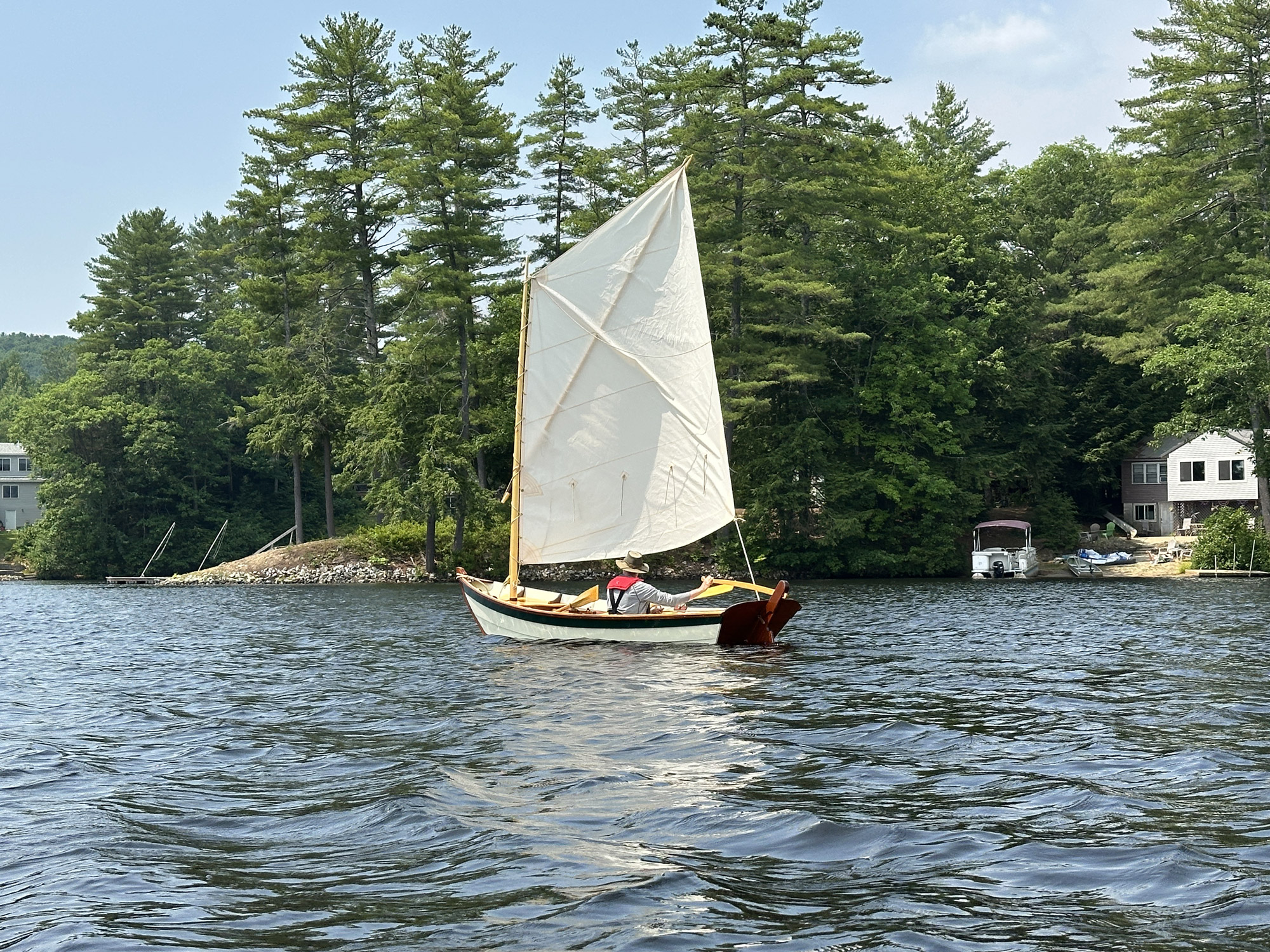
Pierre Fortier took up a new hobby six years ago, building his Haven 12 1⁄2, MOLO. Pierre chose the Joel White design because he had always admired the Herreshoff 12 1⁄2, yet wanted a trailerable boat. The plans call for a carvel or strip-planked hull. Pierre chose the strip-planked version, as its monocoque hull makes it easy to move the boat from trailer to water and back again. The strips are 5⁄8″ western red cedar, sheathed in 6-oz fiberglass cloth set in epoxy. The transom, thwarts, coaming, and trim are all mahogany. He also built an electric motor into her rudder to maneuver around harbors.
Pierre works in the aircraft industry and lives in St-Jerome, Québec. Seeking a boat that he could sail with his three sons and their children, he wanted to pass along to the future generations a thing of beauty that reflects his determination, craftsmanship, and passion for boats. He was so proud to finally launch her in Plattsburgh, New York, he put a video of the first voyage on YouTube. The Haven 12 1⁄2 is 15′ 9″ long, 12′ 6″ on the waterline, and has a beam of 6′ 11″. She carries 133 sq ft of sail and displaces 1,400 lbs. Plans for the Haven 12 1⁄2 are available from the WoodenBoat Store.
GRACE
Photos by Richard Jones
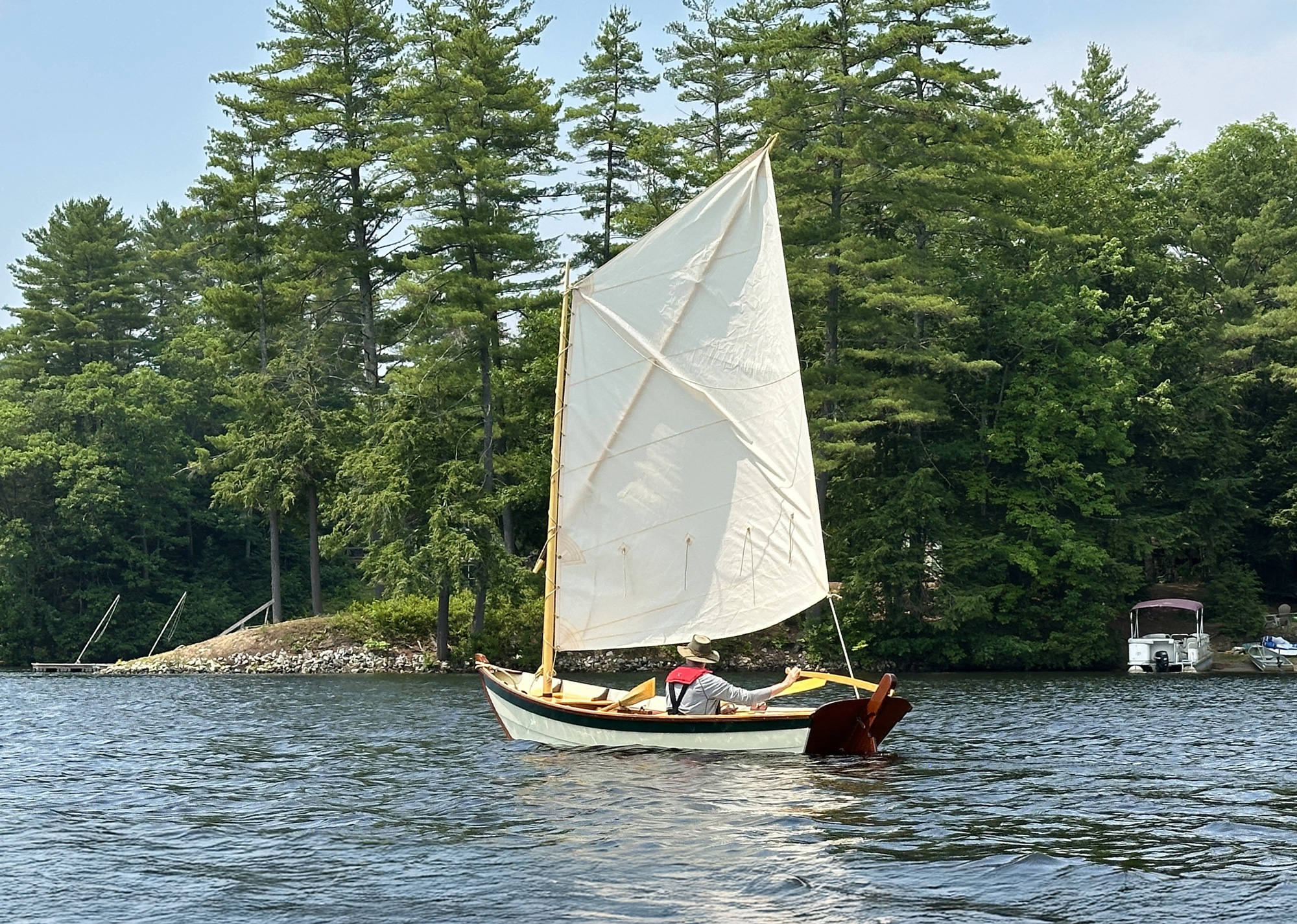
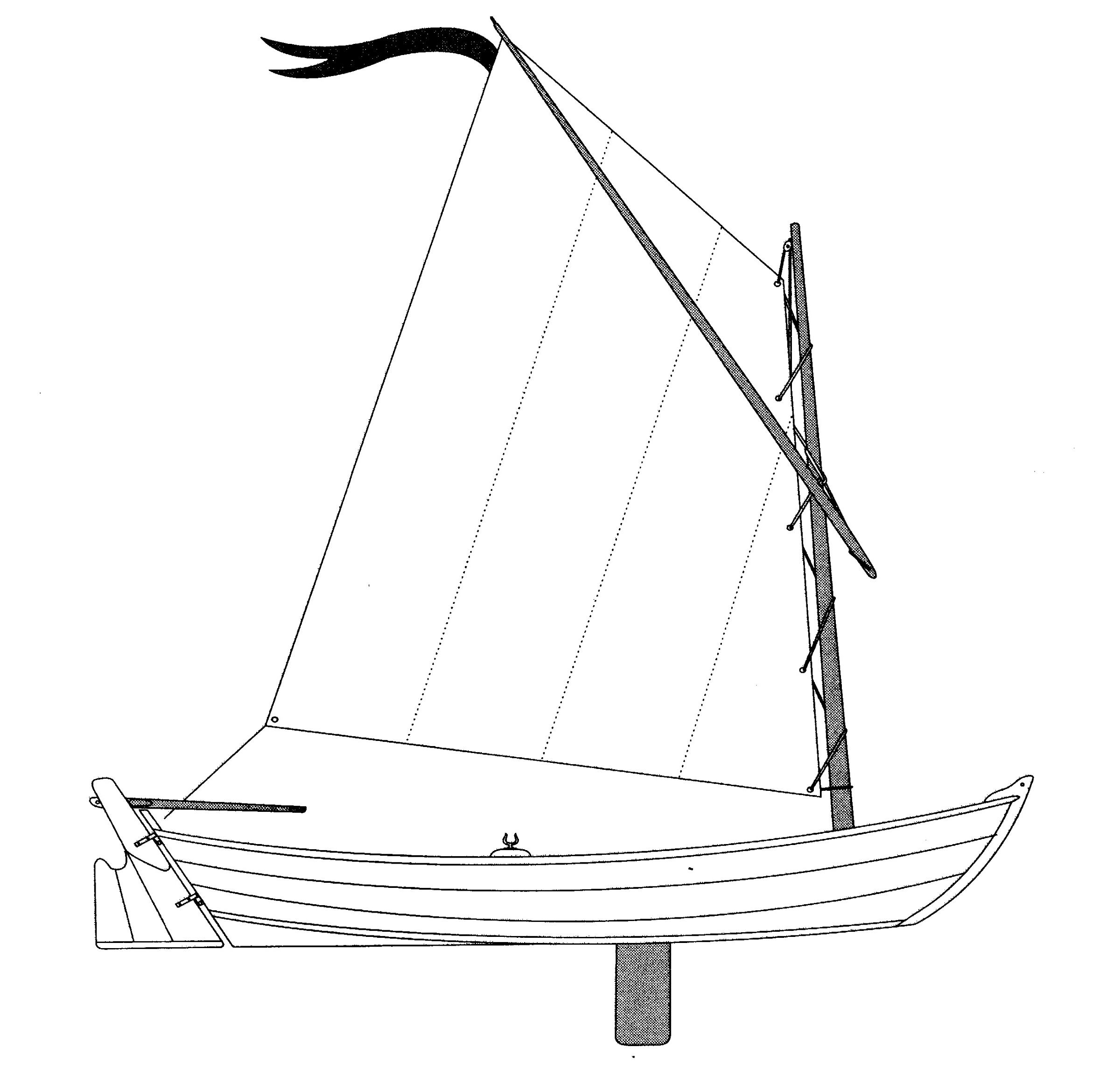
Seeking the perfect dinghy for both rowing and sailing, Rich Jones of Mount Holly, Vermont, chose the Hvalsoe 13. The designer, Eric Hvalsoe, sought to create a compromise dinghy that originally called for traditional lapstrake plank-on-frame construction for a hull with a sweeping sheerline and wineglass transom. The name, GRACE, after his late mother-in-law, fit perfectly. Wanting to modify the construction method to glued-lap plywood, Rich conferred with Eric and got his approval. Rich made the keel, knees, centerboard trunk, and thwarts from American black cherry, and the planking is all okoume plywood. GRACE’s interior has eight coats of varnish, and Rich painted the exterior white. Rich sails on the lakes of Vermont. He reports that his little boat is “a delight to sail and rows like a dream.” Plans for the Hvalsoe 13 and Hvalsoe 16 are sold by Hvalsoe Boats, 104 NW 189th St., Shoreline, WA 98177; 206–533–9138; [email protected].
TRIM
Photos by Andrew Kopp Photography and (top left) Russell Kenery
TRIM, a 15′ double-ended lifeboat for the ferry ROSNY, was built in 1913. Frederick and Harry Moore of Kennedy’s Shipyard in Battery Point, Hobart, Tasmania, built both boats. ROSNY ferried passengers over the Derwent River for much of her life. In 1963, TRIM’s lifeboat days ended and she passed through several owners until 2012, when Russell Kenery bought her. When he began her restoration, 99 years after her construction, Russell stripped her hull to bare timber and removed the caulking from the lapstrake seams. Remarkably, her planks of Huon pine were sound and didn’t need replacement. Her blue gum keel and stem did show some rot, which Russell repaired. He also filled cracks and holes in the planks with epoxy, replaced the fastenings as needed, and recaulked her with cotton and 3M 5200. Russell finished the hull with two-part polyurethane in the traditional lifeboat colors of white exterior, and Cumberland Stone trim and interior. TRIM received a new set of Dacron sails for her 100th birthday. Russell and TRIM sail in Port Phillip Bay in Melbourne, Australia. TRIM is 15′ (4.52 m) long, with a beam of 5′ 6″ (1.68m). She draws just 10″ (0.25 m), weighs 480 lbs (217 kg), and carries 95 sq ft (8.8 sq m) of sail.
PHLIP IT
Photo by Tom Sieniewicz
Satchel Sieniewicz first saw a Cocktail Class Racer at the 2012 WoodenBoat Show at Mystic Seaport. In 2014, he bought a Cocktail Class kit from Chesapeake Light Craft, and spent last winter building it in the basement of his family home. Satchel is 14 and this is the first boat he has built.
Having done nearly all of the work himself on the 8′ hydroplane, Satchel reports that working with epoxy was the most interesting part of the construction, while sanding the hull and applying seven coats of varnish was the most difficult. His father helped him install the controls and the 6-hp rebuilt Johnson outboard. Satchel won’t soon forget his own pride and confidence in her construction, as he sat in PHLIP IT for the first time on her launching day. Plans and kits for the Cocktail Class Racer are available from Chesapeake Light Craft.
MERRY WING
Photos by Matt Murray
Peter Arenstam, Boatshop Director of the Jones River Landing Environmental Heritage Center (Kingston, Massachusetts), recently led a group of volunteers in a seven-year restoration of a 1928 Duxbury Duck. The Duck, MERRY WING, was designed by John Alden (design No. 250) and built by George Shiverick, whose boatyard once occupied the space where the Center is now located.
Starting in 2008, the group worked one night a week on the boat. Over the years, about 70 people worked on the project, with around 10 showing up in any given week. Nearly the entire hull is new: The keel and frames were replaced with white oak from a local Massachusetts mill, and the group took a field trip to a Maine lumber mill to get the northern white cedar for the new planking and deck. The Jones River Boat Shop will keep MERRY WING in the water for various community sailing activities.
John Alden designed the 18′ sloops for Duxbury’s shallow bay. The Duxbury Yacht Club fleet started with 24 boats, and at one point 80 boats were part of the club. Soon, other local yachts clubs also had fleets of Ducks, with more then 200 built. The hulls are 18′ long, waterline length is just over 15′, and the beam is 6′ 4″. They draw 2′ 6″ with the centerboard down, and just 7″ with it up. They carry 342 sq ft of sail, including a spinnaker, and weigh 750 lbs.
MS JEANIE
Photos by Donell McDonell (top) and Peggy O’Brien
MS JEANNIE is a newly restored 1955 Peterborough Sportabout Deluxe owned by Mike and Peggy O’Brien of North Saanich, British Columbia. She has a 13′ cedar strip hull with mahogany decking. Mike did the restoration for Peggy, and the boat is named after Peggy’s 95-year-old mother. Mike had to replace the stem and several frames, as well as the center-cockpit deck and cowlings. He removed and rechromed all of the fittings, refaired and refinished the hull, and made new seats and cushions.
She is powered by a 1956 Johnson 18-hp outboard that Mike also restored. He added an electric start and electric fuel pump, and repainted the motor in its original colors.
The couple launched MS JEANNIE at the June 2014 Burrard Yacht Club Classic Boat and Car Show. They cruise among the Gulf Islands of British Columbia.
Mill Creek Kayak
Photos by Lisa Barr
Justin Barr recently launched this Mill Creek double kayak in Adelaide, South Australia. He had occasional assistance from his three children: Lucy, age nine, Thomas, age seven, and Jack, four. They are also enjoying many happy hours with their father exploring the local waterways of Adelaide. Justin is an electrical and electronic engineer working at a software company during the day. He spent his free time over about 12 months building this kayak from Chesapeake Light Craft. He stitched the gaboon marine plywood hull together with wire, and then glued the seams on the outside of the hull with epoxy. Once the epoxy hardened, Justin removed the wires and epoxied fillets on the inside seams. The slatted seats are made from Tasmanian oak. Justin kept a construction blog at www.millcreekkayakbuild.blogspot.com.au. Chesapeake Light Craft sells plans and kits for many different kayaks, canoes, sailboats, and power craft. Justin bought his plans from Denman Marine, which sells plans and kits from CLC and other designers.
DAYDREAMER
Photos by Greg Edward (top) and David King
Three years ago, David King ordered plans from Glen-L Marine for a 19′ 6″ Barrelback, a design reminiscent of the Chris-Craft Barrelbacks so popular in the 1940s. David had already built seven other wooden boats, so coldmolding this hull was well within his capabilities. David started construction in his garage in June 2011. The cold-molded hull is built from three diagonal layers of 3mm okoume plywood on the bottom, and two diagonal layers on the sides. He then covered the sides and the deck with a layer of 4mm meranti. He powered DAYDREAMER with a Marine Power Vortec 4.3L, V-6, 220-hp inboard. David and his wife, Carol, enjoy cruising and daydreaming on the waters of Prince Edward County, Ontario. Glen-L Marine sells plans for this Barrelback design and several other launches and runabouts, as well as sailing and rowing boats. The designs are aimed at amateur boatbuilders with varying levels of expertise.
NAUSICAA
Photos courtesy of the Huang Family
Starting with a kit of Sam Devlin’s design, Khuong Hoang built this Candlefish 16 in about eight months. NAUSICAA’s stitch-and-glue hull is built from okoume marine plywood covered with a layer of 6-oz fiberglass cloth. The keel strips and gunwales are Port Orford cedar. Khuong designed the plywood center console himself. The boat has an Awlgrip finish with varnished trim, carries a Yamaha F25 outboard, and cruises at 15 knots. Khuong launched NAUSICAA in February 2015 on Lake Washington near Seattle. He fishes and crabs with his family on Lake Washington, Lake Union, and Puget Sound. He picked the Candlefish because it could handle a chop and was big enough to carry his family, yet small enough to fit in his garage. At 16′ long, with a 6′ beam, the Candlefish weighs about 700 lbs. West Satsop Boatworks of Montesano, Washington carries kits for this and other Devlin designs. Get plans and finished boats from www.devlinboat.com.
GRACE
Photos by Maurice Klapfish, insets: Peter Anthony
In 1992, Peter Anthony built this 13′ 1″ Recreational Rowing Boat, design No. 562 by Phil Bolger. Peter named her GRACE and used her regularly for the next 20 years. He built the hull from 6mm marine plywood fiberglassed inside and out. In October 2012, a storm washed GRACE off the bank and she landed among some granite boulders along the shore, resulting in more than a dozen holes up to 4″ in diameter in her hull. Peter patched the holes with thickened epoxy and fiberglass. He then faired and repainted the hull. He also replaced the seats and floorboards, and added a backrest for the stern seat and an adjustable-height middle thwart. He relaunched her in August 2014. Peter rows GRACE for fun and exercise in Tenants Harbor, Maine. He reports that with two oarsmen she really flies. This design was originally published in Small Boat Journal (No. 77, February/March 1991) for a reader requesting a design for the aging sculler. Plans for many of Bolger’s designs are available from Phil Bolger & Friends, Inc., Boat Designers, P.O. Box 1209, 66 Atlantic St., Gloucester, MA 01930.
Pygmy Borealis
Photo by Carol Elliot
Dave and Carol Elliott, both retired from the Air Force, live in Gallatin Gateway, Montana. They have been avid kayakers since the 1990s. Since he was a child, Dave has spent summers around boats at his family cottage on the coast of Maine. A few years ago, Dave built two 14′ Shearwater Sport kayaks for general family use at the cottage. As Dave and Carol delivered the boats from Montana to Maine, they visited some friends who liked the kayaks so much, they ordered Shearwater Sport kits of their own from Chesapeake Light Craft. The friends sent the two kits to Montana and then visited Dave for a couple of weeks and built their own pair of Shearwaters. In June 2014, Dave started building a boat for himself—a Borealis XL kayak from a Pygmy Boats kit. Dave and Carol launched the boat three months later on the Hyalite Reservoir near their home. In June 2020, Pygmy Boats closed its showroom in Port Townsend, Washington, and suspended kit production. Chesapeake Light Craft of Annapolis, Maryland, sells kits and plans for the Shearwater Sport kayak and numerous other designs.
Have you recently launched a boat? Please email us. We’d like to hear about it and share your story with other Small Boats readers.
Much of boat building and repair involves problem solving, and when dealing with small one-of-a-kind boats, solutions must be creative. For several years, I have been using epoxy and scrap fiberglass to make panels for backing plates. The advantages are numerous: they are inexpensive, robust, can be made of any size and thickness, and do not corrode. Any cloth, mat, roving, or a mat/roving combination like 1708 (17 ounces per yard of strands stitched at a 45° angle, and 8 ounces of chopped-strand mat backing) will work; the choice depends on the project and availability of material. Carbon-fiber and carbon-Kevlar cloths can also be used and make for attractive finished products.
Follow the steps below to make a small flat epoxy/fiberglass plate, as a practice piece. This will allow you to find the curing rate for the epoxy mix you are using. Epoxy cure rates are dependent on the resin/hardener combination, as well as the ambient temperature. The epoxy curing also generates its own heat: epoxy spread out in a sheet will stay cooler and cure more slowly than epoxy in a cup, which can get very hot and cure quickly. This is referred to as working time vs pot life. The epoxy I used has a pot life of 20 minutes, a working time of 100 minutes, and a cure-to-solid of 10–12 hours (leather hardness would be around 4 hours). It’s good practice to stick to one manufacturer for both resin and hardener, and to refer to their data sheet for relevant information.
Making a flat fiberglass-and-epoxy plate
Step 1
Determine the size and shape of the plate you are creating and find a flat work surface large enough to accommodate it and the materials and tools you’ll need. If the plate needs to fit a gentle curve of the hull or deck, lay it up flat. Then, while the panel is leather hard and still flexible, you can press it into the curve until it has fully cured.
Photographs by the author
Having an organized workspace is key, as is gathering everything you need ahead of time. Here, precut pieces of carbon fiber and fiberglass are being laid on top of each other and saturated with epoxy. As this can be a messy job, I made sure I had several pairs of disposable gloves on hand. To ensure consistent and even spread of the epoxy, I used a disposable paintbrush and ’glass roller. In this layup I’m using both ’glass and cabon fiber—the latter as a top layer for improved appearance.
Step 2
Prepare and clean your work area and gather all your supplies. You will need several pairs of gloves, acetone or alcohol for a solvent, disposable brushes, a low-viscosity non-blushing epoxy resin and its hardener, mixing containers, fiberglass cloth, and scissors. Your work surface should be covered with a protective sheet to which the epoxy will not bond. For a flat panel you can work on a section of Formica that has been waxed or covered with a piece of polyethylene plastic, such as a trash bag or construction plastic sheet. The sheet should be large enough to cover your whole work surface (not just the immediate area where you will be working). The advantage of using a plastic sheet is the easy cleanup, but it does result in more plastic waste.
Step 3
Cut your fabric to size, cutting as many layers as you need to create the desired thickness for your particular plate.
Lay down one layer and saturate it with epoxy, then work all the air out with your disposable brush, or a ’glass roller. Lay a second layer atop the first and saturate it with epoxy. Repeat until all the layers are laid and saturated. Use the roller to remove any excess epoxy and get a consistent thickness. If you don’t have a roller, cover the assembled panel with another piece of plastic and use a squeegee to work out the excess epoxy. Leave the layup to cure and then peel it away from the protective sheet.
Step 4
Cut the finished layup to shape and drill for fastenings. Trimming is most easily done before the epoxy is fully cured and the panel is leather hard. At that stage you can use a standard utility knife to trim the edges and cut the panel to a desired shape. If you wait till the layup is fully cured, you will need a more aggressive tool. I use an oscillating saw with a carbide blade.
When your panel is trimmed and shaped, you will have a tough, inexpensive pad to use as a backing plate for your boat’s hardware. It will spread the load over a larger area, and prevent crushing of the wood fibers beneath.
A laminated fiberglass-and-epoxy backing plate spreads the load of a cleat and protects the wood fibers from being crushed by the fastening nuts and washers. When the fitting will be out of sight, I’m less concerned about its appearance and so don’t add the carbon-fiber layer.
Making more complex custom hardware
The variety of hardware items that can be made from epoxy-saturated cloth is far-ranging and certainly not limited to backing plates.
When re-rigging my 12′ 6″ catboat, for example, I used some leftover cloth to make a saddle for the gaff-to-mast connection.
Firstly, I made a form for the saddle that would fit against the mast. I was lucky to have a section of aluminum pipe that was the correct size; otherwise I would have shaped a wooden block to the correct diameter and about 1′ long.
Next, I measured the thickness of the gaff where it would be connected to the arms—to be incorporated on the aft side of the saddle—and made a wooden spacer of the same thickness. I covered the saddle form and the spacer with separate sheets of plastic, dry-fitted them together with clamps to make sure they would sit well, and then laid the spacer aside.
For my gaff-saddle form, I was lucky to have some aluminum pipe that matched the diameter of the mast; for the saddle arms’ spacer I used a block of wood cut to the correct thickness. I separately wrapped the wood and the pipe in plastic to create barriers for the epoxy, and clamped the two forms together to check for placement and stability before proceeding.
I then cut two pieces of 1708 biaxial fiberglass cloth and a top layer of carbon-fiber cloth—for aesthetic reasons—and laid up the saddle as described above for the backing plate.
While the saddle is still curing, I shaped it over the form and then turned my attention to creating the arms that would fit on either side of the gaff. I clamped the spacer in place on top of the saddle and laid down three layers of 1708 with a layer of carbon on top to create the arms. Don’t be afraid to change your gloves at each step… this is a messy process and you want to avoid getting epoxy on either yourself or your tools.
After laying up the gaff saddle, while the epoxy was still wet, I brought the spacer back to the form and applied additional layers to extend the saddle up either side of the spacer to form the arms. The carbon and ’glass patches are all cut oversize, and the edges will be trimmed at the next stage.
After everything had cured to a leather hardness, I trimmed the edges while the lamination was still on the form—I used a utility knife with a new blade to trim the exposed needles of the carbon-fiber cloth. I also marked out the finished shape of the gaff saddle, but to maintain the curved shape as accurately as possible, I left the lamination on the form to fully cool and cure.
When the epoxy was partially cured, I could trim the ’glass and carbon-fiber edges. Using a block of high-density polyethylene held firm beneath the knife, I was able to guide the blade along a straight and level line.
Once fully cured, I removed the saddle and arms from the form and cut it to its final shape using the oscillating saw with carbide blade. It is important to wait until the piece is fully cured, if not, when you cut or drill into it your finish will be gummy leading to ragged holes and edges. After cutting the shape, I removed any rough edges and faired the curve with sandpaper and carbide-grit files.
Once I had neatly trimmed the edges of the laminate, I marked up the outline of the finished product, but left it on the form to fully cure.
With the saddle complete, I shaped the sides of the gaff where it would sit between the arms and epoxied carbon-fiber cloth to each side. These pads will protect the wood from abrasion when in use. Having assembled the gaff saddle, I finished rigging the boat and went sailing.
After removing the fully cured saddle from the forms, I drilled holes for the gaff pivot bolt and the parrel-bead bungee; I had previously made the carbon-fiber composite pads to go on either side of the gaff to protect the wood of the spar from being chafed by the saddle.
It should be noted that I did nothing to protect the assembled piece from UV damage, as I only day-sail and the gaff saddle is not exposed to the weather for extended periods. If you make fittings that will be unprotected for extended periods, it would be best to cover them with paint or a clear-coat finish for longevity.
My gaff saddle and backing plates are but two examples of hardware I have created using this technique. There have been others and there will be more, for this is a simple, cost-effective, and ultimately efficient way to fit out a small boat with custom hardware.
Michael Jones has had a lifelong obsession with boats and spent 45 years in boatyards repairing and rebuilding a wide range of vessels. He is a past president of the Traditional Small Craft Association.
You can share your tips and tricks of the trade with other Small Boats readers by sending us an email.
For more “how-to” articles for fabricating custom items, see…
Living in the Tidewater region of Virginia, we have plenty of opportunities to strap a small boat or two onto a trailer and head to the water. A year ago, we bought a trailer from Malone Auto Racks and at the same time invested in some Malone Load Straps. We’re always interested in quick and efficient ways to tie boats to trailers, and these straps, which come equipped with foam buckle sleeves, looked like they’d be useful.
Photographs by the authors
The Malone straps can be adjusted and tensioned with a galvanized center-spring cam buckle. Neoprene covers are slid down over the buckles to prevent them from damaging boats and vehicles.
The Malone Load Strap webbing is 1″ heavy-duty polyester with reinforced stitching and is rated for 1,200 lbs of pull strength. It is UV- and water-resistant, and over a year of regular use we have seen no sign of fading, wear, or fraying. The straps feel smooth in the hand and are soft enough to have never chafed against our boat finishes; the tight weave is a good match for the cut of the cam buckle’s teeth.
Each strap can be adjusted and tensioned through a galvanized center-spring cam buckle, which has excellent grip, and none of our straps has slipped under tension. The buckle material is corrosion-resistant, making the load straps ideal for use around water. Feeding the strap through the injection-molded buckle protector and then through the buckle itself is straightforward, and can be done while holding the buckle mechanism open with one hand and routing the strap with the other. A neoprene outer cover keeps the buckle from scratching boats or cars while loading or in transit.
The galvanized buckles are corrosion-resistant, and the cut of their cams’ teeth works well in the tight weave of the strap.
The straps come in 9′, 12′, 15′, and 18′ lengths and are color coded: blue for 9′, red for 12′, green for 15′, and yellow for 18′. If, like us, you have more than one trailer, each used for different purposes, the range of strap length is extremely useful—we have organized several trailers with their own set of color-coded straps, and find that this reduces loading time and takes the guesswork out of tying down a boat. The shorter straps work well with our small kayak and L-shaped kayak racks, while the longer straps have been useful for securing boats on dollies to the utility trailer. Every length of strap has proved useful in our boatyard of seven trailers, sixteen boats, and multiple dollies.
The Malone Load Straps are of different colors according to their length. Seen here are two red 12-footers and a yellow 18-footer.
The Malone Load Straps come with a one-year warranty, are sold as singles or in packs of two, and—given the quality of the product—are priced very reasonably. It’s not often we come across a piece of gear that meets all three criteria of quality, affordability, and high functionality, but these straps check all the boxes.
Audrey (Skipper) and Kent Lewis mess about in the Tidewater region of Virginia and have trailered coast to coast with many a boat. Their adventures are logged at smallboatrestoration.blogspot.com.
Malone Load Straps are available from multiple outlets or direct from Malone Auto Racks where they range in price from $9.95 for a single 9′-long strap to $22.95 for a two-pack of 18′ straps.
Is there a product that might be useful for boatbuilding, cruising, or shore-side camping that you’d like us to review? Please email your suggestions.
For more trailer gear reviews from Audrey and Kent, see…
There are many tasks in boatbuilding that require spending a lot of time on one’s knees: kneeling to sand or paint a larger boat; working on all fours to lay out cloth panels when making sails; changing the oil in an outboard’s lower unit. Such jobs are hard on the knees.
I’ve used various kneepads over the years. My most recent and clear favorites are the Leatherhead Kneepads from Troxell. They have a 1″-thick closed-cell-foam core that is contoured to fit around the knee and over the kneecap. The foam is covered inside and out with stretch-fabric-faced 1⁄8″ neoprene. Sewn on the front of each kneepad is a patch of leather-like material, which evidently gives the Leatherheads their name. The Troxell website avoids identifying the material, but many descriptions posted by their retail outlets list it as “faux leather.” Using magnification, I could see a sponge-like layer under the textured surface and beneath that a layer of interwoven fibers. I cut off a small corner of the material, touched it with a flame, and it burned to a black ash with no sign of melting that would occur with plastic. Whatever the composition of the patch, it is remarkably durable. Despite prolonged use over four years the pads’ textured surfaces have no tears, gouges, or scuffs.
Photographs by the author
The Leatherhead’s 1″-thick foam provides plenty of comfort, and the faux-leather outside patch stands up well to rough and abrasive surfaces.
Below the faux-leather patch on each kneepad is a 7″ × 2″ strip of the hook side of some Velcro. An adjustable neoprene strap, 18″ long × 3″ wide, tapering to 2″, is sewn to the side of the kneepad. The end of its outside face is protected with faux leather; on the strap’s inside face is the loop side of the Velcro.
The Velcro closure system works effectively and has not lost its grip on my kneepads even after years of use and the accumulation of debris on the hook side of the tape.
Putting on the kneepads is quite easy. While holding the pad over the kneecap, the strap is wrapped around the back of the knee, to ride on the top of the wearer’s calf, and pulled taut to keep the pad in place. The end of the strap is secured to the Velcro strip on the front of the kneepad.
The Leatherheads are very comfortable to wear. Each weighing only 8 1⁄2 oz, the pads do not sag away from the knee, so there is no need for a second strap above the knee, which can hinder walking. I don’t wear shorts much (and never while working), but the neoprene’s stretch fabric is easy on bare knees if the weather gets warm. When knelt on, the thick foam cushion distributes weight without creating pressure points. I can put my full weight on the pads against steel carpet tacks, brass canoe tacks, and copper rivets and clench nails without feeling any discomfort, even when a fastening pokes into (but not through) the faux leather.
The Leatherhead’s neoprene strap rides at the top of the calf muscle and keeps the pad in place. The stretch of the neoprene assures comfort while kneeling, standing, and walking.
I’ve been using my Leatherheads for a few years now. They’re stained and paint-splattered, and the hook side of the Velcro has gathered bits of moss, hair, and lint, but they function as well as they did when new. Whatever work may bring me to my knees, I’ll be wearing them.
Christopher Cunningham is the Small Boats editor-at-large.
Alison and Paul, Dawn and Simon were longtime friends living in the southeast of England. The two couples had met through work and quickly discovered a mutual love of sailing. Simon’s family owned a 34′ cruiser-racer, and Paul and Alison would join Simon and Dawn for outings off the East Coast. They went on a flotilla-sailing holiday together in the south of France, chartering a 27′ catamaran, and for a while they co-owned a twin-keeled Channel 27 cruising yacht. And even though Paul and Alison eventually took a step back from sailing to pursue other interests, the two couples remained firm friends.
Photographs courtesy of Paul Scott
The two young couples, Simon and Dawn, Alison and Paul, met through work and became firm friends, sharing sailing holidays and, for a time, co-owning a 27′ sloop. Simon, far right, was the original owner of the Barrowboat kit.
Then, in 2020, Simon fell ill. Diagnosed with a form of blood cancer, he went through more than two years of treatment, remission, and more treatment before succumbing to the disease in early 2023. Paul and Alison stayed close to Dawn and, more than a year after Simon’s passing, she called them. She had been clearing out the loft and had come upon a kit for a Barrowboat—a 6′ glued-lap pram dinghy with a lug rig. When built, a small wheel would be attached to the keel plank forward, and oars could be inserted through two holes in the aft transom, so that the boat could be lifted and wheeled around like a barrow. Simon had bought the kit 35 years earlier at the London Boat Show, thinking that he’d build the dinghy to use as a tender to the family boat, but somehow it had never happened. Knowing that Paul had developed a keen interest in woodworking as a retirement hobby, Dawn wondered if he’d like to take the kit and build the boat. Paul didn’t hesitate. It would, they both agreed, be a nice way to honor Simon’s memory.
A few days later Paul brought the kit home. It seemed it was all there: 32 pieces of precut plywood, all the fittings, the sail, mast, and yard; the original bottles, cans, and packets of epoxy, hardener, filleting powder, and varnish; even the instruction manual, How to Make the Barrowboat, which included plans, step-by-step directions, and hand-drawn sketches featuring a curious, occasionally helpful, dog. Created in the 1980s, it was a friendly manual, very much of its time.
Despite having been stored in an unheated loft for 35 years, the plywood pieces of the Barrowboat kit were in good shape.
Paul unpacked everything, threw out the long-expired adhesives and finishes, bought replacements—along with mixing pots, syringes, and tongue depressors for applying the epoxy fillets—and set to work. The Barrowboat would be built upside down on a plywood strongback (that would later be cut up to make the daggerboard and one of the thwarts), with two molds and a bow and stern transom defining the boat’s shape. With the jig set up, the planks were laid from keel to sheer plank. The process was simple. The keel plank was laid in place and screwed to the two molds and transoms. Next the garboards were laid down: each precut plywood plank was positioned into its corresponding step on the ’midship mold, where it was temporarily screwed in place. Screws were then inserted through the plank into the second mold and the two transoms. Subsequent planks were fitted, overlapping, and temporarily screwed to the neighboring plank at 18″ intervals. Once the screws were all in place, a “small blob of epoxy” was inserted between the planks beside the shaft of each screw. Once the epoxy was cured, all the screws were removed. Paul was, he says, “a bit skeptical about whether that series of epoxy blobs would really hold the planks together, but they did, and having completed the boat—which involved a steep learning curve in how to use epoxy—I now understand the considerable strength of epoxy resin.”
The manual is peppered with illustrations of a man in a striped shirt and his patient, often impressed, dog. Neither is named, although the illustrator is identified on the front cover as Meg Bungey.
Being new to working with epoxy, Paul found the next step—filleting the joints between the overlapping planks—challenging. “The instructions said where to put the epoxy, but not really how. I watched a YouTube video in which someone was working with epoxy in a plastic bag, in the same way that’d you pipe a cake. It worked well. But I’m glad the manual said to work first on the outside of the hull—where things are bit less visible—because my technique improved as I went on.”
Paul taped above and below each lap “so the epoxy didn’t go everywhere, and then I smoothed it off with the tongue depressors to make a neat fillet—well, that was the goal! By trial and error, I figured out the optimum time between applying the epoxy and removing the masking tape—about an hour—but even then, some of the tape got stuck and wouldn’t fully release, leaving me with a bigger cleanup later.” Once he’d finished filleting the outside laps, Paul turned the boat over and filleted the inside. “It was mostly okay, but there were plenty of ‘snots’—overspill and runs—which I finally managed to get off with some carbide-steel rotary burrs, and then finished up with a power sander. It all came clean in the end.”
Even before he had laid all the planks, Paul turned the hull upright—with its building form still in place. He would re-invert it to finish the planking, and then the strongback (from which would be cut the daggerboard and aft thwart) and molds would be removed.
Having taken the hull off the jig, Paul cut the aft thwart and daggerboard out of the strongback and fitted the inner keel plank. “The plank was described in the instructions but wasn’t in the kit, so I cut one out of some 6mm plywood that I already had. I also added a plywood support beneath the center thwart. That wasn’t suggested in the manual, but the thwart flexed quite a bit and I was sure that if I sat on it we’d have had a catastrophic seat failure!”
With all the planks in place, Paul removed the building form and filleted the joints between the planks and aft transom. Once that epoxy was cured, he would begin the task of grinding and sanding away the runs that had seeped through from the outside of the plank laps.
For the rest of the fit-out, the kit was complete: the daggerboard trunk; the forward bench seat (identified as the “bumboard” in the manual), which included the opening for the daggerboard and the mast gate; the aft thwart; six plywood knees; rudder and rudder fittings; sail, spars, rigging; and the hardwood gunwales. “The instructions said to screw the gunwales and inwales in place, but they didn’t bend easily, so I clamped them on and then eased them into shape with stainless-steel button bolts.”
After sanding everything with a power sander and by hand, Paul decided the boat’s appearance was worthy of being varnished inside and out. “I used Epifanes varnish and thinners as recommended by the kit suppliers. I thinned the first coat to 20 percent varnish, the second coat to 50/50, and then applied four more coats of full-strength. Applying the first coat was joy; it immediately brought out the grain and enriched the color, and after all six coats were on, she looked great.”
Once the interior was faired and fitted out, Paul decided to varnish the boat, inside and out. The oars are placed through the aft transom to act as handles while the boat is rolled along like a barrow—from which the design got its name.
As he neared the end of the project, things moved fast. “I had started building in the spring of 2025, and in September, I wheeled her out of the carport and rigged her for the first time. She’d been in a box in an unheated loft for 35 years and here she was, her red sail billowing, the sun shining on her brightly varnished hull, gently rocking from side to side. I imagined she was smiling.”
SWEETIE was launched on a windy September day into the lower reaches of the River Thames.
Two weeks later, Paul, Dawn, Alison, and friends launched the boat into the lower reaches of the Thames River at Southend-on-Sea. They named her SWEETIE. As Dawn said, “seeing the boat brought to life was such a pleasing experience; her build went so smoothly, despite her long stay in the dark, and as Sweetie was my pet name for Simon it seemed an apt name for such a sweet little boat.” The conditions on the river were too rough to sail, but Paul managed a few pulls on the oars and happily bore witness to the fact that she neither sank nor leaked.
In the run-up to Christmas 2025, SWEETIE was bought by Leeds Castle to be part of the Mermaid Lagoon display, in the castle’s Christmas Neverland event. A share of the proceeds from the event went to the Great Ormond Street Hospital of London.
It had never been Paul’s intention to keep the Barrowboat, so he advertised her around Norfolk and on Facebook and eBay. Eventually he was contacted by Louise Roots, a wedding and events florist working on a display for the Christmas celebrations at Leeds Castle in Kent. The event, “Neverland at Leeds Castle,” was to be held in partnership with Great Ormond Street Hospital (England’s most prestigious children’s hospital, to which J. M. Barrie gifted the rights to Peter Pan in 1929) and revenue was to be shared between Leeds Castle and the hospital. SWEETIE, Louise said, would lend the perfect nautical touch to one of the displays.
It was, perhaps, the perfect ending to the story. “When I was building her,” says Paul, “none of us could have imagined that Simon’s Barrowboat, SWEETIE, was destined to be famous. But there she was, being admired by thousands of people, and raising money for the care of sick children. I couldn’t have asked for more.”
In the dead of winter, with snow lying 2′ deep, and the mercury struggling to climb into the double digits, it’s hard to imagine deriving any pleasure from boats and boating; to conjure up the feeling of a warm breeze on your face or the tug of a mainsheet in your hand. And, yet, in the clutches of one of the coldest Januarys in years, a quick visit to a small local boatyard was enough to stir the fancy and remind me of the fun and enjoyment that even brief encounters with boats can bring.
Two days after the first major storm of the new year, my phone lit up with an incoming message. It was a friend, Austin, who summers nearby but spends his winters farther south. “You around tomorrow?” the text read. “Coming up to do boat stuff.” And there it was… that siren of summer, the promise of “boat stuff.” I replied, “Whatever it is, I’m in.”
Photographs by the author
Before he could move his tarp-covered Rhodes 18, Austin first had to dig out its trailer.
The boat stuff in question was nothing much. It involved moving Austin’s Rhodes 18 from one spot to another, barely 50′ away. The small yard in which the boat is overwintering was once a commercial business, but is now privately owned by a retired boatbuilder who uses it for winter storage and the occasional piecework. Rustic and somewhat disheveled in appearance, the yard nestles in a clearing in the woods, a patch of rough ground on which stand haphazardly arranged snow-covered boats and a scattered group of three or four buildings. The largest of the structures is a timber-clad, two-story, weathered barn with double doors and a smaller service door in its gable end, and a row of dust-shrouded first-floor windows in the side wall, shaded beneath the over-hanging peaked roof. Austin opened the service door and I followed him in. The freshly painted dark-green hull of a 30′ motorboat loomed above me. Balanced here and there around the shop, the boat’s slatted benches gleamed with freshly applied gloss varnish, a finish miraculously free of dust in the chaotic surroundings. Every surface seemed to be piled high with tools, pots of paint and glue, varnish and grease, discarded fastenings and scraps of wood.
“Hello?” Austin called. No one answered.
Protected from the worst of the weather under a tent building, GRAYLING, a Crosby catboat built in 1898, had had some recent work done on her frames, as evidenced by the exposed fastenings in her starboard topside planking.
We went back out and looked around. There were signs of life—parked cars, smoke rising from the chimney of the one-story home the far side of the yard—but no movement. Austin glanced at his boat, its trailer buried deep in snow, and went off in search of a shovel. The sun was bright, reflecting with blinding sharpness off the snow that clung to every building, every inch of unplowed ground, every tarp-covered boat. The only boat not shrouded stood in an open-ended tent building. A catboat, some 20′ or more in length, her topsides showed evidence of recent structural work—the replacement of some frames, judging by the exposed fastenings in the planking. The powdery snow had blown in and covered some boat stands that lay on the ground beside the boat’s bow, but otherwise she was dry and protected. I walked through the tent to the boat’s stern. The wide varnished transom declared her to be GRAYLING, built in 1898; her barndoor rudder was supported by a wooden block, and two boat stands held the weight of her stern on either side.
GRAYLING has the unmistakable wide transom, firm bilge, and shallow underbody of a traditional catboat.
Hearing voices I walked out to the yard and waded back through the snow toward the truck. Austin had returned and was shoveling snow away from his sailboat. He’d been joined by an older wiry man whom I recognized as John, master craftsman, boatbuilder, finisher… one of a dying breed that was once the staple of every East Coast boatyard. The two men were discussing how to lift the boat’s trailer tongue onto the hitch. “That wheel jack looks like it’s not going to help much,” John commented. With a grin, Austin swung a sledgehammer at the wheel, promptly severing both it and its axle from the stand. “Nope,” he agreed, “it’s not,” and returned to his shoveling.
The wind-blown snow had all but covered the unused boat stands piled just inside the entry to the catboat’s tent building.
As Austin moved the snow, the two men discussed the problem of how to raise the trailer tongue enough to get it onto the hitch. Misquoting Archimedes, they quickly settled on the need for a lever and fulcrum. Once more, Austin disappeared around the back of the barn. He returned barely a minute later with a 12′ length of staging board. John found and placed a wooden block beside the tongue of the trailer and Austin lowered the board onto it, sliding the end beneath the tongue. John moved to the high end, applied a modicum of pressure, and nodded. I stood by to watch the wordless performance unfolding before me. Leaving John holding the end of the board—now doing duty as a lever—Austin climbed into the truck and reversed it back to the trailer. When the two men were satisfied with the positioning, Austin jumped out, John bore down on his lever, the trailer tongue lifted, and Austin guided the hitch onto the ball. It was all over in seconds and, with a smile of self-satisfaction in a job well done, Austin exclaimed, “Who needs a wheel jack when you’ve got a lever?”
As John bore down on the upper end of the lever, the tongue of the trailer rose up off the ground and Austin was able to guide the coupler onto the ball.
John and I stood together watching Austin maneuver the truck and trailer to the boat’s new location. I asked John about the catboat. Yes, he said, 22′, built in 1898 by one of the Crosbys—Wilton Crosby, he thought, though he wasn’t entirely sure. Then he nodded toward a tarp-covered lapstrake double-ender. “That’s my boat,” he said, “VANDY II. She’s an old rescue surfboat—26′, eight oars—from down Hampton [New Hampshire] way. She came out of service and was auctioned off in 1954; the buyer paid $102 for her. He did some work to her, installed an engine, fitted some decks, and added an extra sheerstrake to give her more depth. He had her for about 30 years. My family bought her in the ’80s. I keep meaning to research her history, but you know how it is.”
VANDY II, a 1930s rescue surfboat from New Hampshire, has been in the Van Dyke family since the 1980s.
While we were talking, Austin had reversed the Rhodes into her new slot alongside the surfboat. I went to get the staging-board lever. John set it up on another block fulcrum and levered the hitch off the ball, lowering the trailer tongue back down into the snow. Mission accomplished. We bid our farewells and Austin and I climbed back into the truck as John ambled off toward the barn.
“Wasn’t much of an outing,” said Austin as we drove away. I smiled. “No, but it was a good lot of boat stuff.” And it was… the sort of boat stuff that breathes hope into a frigid winter day and fuels dreams of warmer waterborne days ahead.
Since the first St. Ayles skiff was launched at the Scottish Fisheries Museum in 2009, hundreds have been built. Designed by the late Iain Oughtred, the St. Ayles Skiff was commissioned by the museum and boat-kit manufacturer, Alec Jordan, to coincide with the museum’s creation of the Scottish Coastal Rowing Project. The goal was to revive interest in community rowing, a pastime that was popular in the U.K. until the 1950s.
Oughtred designed the 22′ plywood-and-epoxy glued-lap skiff for an easy build. Today, Jordan Boats in the U.K., Michael Hewes & Co. in the U.S., and Stray Dog Boatworks in Australia offer the CNC-cut plywood kits. Below are some St. Ayles skiffs completed by our readers that we featured in the 2016 Small Boats Annual.
In November 2014, Angus Campbell and Rory Cowan started the Arran Coastal Rowing Club on the Isle of Arran in Scotland. A couple of months later, Rory, teacher Steve Garaway, and three students from the Arran High School started building the St. Ayles kit. The Arran Coastal Rowing Club launched IOLAIR (Gaelic for “sea eagle”) in September 2015 at Lamlash on Arran. Another skiff is in the works.
SEA SHADOW & SEA SPIRIT
Photo by Chris Ireland
In 2013, a group of friends in Picton, Ontario, built Canada’s first St. Ayles skiff, which they named SEA SHADOW. That launching led to the creation of the Ayle of Quinte Skiff Club, and the construction of Canada’s second St. Ayles skiff, SEA SPIRIT. Launched in 2015 at Waupoos Marina, she is seen here with her sistership SEA SHADOW and most of her builders. From left to right: Duncan Payne, Tony Dean, Don Farrington, Doug Macpherson, Peter Bell, Brian Wheatley, John Fricker, Bob McKittrick, Sandy Pratt, Jim Vince, Gary Osborne. Missing is Chris Ireland, who took the picture.
BILLIE
Photo by Bob Hawkins
In July 2014, the Living Boat Trust of Tasmania was awarded a grant that covered much of the cost of building a St. Ayles skiff. Pete Heading supervised the group of eager volunteers who worked on the boat. At her 2015 launching, they named her BILLIE, after a beloved dog mascot of the Trust. A blog of the construction is available on the Living Boat Trust website.
SEA SPARTAN
Photo by Sarah Dumser
Under direction from their wood arts teacher, Jim Dumser, a dozen students at the Community School of Davidson built SEA SPARTAN in just four months. They launched her on Lake Norman in Davidson, North Carolina, in May 2015. Seated from stern to bow are Jim Dumser, Kevin Harris, Austin Talbert, Connor Collop, and Michael Simon.
YACKYDOOLA
Photo by Niall Odhar
On the Isle of Lewis in Scotland the An Eather Rowing Club built YACKYDOOLA and launched her in July 2015 on Loch a’ Bhaile amid much fanfare and celebration. The builders from left to right: Ian Mackay, Ian Hunter, team leader Charlie Green, Rhys Howell, and John Mitchell.
TROIKA
Photo by Dave Pickering
In 2015, Ali Grant, who had previously been involved in building two other St. Ayles skiffs, was working as a youth worker at Muirhouse Youth Development Group in Edinburgh, Scotland. She and boatbuilder Nik Savage supported three young men in the construction of a St. Ayles skiff. The trio spent two afternoons a week working with Ali and Nik to build their own skiff, TROIKA, which means three people working together. The photo shows Nik Savage, Figo El Sherif, Francisc Dorot, trainee rower Stanley McKay, and Ali Grant.
Have you recently launched a boat? Please email us. We’d like to hear about it and share your story with other Small Boats readers.
More reader-built rowers…
A Kinney Dory, from Skene’s Elements of Yacht Design
For an open canoe, 16′ is the most versatile and popular length. When paddled by two people, a 16-footer offers enough space to carry gear for a week of camping, or even a third person. Depending on the design and fabrication, it can be optimized for straight-line flatwater paddling or have sufficient rocker to enable it to be twisted down a rocky stream. Sixteen-footers can also be paddled solo, which is hard in longer canoes. Furthermore, longer canoes are harder to load on cars or portage solo. Old Town Canoe of Maine, the most prolific of all North American canoe manufacturers, records that 32 percent of their entire canoe production from 1905 to 1978 consisted of 16-footers.
Newfound Woodworks of Bristol, New Hampshire, offers the sporty Chestnut Kruger, a 16-footer based on one of the classic wood-and-canvas Cruiser models designed and originally built by the Chestnut Canoe Company. Located in Fredericton, New Brunswick, Chestnut started business in 1904 and closed in 1978; during those 70 years, it was Canada’s largest canoe company. The Kruger was one of Chestnut’s first models, and I was intrigued by the unlikely-sounding name. Some quick research revealed that, in the early 1900s, to ensure accuracy in telegraphed orders, canoe companies assigned code names to their models, choosing titles that evoked a specific quality. The Kruger was named for Paul Kruger, State President during the South African War (1899–1902), in which his underdog Boer forces earned considerable respect from British and colonial forces—among them soldiers from Canada.
Photographs by Jenny Bennett
The Chestnut Kruger is a responsive canoe and, with a rated capacity of 450 lbs, can easily carry two paddlers and their camping gear.
From Chestnut Canoe to Newfound Woodworks
In the 1908 Chestnut catalog there is a description of the Cruiser line of canoes, of which the Kruger was the smallest: “Whenever heavy rapids and swift running rivers have to be navigated, we can easily carry off the palm with this model. We claim that it is the best canoe ever draughted for rapid water and general river work, and a trial will convince the most skeptical. It is not straight on the bottom, but rises a little towards the ends, and consequentially can be turned quickly. This is of utmost importance in running rapids. It is rounder on the bottom than the Pleasure model consequently slightly faster and consequently not quite so steady. It is an easy paddler and the best poling canoe known.”
Seventy years later, the company’s final catalog described the Cruisers: “designed for whitewater and stock model racing… sharper bow and stern, narrower beam and more rounded bottom than the pleasure models, making them extremely quick to the paddle… Alertness to paddle and lively forward motion are features that the racing enthusiast desires making this design the number one choice in Canada for stock model canoe racing.”
The Newfound Woodworks kits for the Chestnut Kruger include western red cedar strips for the planking along with northern white cedar and aspen strips to be used as accent pieces.
The late Chestnut Canoe historian, Roger MacGregor, took the lines from an original Kruger and sent them to illustrator Sam Manning. Sam created lines plans of the Kruger and several other canoes for Roger’s history of the Chestnut Company, When the Chestnut was in Flower, published in 1999. Working with Sam’s drawings, Rose Woodward and Alan Mann of Newfound Woodworks built their own version of the Kruger—strip-planked and 10 lbs lighter than the original wood-and-canvas canoe—and launched it in May 2003. It was, indeed, a performance boat.
Since building that first Kruger, Rose and Alan have developed a strip-planked kit, named the Chestnut Kruger. As with all Newfound kits, the Chestnut Kruger can be customized according to the order, but if a complete kit is purchased it will contain everything one needs to build the canoe: plans, notes on the method of strip-building a boat, CNC-cut forms (including clamping grooves so the canoe can be built without staples), and a selection of photographs showing canoes at various stages of construction. The strips—all milled to order from air-dried western red cedar at the Newfound facility—are coved and beaded, with at least 30 percent being full length. Also in the kit are some 6′ to 10′ lengths of northern white cedar strips for color contrast, and four aspen strips for accents. Finally included are the ash outwales, scuppered inwales, stem laminations, and thwart, the cane-and-ash seats, cedar seat cleats, fiberglass, epoxy, epoxy-application tools, and varnish—in short, a canoe in a box.
While the canoe’s narrow beam does make it initially somewhat tippy, with weight kept low, it quickly steadies as it gets underway.
The Chestnut Kruger’s Performance
When I paddled Newfound Woodworks’ newly built Kruger at the WoodenBoat Show last June, I knew nothing of the design’s prestigious history but was familiar with the quality of Rose and Alan’s productions, having visited their stand at the show for many years, and having solo-paddled their smaller Otter earlier in the day. True to form, the Kruger build was flawless: Rose and Alan’s attention to detail is second to none, and the materials included in their kits are all high quality. A visit to their website confirms their exemplary customer service and their willingness to help the less experienced builders among their customers.
I was joined for my test paddle by Gabriel, a young man working at The WoodenBoat Store for the season. He had paddled a good deal in his childhood, but had done little recently.
Though designed for two paddlers, the Chestnut Kruger’s 16′ length can be handled easily by a solo paddler with some experience. However, with just myself on board the bow had a tendency to ride high, so I added two filled water jugs in the forward end, and the issue was resolved.
The Kruger has a narrow, 29″, waterline beam and arced bottom and, as anticipated, we found the canoe to be somewhat tippy when boarding, but it steadied as soon as we got underway. Since Gabriel and I hadn’t paddled together, it took a little time for us to find a rhythm. We decided not to do any heeled turns or braces, but even when flat, the Kruger’s 1 1⁄2″ of rocker allowed the canoe to spin fast with both of us doing draw strokes. After some practice we did some crossbow turns, with equally satisfactory results, and working together we easily hit 4 knots when paddling straight. For inexperienced paddlers, the Kruger is a canoe that asks for time and practice, but its potential performance will definitely reward such efforts.
Gabriel’s duties called him back to the WoodenBoat booth, so I took the canoe out for a solo paddle. The Kruger’s bow seat is positioned to be the perfect placement for a solo paddler, and the canoe can be efficiently paddled stern-first. Initially, my weight, aft of amidships, caused the bow to ride high, but after placing a couple of full water jugs in the bow, it leveled out well. Sitting on the seat, I was able to hold the canoe on a straight line with a J- or, indeed, any underwater recovery strokes. I had brought a selection of paddles with me—with blades ranging from 5″ to 6 3⁄4″ wide—and found that my Northwoods paddle with its 29″ × 6 3⁄4″ blade was the best fit for the boat.
While paddling solo, I heeled the canoe and found that it was easy to spin it through a tight circle but I could also maintain a straight course with little effort.
After paddling solo from the seat, I tried kneeling and heeling the canoe, and found that with my weight lowered the canoe became delightfully rock solid. When heeled it was even easier to run the canoe in a straight line or spin it through a tight circle.
As the old Chestnut catalogs promised, this is a canoe for experienced paddlers or for those who want a canoe that will reward them as they polish their skills. Indeed, twisting it down a Class II rapid would be a delight. I had anticipated a canoe that would be fun and rewarding for two paddlers, and was not disappointed; what surprised me was just how much fun it was to paddle it solo.
Ben Fuller, curator emeritus of the Penobscot Marine Museum in Searsport, Maine, has been messing about in small boats for a very long time. He is owned by a dozen or more boats: kayaks, canoes, a skiff, a ducker, and a sail-and-oar boat.
Chestnut Kruger Particulars
LOA: 16′
Beam: 33 1⁄2″
Beam at waterline: 29″
Weight: 55 lbs
Displacement/capacity: 450 lbs
Draft at capacity: 3 1⁄8″
Center depth: 12 5⁄8″
Rocker: 1 1⁄2″
The Chestnut Kruger is available from Newfound Woodworks. Kits can be customized, but a full kit as described here is $3,275 plus shipping.
Is there a boat you’d like to know more about? Have you built one that you think other Small Boats readers would enjoy? Please email us your suggestions.
For more boat profiles by Ben Fuller see…
Hatch Cove Kayak, a single-person kayak designed by David Wyman and available from Chase Small Craft.
The Delaware Ducker, a working boat evolved for duck-hunting, the ducker lends itself to solo camping and two-person daysailing; Ben Fuller has owned his ducker for more than 30 years.
Newfound Woodwork’s Otter, a strip-planked canoe that can be paddled with a single- or double-bladed paddle.
Following directions from John Gardner’s The Dory Book, Dave Van Stone built this semi-dory flatiron skiff in about two years. He used 3⁄8″ Douglas fir marine plywood for the hull, and two pieces of laminated 1⁄2″ Douglas fir for the transom. The frames, rails, backbone, and seats were cut from white oak. The fastenings are silicon-bronze and stainless-steel screws. After finishing the hull construction, Dave sheathed the boat in a layer of 7-oz fiberglass cloth, then painted her inside and out. Dave estimates material costs of about $1,000.
Dave lives in Texas most of the time, but vacations in Maine during the summer. These pictures were taken in Boothbay Harbor. He powered his skiff with a 1997, two-stroke 9.9-hp Mercury outboard. She had a top speed of 17 mph with just him aboard, which drops to 10 mph with a couple more passengers. Dave reports that due to her light hull, she is easy to trailer and launch, and inexpensive to operate. Since launching the flatiron, Dave has kept busy in the shop, building a Simmons Sea Skiff.
Swift
Photos by William Cruthers (above) and Matt Morello (below)
Evelyn Ansel of Mystic, Connecticut, comes from a shipbuilding family. Her father, Walt, and grandfather, Willits, have worked at Mystic Seaport for decades and both have contributed to WoodenBoat from time to time. Evelyn is pursuing a career in wooden boats herself, with experience so far working on the recent restoration of the CHARLES W. MORGAN, documenting Venetian small craft in Italy, and most recently conducting research as a Fulbright Scholar at the Vasa Museum in Stockholm, Sweden.
After deciding on Paul Gartside’s Bob pulling boat, Design #115 at Gartside Boats, Evelyn and her father lofted it and built the backbone during the winter of 2008. The next spring, while taking leave from college, she moved herself and the bare bones of SWIFT to work on it with her grandfather at his home in Georgetown, Maine. When fall came, Evie went back to college and after that was able to work on her boat only during college breaks. After graduating in 2011, Evie apprenticed on the MORGAN restoration at Mystic Seaport, and worked on her own boat nights and weekends.
Gartside had specified a strip-planked hull, but after much discussion, the Ansels decided on a more traditional build of 3⁄16″ cedar lapstrake planks on steam-bent oak frames fastened with copper rivets. All of the wood in the construction came from offcuts from restoration projects—including a breasthook made from a walnut crook bookmatched end for end, and thwarts from salvaged cypress. After five years of work, Evie launched SWIFT last September in Old Mystic, Connecticut, cheered on by friends and family.
DJANGO
Photo by Mariza Garcia; inset: Yair Lichtenstein
DJANGO is an Ebihen 15 named after Django Reinhardt, whose music kept the builder, Yair Lichtenstein, company during construction. Designer François Vivier kindly modified his standard standing-lug rig at Yair’s request by adding a boom to make solo downwind sailing easier.
Yair writes that she sails beautifully, is remarkably stable, and will heave-to perfectly with a raised centerboard. He finds the 14′ 9″ × 6′ boat to be perfect for fishing and daysailing in Aruba with his family and friends (human and canine varieties).
DJANGO has glued-lapstrake planking of sapele plywood. Other woods include mahogany, teak, and Port Orford cedar. Yair is a WoodenBoat School alumnus who took a course on building glued-lapstrake boats, which he found very helpful in the construction of DJANGO.
Little Lizzie
Photos by Larry Joyner (above) and Lauren Vicars (below)
As part of his 60th birthday celebration, Larry Joyner launched LITTLE LIZZIE on Lake Summit in North Carolina. Though she is the first boat he’s ever built, Larry has loved wooden boats forever and has always wanted to build one.
After some research, he decided to build a Glen-L stitch-and-glue Power Skiff 14. Larry reports that the folks at Glen-L were very helpful with his questions. He also made use of their forum and some of the other resources on the Glen-L website.
Larry built his skiff from okoume marine plywood with mahogany seats, rails, and trim. He took the fullsized plans to a local woodworker to have him cut the big sections out of plywood. Then he brought the pieces back home and wired them together. After the hull was glued up, Larry covered it with 6-oz fiberglass, adding an extra layer on the bottom to protect the hull. LITTLE LIZZIE, 13′ 10″ long with a beam just over 5′, is powered by an 8-hp Mercury outboard. Larry hopes this won’t be his last boat, as he thoroughly enjoyed the construction process.
Four Seaclipper 10 Trimarans
Photos by the Maitland Family
In a quadruple launching, four brothers launched four Seaclipper 10s together in Lang Bay, British Columbia, in August 2014. The four Maitland brothers—Pete, Rory, Bill, and Rick—each ordered Seaclipper 10 plans from designer John Marples, and built them independently at their own homes before trailering them to the family home in Lang Bay. Rick came the farthest, all the way from Calgary, hauling his black and red boat GOODENUF.
Construction time was about 200 hours to build the 10′-long, 8′-wide plywood-and-epoxy trimarans (see WoodenBoat magazine No. 227 for more on this design). The brothers conferred with each other during construction but did not see their respective boats until launch day. Each had followed the designer’s instructions but added his own personal flair to his project to make it stand out from the others. Pete, an engineer, modified the rig on his red hull, INSTIGATOR, hoping to get an edge on his brothers. It didn’t work, and he went back to the original rig the next day.
After launching, the brothers had just one day to learn the boat, tweak their gear, and practice for the Maitlands’ First Annual Seaclipper Race. Bill won the race in his orange WILL RUN RIOT, and was awarded a trophy created by his sister, Kit. Bill and twin brother Rory, who built the light blue STORMIE NORMIE, both live in Powell River, so Bill may have had a homefield advantage.
GRACE
Photos by Eisa Quelette
Simon Kendall built this PT11 nesting dinghy in his living room in Auckland, New Zealand. He started with a kit designed by Russell Brown of Port Townsend, Washington. Simon reports that the construction was surprisingly simple, as the CNC-cut pieces fit easily together without any forcing or twisting.
The living room carpet protected his knees, and the couch close by provided a good place to sit and work out each step of construction. Having the boat in his living room was a big incentive to get finished quickly, and after four months of nights and weekends, Simon finished GRACE.
Simon plans to use this dinghy as a tender for his 40′ yacht. He reports that he’s owned smaller nesting dinghies but they were too much of a hassle to connect together regularly.
The PT11 is designed to be connected or disconnected by one person in about 30 seconds. The hull is built from okoume marine plywood, with parts in Sitka spruce, Douglas fir, cedar, and mahogany. The pieces are covered with fiberglass cloth and epoxied together.
Dual-Cockpit Runabout
Photo by Jason Oleham
Dale Hamilton of Boomslang Boats in Murfreesboro, Tennessee, has recently launched another of his mahogany dual-cockpit runabouts. He is a retired physician, now building boats as his second career. His favorite boats are the 1930s classic mahogany runabouts by Chris-Craft, Hacker, and Ditchburn, which he considers among the most beautiful boats ever built.
Dale does his best to emulate those boats in his own construction. He chose a 15′ sport runabout design by Ray Sargent (formerly of Bristol Engineering in North Hero, Vermont) after reading about Ray’s conversion of a Subaru engine for marine use in WoodenBoat No. 134. He has built nearly a dozen boats since finishing his first one in 1999.
On his latest boat, Dale planked the hull with 3⁄8″ plywood on the bottom, and 1⁄4″ okoume plywood on the sides, which were then covered with 10-oz fiberglass E-cloth and epoxy. He faired the hull until it was as “slick as steel.” The deck is made from 3⁄16″ mahogany strips, which had originally been intended for use in WWII PT-boats by Higgins Industries. The boat is powered by a 100-hp, four-cylinder Mercury.
QUEEN MARY
Photos by Phil Schirmer (above) and Jordan Gable (below)
After attending John Karbott’s Introduction to Boatbuilding class at WoodenBoat School in August 2013, Phil Schirmer decided to build his own boat. Working weekends and evenings over the winter of 2013–14, he built a Karbott-designed 12′ 6″ semi-dory skiff, using marine plywood, white oak, and pine.
Recently retired from WoodenBoat, where he served as our associate art director, Phil is an artist who recently had an egg tempera painting on exhibit in the Smithsonian Institution. He brought those exacting skills to his boatbuilding, reworking each piece until he had a near-perfect fit.
In August 2014, Phil and his wife, Mary, launched their boat at their summer cottage on White Fish Lake in Ontario and christened it the QUEEN MARY.
NIAMH
Photos by Angela Nickich (above) and John Mansolillo (below)
While John Mansolillo was stationed in Ketchikan, Alaska, with the Coast Guard, he built a boat for fishing and hunting during his off-hours. John chose a 16′ San Juan Dory designed by Dave Roberts of Nexus Marine.
John had built two boats before, but the San Juan was a bit more complicated. He bought fir marine plywood and common lumber from the local lumberyard. He built most of the boat alone except for when he attached the sides. The hull, 1⁄2″ plywood on Douglas fir frames, was covered with epoxy and a layer of fiberglass on the bottom.
NIAMH is powered by a 20-hp Yamaha four-stroke engine, and tops out at 23 knots on a calm day. John reports that she handles well on turns, tracks well, and is very stable. John made many fishing trips in NIAMH, sometimes traveling over 60 miles along various inlets in waterways in southeast Alaska.
JARLS OF ORKNEY
Photos by Laura Smith
Steve Smith has dreamt of building a boat for years. Inspired by Small Boats 2012 and the opportunity of a nine-month sabbatical, Steve finally turned that dream into reality. After much research, he decided on Ross Lillistone’s Phoenix III design (see WoodenBoat Nos. 236 & 238 and Small Boats 2013). He officially started construction on May 1, 2013, and sailed her for the first time exactly eight months later in Lake D’Arbonne, Louisiana.
Steve expected to build the boat alone, but his wife, Laura, and three sons—David, Cris, and Josh—helped with the project along the way. In particular, Steve got three weeks of intensive help from David as the pair worked 14-hour days planking the 15′ hull with okoume marine plywood and epoxy. The hull is trimmed out with 100-year-old cypress. Though this is his first boat, Steve adapted the design slightly, in consultation with Ross Lillistone, changing the side decks to open gunwales.
During the build, David had done family genealogical research, and discovered they were direct descendants of the first Vikings in the British Isles, who set themselves up as earls (jarls) in the Orkney Islands. Steve and David aptly named their new boat JARLS OF ORKNEY.
MELISSA
Photos by Melissa O’Shea
After five years of work, Tim O’Shea of Queensland, Australia, launched his 7′ 8″ Auk, MELISSA, on Australia Day in traditional Norse style, with red wine instead of champagne. He sails her on the canals and lakes behind Burleight Heads on Australia’s Gold Coast.
MELISSA was designed by Iain Oughtred, whose charming glued-lap plywood designs have introduced hundreds of people to the joys of building wooden boats. Tim admired the beauty of the Auk, but also chose her because she was small enough to fit in his available building space. Tim had little in the way of carpentry skills when he started building MELISSA. He learned so much along the way, he is now teaching the students at his school to build and sail wooden boats. Plans for many Oughtred boats are available from the WoodenBoat Store.
Tim reports that MELISSA sailed very well indeed, and he believes she’ll row very well too, once he makes the oars. He adds, “The sound of the water working its way along the hull was nothing short of magic, as was her light and nimble handling. Iain Oughtred draws boats that not only look pretty, but sail pretty well too. She is named in honor of my beautiful wife, who has quietly let me go about finishing this build and has occasionally helped out when there simply weren’t enough clamps.”
HUKA LUGI
Photos by Karin Pfitzner
Rowan Buelow, age 12, has always wanted to build a boat. His dream came true on May 11, 2014, when he launched this 5′ 6″-long plywood rowboat that he built with his dad.
Rowan designed the boat himself. He did all of the measuring and most of the cutting. His father held the pieces for him while he fastened everything together. The hull is made from fir plywood with cedar frames.
It took Rowan just eight months from initial idea to final launch. Rowan named her HUKA LUGI. He plans to use her close to shore in the protected ocean waters and lakes of southern Vancouver Island in British Columbia, Canada.
REVEILLE
Photos by Sea Scout Ship 1332
John Nichols, a professor at Texas A&M University, had his Structural Analysis class last year build a Walt Simmons–designed 15′ 6″ Matinicus Double-Ender. Out of a class of 128 students, a team of five managed the build—raising necessary funds, and ensuring their classmates worked their required number of hours on the boat. Professor Nichols notes that 128 people worked on this double-ender, and of that group, only two had ever touched a boat before. The class started the boat in late September and finished her at the beginning of December. They also built six oars. This was the second of eight boats built in this class.
The hulled is planked with steamed white oak planking, fastened with copper rivets and roves. The frames are laminated from pieces of 3mm oak. The centerboard trunk and seats are also oak, and the gunwale is purple heart. The students laser-cut the university logo into the seat, and painted the hull with Texas A&M maroon paint from the Kirby Paint Company. The boat is named REVEILLE after the American collie mascot of Texas A&M.
When the boat was finished, the class gave it to Sea Scout Ship 1332, based in Houston, Texas. Sea Scout Skipper Alan Cross put the double-ender to the test right away, filling her with seven scouts as they launched her in the Buffalo Bayou. The crew hopes to compete in rowing races with other scouts around the state.
Have you recently launched a boat? Please email us. We’d like to hear about it and share your story with other Small Boats readers.
Check out these other reader-built small boats…
Building a Piranha, a young Polish woodworker tackles his first boatbuilding project
One day in early summer a friend invited me to join him and a group of like-minded boat nuts for a birthday cruise. He was proposing a mini-adventure: a 3-mile voyage under sail and oar down the River Avon to Bantham, a small village with a large sandy beach on the south coast of Devon, U.K. It was the kind of excursion I love, and it so happened that I had just borrowed a 7′ 10″ Lighter, the mid-size boat in a range of three folding dinghies built by the British company Seahopper. The birthday cruise would be the ideal opportunity to try out the boat in a real-life situation that was probably at the limit of what it was designed for. I accepted the invitation.
Fifty years of folding boats
Seahopper was established in 1974 and over the years has developed a solid reputation for building high-quality collapsible boats, starting with the 6′ 8″ Scamp and the 7′ 10″ Lighter (aka the Nifty Fifty) and then, from 1997 onwards, the 10′ Kondor (ex-Kontender). According to the company’s records, more than 7,600 boats have been sold since its inception, making it one of the best-selling wooden-boat builders in the U.K. What’s more, nearly a quarter (22 percent) of recent sales have gone to the U.S.
Anna Kisby Compton
The Seahopper Lighter makes a compact package when folded, and the wheel built into the skeg makes it easier to manage its 75-lb weight.
In 2024, the company’s 50th-anniversary year, Seahopper was bought by Alec Bates and Vera de Ruiter, who live on a narrowboat near Rugby in Warwickshire. Despite living about as far from the sea as you can in the U.K., Alec and Vera were working as professional SCUBA diving instructors when they decided to go into boatbuilding.
“We were looking for a lifestyle change,” says Alec. “I’ve been sailing since I was a kid, and working with wood. We looked at several possibilities in Devon and Cornwall, but when we saw the Seahopper we fell in love with it right away.”
Design and production had been fine-tuned by the company’s previous owner, so there was little to do other than continue where he had left off and move the workshop from Devon to Rugby. Alec and Vera’s main innovation so far has been to offer the transom vinyls in different colors. Their own display boat, a Kondor, has pink transoms and pink sails—the perfect present for the princess in your life.
Assembling and sailing the Seahopper Lighter
The day of the birthday cruise arrived. We gathered in Aveton Gifford, a village at the top of the navigable reaches of the Avon estuary. As soon as we arrived in the parking lot we could see that we had misjudged the tide, and that there was barely 6″ of water in places. No matter: in the true spirit of adventure, we decided to carry on regardless. So, while the others pumped up two inflatables and rigged a small aluminum dinghy, I assembled the Lighter for the first time.
Nic Compton
The Seahopper Lighter’s assembly design is ingenious: as the hull is unfolded, the boat’s form is automatically established. Here the first unfold has occurred, opening up the bottom of the boat to reveal the upright stem, daggerboard trunk, and folded stern transom panel. Next, the two side panels will be unfolded, which will, in turn, spread the two vinyl transoms. Athwartships tension will then be introduced by the center thwart.
The boat’s design is nothing if not ingenious and shows the benefits of 50 years’ development. The central keel—about 4″ wide—is made of three layers of 6mm plywood, giving a rigid 18mm-thick centerline on which everything else is hinged. Either side of the centerline are two longitudinal 5mm plywood panels—making up the hull’s bottom and sides—hinged together with durable fabric, their joints strengthened by a series of wide, interlocking teeth cut into the plywood. The two transom ends are made of vinyl, stiffened internally with plywood panels.
Packed away, the longitudinal panels, daggerboard trunk, and fabric transoms fold into themselves along the centerline. To assemble the boat, you unfold the bottom boards, and then the side panels. The aft transom’s inner plywood panel is built onto the keel and simply unfolds along its ’midships centerline. As it does so, it pushes the side panels out. The main lateral stiffener is the center thwart, which is hinged in the middle. To open the boat fully, the ends of the thwart are placed into locating brackets on the inside of the side panels, and the seat is then pushed down firmly on its hinge until flat; it is then locked in place in the brackets with spring-loaded latch clamps. The fit of the thwart is snug, and its placement effectively holds the sides of the boat open while they, in turn, keep the thwart in place. Next the bow transom plywood panel is slid into position, and the forward and after thwarts are clicked into place. And with that, you have a boat.
The world record for assembling a Seahopper is held by one of the company’s previous owners, Steve Rea, and stands at 1 minute, 45 seconds. With the help of my wife and kids, I managed to assemble the hull in about 10 to 15 minutes; with practice I eventually got it down to less than 5 minutes—plus another 10 minutes or so for the rig.
Once the boat was assembled, we headed from the parking lot to the launching area using the boat’s sturdy launching wheel that is permanently fitted to the after end of the skeg. This simple addition means that one person can easily move the boat around, both folded and fully assembled.
Anna Kisby Compton
Despite being only 7′ 10″ long, the Seahopper Lighter has remarkable load-carrying capacity and yet is small enough to be handled by younger crewmembers.
For our Avon cruise, there were five of us hoping to catch a ride on the Lighter: myself, my wife, our two children, and our dog, Winnie. And then there was all the gear, including a generous picnic and plenty of liquid refreshments.
With the tide rapidly ebbing, there was no way we could all fit on the boat without dragging the keel on the riverbed, so we took turns sitting on board while the rest of the family waded in the river, pulling the boat along by the painter; Winnie, meanwhile, busied herself hunting for fish.
In the shallows, the inflatables had the advantage as they sat higher on the water. But as soon as we reached deeper water, we all climbed on board; here the Lighter’s better rowing qualities began to show, and we pulled slowly ahead. Even loaded with the whole family, there was still plenty of freeboard and the boat never felt tippy. Once down at the estuary’s mouth, we experimented with the simple lug rig provided but struggled to make any headway against the stiffening onshore breeze and incoming tide.
We had a better time on the way back when, fully laden once again, the Lighter romped back up the river, well ahead of the other three boats. It was a trip of mixed fortunes, but the Lighter had shown its surprisingly good load-carrying abilities and its sailing potential, at least with a following breeze. More importantly, perhaps, at no point did I feel like it couldn’t cope with the demands we were putting on it, and I was most impressed by the boat’s steady manner under way and the surprising rigidity of the hull.
Our second test sail with the borrowed Lighter proved much more successful than our first. The boat came together more quickly, and we had exchanged the basic lugsail for the more effective gunter rig—an option from Seahopper. I also swapped the 5′ 6″ oars that had come as standard (and which fit neatly under the thwarts) for a 6′ 6″ pair, and the transformation was complete. (The Seahopper Lighter is now supplied with 6′ oars as standard.) The Lighter maintained way under sail, even in the fading breeze, and was fun to row, and even when I pulled hard there was no sense of the hull flexing beneath me. When I relinquished the boat to my seven-year-old son, he was soon speeding along, and performing spectacular U-turns.
Anna Kisby Compton
The Seahopper Lighter performs well under sail, or powered by an outboard motor hung on the optional stern bracket. I used a 6-hp outboard, which was larger than the recommended 2-hp. While the boat performed well, the oversized motor caused the stern transom to flex somewhat under the weight.
From family to singlehanded sailing
My third outing—with just me and a friend—was even better. With a brisk 15-knot breeze blowing, the Lighter skimmed across the river and never felt over-pressed or in danger of capsizing—which was just as well, as I hadn’t installed the buoyancy bags that were supplied with the pack. It was a fun sail and the gunter rig performed well, even though James and I later discovered that we had put the maststep in the wrong position. When sailing singlehanded, I found the boat light and nimble. The boom is quite low, so I did have to be careful to duck my head when tacking or jibing, but in a such a small boat that is to be expected. It is also sensitive to weight placement, and it paid to keep the boat well balanced and trimmed.
However, despite all the positives, it should be stated that, since you can’t tune the rig as you might on a more rigid boat, the Seahopper does not offer performance sailing like an Optimist or Mirror dinghy does. Also, being short, beamy, and light, it does not carry its way under oar as might be expected in a conventional tender of similar length. But it will certainly row and sail considerably better than any inflatable dinghy on the market, and with the low position of the painter eye contributing to directional stability, owners have reported that it tows well. Under power—an optional plywood outboard bracket can be fitted to the transom, bracketing over the top and bolting onto the skeg below—the 6-hp outboard I used was probably overpowered and over-heavy, causing the transom to flex somewhat under the weight (Alec recommends 2 hp or thereabouts), but it did push the boat along at a fair clip.
Pricewise, the Lighter is inexpensive for a wooden boat, but costs more than a generic inflatable dinghy. However, its design is very carefully thought through, and the component parts are well made and a pleasure to use. What’s more, with its woody finish, it’s unexpectedly pretty and drew admiring glances from several passersby.
Nic Compton
The Seahopper Lighter has two rig options: a simple lug rig on an unstayed mast and a gunter sloop rig (seen here) with shrouds and a forestay. Performance was definitely better with the sloop rig, but it was a lengthier process to get the boat ready to sail.
When folded the boat is 8′ 4″ long by 20″ wide and about 5″ thick—the version I tested was fitted with a rope fender, which looks great and will protect a mother ship’s topsides, but adds another 2″ to the folded thickness. Finding deck space to assemble it on board a small boat could prove an issue, and I had thought the Lighter would be too big for a 26-footer, but have since heard of people using it on much smaller boats and loving it. With a hull weight of just 53 lbs, it’s ideal for carrying on a car roof rack.
The Lighter would be a great boat to keep in an apartment or house with limited storage, or to carry atop a camper to give water access while traveling. And, providing you can find a safe place to stow it onboard, it would provide a lot of fun as a tender too. Just avoid trying to row down a shallow river on a falling tide!
A regular contributor to Small Boats, Nic Compton is a freelance writer and photographer based in Devon, England. He has written about boats and the sea for more than 30 years and has published 16 nautical books, including a biography of the designer Iain Oughtred. He currently sails a 14′ Nigel Irens skiff and a 33′ Freedom cat-ketch.
The Lighter is available from Seahopper; prices start at £3,375 for a rowing version, plus tax and shipping; Seahopper is offering 50 percent off transportation costs through February 2026.
Is there a boat you’d like to know more about? Have you built one that you think other Small Boats readers would enjoy? Please email us your suggestions.
For more folding boats see…
The Fliptail 7, a mostly vinyl sailing dinghy from Wooden Widget reviewed by Matthew McGregor-Mento
In Tasmania, Australia’s island state, there is a community of wooden-boat enthusiasts who, since 1998, have come together under the auspices of the Living Boat Trust to promote the maritime heritage of Tasmania, preserve wooden boats, and engage in water-based group activities. Every two years, the Trust organizes the Tawe Nunnugah Raid (Tawae Nunnugah means “traveling by canoe” in the local Palawa language, and the phrase was chosen by the Trust in homage to the indigenous Tasmanian people). The Raid is a fully catered 10-day small-boat expedition that starts with a welcome dinner in Franklin on the Huon River, 15 miles inland from Tasmania’s southeast coast, and finishes in Hobart, 21 miles to the northeast as the crow flies. The goal is to arrive in time for the opening of the biannual Australian Wooden Boat Festival in Hobart. In July 2024, I signed up to take part in the 2025 Raid in my Cygnet 20, RUST NEVER SLEEPS; Andrew, a fellow Cygnet 20 owner, would sail with me.
Trailering the boat, we drove to Franklin and arrived in time for the welcome dinner the night before the start of the Raid at Recherche Bay. We joined some 120 others who had come from across Australia, New Zealand, England, Scotland, the Netherlands, Canada, the USA, Spain, and France. The fleet consisted of 34 boats ranging in size from 12′ to 28′. There were sailboats, rowboats, boats with and without motors; all were wooden, with the exception of my own boat, a 20′ fiberglass gaff-rigged sailboat.
Jan Kent
The launching ramp into the Catamaran River allowed just one boat at a time to be backed down into the water, but for each one there was a gathering of helpful onlookers eager to share their advice. Here, Andrew and I are about to launch my Cygnet 20, RUST NEVER SLEEPS.
The following morning, we drove the boats to Recherche Bay, just 7 miles from Tasmania’s southernmost point, along roads that wound through farmland and rolling hills crowned by blue gum trees and radiata-pine plantations. The area borders Tasmania’s South West National Park, home to wallabies, Tasmanian devils, wombats, and the elusive platypus. At the end of a single-lane asphalt road we congregated at the Catamaran River boat ramp. Boats were eased into the water one at a time and as each trailer made its way down the lane to the ramp, there was a general buzz, punctuated by the inevitable helpful directions: “Watch the trees, to your right! No! Your other right!”
Andrew and I readied the boat in the parking lot, raising the mast, securing the standing rigging, attaching fenders, and stowing our gear. There was a light wind rustling in the gum trees and fishbone ferns, and we were excited to get afloat. At last, it was our turn to launch and, like those who had gone before us, we negotiated the ramp, climbed aboard, motored upriver, and anchored. The morning was calm, the river a deep emerald green, the gum trees at the water’s edge standing tall, silver-barked and straight. Later, when the fleet had all launched and vehicles and trailers had been taken care of, we sailed in company to Pigsties Cove and the Moss Glen campground, a mere 1 ½ miles to the north. There was plenty of sheltered water for those of us who anchored off, but with no beach, the smaller boats simply moved into the shallows and tied up to trees on the foreshore so that their crews could step ashore to set up camp on the gentle slope above. We had arrived at our first overnight rendezvous.
Jan Kent
Once RUST NEVER SLEEPS was safely anchored in the river, I swam back ashore to tend to the car and trailer, leaving Andrew in charge of the boat.
The start of the 2025 Tawe Nunnugah
Early the next morning, I sat quietly in the cockpit, enjoying the stillness and watching the sunrise paint the sky with hues of yellow, pink, and tangerine. The sounds of the bush were all around: the guttural squawk of a wattlebird, the zit zit whorl of a thornbill, the chortling deep-throated trill of magpies. From time to time a red-breasted cockatoo with pearl-gray wings passed by.
We went ashore for breakfast and to hear the plan for the day: a short 4-mile shakedown cruise south across Recherche Bay to Cockle Creek, which would allow crews to work out any kinks before we headed north. As we sailed down the cove to Shag Rock, gateway to Recherche Bay, the wind slowly built to a gentle westerly breeze. We adjusted course and set a waypoint for the red “danger” mark atop Denmark Reef, about 1 ½ miles away. There was a slight chop and the occasional white cap but nothing the boat couldn’t handle efficiently—we were cruising comfortably, and on a broad reach we passed many of the boats that had weighed anchor before us. Andrew and I spent the next hour checking everything and getting to know one another’s sailing habits. Arriving at Cockle Creek the fleet anchored or ran up on the beach for lunch. The food and company were good, and we both took time to relax before setting sail again in mid-afternoon. Andrew and I settled into sharing the helming and sail-trimming duties, alternating between being on duty and enjoying the view. As we arrived back in Pigsties Cove for a second night at Moss Glen, we were both content.
Jan Kent
Our first morning afloat dawned bright and calm in Pigsties Cove. I spent some time sitting in the cockpit soaking up the sights and sounds of the Tasmanian coast.
The first day of the expedition dawned. Our destination was Southport, about 11 nautical miles to the north. We motored out of Pigsties Cove and past The Images, a group of low-lying, blue-gray rocky outcrops covered in scraggly, khaki-colored bushes. Beyond the channel, in the open sea, there was a southeast breeze of about 6 knots and we raised sail. The sky was lightly overcast, the air temperature 65°F. We set a course to the northeast, heading for Southport on a broad starboard reach. To our east was nothing but 700 nautical miles of Southern Ocean stretching away to New Zealand. To our west was the coast of Tasmania, and a conservation reserve indented by windswept sandy beaches and undulating hills crowned by eucalypts, tea trees, and coastal heath.
We skirted the submerged rocks of Bowdens Mistake, their presence indicated by a mere hint of breaking whitewater, and passed Actaeon Island and its lighthouse 3 miles off our starboard bow.
Roger Siebert
.
Three-and-a-half miles farther on, near George III Rock, a jagged granite cairn visible only in a heavy sea swell, we caught up with several boats that had departed before us. Close inshore, all were making good progress: EMMELINE, an open skiff with two rowers; IMAGINE, an 80-year-old restored naval pinnace crewed by four rowers, a helmsperson with an oar sweep, and another rower resting in the bow; and PAT C, a singlehanded open skiff. Farther out, the wind was holding steady, but within the hour it had started to increase. Our speed rose with it to a comfortable 4 knots, and just two-and-a-half hours after leaving the anchorage in Pigsties Cove we were slipping through the 100-yard gap between Southport Island and Southport Bluff. We rounded up, started the outboard, furled the jib, flaked the main, and motored along the crescent-shaped beach for 100 yards, past the Settlement Creek outlet, and dropped the anchor. We had sailed 10 1⁄2 nautical miles, and I was well pleased with our maiden sail along the Tasmanian coast.
Over the next two hours the anchorage slowly filled with the rest of the fleet. Rowboats beached and the all-volunteer water-based support crew (ranging from eight to six people as some returned to work) helped to ferry crews off anchored boats to shore. The catering team had already arrived and set up in a grassy paddock next to Settlement Creek. As crews came in, we helped to set up tables and chairs, found refreshments, and chatted about the day’s sailing until the dinner gong sounded.
Southport to Dover
At around 10 a.m. the following morning we raised anchor and set sail for Dover. It was 7 miles due north of us, but thanks to the east-northeast breeze, and the extra miles to navigate the passages out of Southport and into Dover, the voyage would total 18 miles. As we set off through Southport Bay, the wind was fickle. The tree-covered hills to windward created irregular lulls and shifts, but within the hour we had rounded Herriots Point, a rugged, scrubby-forested cape with exposed rocky cliffs, and were out in D’Entrecasteaux Channel, the 37-mile-long, north–northeast passage between Bruny Island and the Tasmanian mainland. The wind freshened, blowing straight into our faces. Over the next two hours, we tacked five times up the 3-mile-wide channel. To the east were the ochre-colored cliffs of Bruny Island’s Labillardiere Peninsula crowned by tea trees, the bright yellow burst of wattle, and the silvery-soft green leaves of gum trees.
Jan Kent
Sailing to and from Dover, the islands of Faith (seen here), Hope, and Charity are never far away. Beyond, on the mainland, rising up above the lowlands we could see the distinctive 4,000′-high Adamsons Peak.
As we approached Scott Point to our west, sailing closehauled on our fifth tack, we spotted two large fish pens less than a mile ahead. Salmon-farm pens are typically circular, constructed of steel mesh, with floating platforms and overhead netting to deter hungry birds. They are anchored to the seabed. As we came closer, we saw that these pens were unusually oblong in shape, lying end-to-end and separated by about 200 yards of water; each was about 700 yards long and 100 yards wide. They were clearly marked with exclusion pylons and floating yellow warning marks. We observed the warnings, and negotiated a course between the pens, being careful not to get too close to either one.
Three miles farther on, we eased the sheets and changed our course to the west and the islands of Faith, Hope, and Charity. Hope, the largest of the three but still only 1⁄2 mile long, was once a burial ground for convicts. It was later briefly used for farming but is now a reserve overrun by rabbits. At the island’s eastern tip stands a 30′-tall navigation beacon. To our west, the distinctive triangular shape of Adamsons Peak, 4,000′ tall and 10 miles inland, rose above the horizon, a scattering of cumulus clouds beyond it.
The small fishing port of Dover lay a mile before us, straddling the western coastline of Port Esperance. The afternoon breeze was steady and the sun was warm. We could make out small bays and sandy beaches along the shore. With the boat flying along at 5.8 knots we took our time to enjoy the day, glancing back from time to time to see the rest of the fleet appear as they entered Port Esperance.
Jan Kent
We were one of the first to arrive in Alonnah, and after making sure everything was shipshape on board, we stuffed some essentials into drybags and swam in to the beach, leaving RUST NEVER SLEEPS at anchor.
By late afternoon we were anchored off Dover Beach, below the Port Esperance Sailing Club. Beyond, the township extended for just two blocks, bordered inland by the state highway. It was a sheltered anchorage and, for those boats landing onshore, the sandy beach had a gentle incline. We settled in for another quiet night.
Sunday morning dawned with mill-pond conditions, blue skies, a scattering of clouds, and a clear view across the bay as we enjoyed breakfast. Our destination for the day was Alonnah on Bruny Island, 10 miles away. We would stay there for two nights. Andrew and I were in no rush and relaxed as we watched the fleet motor away from the anchorage, the rowboats gliding past us through the still-calm waters. Then it was our turn: we fired up the motor and weighed anchor. Within 15 minutes, a light breeze had filled in, and we raised sail and settled in on a port tack headed for Charity Island, a 50-yard-wide wooded islet, then onto starboard for a mile towards Faith Island, half the size of Charity, and finally another port tack for Hope.
As we sailed towards Hope, the wind frustratingly light, the other boats began to catch up, some passing by with friendly shouts of, “No, it’s not a race!”
At last, after almost an hour of light winds, we escaped the shelter of Port Esperance, and entered the Channel with a clear view east to Bruny Island. The wind had risen and settled from the southeast and we once more overhauled the fleet as we set course for the small township of Alonnah, about 8 miles due east.
Courtesy of Jan Kent
The swim from RUST NEVER SLEEPS to the beach was refreshing, but so too were the cold beers at the Alonnah Sailing Club beach bar. Andrew (right) and I (left) were given a warm welcome, and there was no more relaxing spot from which to watch the arrival of the rest of the fleet.
With less than a mile to go, we rounded the northern tip of Satellite Island, a mile-long landmass that, if viewed from above, bears the shape of a sperm whale lying on its side. Once the home of a reclusive writer, painter, and poet, the island is now an exclusive, privately owned holiday retreat. In its lee, we drifted for half a mile past several small circular fish pens, and in towards the beach at Alonnah. The early afternoon sun had burned away the morning’s light cloud cover. We quickly packed a change of clothes, our wallets, and phones into waterproof bags, changed into board shorts, and jumped into the water. It was a leisurely swim from the boat to the beach—the water was crisp, clear, and refreshingly cool—and we were greeted warmly at the beach bar of the Alonnah Sailing Club. Through the rest of that balmy summer afternoon, in temperatures that peaked at 75°F, we sat at the bar and watched the rest of the flotilla arrive. Some boats, like RUST NEVER SLEEPS, anchored off the beach, while others maneuvered inside the breakwater or ran up onto the sandy shore.
A well-timed stay at Alonnah
The following day was a layover. Multiple outings had been planned, but we decided to stay local and walk along the coastal path—open on our left to the Channel’s blue-green waters, and bordered on our right by stunted coastal trees long bent by the prevailing westerly winds. The Raid leader, Martin, had reported that a weather system with winds forecast 35 to 45 knots was due the next day so we would be staying put for today and tomorrow. He encouraged those of us who were anchored out in the bay to put out storm ground tackle or, if we preferred, to relocate inside the breakwater. Throughout the day, the ever-willing support crew and their outboard-powered RHiBs towed the smaller craft around the breakwater and beached them, bow-first. The crews buried their anchors into the sand and stowed their sails and loose items. We followed the fleet inside the breakwater and, along with two other boats, rafted up to a local yacht.
Jan Kent
With an overnight storm building, the support crew helped the smaller boats to beach in Alonnah while encouraging the larger boats to anchor or raft up with resident moored boats inside the breakwater.
That night, as I closed up the companionway, the wind picked up, and alongside us the yacht’s halyards began to slap against its mast. I strapped on my LED headlamp, grabbed a spare mainsail tie, clambered across to locate the offending lines, and tied them off to the shrouds. The slapping ceased. I headed back to my sleeping bag and instantly fell asleep.
When I awoke the next morning and made my way to breakfast, I heard from Andrew and fellow sailors who had spent the night camped ashore that the wind had blown hard and loud throughout the night—after the calming of the halyards, I had heard nothing. The weather, though, had surely changed. The wind was still strong, and the sky was overcast and gray; beyond the bay, wind-whipped waves marched across the channel. We congregated in the community hall. Some found voice and a couple of guitars; others retreated to quiet corners, losing themselves in books as the gray clouds scudded north, the occasional shower drumming down on the corrugated tin roof of the hall.
At the end of the day, after dinner, John Welsford (the small-boat designer from New Zealand who was sailing with a friend on a Navigator, one of John’s designs) gave an impromptu talk on boat design, the challenges of boatbuilding, and one or two entertaining New Zealand sailing adventures.
From Alonnah to Quarantine Bay
The storm abated on the second night, and we awoke to a blue sky with scattered clouds, and a gentle southwesterly breeze. Our destination for the day was more than 15 miles to the north and the support crew worked hard to launch all the beached boats as quickly as possible. We helped to cast off the two boats that had rafted up with us, before slipping our own lines and motoring out beyond the breakwater. We raised the mainsail, unfurled the jib, and stopped the engine. We were off: a bow wave whispered along the hull as we gathered speed, the boat heeled over, and we headed out into the channel’s open waters.
Courtesy of Jan Kent
As we came into Ralphs Bay, we could see Hobart—our destination for the following day—to the northwest. Rising high above the city, its peak shrouded by clouds, was Mount Wellington.
It was a great morning for sailing; the sky was clear with scattered clouds, the temperature was a mild 61°F, and a 7- to 8-knot breeze from the southwest propelled us on a broad reach up the D’Entrecasteaux Channel. We headed north to our first waypoint, a red lateral beacon about 4 1⁄2 miles ahead, off the township of Middleton. To the west, rolling hills rose from the sea; farther away, to the southwest, the distant blue-green Hartz Mountains were starkly outlined against the vibrant blue sky. To the east, the low hills and sandstone cliffs of Bruny Island rose steeply from sandy beaches. As we passed Middleton and headed for North Bruny Island, we counted off the headlands and bays that studded the island’s west coast. At Roberts Point we jibed east to skirt the ferry terminal and sailed into Barnes Bay. Immediately, we fell into the lee of Roberts Point and jibed again to find clear air out in the channel.
We were now sailing in company with several of the other boats all similarly affected by the fickle wind. We jibed first one way then the other as the southwesterly was alternately blanketed or deflected by the hills. But, at last, we made it to Shelter Cove, with its lee shore completely exposed to the southwesterlies, at the northern end of Barnes Bay. As we tacked to the southeast, Barnes Bay opened before us, the coastline a mixture of cleared farmland running down to a rocky shoreline, with the occasional farmhouse and isolated stands of gum trees and plantation pine trees dotted across the rolling hills. The breeze, though steady in its direction, continued to rise and fall as we sailed towards Lodge Bay, and Quarantine Bay beyond. By early afternoon we were 100 yards from the Lodge Bay rocky shoreline directly ahead. We tacked to port and sailed north again, towards Quarantine Point and the bay that lay to starboard. The breeze continued to rise and fall, our speed reduced to 2 knots, and at 1:30 p.m. we dropped anchor at the head of Quarantine Bay and furled the sails. We had been sailing for nearly five hours in the light winds and were happy now to sit and watch as the support team helped shepherd in the stragglers slowly making their way into the anchorage.
Philip Lyne
On our last morning there was an eerie calm in Ralphs Bay—later we’d encounter some of the strongest winds we’d faced under sail.
Once used as a prisoner internment camp during World War I and then as a quarantine station during the 1918 influenza epidemic, Quarantine Bay today operates as a plant quarantine station with a small visitor center and basic campground. The campers set up on the gently sloping hillside, and before long we were tucking into a fine dinner of barbecued steak and sausages, salad, fruit salad, and ice cream—good food was definitely a perk of sailing in company.
The Tawe Nunnugah’s final push to Hobart
Our last full day of sailing dawned bright and clear, but the hours ahead were expected to be challenging. The distance from Quarantine Bay to a campsite at Rokeby, once a farming community and now an outer suburb of Hobart, was roughly 15 miles and the weather forecast was for very light northeasterly winds in the morning, building to gusts of up to 25 knots by lunchtime. By the afternoon the wind direction was expected to have shifted first to the east and then the southeast—typical of a summer day on the coast of southern Tasmania, but not great for us: the morning northeasterlies would be on the nose as we headed up the channel to the Derwent River.
Tom Stevens
RUST NEVER SLEEPS fairly flew across the River Derwent on our final leg into Hobart. Anchored in the distance is the Australian-built replica of HM Bark ENDEAVOUR, Lieutenant Cook’s vessel of discovery.
Nevertheless, we had a date with a festival and were out of extra time. We made an early start, and by 7 a.m. most of the boats were underway in waters that were flat, calm, and glassy, just as forecast. Several of the smaller boats without motors requested a tow over the radio, and we took a line from Geoff Turnbull on STIRLING, a beautiful lapstrake dinghy, and set off with him in tow. About 1 1⁄2 miles beyond Quarantine Point, as the wind picked up, we both raised sail, cast off the towline, and waved our goodbyes. Once more we were headed out to the D’Entrecasteaux Channel.
The wind continued to rise. Sailing closehauled, we made our way up the channel, hugging the tree-lined west coast of North Bruny Island. We passed Rat Bay, home to a number of holiday homes and an occasional farm, and skirted the rocky shelf and khaki-colored bull kelp beds exposed by the morning’s low tide off Bligh Point, named after Captain William Bligh—governor of New South Wales from 1806 to 1808—who visited and anchored off Bruny Island several times. As we passed the hamlet at Dennes Point—a grassy headland just 20′ above sea level, and the northernmost tip of Bruny—we eased our sheets for a close reach, entered the River Derwent and headed east, for the western shore of the South Arm Peninsula. From there, as we once more turned north, still with a full set of sail, we hugged the coast for the next 4 miles, in an attempt to shelter from the strengthening northeasterly winds.
Tom Stevens
ENDEAVOUR is a frequent visitor at the Australian Wooden Boat Festival in Hobart. The annual festival attracts boats large and small from far and wide. Regularly taking part is the fleet of boats taking part in the Living Boat Trust’s Tawe Nunnugah Raid. As the TN boats—such as the 27′ MONTY, an ex-naval whaler owned by the Living Boat Trust—join others arriving in Hobart, the waters in and around the festival become quite tight.
By the time we had cleared Gellibrand Point, the northernmost tip of the peninsula, the city of Hobart and its southern suburbs were clearly visible to the west. We furled our sails and motored directly into the headwind, a stiff 1′ chop on our bow, across Ralphs Bay to the Rokeby campsite. It was still only noon, but with Ralphs Bay fully exposed to the northeasterly wind now gusting up to 20 knots, it took some time to settle on a suitable anchor site as other boats continued to arrive and jockeyed for space. We anchored in 10′ of water, just 100 yards off the beach, packed up the boat, and went ashore—Andrew to pitch his tent, me to find my wife and sister.
Tom Stevens
The TN25 fleet rafted up in Hobart for the festival. Being the only non-wooden boat of the fleet, RUST NEVER SLEEPS was docked away from the festivities at the Bellerive Yacht Club, but we made it back overland to the festival to join our fellow sailors in celebrating the end of a successful expedition.
Our arrival was perfectly timed: the following day, Hobart would celebrate the opening of the Australian Wooden Boat Festival, and the TN25 fleet was invited to participate in the official Parade of Sail and later to join the flotilla of wooden craft and tall ships on display at the Hobart docks. Being a fiberglass boat, RUST NEVER SLEEPS could not be included in the festival, so we made our way to the Bellerive Yacht Club for the weekend, going back into town to join our fellow Raiders later that afternoon. It had been an exceptional 10 days; I had made new friends, explored new sailing grounds, and developed an appreciation for extended cruising in a small boat. And throughout, RUST NEVER SLEEPS, regardless of her hull material, had done me proud.
Jan Stephen Kent is the eldest of three children of Polish migrants who arrived in Australia in the early 1950s. Born and raised in Hobart, Tasmania, his love for the ocean came when he began surfing aged 14. He has surfed in Hawaii, Peru, Portugal, South Africa, and most of Australia. He and his wife have traveled extensively to the United States, Peru, Chile, Argentina, southern Africa, most of Europe, and parts of Asia, and have sailed off Croatia and Sardinia. Retiring at the end of 2023, he is still surfing, and messing around in boats has become his passion.
If you have an interesting story to tell about your adventures with a small boat, please email us a brief outline and a few photos.
Looking for more Australian boats? See…
Jan Stephen Kent’s Boat Profile, Cygnet 20, a trailer-sailer ideal for gunkholing
Ian Hamilton’s Boat Profile, First Mate, a Lillistone beach cruiser for sail, oars, and outboard
Nigel Sharpe’s Boat Profile, The Paroz Tender, a Queensland-built dinghy for oars, outboard, and towing
The last two kayaks I built were for casual day paddles: a Nick Schade–designed Petrel Play for my wife, Caroline, and an Eric Schade–designed Shearwater 14 for myself. Our excursions often involve coasting while looking around, and perhaps taking some photos or raising binoculars to identify a bird. The wind is usually light, the water a protected spot in a bay or at the narrow end of a lake. We are decidedly in no hurry and have no need for a high degree of maneuverability, but rather, favor having good directional stability.
However, we found that while both kayaks would hold a course well when we got them moving, when the paddling was paused, they tended to yaw left or right. And this, of course, is annoying when you’re trying to get the camera aimed at that showy hooded merganser or sunbathing painted turtle. Just as you’re getting the shot lined up, the kayak turns you away from the target.
Photographs by the author
This skeg, on my Shearwater 14, is 3⁄4″ wide at the top and tapers to about 1⁄4″ along the bottom edge. It has held up over two years of regular use and has done a good job protecting the kayak’s finish at the stern, a common wear point.
I could have attached retractable rudders or built pivoting skegs with their boxes. But these are simple kayaks for quick and easy trips. The object was to keep everything as uncomplicated as possible. So, rather than deal with the complexity of either a pivoting skeg or a rudder, my solution was to attach a short, fixed skeg to each kayak. It was a relatively quick and easy add-on, and a surprisingly small skeg can keep a kayak from yawing without seriously affecting its ability to turn. An added benefit is that the skeg can prevent the stern from getting scraped when putting in and taking out.
For both kayaks, I used small blocks of hardwood that I had on hand: a chunk of purpleheart for the Petrel Play and a piece of reclaimed Brazilian cherry—a hardwood more properly called jatoba—for the Shearwater. Both woods are dense and tightly grained; any dense hardwood would be suitable.
Few tools were required. I used a bandsaw, planes, gouges, and a stationary belt sander to shape mine, but a handsaw, some rasps, and some sandpaper would also do the job.
I used a bench plane, spoon plane, and a couple of gouges to shape the skeg before taking it to the roller end of a stationary belt sander.
How to make and fit a fixed skeg to a kayak
Decide how much correction you want to introduce
The Petrel Play has a flatter, broader underbody than average, so I went with a 9″-long skeg. The Shearwater has a more traditional V-bottom and tracks fairly well, so I made a shorter, 7″ skeg for that kayak. Both skegs are 2″ deep—I found this was sufficient for the tracking I was trying to achieve. If I had made them deeper they would have increased the draft, compromising the great advantage kayaks have in shoal waters.
Keep in mind that after the skeg is on the kayak, it can be easily trimmed down with a plane or saw, so if in doubt, a larger skeg is the way to start.
The other decision is where to place the skeg. Attaching it farther back makes it more effective for maintaining direction, but in any kind of chop it will often be out of the water. Bringing it forward keeps it submerged and working more of the time, but now the skeg is deeper in the water and will probably have more impact on the kayak’s draft. Because we use our kayaks in mild conditions, I placed the skegs well aft.
Take two measurements off the kayak
Using a contour gauge to record the profile of the keel.
After deciding where you will place your skeg, place the kayak on the floor and measure the gap between the keel and floor where the skeg will fit. By using a sliding T-bevel or by cutting out a cardboard template, establish the shape and size of the skeg. Most kayaks have enough rocker to make this work. A skeg with a bottom edge that runs parallel with the ground will work well in most cases and will protect the kayak when launching and retrieving. Next, using a contour gauge, record the athwartship curve of the keel in the same location (see below for option if you don’t have a contour gauge).
Draw the keel angle onto the stock
Mark the angle you measured between the rise of the keel above the floor as a baseline on the stock and draw out the shape. Or, if you created a cardboard template, trace it onto the stock. This skeg is 2″ by 7″ on an offcut of 3⁄4″-thick jatoba flooring.
A piece of 3⁄4″-thick hardwood works well. Leave a “handle” on the forward end of the marked shape so you have something to clamp securely into a vise while shaping the skeg.
Shape the skeg
Start by turning the rectangular sectional shape of the stock into a V. Don’t over-thin the bottom edge of the skeg—it will need to take some abuse. And don’t thin the top of the skeg as this will be where it bonds to the boat; you need the full 3⁄4″ width for good adhesion.
The profile has been cut out, leaving a “handle” on the right, which can be secured in a vise to simplify shaping. The centerline is marked on the bottom edge for reference. The horizontal line at left marks the transition to the taper.
Cut some hollow into the sides of the skeg
I used a brass spoon plane, but a half-round rasp or the idler roller on a stationary belt sander will also work.
Cut a channel into the top edge
Checking the shape of the keel groove with the contour gauge.
Using a gouge, cut a channel into the top edge of the skeg to match the shape recorded with the contour gauge.
Cut the skeg free from the “handle”
Once the skeg is formed, cut it free from the stock’s handle, and finish shaping and sanding until it has the shape of a fin. Remember, don’t make it delicate—leave some thickness on the trailing and bottom edges so that bumps and grinds on rocks won’t damage it. Don’t worry about added drag—I guarantee you won’t feel any increased resistance when paddling your kayak.
The completed skeg, ready to be mounted.
Finish the skeg however you like
You could saturate your skeg with epoxy and then apply layers of varnish, or just wipe it with some tung oil. Kayaks don’t live in the water full time, so if you’ve used a dense hardwood there should be no need to worry about rot.
This skeg—9″ long and 3⁄4″ wide—has a bullnose leading edge and well-tapered trailing edge, which help to minimize drag while maintaining the skeg’s strength.
Fasten the skeg to the boat
To fasten our skegs I used thickened epoxy, but if you don’t want yours to be a permanent fixture there are other options. Hot-melt glue will hold it in place but allow removal with the sharp whack of a mallet. A marine adhesive sealant such as 3M 5200 will work for a more permanent connection. High-strength, double-sided auto-body tape should work too, although I haven’t tested that yet. If your boat is made of roto-molded polyethylene, getting good adhesion may be more problematic, but West System’s G-Flex epoxy and products like 3M 5200 would be the best options here.
David Dawson lives in Pennsylvania but stretches his passion for boating up and down the East Coast, paddling and sailing the waters between Maine to Florida. Since retiring in 2012, he has built six kayaks and a sailboat.
Editor’s note
When measuring the athwartship curve of the keel, if you don’t have a contour gauge, fold a 6″ square of aluminum foil in half three times to create eight layers, then press it smooth across the keel. Remove it and handle it gently as you use it to shape the skeg’s groove.
Christopher Cunningham
To measure the keel without a contour gauge, fold a 6″ square of aluminum foil in half three times and press it down across the kayak keel. Carefully remove the pressed foil to reveal a useable template. Crinkling the foil before flattening and folding it helps the template to hold its shape.
You can share your tips and tricks of the trade with other Small Boats readers by sending us an email.
For more kayak material from David Dawson see…
TheShrikeKayaks, a review of CNC’s modern kayaks steeped in Inuit tradition, available as plans for amateur builders.
We needed to buy pants. When we moved from Florida to Virginia in 2021 we left the land of year-round shorts and sunshine and arrived in a part of the country that had four seasons. For the first time ever we found ourselves in need of socks, and learned that zippers on light jackets do actually have a function. We didn’t need foulweather pants (we already had some Third Reef Foulies from West Marine), but we did need long pants that would be suitable for our small-boat adventures.
We both knew we wanted pants with a loose fit and made from material that would dry quickly. We also wanted versatility—we had taken up trail walking in our local park, so multifunctioning gear was on our list of wants. We had long had some Columbia-brand shirts and were happy with those, so when we visited our local sporting goods store we homed in on the Columbia clothing—and there we found the Silver Ridge Convertible Pants.
Photographs by the authors
Columbia Silver Ridge pants have an outer shell of nylon and an inner lining of polyester. They feature six pockets—four with secure closings—and a partially elastic waistband with an integral adjustable web belt.
Silver Ridge pants are lightweight—the men’s pants with waist 36″ and length 32″ weigh approximately 0.7 lb (a pair of denim jeans of the same size weighs 1.8 lbs)—and they roll up into a small ball, making them a great choice for stowing on a small boat. The pants are made of Columbia’s branded Omni-Wick fabric—100 percent nylon with 100 percent polyester lining. The breathable material pulls moisture away from the wearer’s skin and out to the surface of the fabric, speeding up evaporation. Thanks to the Omni-Wick technology the pants dry very quickly when wet, and we find that we stay dry, cool, and comfortable when wearing them. Even after a splashing in the river, our pants are usually dry within 15 to 20 minutes. The wicking also helps to keep us dry during hikes, and whether afloat or ashore, neither of us has suffered any chafing from the smooth polyester lining.
The pants have an abundance of pockets: two front, two rear with hook-and-loop tab closures, and one on the side of each thigh. The upper pockets—front and back—are lined with mesh fabric. The thigh pockets have secure closures—one with a nylon zipper, the other with a flap and hook-and-loop tabs.
Below the knee a nylon zipper connects the upper and lower portions of the pant leg. The lower portion can be quickly removed to convert the pants from long-leg to short-leg—still with six pockets.
A feature of the Silver Ridge design that we particular like is the convertibility. The lower portion of each leg is connected to the upper with a nylon zipper, and can be quickly removed to convert from full-length pants to shorts just above the knee. This is particularly handy for a small-boat user: you can unzip to wade through the shallows when launching, but re-zip to keep both sun and skeeters away from your legs. With its tight weave and modified fibers, Columbia’s Omni-Wick material offers Omni-Shade UPF 50, and we find that wearing the long pants is more comfortable than shorts with sunscreen.
The pants have a partially elastic waistband and an integral adjustable web belt. They come in styles for both men—from waist size 28″ to 54″ and inseam from 30″ to 34″—and women, sizes 2 to 18, in short, regular, and long. We both prefer a longer leg length so that the pants bunch a little on top of our shoes when we’re standing but still cover our ankles when we are seated.
The Silver Ridge pants come in a range of sizes for women and men, and their Omni-Wick (fast-drying) Omni-Shade (sun-blocking) fabric makes them an ideal choice for warm-weather use in small boats.
All in all we have been very satisfied with the Columbia Silver Ridge Convertibles. We have been wearing ours for four years and they have proved to be hard-wearing, comfortable, and ideal for all our outdoor activities—a good addition to our gear locker.
Audrey and Kent Lewis mess about in the Tidewater Region of Virginia. Their sea stories are logged at smallboatrestoration.blogspot.com.
Silver Ridge pants are available from multiple online outlets and high-street stores, and also direct from Columbia Sportswear, priced between $70 and $80 depending on size and style.
Is there a product that might be useful for boatbuilding, cruising, or shore-side camping that you’d like us to review? Please email your suggestions.
Woodworking machines produce a lot of dust, which needs to be kept out of our lungs. Over the 49 years that I’ve been building boats, I’ve become increasingly aware of the health risks posed by wood dust, and have taken many steps to gather it at source. I have a dust collector connected to my table saw, jointer, and downdraft table, as well as shop vacs connected to my 12″ disc sander, 6″ × 48″ belt sander, 14″ bandsaw, drum sander, and other benchtop and handheld power-sanding tools.
However, in the past, for quick tasks I would often forgo dust collection because it was simply too much bother to turn on and off two machines in different locations in the shop. It was easier—though less healthy—to go without. Then, some years back, I solved the problem with a couple of automatic vacuum switches, one for the dust collector and another for a shop vac.
Photographs by the author
The Automatic Vacuum Switch is quite simple. Its plug goes into a workshop wall outlet for power, and it has two receptacles—one for a tool and one for a dust collector. As the receptacles are marked only A and B, I further identified them, Tool and Dust, to remind myself which was which when switching between table saw and jointer.
The Automatic Vacuum Switch from Etoolcity has one outlet for a dust collector and another for a tool, which for me is most often the table saw. When I turn on the tablesaw, there is a 1-second delay before the Automatic Vacuum Switch turns on the dust collector. This delay staggers the surge of electricity that each motor requires when starting up. When I turn off the table saw, the switch lets the dust collector run for another 7 seconds. That delay allows lingering dust to be collected and kept out of the shop’s atmosphere. I’ve screw-fastened the switch to the shop wall so that, with one hand, I can easily change plugs from table saw to jointer. I’ve been using the Automatic Vacuum Switch for five years and it has worked flawlessly.
The Ortis Vacuum Switch is more sophisticated than the Automatic Vacuum Switch: it can connect two tools to a single dust-collection device, and its rocker switch offers three options for the vacuum function—On, Off, and Auto—giving the user more control.
Recently, I purchased the Ortis Vacuum Switch, also from Etoolcity. It is a more versatile switch that I use to connect my belt sander and bandsaw to the shop vac. Like the Automatic model, it delays the vacuum by 1 second when starting up and by 7 seconds when shutting down. In addition to the outlet for the vacuum, the Ortis has two outlets for two machines, so I can have the belt sander and the bandsaw plugged in at the same time and have the vacuum respond to either one. The Ortis has a rocker switch that can be set to “Auto” so that the vacuum will be turned on whenever a tool is in use; “Off” so a tool can run without the vacuum, for example when I want to replace and track a bandsaw blade or a sanding belt; or “On” to run the vacuum on its own. With the bandsaw and the belt sander each connected to the shop vac by a long, flexible hose, I can fire up the vacuum by itself, disconnect a hose from the dust port on either machine, and clean up any stray dust in the area.
The vacuum receptacle on the Ortis switch has a 15-amp capacity and I reasoned that a work light could be connected at the same time as a vacuum if the total power requirement is equal to or less than 15 amps. I used a three-way adapter that doesn’t obstruct the rocker switch.
A final detail on the Ortis Vacuum Switch is the label next to the top socket, which notes that it has a capacity of 15 amps. My belt sander has long needed a light and so, as my 6-gallon shop vac pulls only 7 amps and my 9-watt LED work light less than 1 amp, I have plugged a three-way outlet adapter into that top socket so that I can now operate both a work light and my belt sander from the Ortis Switch. A cube-shaped adapter enables me to plug in the vacuum and the light without overlapping the rocker switch.
The Etoolcity Vacuum Switches remove the previously inconvenient step of going back and forth to activate my dust-collection systems, and prevent me from taking shortcuts that could jeopardize my health.
Christopher Cunningham is Small Boats’ editor at large.
Matt Morris lives in Waterloo, Ontario, part of the landlocked twin city of Kitchener-Waterloo, a metropolis of some 700,000 people about 60 miles west of Toronto. Lakes Ontario, Erie, and Huron are all less than 75 miles away, but for Matt, the much smaller, 5 1⁄2-acre lake in Victoria Park is his go-to place for boating adventures. Park and lake are within an easy bike ride from Matt’s house, and in 2021, when he stumbled upon a municipal sign that suggested the small body of water could be used for boating, he set about designing and building a three-section skin-on-frame nesting rowboat that he could trailer behind his bike. Christened UB1000, it was the first of Matt’s “Urban Boats” and weighed 36 lbs.
Photographs courtesy of Matt Morris
Matt built PHEATHER 2 on five stations. Before installing the ash frames (seen here leaning against the port gunwale), he had fitted the four full-length and two half-length western red cedar stringers as well as the ash keel and gunwales. The nine frames—previously soaked and steamed—would be installed in two hours.
Eighteen months later Matt was back at the drawing board. UB1000 had served him well—especially after he had designed and built a custom trailer to pull it behind his bike—but he had decided he preferred to look forward when he was on the water, and he wanted something lighter for easier towing. He set out to create a 12′ canoe that would weigh less than 20 lbs. After many hours of research and design—both on paper and in model form—in September 2023, in just four days, Matt built his UB2000, PHEATHER, a skin-on-frame canoe of ash frames, gunwales, and keel, maple stems, and western red cedar stringers, all skinned with 9-oz Dacron. She was 11′ 11″ long, with a beam of 31″ and a depth of 13 1⁄4″. On the waterline, she was 27 1⁄4″ long, and her dry-weight draft was just 2″. She had no sheer and little rocker, but, said Matt, she did have “an enthusiastic tumblehome to make solo paddling comfortable.” PHEATHER weighed 20.6 lbs.
A year later, Matt was at it again. This time he wanted to build a canoe that was not only lighter but also see-through. Writing on his blog, Matt said, “I envisioned sliding effortlessly over the water while watching fish swim beneath me! And the lighter weight would make it even easier to tow behind my bicycle.”
Once the hull’s frame was finished, it was time to apply the clear vinyl skin. Matt applied HH-66 adhesive to both the keel and the vinyl, allowing it to become tacky before placing the vinyl in position. He tensioned the vinyl by stretching it down to the gunwales and holding it taut with spring clamps.
Using his UB2000 as the design foundation, and acknowledging that his new canoe would be strictly for use in calm waters, Matt drew up a list of “wants”: less freeboard; clear skin; fewer frames and stringers; no Kevlar rovings; reverse-raked stems; thinner gunwales and keel; 1″ negative sheer; and just under 2″ of rocker. To make it towable he’d use the UB1000’s towing system: two longboard wheels mounted on a narrow board fixed to the aft stem of the canoe, with a swivel-mount receptacle beneath the saddle of his bike where the forward stem connects.
Matt was focused on reducing weight. His early rough calculations estimated the canoe would weigh around 15 lbs. One way to make it lighter was to remove structural elements: fewer stringers and frames would mean less weight. He started with the stringers, working first on paper and then using the original PHEATHER to visualize possible placements. “The new hull shape would be very similar to my original boat, but lower. I decided to grab some painter’s tape and experiment with different stringer positions on my original boat. It was very quickly apparent what would work and what wouldn’t.” While he was intent on reducing weight, Matt didn’t want to sacrifice stiffness in the new canoe. As he worked, he saw that he had plenty of strength in the ends, but needed more structure in the middle. “I came up with the idea of a half (70″-long) stringer that would be placed amidships between the uppermost full-length stringer and the inwale.”
To fix the skin at the stems, Matt applied adhesive to both stem and vinyl and then pulled tension into the vinyl manually, wrapping it around the stem from both sides and holding it taut with as many clamps as he could fit. The meranti marine plywood stem was designed for lightness and strength. Protruding beyond the gunwale is the stem bracket that will join with the trailer hitch on Matt’s bike.
The biggest shape difference between PHEATHER and PHEATHER 2 was in the sheer. On PHEATHER the sheer was flat but, says Matt, “I decided to introduce some negative sheer. If you heel a canoe it always floods first at the center—the bow and stern are never the first to go. For a canoe working in big waves it makes sense to have high ends, but this boat is for calm waters only. That realization motivated me to lower the ends, save weight, maintain function, and maybe even look cool.”
Freeboard was next to go. Studying videos and photographs of PHEATHER underway, he was confident that he could reduce the freeboard of the new canoe from 13″ to 9″ but still keep the water out. He also flattened the athwartship curve of the bottom to provide more stability.
On launching day Matt towed PHEATHER 2 to the lake at Victoria Park and stood his bike beside the sign that first inspired his urban boating journey back in 2021.
For the build Matt made five stations: one central and two on either side, identified from bow to stern as 3-2-1-2-3. In PHEATHER the forward and aft versions of stations 2 and 3 were identical, but in PHEATHER 2 he made some changes: “I wanted to play a little with making the boat somewhat asymmetrical. The idea was ‘sleek on the front end’ to cut through the water and ‘slightly bulbous behind the seat’ for more buoyancy.” He built the stations out of plywood and drilled 1″ holes into each to receive releasable zip-ties that would hold the stringers, keel, and gunwales in place until the frames were glued in. For stringers he used 12′ lengths of western red cedar left over from the original PHEATHER project, four to each side. He made the stems out of 1⁄2″ plywood, designing them to rake into the boat in order to maintain the waterline length, and saving some weight by shortening the chines and gunwales. While the resulting shape is reminiscent of the sturgeon-nosed canoes of the First Nation peoples of the Northwest, Matt’s interpretation is less exaggerated and includes solid stems to which the stringers are glued.
The keel and gunwales were of scarfed lengths of ash, and once Matt was sure he had the shapes of his stems right, he zip-tied everything together—stations, keel, gunwales, stringers—in preparation for installing the frames. There would be nine 3⁄4″ × 3⁄16″ ash frames. Matt had soaked the stock in his cistern for several days and on the day of installation steamed each frame for 16 minutes. As he bent them in place, he first clamped them and then zip-tied them to the stations, stringers, and keel—all nine frames were installed in two hours. The following day, Matt glued the frames in place. Later, after one of the epoxied ash-to-cedar joins broke, he would also apply waxed polyester lashings throughout.
After Matt lowered PHEATHER 2 into the water at Victoria Park, he was delighted to see her floating with no sign of any leaks.
After installing small decks in either end—“for strength and looks”—it was finally time to apply the transparent skin. Matt had been experimenting with different materials—20-gauge vinyl and 4-oz Dacron—and application techniques, testing the adherence of vinyl to wood, and trying different methods of waterproofing and heat-shrinking Dacron. In the end he decided to use 20-gauge clear vinyl—12.9 oz per square yard—with HH-66 adhesive to secure it to the frame.
Wishing to avoid inhaling too many of the adhesive’s solvent vapors, he moved the project out of the shop and into the driveway and began by rolling out and centering the 5 yards of vinyl over the bottom of the inverted canoe, still supported by the five stations. When he was confident that the vinyl was centered, he applied painter’s tape to the fabric where it rested on the keel. This allowed him to remove the vinyl but still see the centerline so that he could apply glue to both the keel and the vinyl. After curing the glue for several minutes he carefully lifted the vinyl back into place and pressed it down onto the keel. He then left it to fully cure for 24 hours before moving onto the attachment at the gunwales. To stretch the vinyl across the frame of the canoe and around the stems, Matt decided against using heat. Instead he simply pulled the vinyl into place, each time marking the spot with painter’s tape, releasing the vinyl, applying the glue to both parts and, when the glue was tacky, bringing the vinyl back into place and holding it taut with many spring clamps. It was a time-consuming process but not one that Matt wanted to rush—after all, if the vinyl didn’t hold or was too loose, all his hard work would have been in vain.
As he paddles PHEATHER 2 around Victoria Lake, Matt can now enjoy the view above and below the water.
Matt launched PHEATHER 2 on July 19, 2025. He had awoken early and made a list of all that he still had to do: take off the clamps, install the seat, and put on the longboard wheels, along with a number of other minor items. And before he headed for the park, he had one last thing to do, weigh her. The scale settled at 11.6 lbs, with the seat installed. With PHEATHER 2 in tow, he set off on his bike. At the park, he carefully set the canoe into the water and climbed on board. “It initially felt weird, but I’d almost expected that,” he says. “Had I designed it tippy or was it that I wasn’t used to its characteristics? It quickly proved to be the latter, and I set off for two loops of the lake. What a blast! It worked! It didn’t sink! It didn’t tip me out and it didn’t leak!”
Since last July, Matt and PHEATHER 2 have returned to the lake on multiple occasions. “The mood of the park changes,” he says, from “quiet misty mornings to loud crowds.” He’s connected with friends old and new beside the lake, “the same senior woman pushing her walker down the trail, the same people sitting on the same bench, kids feeding fish from the bridge… The wildlife has also gotten used to me. I have a working relationship with the resident swans, Otis and Ophelia; mid-July to mid-August schools of fish gather under a mulberry tree that overhangs the water…” And all the while, Matt paddles silently by, taking delight in seeing the water break around the bow from within the canoe; pausing to watch a downy feather float past his knees; gazing at a fish as it swims by beneath his feet. “She wouldn’t last a minute in big waves or a fast-flowing river,” he says of his creation, “but as a source of exercise and a little serenity in a bustling city, she’s hard to beat.”
Jenny Bennett is editor of Small Boats.
Do you have a boat with an interesting story? Please email us. We’d like to hear about it and share it with other Small Boats readers.
Interested in space-saving or lightweight boats? See…
A Nesting Dinghy, a stylish 11′ sailboat that divides in two to fit in the back of a small pickup truck.
A Twin Cities Boat, Matt Morris’s first Urban Boat project—a boat that could fit in the trunk of his car or be trailered behind his bike.