Since it was first published in 2007, Small Boats has inspired numerous readers to dream of building their own small wooden boats. On these pages we celebrate those readers who made that dream into a reality. Be sure to check out our Reader Built Boats section for more.
MOLO
Photos by Pierre Fortier
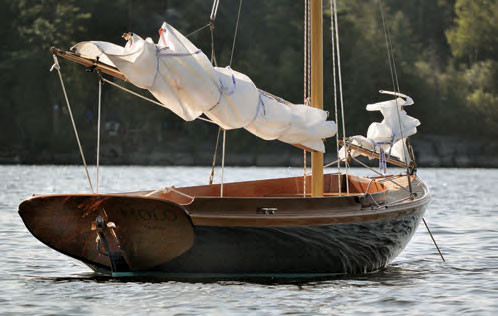
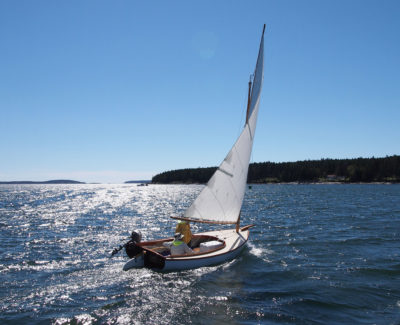
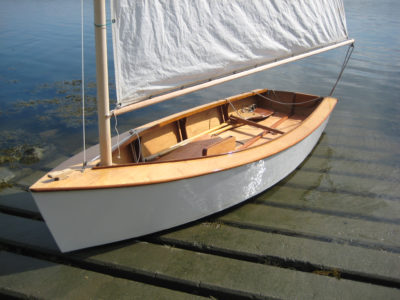
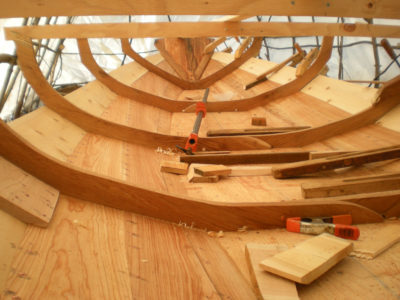
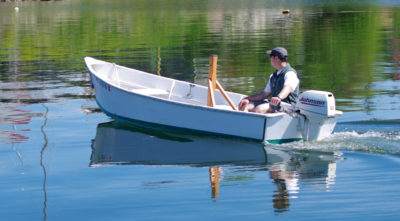
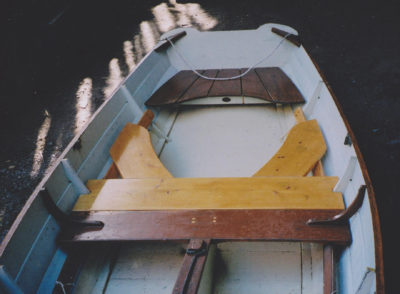
Pierre Fortier took up a new hobby six years ago, building his Haven 12 1⁄2, MOLO. Pierre chose the Joel White design because he had always admired the Herreshoff 12 1⁄2, yet wanted a trailerable boat. The plans call for a carvel or strip-planked hull. Pierre chose the strip-planked version, as its monocoque hull makes it easy to move the boat from trailer to water and back again. The strips are 5⁄8″ western red cedar, sheathed in 6-oz fiberglass cloth set in epoxy. The transom, thwarts, coaming, and trim are all mahogany. He also built an electric motor into her rudder to maneuver around harbors.
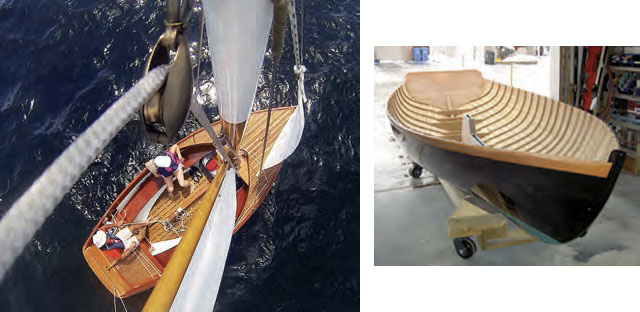
Pierre works in the aircraft industry and lives in St-Jerome, Québec. Seeking a boat that he could sail with his three sons and their children, he wanted to pass along to the future generations a thing of beauty that reflects his determination, craftsmanship, and passion for boats. He was so proud to finally launch her in Plattsburgh, New York, he put a video of the first voyage on YouTube. The Haven 12 1⁄2 is 15′ 9″ long, 12′ 6″ on the waterline, and has a beam of 6′ 11″. She carries 133 sq ft of sail and displaces 1,400 lbs. Plans for the Haven 12 1⁄2 are available from the WoodenBoat Store.
GRACE
Photos by Richard Jones
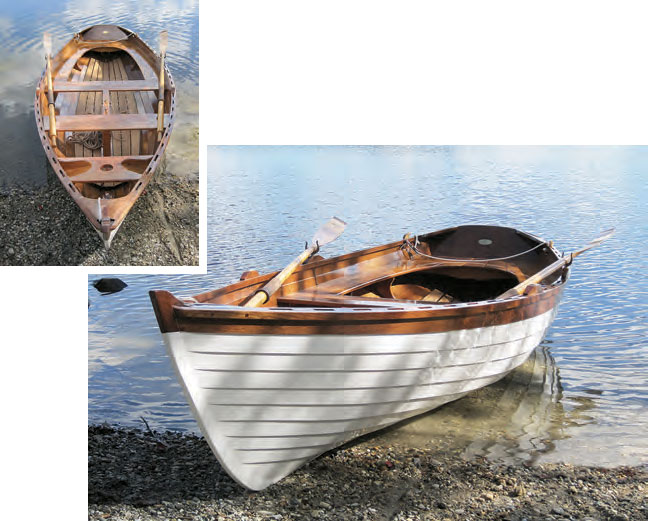
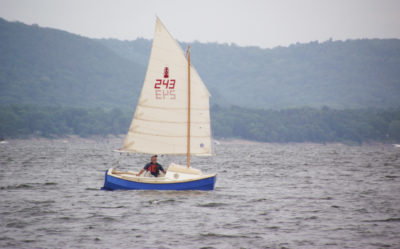
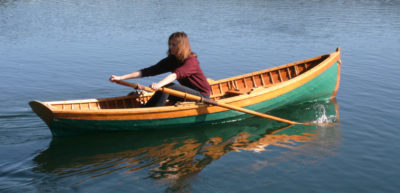
Seeking the perfect dinghy for both rowing and sailing, Rich Jones of Mount Holly, Vermont, chose the Hvalsoe 13. The designer, Eric Hvalsoe, sought to create a compromise dinghy that originally called for traditional lapstrake plank-on-frame construction for a hull with a sweeping sheerline and wineglass transom. The name, GRACE, after his late mother-in-law, fit perfectly. Wanting to modify the construction method to glued-lap plywood, Rich conferred with Eric and got his approval. Rich made the keel, knees, centerboard trunk, and thwarts from American black cherry, and the planking is all okoume plywood. GRACE’s interior has eight coats of varnish, and Rich painted the exterior white. Rich sails on the lakes of Vermont. He reports that his little boat is “a delight to sail and rows like a dream.” Plans for the Hvalsoe 13 and Hvalsoe 16 are sold by Hvalsoe Boats, 104 NW 189th St., Shoreline, WA 98177; 206–533–9138; [email protected].
TRIM
Photos by Andrew Kopp Photography and (top left) Russell Kenery
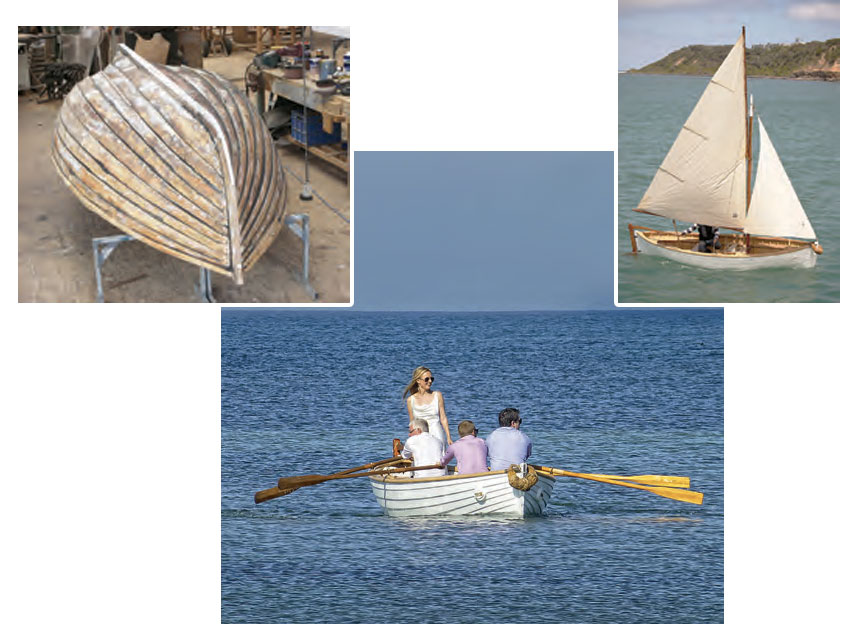
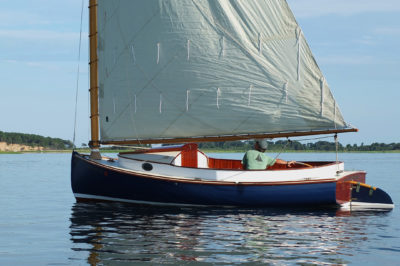
TRIM, a 15′ double-ended lifeboat for the ferry ROSNY, was built in 1913. Frederick and Harry Moore of Kennedy’s Shipyard in Battery Point, Hobart, Tasmania, built both boats. ROSNY ferried passengers over the Derwent River for much of her life. In 1963, TRIM’s lifeboat days ended and she passed through several owners until 2012, when Russell Kenery bought her. When he began her restoration, 99 years after her construction, Russell stripped her hull to bare timber and removed the caulking from the lapstrake seams. Remarkably, her planks of Huon pine were sound and didn’t need replacement. Her blue gum keel and stem did show some rot, which Russell repaired. He also filled cracks and holes in the planks with epoxy, replaced the fastenings as needed, and recaulked her with cotton and 3M 5200. Russell finished the hull with two-part polyurethane in the traditional lifeboat colors of white exterior, and Cumberland Stone trim and interior. TRIM received a new set of Dacron sails for her 100th birthday. Russell and TRIM sail in Port Phillip Bay in Melbourne, Australia. TRIM is 15′ (4.52 m) long, with a beam of 5′ 6″ (1.68m). She draws just 10″ (0.25 m), weighs 480 lbs (217 kg), and carries 95 sq ft (8.8 sq m) of sail.
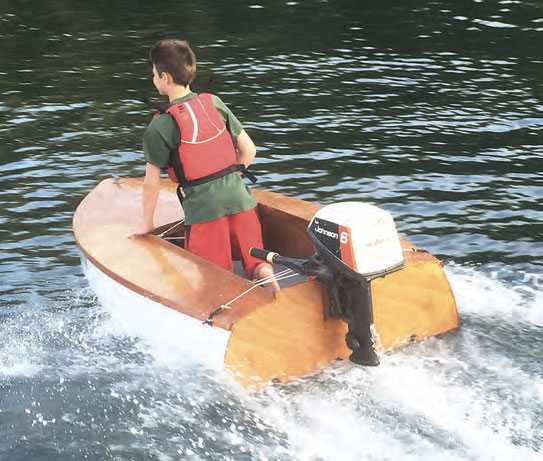
PHLIP IT
Photo by Tom Sieniewicz
Satchel Sieniewicz first saw a Cocktail Class Racer at the 2012 WoodenBoat Show at Mystic Seaport. In 2014, he bought a Cocktail Class kit from Chesapeake Light Craft, and spent last winter building it in the basement of his family home. Satchel is 14 and this is the first boat he has built.
Having done nearly all of the work himself on the 8′ hydroplane, Satchel reports that working with epoxy was the most interesting part of the construction, while sanding the hull and applying seven coats of varnish was the most difficult. His father helped him install the controls and the 6-hp rebuilt Johnson outboard. Satchel won’t soon forget his own pride and confidence in her construction, as he sat in PHLIP IT for the first time on her launching day. Plans and kits for the Cocktail Class Racer are available from Chesapeake Light Craft.
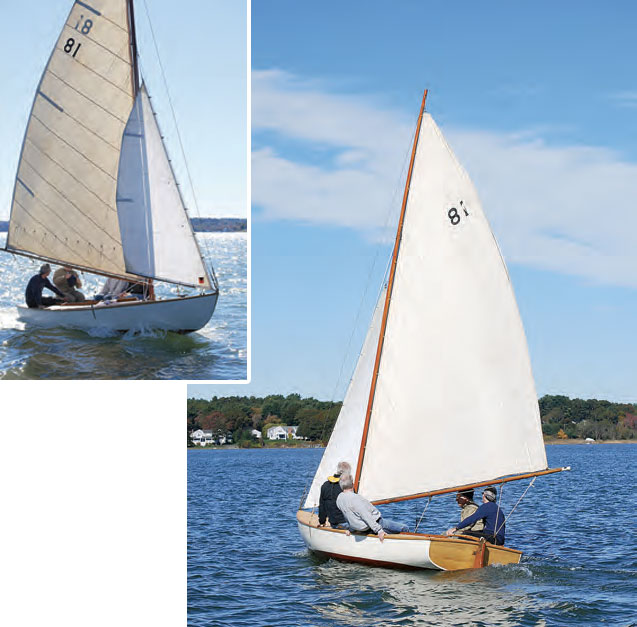
MERRY WING
Photos by Matt Murray
Peter Arenstam, Boatshop Director of the Jones River Landing Environmental Heritage Center (Kingston, Massachusetts), recently led a group of volunteers in a seven-year restoration of a 1928 Duxbury Duck. The Duck, MERRY WING, was designed by John Alden (design No. 250) and built by George Shiverick, whose boatyard once occupied the space where the Center is now located.
Starting in 2008, the group worked one night a week on the boat. Over the years, about 70 people worked on the project, with around 10 showing up in any given week. Nearly the entire hull is new: The keel and frames were replaced with white oak from a local Massachusetts mill, and the group took a field trip to a Maine lumber mill to get the northern white cedar for the new planking and deck. The Jones River Boat Shop will keep MERRY WING in the water for various community sailing activities.
John Alden designed the 18′ sloops for Duxbury’s shallow bay. The Duxbury Yacht Club fleet started with 24 boats, and at one point 80 boats were part of the club. Soon, other local yachts clubs also had fleets of Ducks, with more then 200 built. The hulls are 18′ long, waterline length is just over 15′, and the beam is 6′ 4″. They draw 2′ 6″ with the centerboard down, and just 7″ with it up. They carry 342 sq ft of sail, including a spinnaker, and weigh 750 lbs.
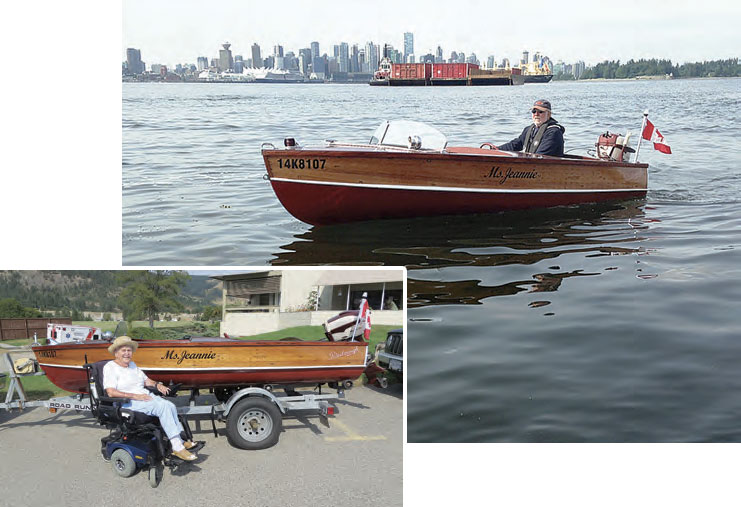
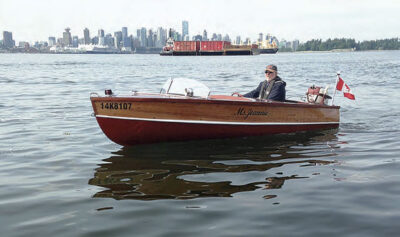
MS JEANIE
Photos by Donell McDonell (top) and Peggy O’Brien
MS JEANNIE is a newly restored 1955 Peterborough Sportabout Deluxe owned by Mike and Peggy O’Brien of North Saanich, British Columbia. She has a 13′ cedar strip hull with mahogany decking. Mike did the restoration for Peggy, and the boat is named after Peggy’s 95-year-old mother. Mike had to replace the stem and several frames, as well as the center-cockpit deck and cowlings. He removed and rechromed all of the fittings, refaired and refinished the hull, and made new seats and cushions.
She is powered by a 1956 Johnson 18-hp outboard that Mike also restored. He added an electric start and electric fuel pump, and repainted the motor in its original colors.
The couple launched MS JEANNIE at the June 2014 Burrard Yacht Club Classic Boat and Car Show. They cruise among the Gulf Islands of British Columbia.
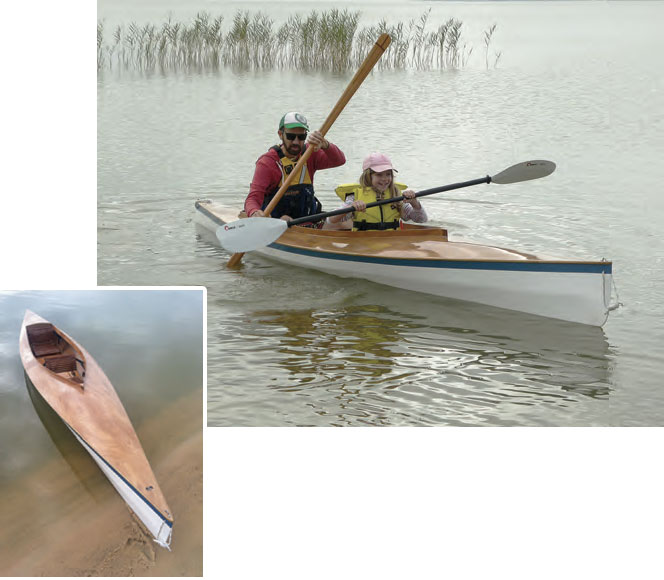
Mill Creek Kayak
Photos by Lisa Barr
Justin Barr recently launched this Mill Creek double kayak in Adelaide, South Australia. He had occasional assistance from his three children: Lucy, age nine, Thomas, age seven, and Jack, four. They are also enjoying many happy hours with their father exploring the local waterways of Adelaide. Justin is an electrical and electronic engineer working at a software company during the day. He spent his free time over about 12 months building this kayak from Chesapeake Light Craft. He stitched the gaboon marine plywood hull together with wire, and then glued the seams on the outside of the hull with epoxy. Once the epoxy hardened, Justin removed the wires and epoxied fillets on the inside seams. The slatted seats are made from Tasmanian oak. Justin kept a construction blog at www.millcreekkayakbuild.blogspot.com.au. Chesapeake Light Craft sells plans and kits for many different kayaks, canoes, sailboats, and power craft. Justin bought his plans from Denman Marine, which sells plans and kits from CLC and other designers.
DAYDREAMER
Photos by Greg Edward (top) and David King
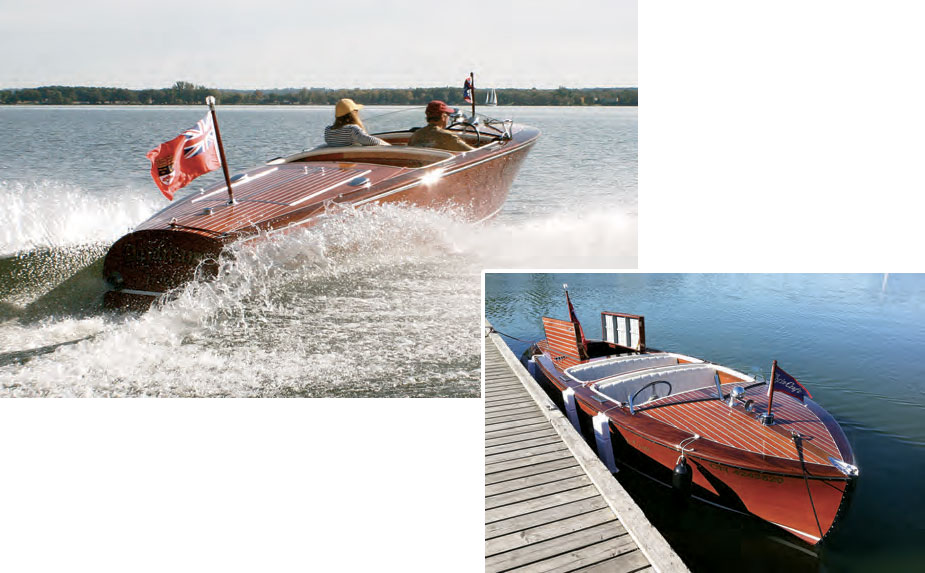
Three years ago, David King ordered plans from Glen-L Marine for a 19′ 6″ Barrelback, a design reminiscent of the Chris-Craft Barrelbacks so popular in the 1940s. David had already built seven other wooden boats, so coldmolding this hull was well within his capabilities. David started construction in his garage in June 2011. The cold-molded hull is built from three diagonal layers of 3mm okoume plywood on the bottom, and two diagonal layers on the sides. He then covered the sides and the deck with a layer of 4mm meranti. He powered DAYDREAMER with a Marine Power Vortec 4.3L, V-6, 220-hp inboard. David and his wife, Carol, enjoy cruising and daydreaming on the waters of Prince Edward County, Ontario. Glen-L Marine sells plans for this Barrelback design and several other launches and runabouts, as well as sailing and rowing boats. The designs are aimed at amateur boatbuilders with varying levels of expertise.
NAUSICAA
Photos courtesy of the Huang Family
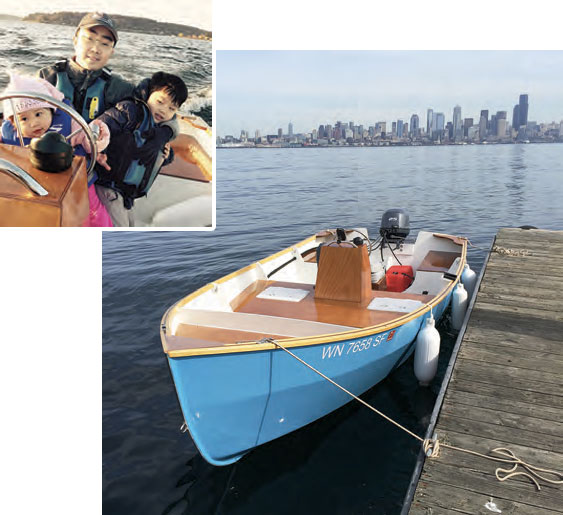
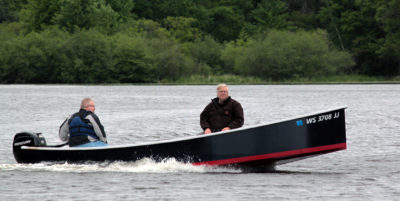
Starting with a kit of Sam Devlin’s design, Khuong Hoang built this Candlefish 16 in about eight months. NAUSICAA’s stitch-and-glue hull is built from okoume marine plywood covered with a layer of 6-oz fiberglass cloth. The keel strips and gunwales are Port Orford cedar. Khuong designed the plywood center console himself. The boat has an Awlgrip finish with varnished trim, carries a Yamaha F25 outboard, and cruises at 15 knots. Khuong launched NAUSICAA in February 2015 on Lake Washington near Seattle. He fishes and crabs with his family on Lake Washington, Lake Union, and Puget Sound. He picked the Candlefish because it could handle a chop and was big enough to carry his family, yet small enough to fit in his garage. At 16′ long, with a 6′ beam, the Candlefish weighs about 700 lbs. West Satsop Boatworks of Montesano, Washington carries kits for this and other Devlin designs. Get plans and finished boats from www.devlinboat.com.
GRACE
Photos by Maurice Klapfish, insets: Peter Anthony
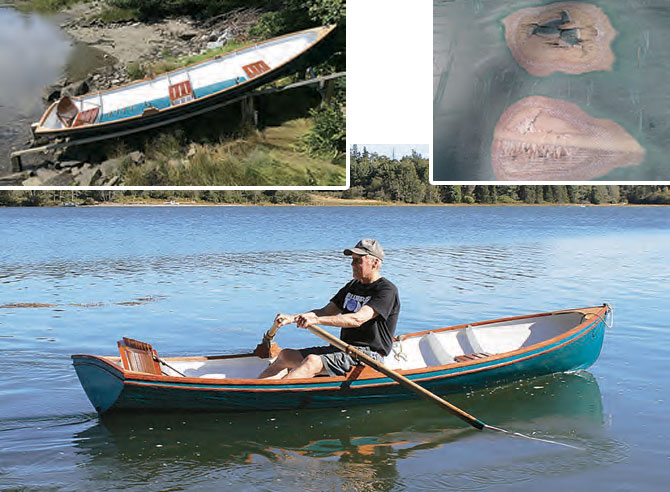
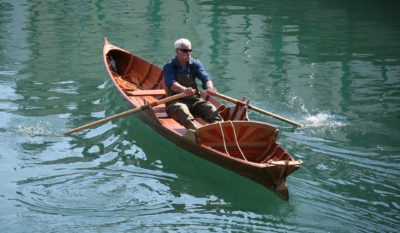
In 1992, Peter Anthony built this 13′ 1″ Recreational Rowing Boat, design No. 562 by Phil Bolger. Peter named her GRACE and used her regularly for the next 20 years. He built the hull from 6mm marine plywood fiberglassed inside and out. In October 2012, a storm washed GRACE off the bank and she landed among some granite boulders along the shore, resulting in more than a dozen holes up to 4″ in diameter in her hull. Peter patched the holes with thickened epoxy and fiberglass. He then faired and repainted the hull. He also replaced the seats and floorboards, and added a backrest for the stern seat and an adjustable-height middle thwart. He relaunched her in August 2014. Peter rows GRACE for fun and exercise in Tenants Harbor, Maine. He reports that with two oarsmen she really flies. This design was originally published in Small Boat Journal (No. 77, February/March 1991) for a reader requesting a design for the aging sculler. Plans for many of Bolger’s designs are available from Phil Bolger & Friends, Inc., Boat Designers, P.O. Box 1209, 66 Atlantic St., Gloucester, MA 01930.
Pygmy Borealis
Photo by Carol Elliot
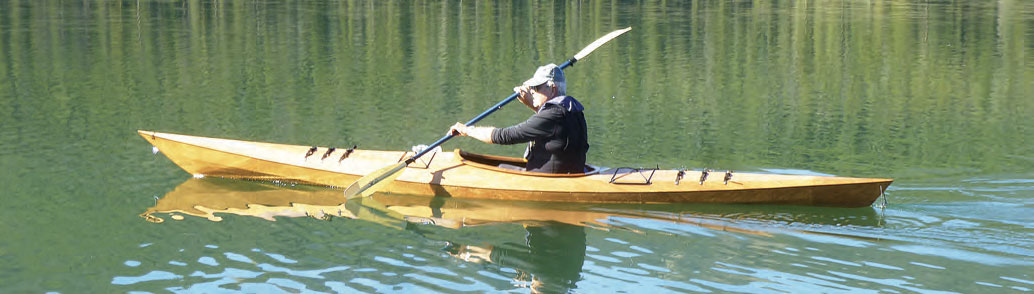
Dave and Carol Elliott, both retired from the Air Force, live in Gallatin Gateway, Montana. They have been avid kayakers since the 1990s. Since he was a child, Dave has spent summers around boats at his family cottage on the coast of Maine. A few years ago, Dave built two 14′ Shearwater Sport kayaks for general family use at the cottage. As Dave and Carol delivered the boats from Montana to Maine, they visited some friends who liked the kayaks so much, they ordered Shearwater Sport kits of their own from Chesapeake Light Craft. The friends sent the two kits to Montana and then visited Dave for a couple of weeks and built their own pair of Shearwaters. In June 2014, Dave started building a boat for himself—a Borealis XL kayak from a Pygmy Boats kit. Dave and Carol launched the boat three months later on the Hyalite Reservoir near their home. In June 2020, Pygmy Boats closed its showroom in Port Townsend, Washington, and suspended kit production. Chesapeake Light Craft of Annapolis, Maryland, sells kits and plans for the Shearwater Sport kayak and numerous other designs. 
Have you recently launched a boat? Please email us. We’d like to hear about it and share your story with other Small Boats readers.
Check out these other reader-built small boats…
SAOIRSE, a sharpie skiff inspired by Reuel Parker’s The Sharpie Book
CHK, a Down East workboat
DREAMWEAVER, two friends build a boat for college credit

Join The Conversation
We welcome your comments about this article. To include a photo with your remarks, click Choose File below the Comment box.