 Geoff Kerr
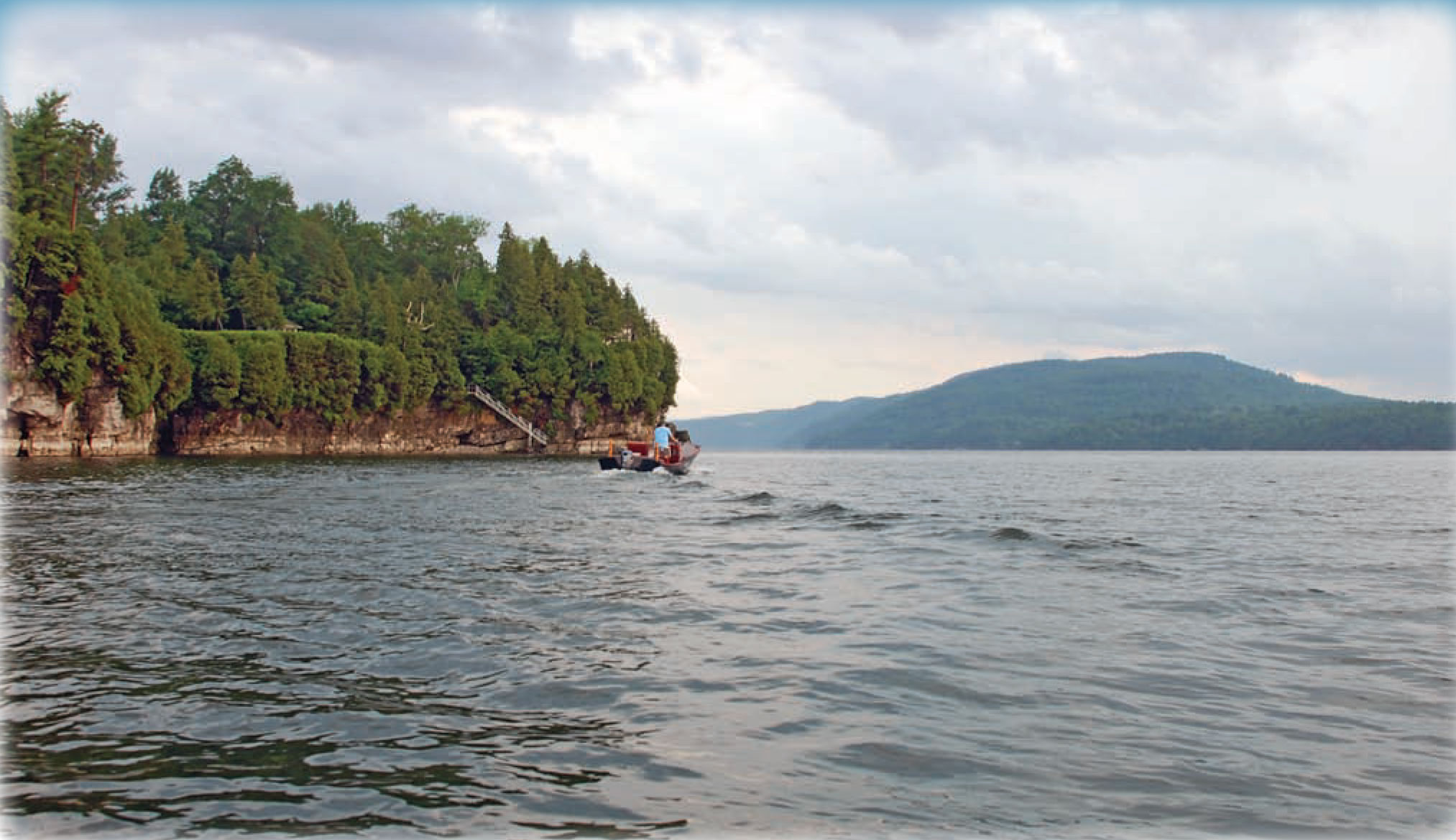
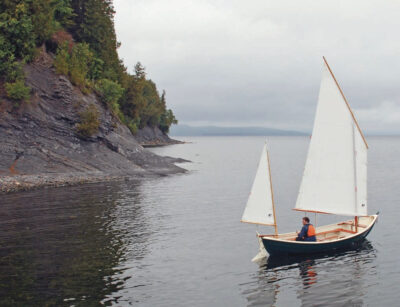
Lake Champlain, the “West Coast” of New England, offers three distinct regions that are ideal for exploring in small boats.
Lake Champlain, stretching 120 miles north to south, is the “west coast” of New England, and it has been a physical, cultural, and political boundary for 12,000 years.
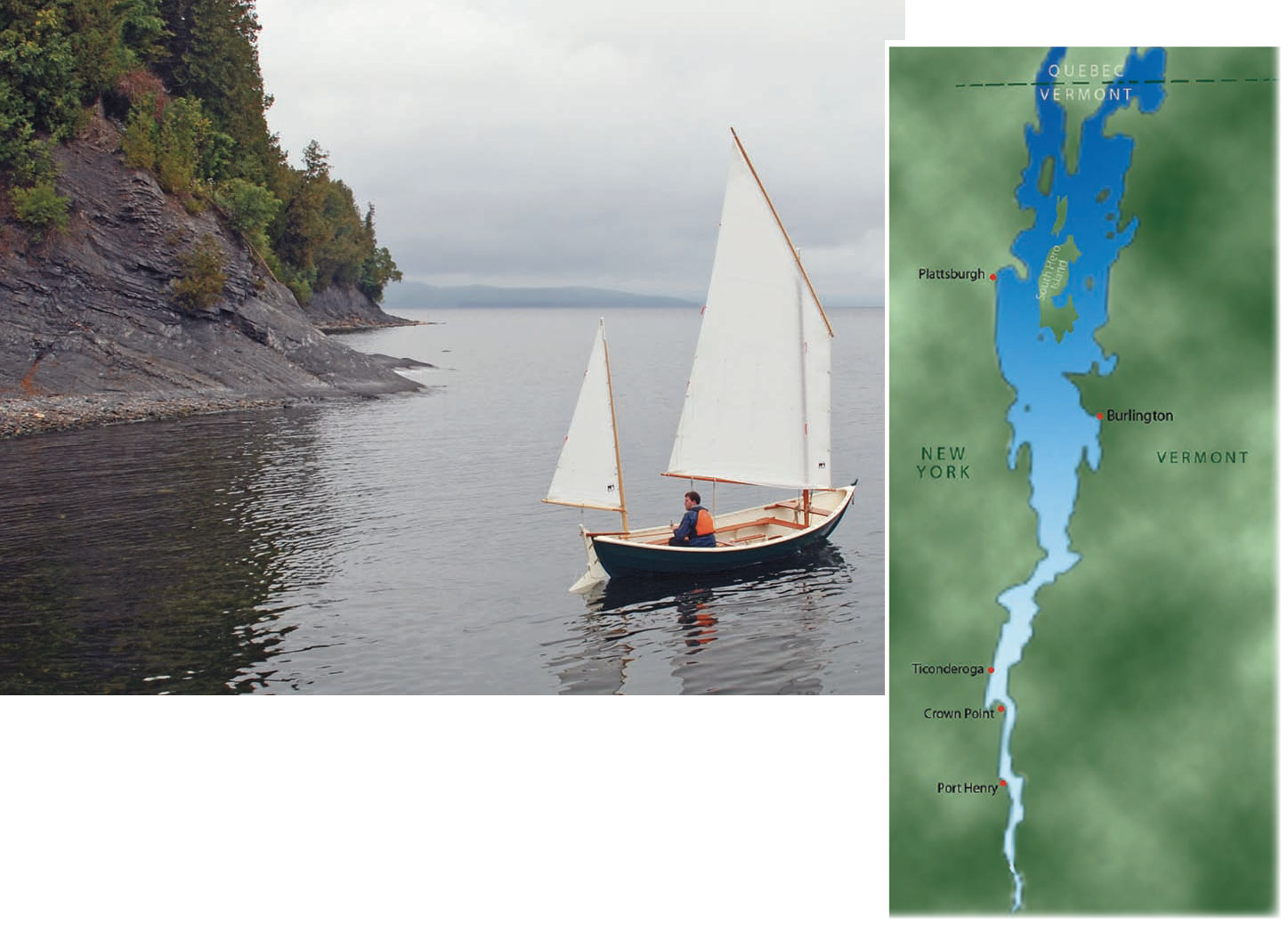
The lake has three distinct regions. First, there’s the southern third, from Whitehall, New York, to the bridge at Crown Point. This section is distinctly riverine, and is highlighted by the Fort Ticon deroga and Mount Independence historical sites. Then there’s the middle third to the north of Burlington, Vermont. This is known as the “Broad Lake”; it’s big water, 12 miles wide and bound by bold rocky shorelines, and it has the lake’s widest and deepest (400′) stretches and the longest fetches. And, finally, there’s the Adirondack region, where mountains plunge to the depths on the west shore, while the eastern shore is the pastoral Champlain Valley, with the long ridge of the Green Mountains forming the backdrop.
The northern third, up to and across the international border, is a charming maze of islands big and small. Large, sheltered bays and multiple convoluted passages characterize this region. All kinds of boaters revel along the lake’s 587 miles of shoreline. Kayakers find a well-organized paddlers’ trail, complete with a network of wilderness campsites. Trailer boaters benefit from great public access, with an extensive network of state and municipal ramps on both shores.
 Geoff Kerr
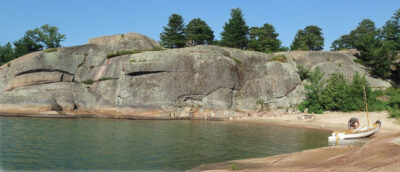
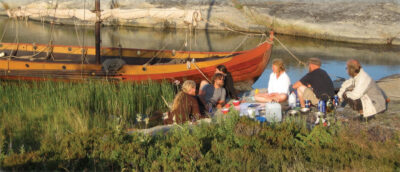
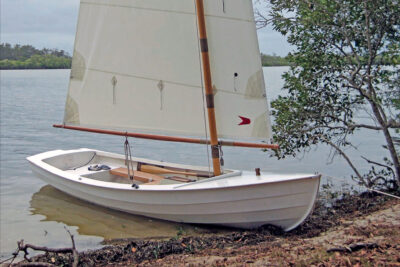
A Ness Yawl noses up to the beach at Juniper Island, near Burlington, Vermont.
Small historic towns, lakeside and island state parks, a grand resort or two, and the buzzing city of Burlington offer a wide array of amenities and lodging. Cruising boaters, both power and sail, take their pleasures in gunkholes, charming small-town docks, and marinas large and small throughout the lake—and beyond.
For Champlain, 95′ above sea level, connects at its southern end to the Hudson River by canal, and through the lock-controlled Richelieu River north to the St. Lawrence River—and then to the Great Lakes and the Atlantic. The lake was the site of The Revolutionary War’s Battle of Valcour Island and the War of 1812’s Battle of Plattsburgh Bay—the latter being one of the three major naval battles in history to be fought at anchor. Add to these events the episodes at Ticonderoga, in multiple wars, and you have a theme for summer cruise extraordinaire.
Resources
Lake Champlain: An Illustrated History (Adirondack Life, 2009)
Lake Champlain Paddler’s Trail
Cruising Guide to the Hudson River, Lake Champlain and the St. Lawrence River (McKibben, 2006)
New York State Dept. of Environmental Conservation
Ready to plan your next small boat cruise?
Read our guide on choosing the right destination for your trip where we share some other top small-boat destination ideas.
Join The Conversation
We welcome your comments about this article. To include a photo with your remarks, click Choose File below the Comment box.