Semi-Dory Flatiron Skiff
Photos by Meg Custer
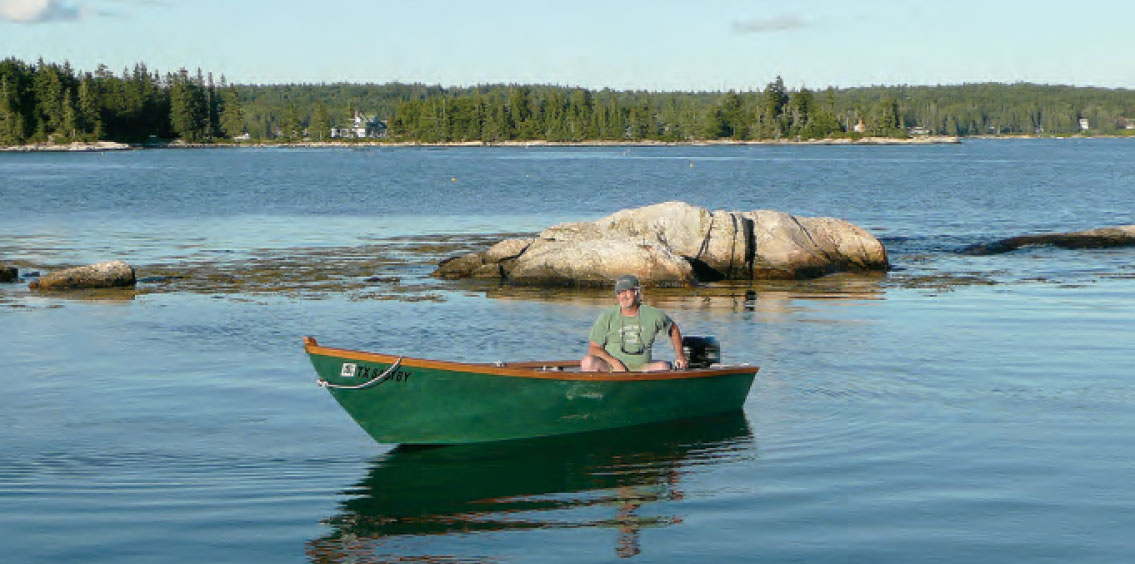
Following directions from John Gardner’s The Dory Book, Dave Van Stone built this semi-dory flatiron skiff in about two years. He used 3⁄8″ Douglas fir marine plywood for the hull, and two pieces of laminated 1⁄2″ Douglas fir for the transom. The frames, rails, backbone, and seats were cut from white oak. The fastenings are silicon-bronze and stainless-steel screws. After finishing the hull construction, Dave sheathed the boat in a layer of 7-oz fiberglass cloth, then painted her inside and out. Dave estimates material costs of about $1,000.
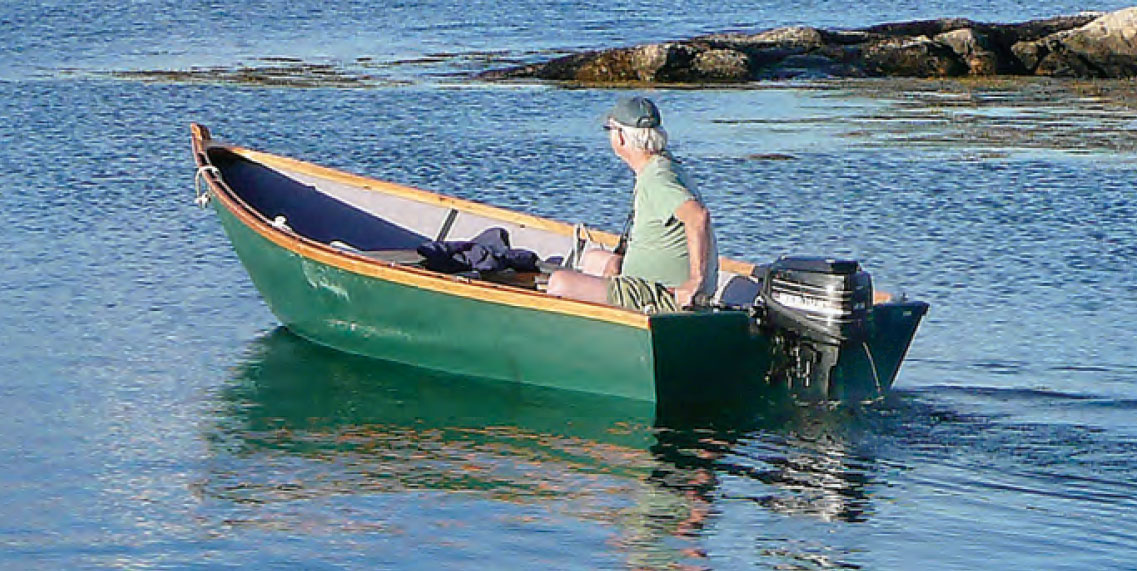
Dave lives in Texas most of the time, but vacations in Maine during the summer. These pictures were taken in Boothbay Harbor. He powered his skiff with a 1997, two-stroke 9.9-hp Mercury outboard. She had a top speed of 17 mph with just him aboard, which drops to 10 mph with a couple more passengers. Dave reports that due to her light hull, she is easy to trailer and launch, and inexpensive to operate. Since launching the flatiron, Dave has kept busy in the shop, building a Simmons Sea Skiff.
Swift
Photos by William Cruthers (above) and Matt Morello (below)
Evelyn Ansel of Mystic, Connecticut, comes from a shipbuilding family. Her father, Walt, and grandfather, Willits, have worked at Mystic Seaport for decades and both have contributed to WoodenBoat from time to time. Evelyn is pursuing a career in wooden boats herself, with experience so far working on the recent restoration of the CHARLES W. MORGAN, documenting Venetian small craft in Italy, and most recently conducting research as a Fulbright Scholar at the Vasa Museum in Stockholm, Sweden.
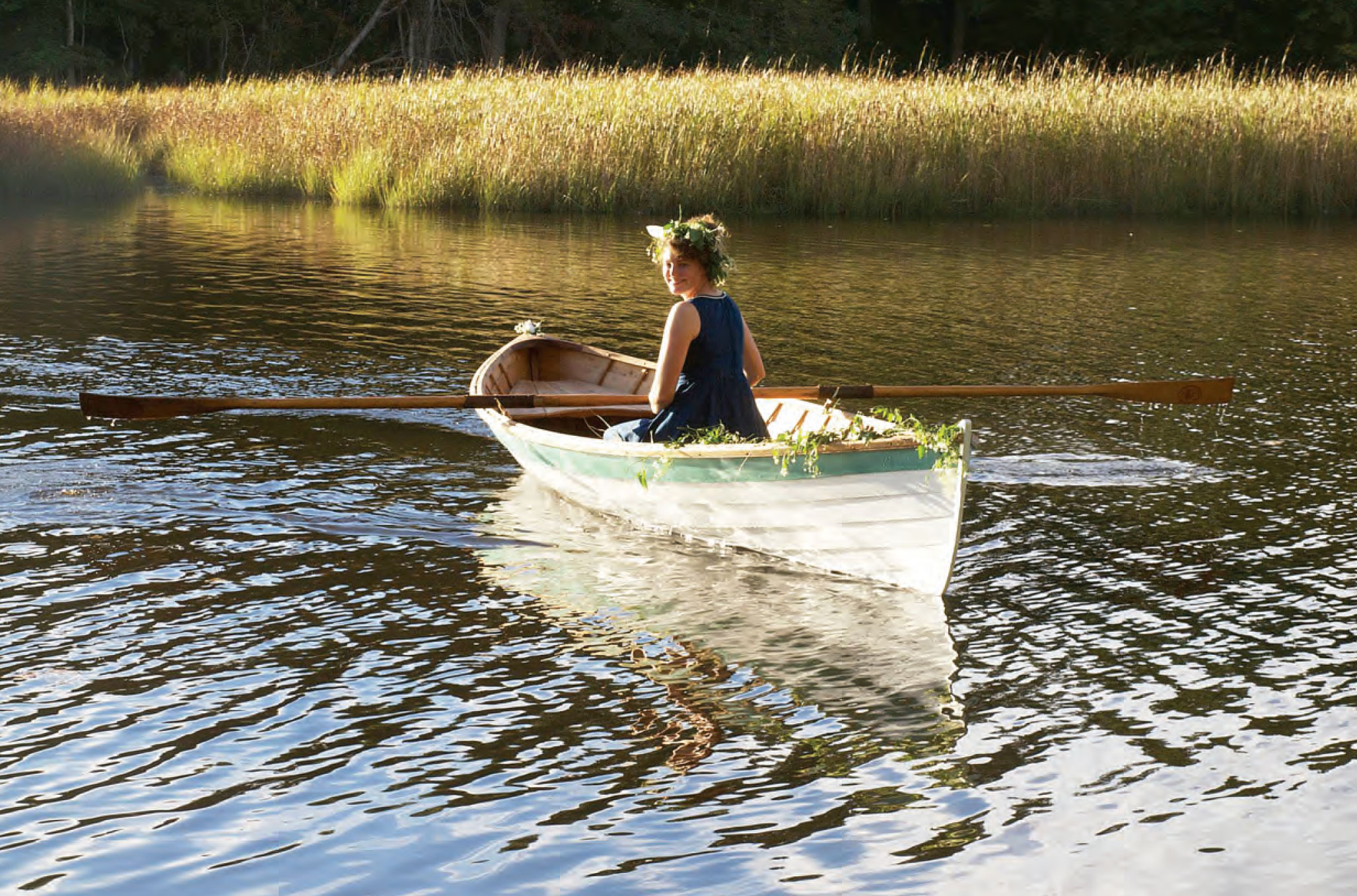
After deciding on Paul Gartside’s Bob pulling boat, Design #115 at Gartside Boats, Evelyn and her father lofted it and built the backbone during the winter of 2008. The next spring, while taking leave from college, she moved herself and the bare bones of SWIFT to work on it with her grandfather at his home in Georgetown, Maine. When fall came, Evie went back to college and after that was able to work on her boat only during college breaks. After graduating in 2011, Evie apprenticed on the MORGAN restoration at Mystic Seaport, and worked on her own boat nights and weekends.
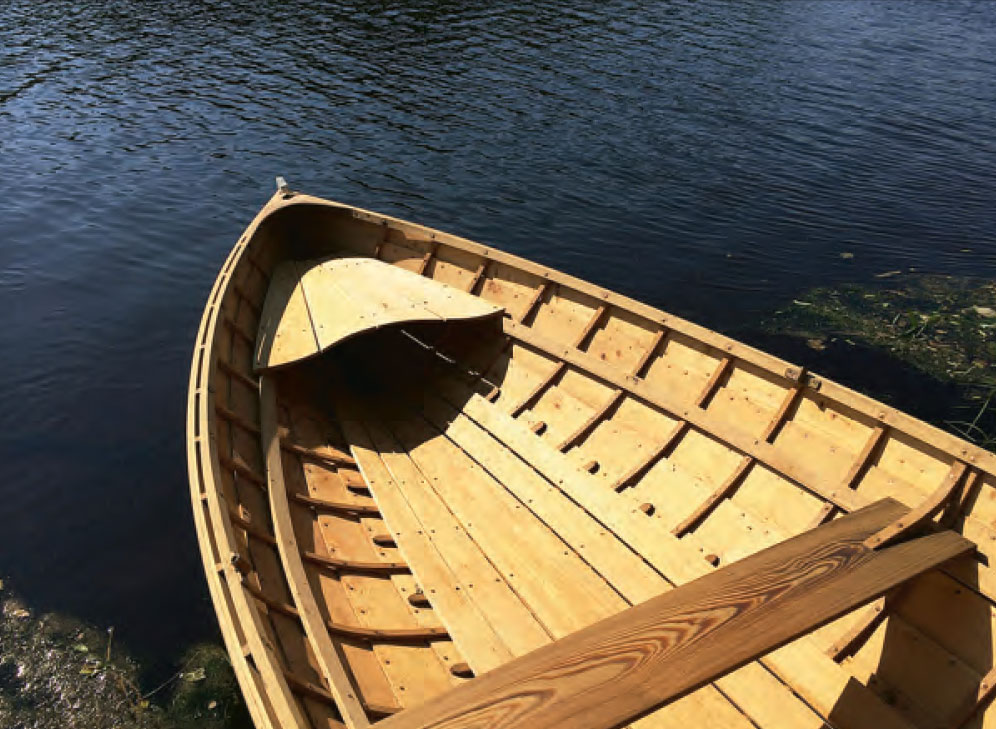
Gartside had specified a strip-planked hull, but after much discussion, the Ansels decided on a more traditional build of 3⁄16″ cedar lapstrake planks on steam-bent oak frames fastened with copper rivets. All of the wood in the construction came from offcuts from restoration projects—including a breasthook made from a walnut crook bookmatched end for end, and thwarts from salvaged cypress. After five years of work, Evie launched SWIFT last September in Old Mystic, Connecticut, cheered on by friends and family.
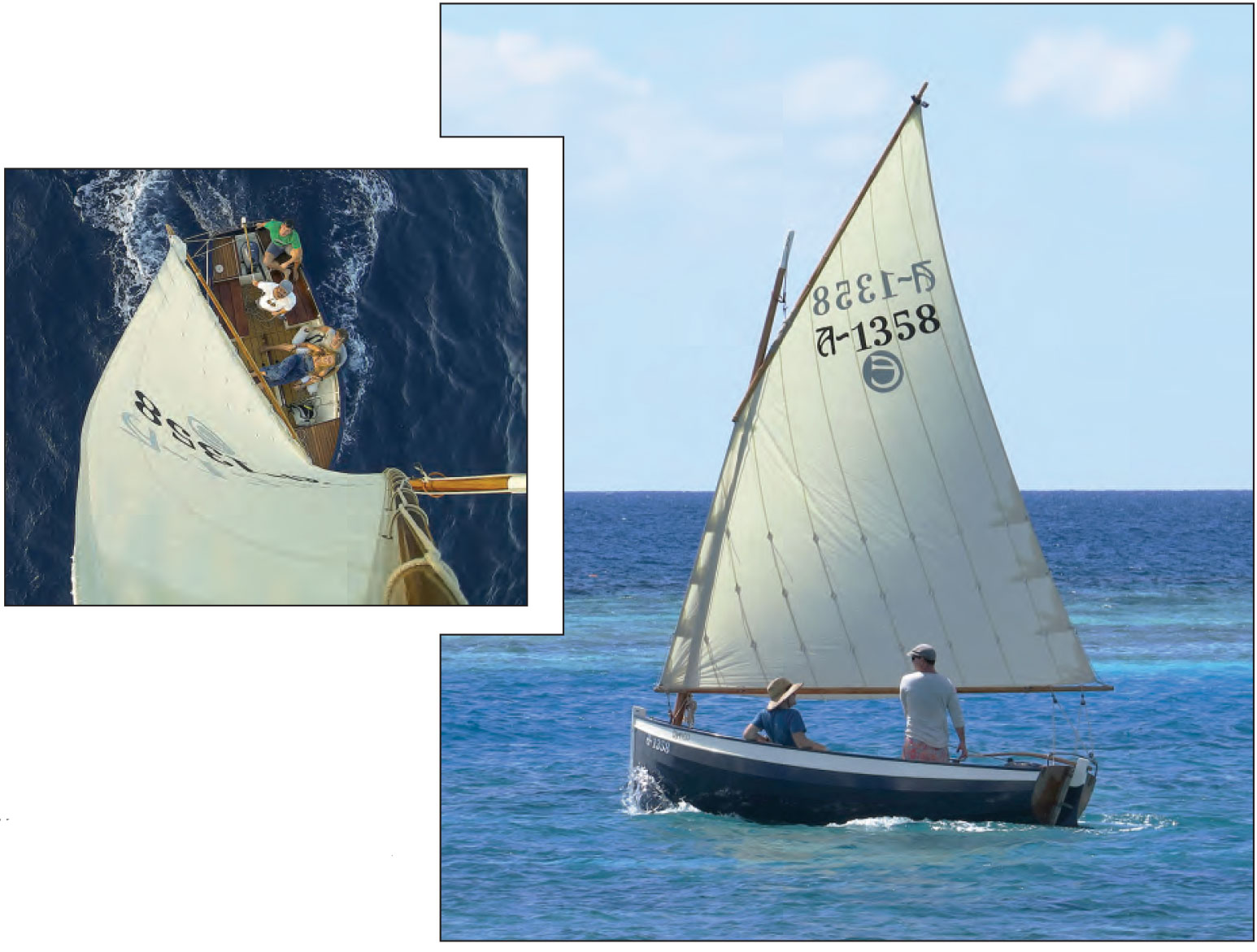
DJANGO
Photo by Mariza Garcia; inset: Yair Lichtenstein
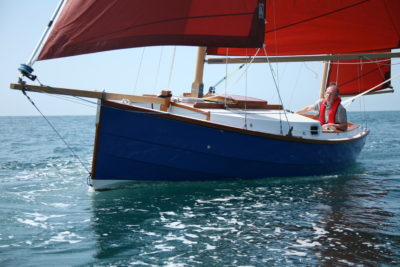
DJANGO is an Ebihen 15 named after Django Reinhardt, whose music kept the builder, Yair Lichtenstein, company during construction. Designer François Vivier kindly modified his standard standing-lug rig at Yair’s request by adding a boom to make solo downwind sailing easier.
Yair writes that she sails beautifully, is remarkably stable, and will heave-to perfectly with a raised centerboard. He finds the 14′ 9″ × 6′ boat to be perfect for fishing and daysailing in Aruba with his family and friends (human and canine varieties).
DJANGO has glued-lapstrake planking of sapele plywood. Other woods include mahogany, teak, and Port Orford cedar. Yair is a WoodenBoat School alumnus who took a course on building glued-lapstrake boats, which he found very helpful in the construction of DJANGO.
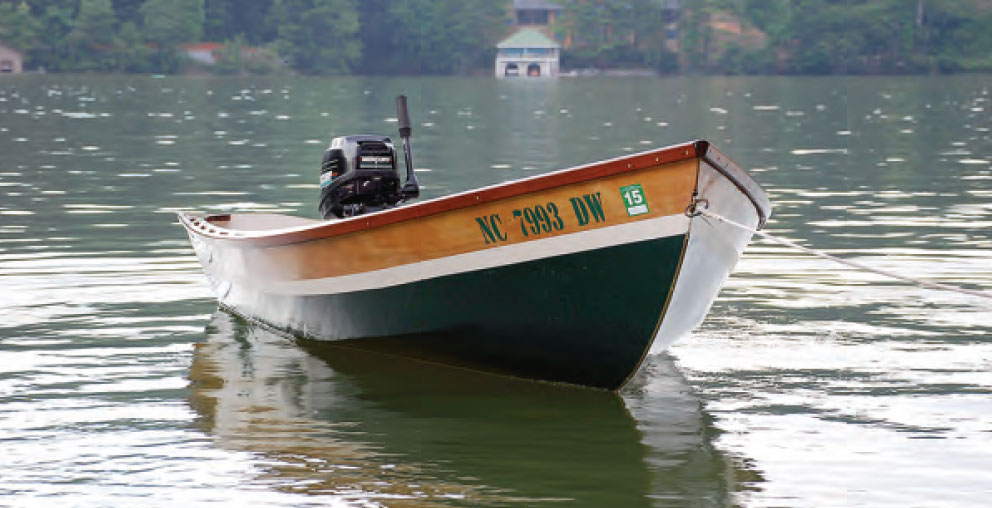
Little Lizzie
Photos by Larry Joyner (above) and Lauren Vicars (below)
As part of his 60th birthday celebration, Larry Joyner launched LITTLE LIZZIE on Lake Summit in North Carolina. Though she is the first boat he’s ever built, Larry has loved wooden boats forever and has always wanted to build one.
After some research, he decided to build a Glen-L stitch-and-glue Power Skiff 14. Larry reports that the folks at Glen-L were very helpful with his questions. He also made use of their forum and some of the other resources on the Glen-L website.
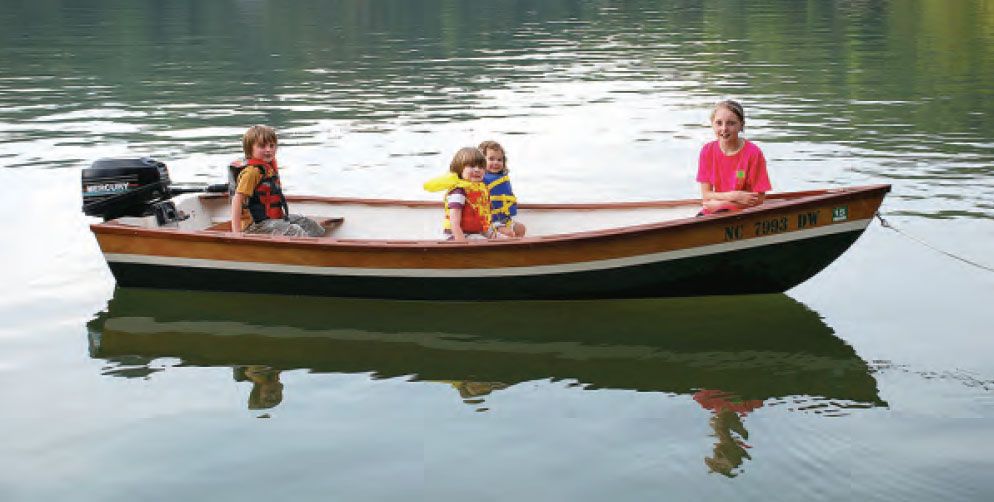
Larry built his skiff from okoume marine plywood with mahogany seats, rails, and trim. He took the fullsized plans to a local woodworker to have him cut the big sections out of plywood. Then he brought the pieces back home and wired them together. After the hull was glued up, Larry covered it with 6-oz fiberglass, adding an extra layer on the bottom to protect the hull. LITTLE LIZZIE, 13′ 10″ long with a beam just over 5′, is powered by an 8-hp Mercury outboard. Larry hopes this won’t be his last boat, as he thoroughly enjoyed the construction process.
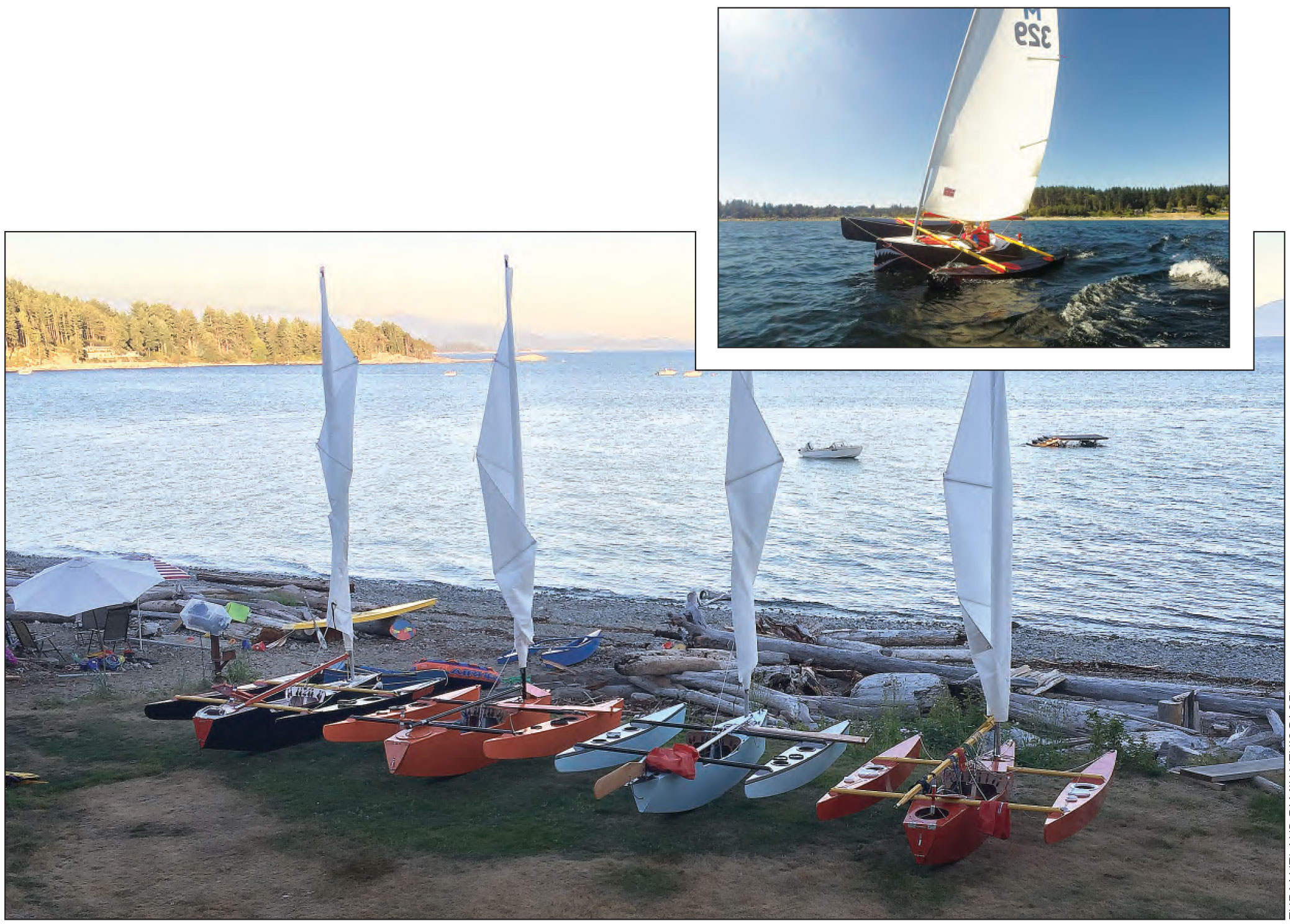
Four Seaclipper 10 Trimarans
Photos by the Maitland Family
In a quadruple launching, four brothers launched four Seaclipper 10s together in Lang Bay, British Columbia, in August 2014. The four Maitland brothers—Pete, Rory, Bill, and Rick—each ordered Seaclipper 10 plans from designer John Marples, and built them independently at their own homes before trailering them to the family home in Lang Bay. Rick came the farthest, all the way from Calgary, hauling his black and red boat GOODENUF.
Construction time was about 200 hours to build the 10′-long, 8′-wide plywood-and-epoxy trimarans (see WoodenBoat magazine No. 227 for more on this design). The brothers conferred with each other during construction but did not see their respective boats until launch day. Each had followed the designer’s instructions but added his own personal flair to his project to make it stand out from the others. Pete, an engineer, modified the rig on his red hull, INSTIGATOR, hoping to get an edge on his brothers. It didn’t work, and he went back to the original rig the next day.
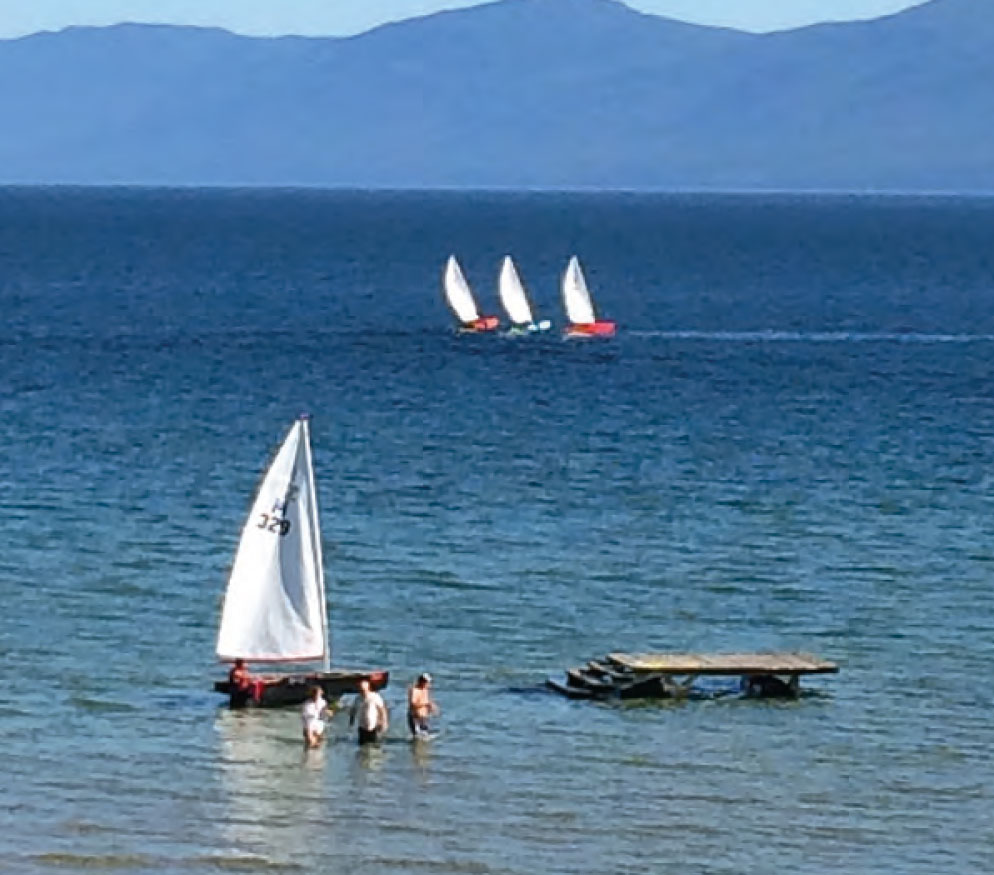
After launching, the brothers had just one day to learn the boat, tweak their gear, and practice for the Maitlands’ First Annual Seaclipper Race. Bill won the race in his orange WILL RUN RIOT, and was awarded a trophy created by his sister, Kit. Bill and twin brother Rory, who built the light blue STORMIE NORMIE, both live in Powell River, so Bill may have had a homefield advantage.
GRACE
Photos by Eisa Quelette
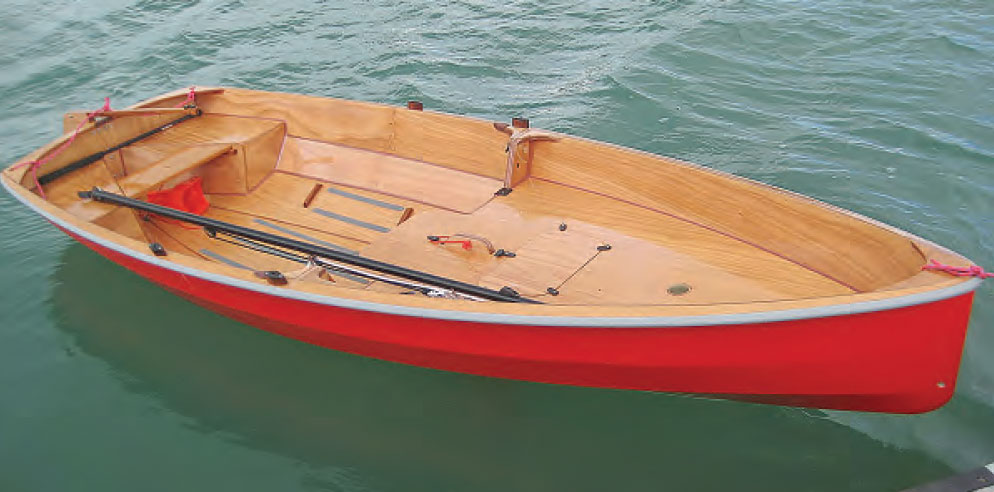
Simon Kendall built this PT11 nesting dinghy in his living room in Auckland, New Zealand. He started with a kit designed by Russell Brown of Port Townsend, Washington. Simon reports that the construction was surprisingly simple, as the CNC-cut pieces fit easily together without any forcing or twisting.
The living room carpet protected his knees, and the couch close by provided a good place to sit and work out each step of construction. Having the boat in his living room was a big incentive to get finished quickly, and after four months of nights and weekends, Simon finished GRACE.
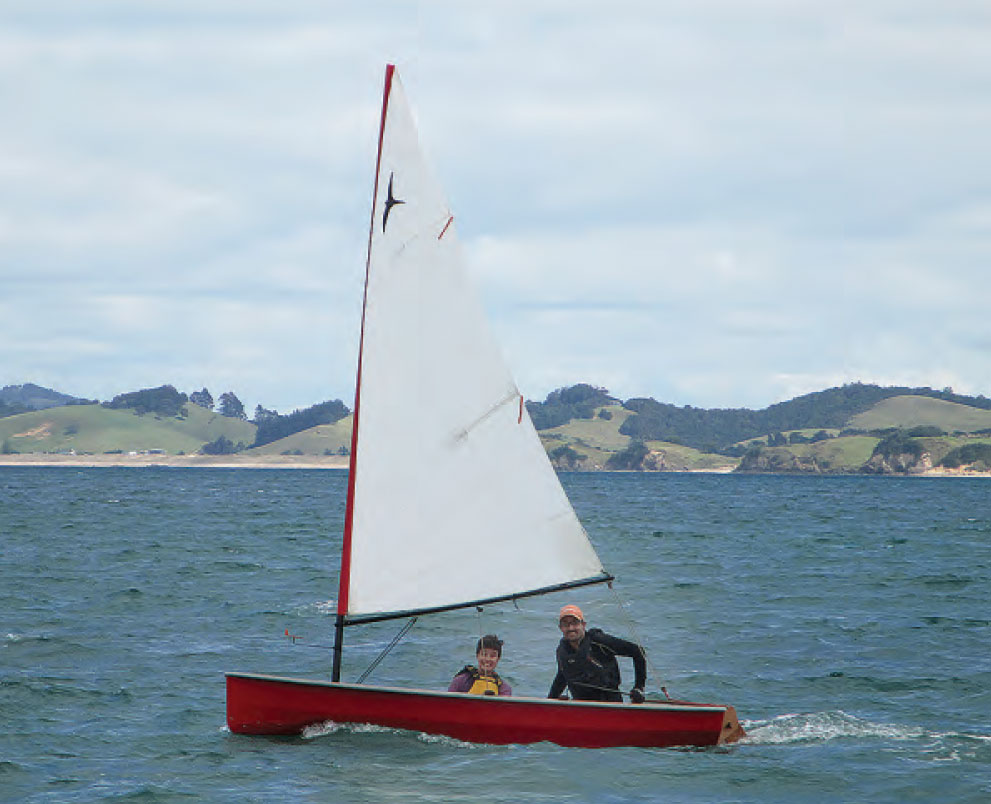
Simon plans to use this dinghy as a tender for his 40′ yacht. He reports that he’s owned smaller nesting dinghies but they were too much of a hassle to connect together regularly.
The PT11 is designed to be connected or disconnected by one person in about 30 seconds. The hull is built from okoume marine plywood, with parts in Sitka spruce, Douglas fir, cedar, and mahogany. The pieces are covered with fiberglass cloth and epoxied together.
Dual-Cockpit Runabout
Photo by Jason Oleham
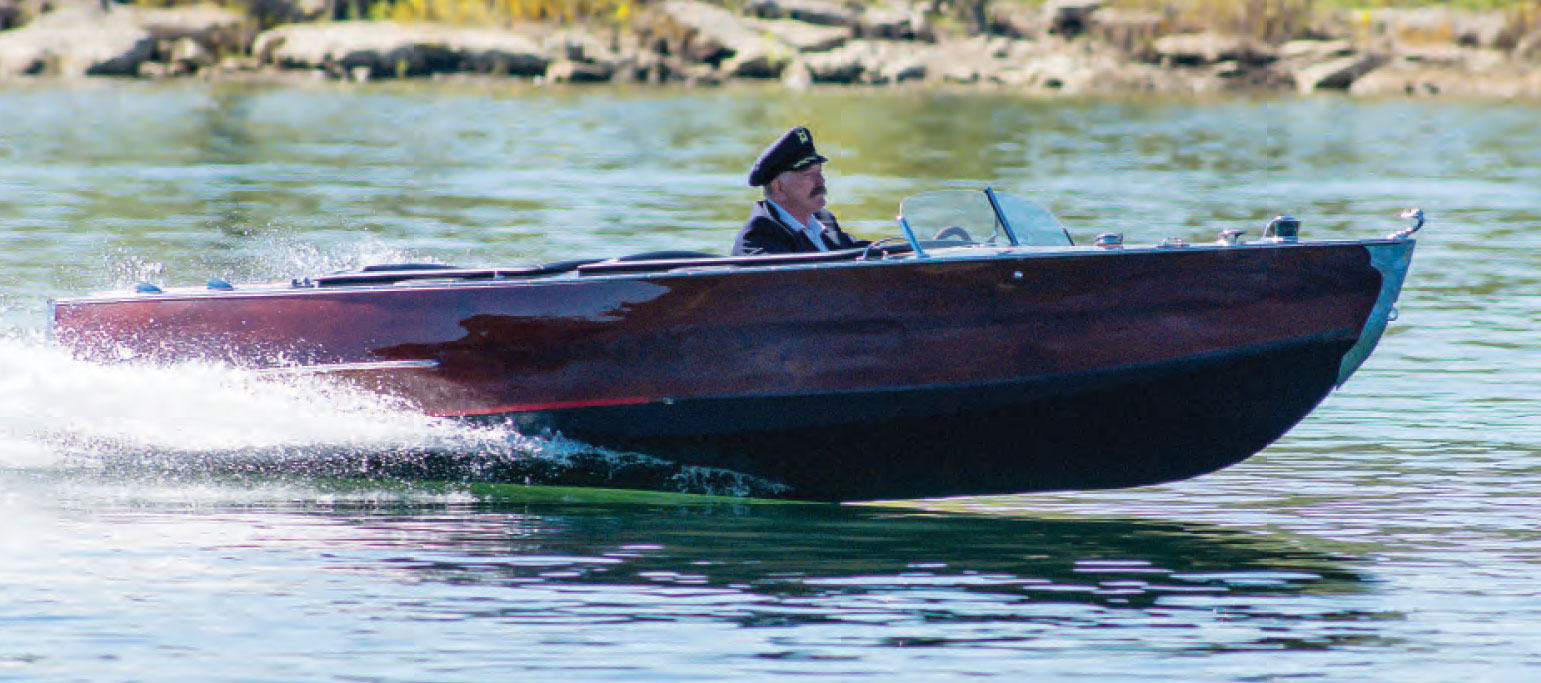
Dale Hamilton of Boomslang Boats in Murfreesboro, Tennessee, has recently launched another of his mahogany dual-cockpit runabouts. He is a retired physician, now building boats as his second career. His favorite boats are the 1930s classic mahogany runabouts by Chris-Craft, Hacker, and Ditchburn, which he considers among the most beautiful boats ever built.
Dale does his best to emulate those boats in his own construction. He chose a 15′ sport runabout design by Ray Sargent (formerly of Bristol Engineering in North Hero, Vermont) after reading about Ray’s conversion of a Subaru engine for marine use in WoodenBoat No. 134. He has built nearly a dozen boats since finishing his first one in 1999.
On his latest boat, Dale planked the hull with 3⁄8″ plywood on the bottom, and 1⁄4″ okoume plywood on the sides, which were then covered with 10-oz fiberglass E-cloth and epoxy. He faired the hull until it was as “slick as steel.” The deck is made from 3⁄16″ mahogany strips, which had originally been intended for use in WWII PT-boats by Higgins Industries. The boat is powered by a 100-hp, four-cylinder Mercury.
QUEEN MARY
Photos by Phil Schirmer (above) and Jordan Gable (below)
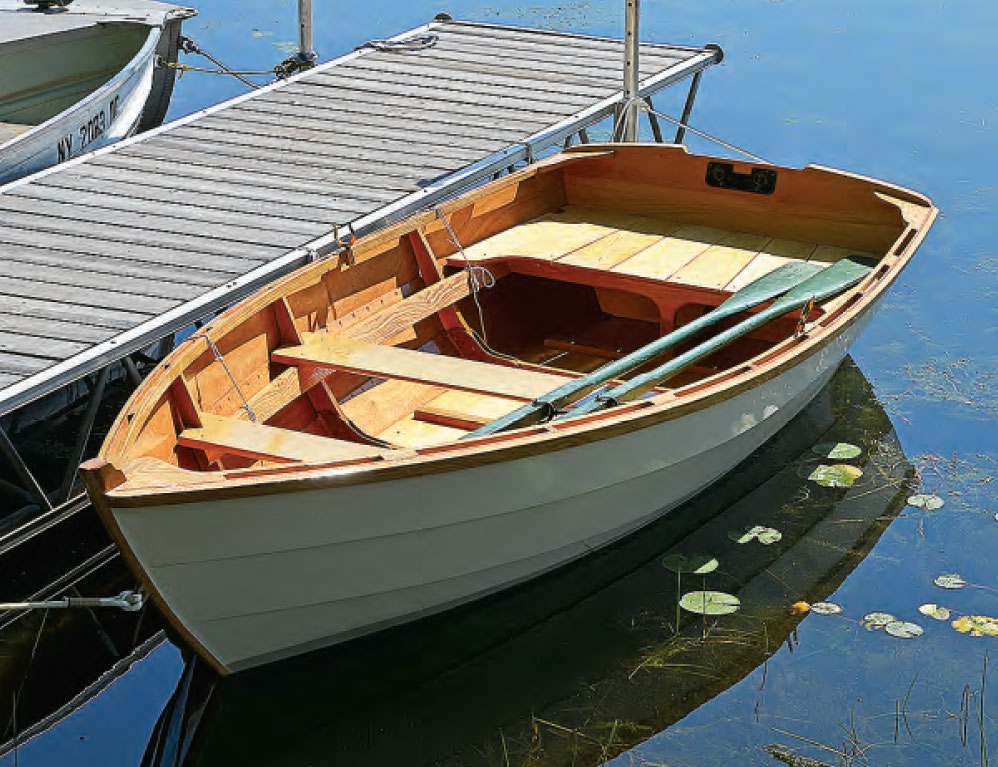
After attending John Karbott’s Introduction to Boatbuilding class at WoodenBoat School in August 2013, Phil Schirmer decided to build his own boat. Working weekends and evenings over the winter of 2013–14, he built a Karbott-designed 12′ 6″ semi-dory skiff, using marine plywood, white oak, and pine.
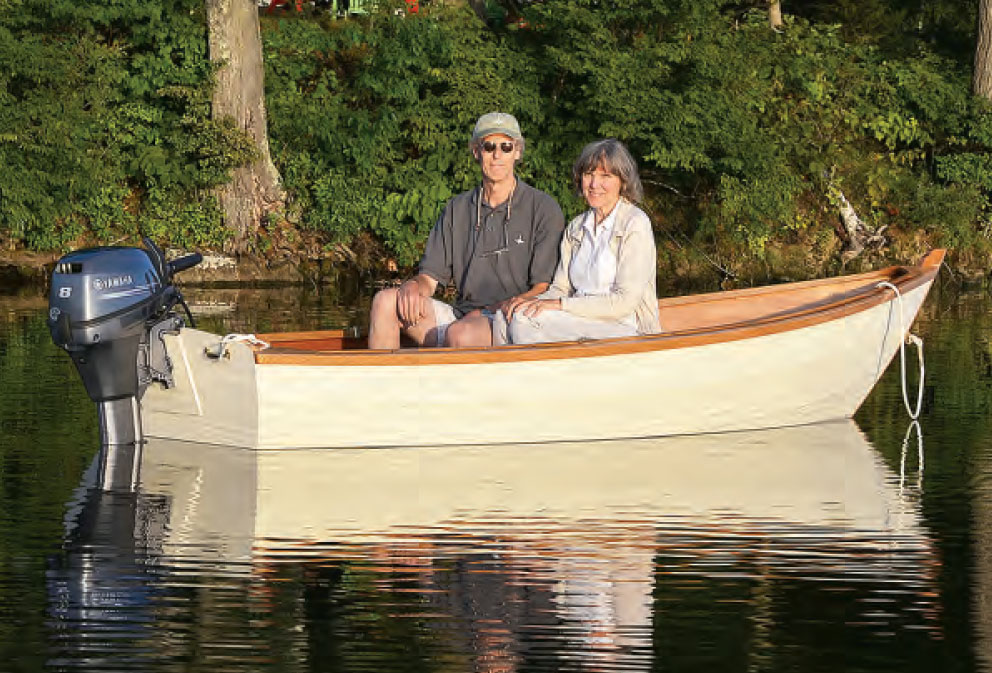
Recently retired from WoodenBoat, where he served as our associate art director, Phil is an artist who recently had an egg tempera painting on exhibit in the Smithsonian Institution. He brought those exacting skills to his boatbuilding, reworking each piece until he had a near-perfect fit.
In August 2014, Phil and his wife, Mary, launched their boat at their summer cottage on White Fish Lake in Ontario and christened it the QUEEN MARY.
NIAMH
Photos by Angela Nickich (above) and John Mansolillo (below)
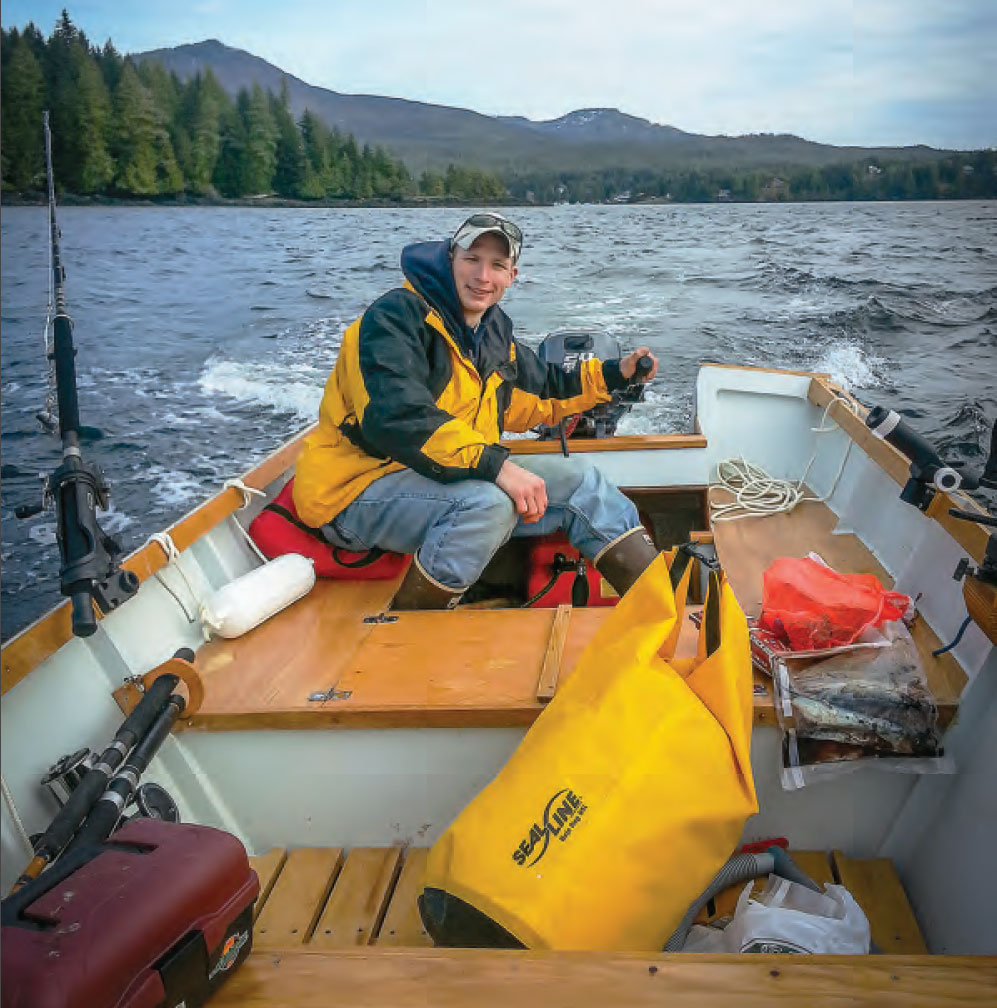
While John Mansolillo was stationed in Ketchikan, Alaska, with the Coast Guard, he built a boat for fishing and hunting during his off-hours. John chose a 16′ San Juan Dory designed by Dave Roberts of Nexus Marine.
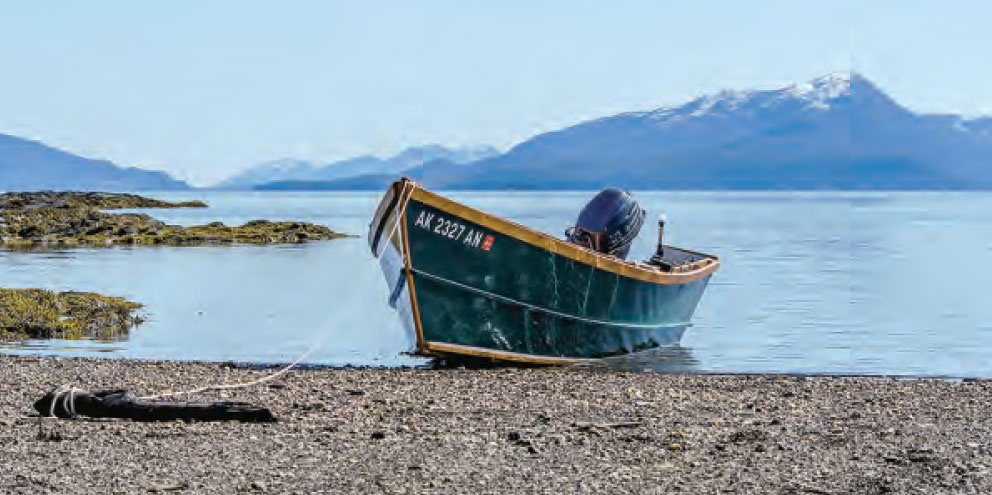
John had built two boats before, but the San Juan was a bit more complicated. He bought fir marine plywood and common lumber from the local lumberyard. He built most of the boat alone except for when he attached the sides. The hull, 1⁄2″ plywood on Douglas fir frames, was covered with epoxy and a layer of fiberglass on the bottom.
NIAMH is powered by a 20-hp Yamaha four-stroke engine, and tops out at 23 knots on a calm day. John reports that she handles well on turns, tracks well, and is very stable. John made many fishing trips in NIAMH, sometimes traveling over 60 miles along various inlets in waterways in southeast Alaska.
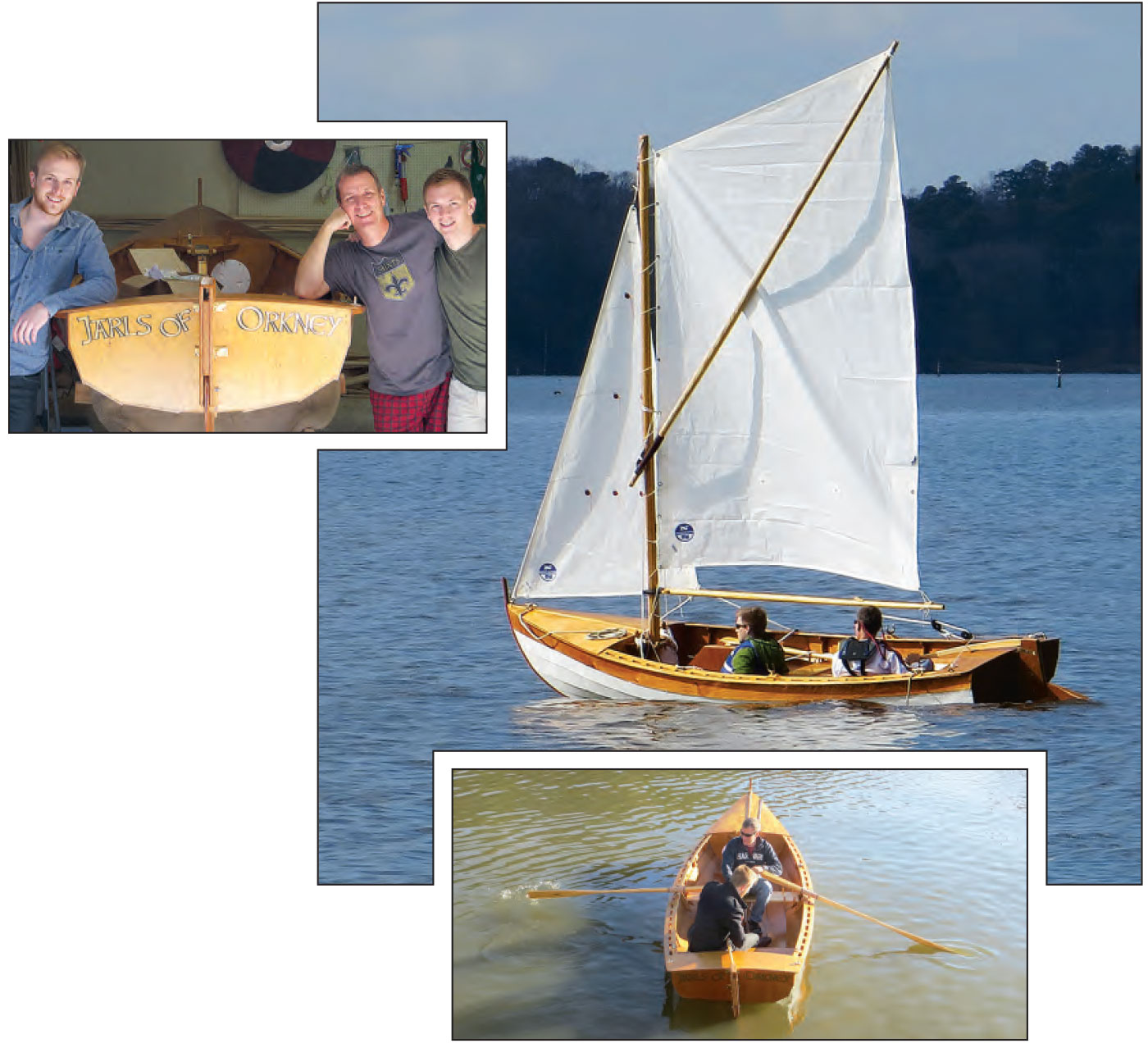
JARLS OF ORKNEY
Photos by Laura Smith
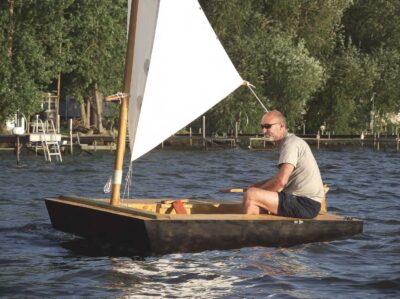
Steve Smith has dreamt of building a boat for years. Inspired by Small Boats 2012 and the opportunity of a nine-month sabbatical, Steve finally turned that dream into reality. After much research, he decided on Ross Lillistone’s Phoenix III design (see WoodenBoat Nos. 236 & 238 and Small Boats 2013). He officially started construction on May 1, 2013, and sailed her for the first time exactly eight months later in Lake D’Arbonne, Louisiana.
Steve expected to build the boat alone, but his wife, Laura, and three sons—David, Cris, and Josh—helped with the project along the way. In particular, Steve got three weeks of intensive help from David as the pair worked 14-hour days planking the 15′ hull with okoume marine plywood and epoxy. The hull is trimmed out with 100-year-old cypress. Though this is his first boat, Steve adapted the design slightly, in consultation with Ross Lillistone, changing the side decks to open gunwales.
During the build, David had done family genealogical research, and discovered they were direct descendants of the first Vikings in the British Isles, who set themselves up as earls (jarls) in the Orkney Islands. Steve and David aptly named their new boat JARLS OF ORKNEY.
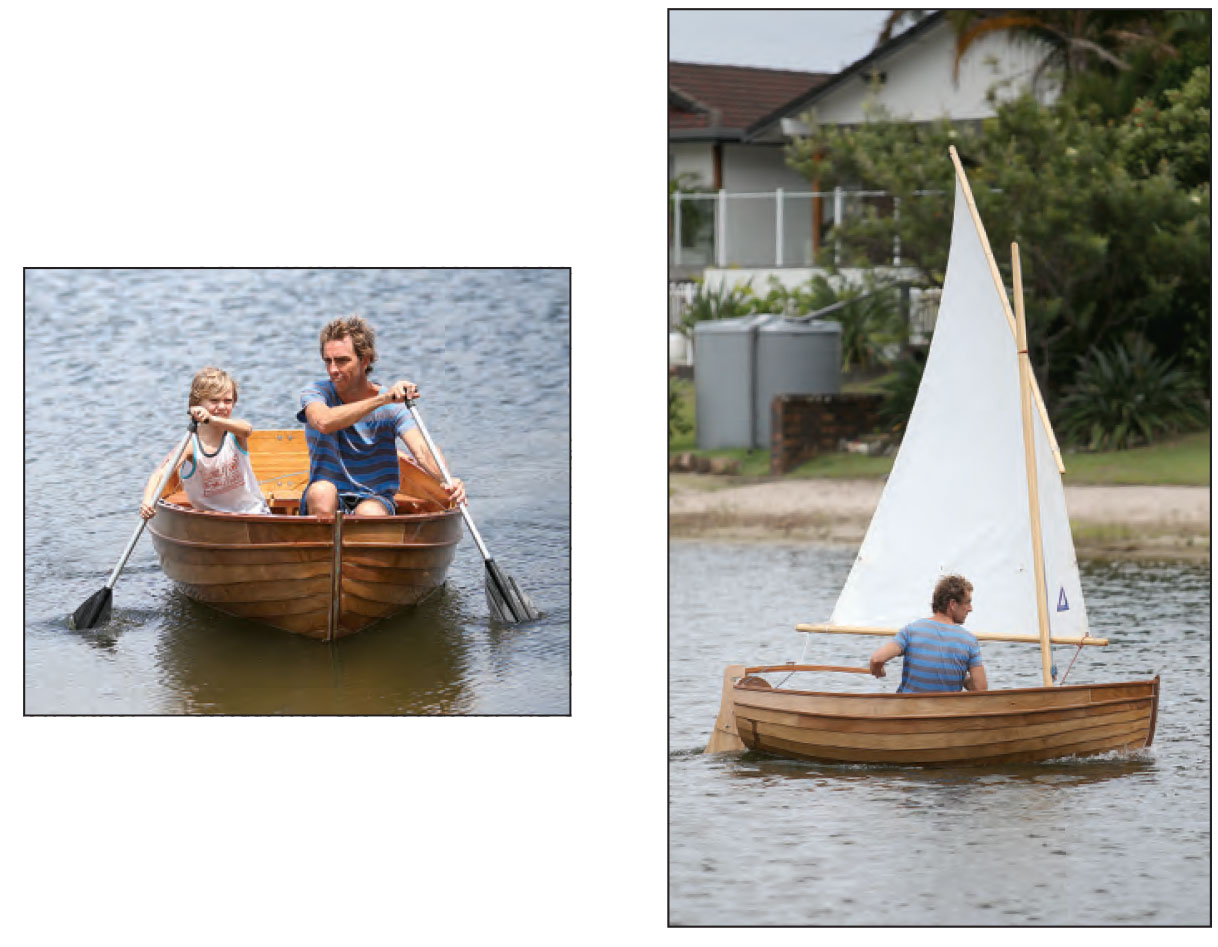
MELISSA
Photos by Melissa O’Shea
After five years of work, Tim O’Shea of Queensland, Australia, launched his 7′ 8″ Auk, MELISSA, on Australia Day in traditional Norse style, with red wine instead of champagne. He sails her on the canals and lakes behind Burleight Heads on Australia’s Gold Coast.
MELISSA was designed by Iain Oughtred, whose charming glued-lap plywood designs have introduced hundreds of people to the joys of building wooden boats. Tim admired the beauty of the Auk, but also chose her because she was small enough to fit in his available building space. Tim had little in the way of carpentry skills when he started building MELISSA. He learned so much along the way, he is now teaching the students at his school to build and sail wooden boats. Plans for many Oughtred boats are available from the WoodenBoat Store.
Tim reports that MELISSA sailed very well indeed, and he believes she’ll row very well too, once he makes the oars. He adds, “The sound of the water working its way along the hull was nothing short of magic, as was her light and nimble handling. Iain Oughtred draws boats that not only look pretty, but sail pretty well too. She is named in honor of my beautiful wife, who has quietly let me go about finishing this build and has occasionally helped out when there simply weren’t enough clamps.”
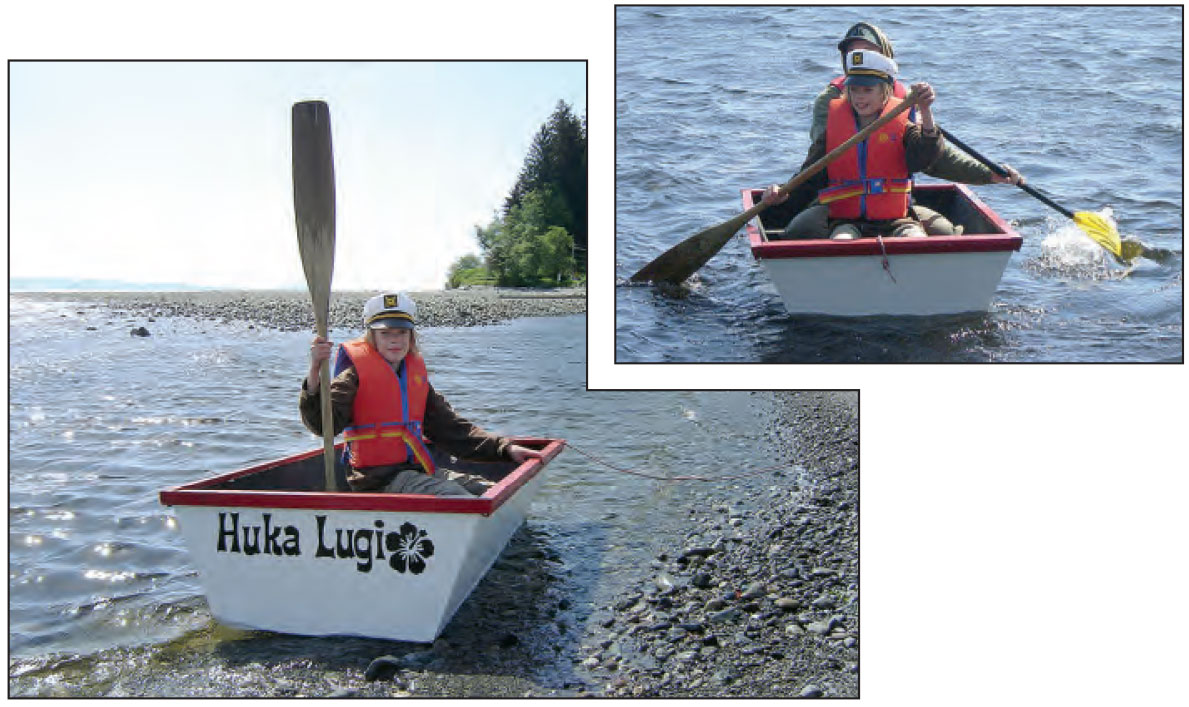
HUKA LUGI
Photos by Karin Pfitzner
Rowan Buelow, age 12, has always wanted to build a boat. His dream came true on May 11, 2014, when he launched this 5′ 6″-long plywood rowboat that he built with his dad.
Rowan designed the boat himself. He did all of the measuring and most of the cutting. His father held the pieces for him while he fastened everything together. The hull is made from fir plywood with cedar frames.
It took Rowan just eight months from initial idea to final launch. Rowan named her HUKA LUGI. He plans to use her close to shore in the protected ocean waters and lakes of southern Vancouver Island in British Columbia, Canada.
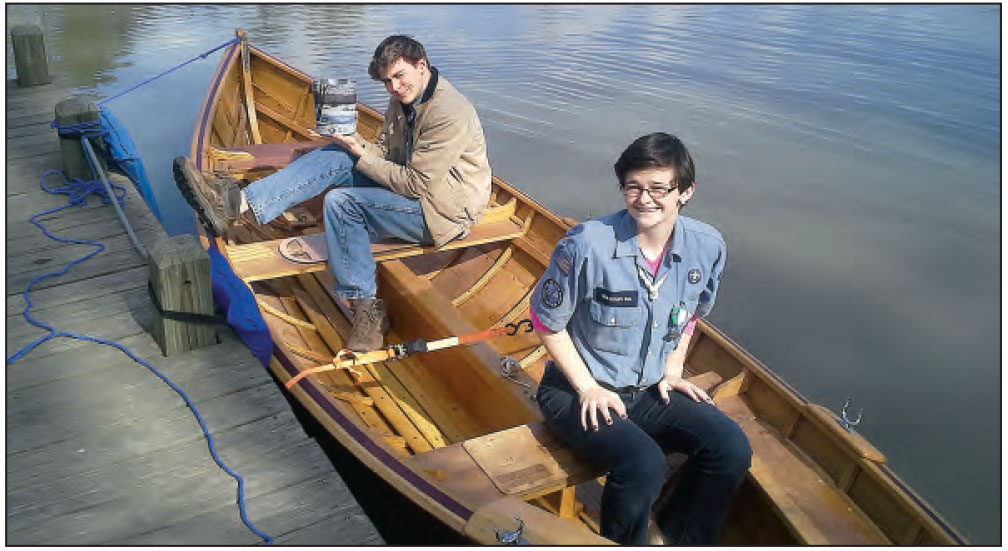
REVEILLE
Photos by Sea Scout Ship 1332
John Nichols, a professor at Texas A&M University, had his Structural Analysis class last year build a Walt Simmons–designed 15′ 6″ Matinicus Double-Ender. Out of a class of 128 students, a team of five managed the build—raising necessary funds, and ensuring their classmates worked their required number of hours on the boat. Professor Nichols notes that 128 people worked on this double-ender, and of that group, only two had ever touched a boat before. The class started the boat in late September and finished her at the beginning of December. They also built six oars. This was the second of eight boats built in this class.
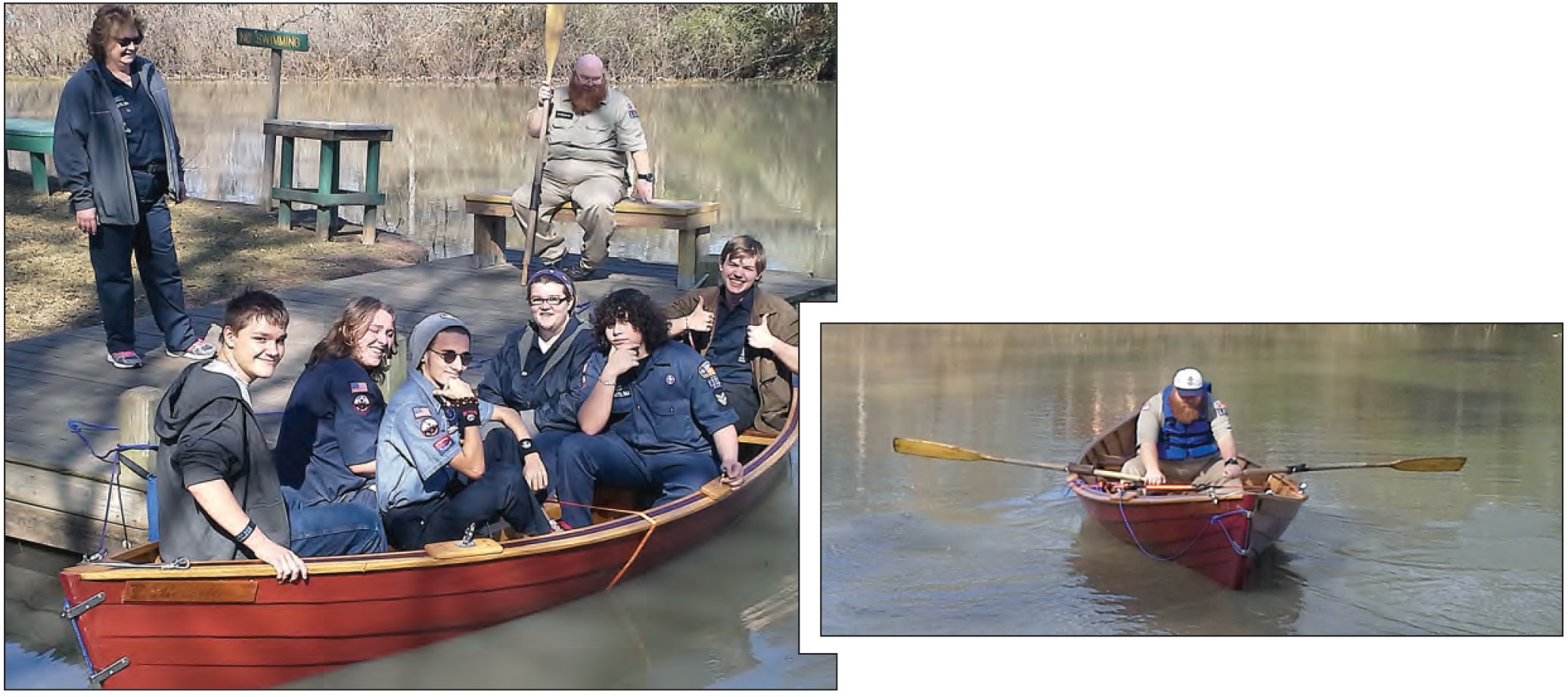
The hulled is planked with steamed white oak planking, fastened with copper rivets and roves. The frames are laminated from pieces of 3mm oak. The centerboard trunk and seats are also oak, and the gunwale is purple heart. The students laser-cut the university logo into the seat, and painted the hull with Texas A&M maroon paint from the Kirby Paint Company. The boat is named REVEILLE after the American collie mascot of Texas A&M.
When the boat was finished, the class gave it to Sea Scout Ship 1332, based in Houston, Texas. Sea Scout Skipper Alan Cross put the double-ender to the test right away, filling her with seven scouts as they launched her in the Buffalo Bayou. The crew hopes to compete in rowing races with other scouts around the state. 
Have you recently launched a boat? Please email us. We’d like to hear about it and share your story with other Small Boats readers.
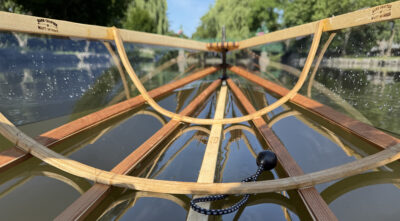
Check out these other reader-built small boats…
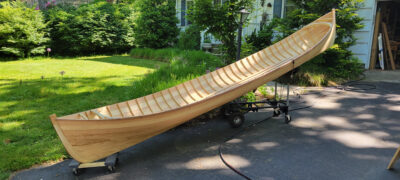
Building a Piranha, a young Polish woodworker tackles his first boatbuilding project
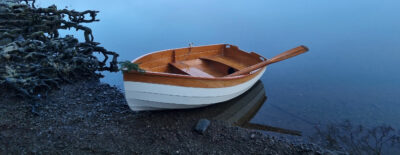
PILGRIM, a Karl Stambaugh Redwing 18
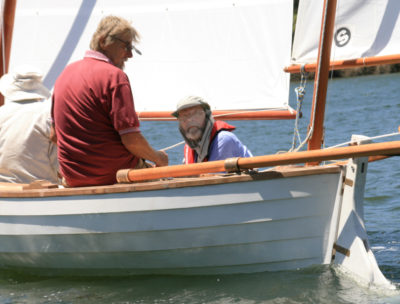
A George Putz Walrus, an experimental skin on an old-school frame


Join The Conversation
We welcome your comments about this article. To include a photo with your remarks, click Choose File below the Comment box.