I had never been to Mexico before. But there I was, on a lonely beach on the east coast of Baja California dressed only in my boxer shorts, wielding a 10″-long hatchet under a silvery moonlight, staring into the yellow headlights of a Ford F150. Facing me were two men, one brandishing a golf club. The other, a shirtless man with tattoos covering his torso and arms, pointed his finger at me and growled, “This him?”
“This is it,” I thought, and prepared to fight for my life.
North through the Sea of Cortez
Twenty-four days earlier and some 550 miles south, I had been bobbing up and down on the long glassy swells of the Sea of Cortez in my 18′-long wooden rowboat named GINGER. My friend AJ had just dropped me off at the Dunas del Mogote, a nature preserve a few miles north of La Paz in Baja California Sur. Together we had driven for two days in my Suburban from Phoenix, Arizona. Now, from the water, I watched as AJ drove away and disappeared over the top of a heaping sand dune. As the dust cloud settled, so did the realization that my only chance of abandoning the adventure of a lifetime had just departed.
 Photographs by the author
After two days of driving from Phoenix, Arizona, to La Paz, Baja California Sur, I was happy to take a moment to pose for the camera. AJ and I spent the first night camped on a cliff overlooking the Pacific Ocean, and four hours of the following night digging the car out of the sand after we got stuck in a dune in the Dunas del Mogote nature preserve.
My plan was to row north along the coastline of the Baja California Peninsula from La Paz to San Felipe, a distance of roughly 650 miles. I hoped it would take me no more than 35 days since that was when my friend Isabel was supposed to pick me up in San Felipe. The east coast of the peninsula is a diverse array of soft sand beaches, smooth cobble rocks, extensive desert, vertical sea cliffs, and rugged mountains. For overnight accommodations I required only a plot of reasonably level land where I could lay my sleeping bag and camp above the high-tide mark. I did have a tent, but I planned to use it only if it rained; it never did.
It was May 14, 2022, and I was 29 years old, the age when physical capability combined with a keen sense of adventure permits a person to explore the world. I knew of a few kayakers who had traveled smaller sections of the peninsula but had found no information about any expeditions that had rowed or paddled the entire length. It seemed like the perfect challenge. Now, I was not so sure… I was alone, spoke no Spanish, and had never before rowed in the sea. Maybe this was a stupid idea, I thought, as I turned GINGER’s bow north toward San Felipe and plunged my oars into the clear turquoise waters of the Sea of Cortez.
 Roger Siebert
.
GINGER is an 18′ Angus Expedition sliding-seat rowboat, built for seacoast adventure in most conditions. She is flat-bottomed with a 3′ beam, fine ends, and nearly plumb stems. She’s incredibly stable in rough water. Her hull is sheathed in Kevlar to withstand long drags over jagged rocks, and apart from the oval cockpit opening, she is completely enclosed, with three watertight compartments in which I had stowed more than 250 lbs of gear, food, and water.
Not 10 minutes into my journey and barely 200 yards from land, I noticed a large fin jutting above the water’s surface. It looked like the nose of a surfboard slicing upright through the water. I quickened my pace and rowed away, putting distance between me and the threat. I rowed for about an hour without incident before deciding to take a break. Rowing has many advantages—I can carry more gear than in a kayak, I get to admire the path I have traveled, and my whole body becomes stronger—but not seeing where you’re going is a distinct disadvantage. As I swung the oars out of the water, I glanced forward over my shoulder as GINGER glided on. There, barely 20’ ahead of me, was another giant surfboard-like fin.
I spun around, frantically dug my starboard oar into the water to turn the boat, and raised it again just in time for the fin to pass beneath the blade. I peered over GINGER’s side to see a huge shadowy mass, both wider and longer than my boat, slip by beneath the water’s surface. It was a whale shark. The anxiety drained from my body as I laughed with relief. A few minutes later I saw another fin gliding through the water, but this time I knew what it was, and I smiled.
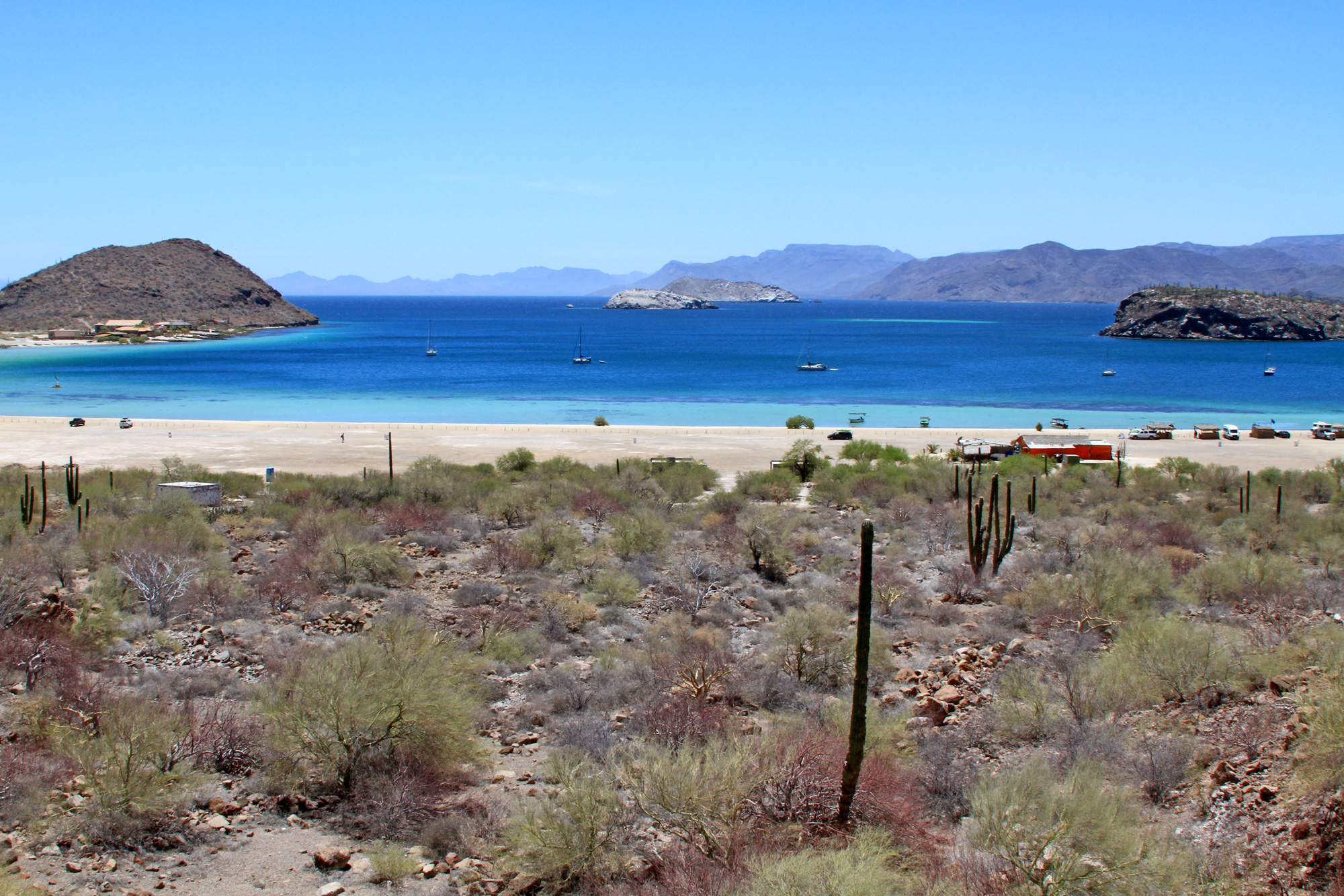
On the way to La Paz, we stopped to admire the startling aquamarine blues of the Sea of Cortez that were in stark contrast to the muted desert colors that surrounded it. Despite the apparent harshness of the landscape, I was to discover a thriving ecosystem in and around the sea.
The company of wildlife
Two hundred and fifty miles farther on and several days later, my hands were layered with thick calluses, and the muscles along my spine were like rods of rebar, but no matter what type of steel I believed my butt had been forged from, sitting down and rowing for hours was still a real pain.
It was 3 p.m. and I was close to the state line that divides the Baja California Peninsula into the states of Baja California Sur and Baja California. The 20-mph headwinds I had been battling since the previous day were finally subsiding, and I decided to give my butt a break by bracing my legs and shoulders on opposite ends of the cockpit and lifting my midsection above the seat. A flicker of motion in the water to my right caught my attention. I glanced over and found myself looking into the black eyes of a slick-headed seal peeking at me from the water. A second head popped up. Then another, and another, and another… all staring at me.
A few seconds later, the seals retreated beneath the surface. The sun was still high in the sky and illuminated the depths of the sea so I could watch the seals swimming back and forth under the boat. Then one of them pierced the surface, its whole body leaping into the air and plunging back into the water. Soon, there were five sleek-bodied seals playfully breaching the surface all around me.

In one of my first encounters with the local wildlife, I met this horse near Punta Coyote, a small fishing settlement on the Sea of Cortez coast of Baja California Sur. Shortly after we caught sight of each other, the horse joined the rest of its herd that had been hidden by bushes at the top of the beach.
I started rowing, and they followed. After a few minutes, the sound of barking reached my ears. I turned in my seat; we were approaching a colony of seals near a rocky outcropping. As I neared, some 20 seals swam to join me and the original five. They swam and leaped, sometimes behind me, sometimes in front. The conditions were perfect for rowing, and I was flying across the smooth swells at full speed, but the seals could easily swim faster. For an hour we kept the pace, until at last, I stopped to give my butt another break and watched the seals as they slowly disappeared from sight.
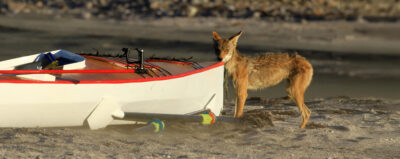
Before setting out on this voyage of discovery I had thought I would be alone. But the Sea of Cortez was filled with an astonishing abundance of life. That same evening, after dragging GINGER over a 4′-high sand berm to get her out of the water, I sat on the soft sand and gazed out over the sea. In the shallows I could see dolphins and seals; above them a flock of pelicans swooped and dived, hunting for fish; on land, a lone coyote scoured the shoreline for the remains of marine creatures. As the sun sank below the sea, I laid out my sleeping bag and gazed into the night sky packed with layers of brilliant stars.

After an exhausting day, during which I was pushed backward by powerful headwinds and gusts of over 30-mph, I made camp early, about 15 miles south of the border between Baja California Sur and Baja California. The farther north I traveled, the more common and curious the coyotes became.
One night, while the wind was whipping through my sleeping bag and I was struggling to sleep, I felt a firm pressure against my left butt cheek. Startled, I scrambled from my sleeping bag, grabbed my headlamp, and flicked on the light. Barely an arm’s length away, a coyote was staring back at me. I yelled and it trotted away.
Another night found me hurling dozens of hermit crabs out of my camp, fighting them off as they burrowed into my gear and tore into my shoes. And on one morning, as I was breaking down camp, I discovered a foot-long rattlesnake cozily nestled under the food bag that I had been using as a pillow.
Not all my wildlife encounters were stressful. Three days after leaving La Paz, I landed on a beach near the small settlement of Punta Coyote late in the afternoon and lay down to take a nap. When I awoke, a chestnut-brown horse with a tiny white dot on its forehead was meandering along the wet sand toward me, the water lapping around its hooves. We made fleeting eye contact, both surprised to see each other, then it bolted up the beach and joined a herd of five other horses that had been hidden behind the tall bushes at the sand’s edge.
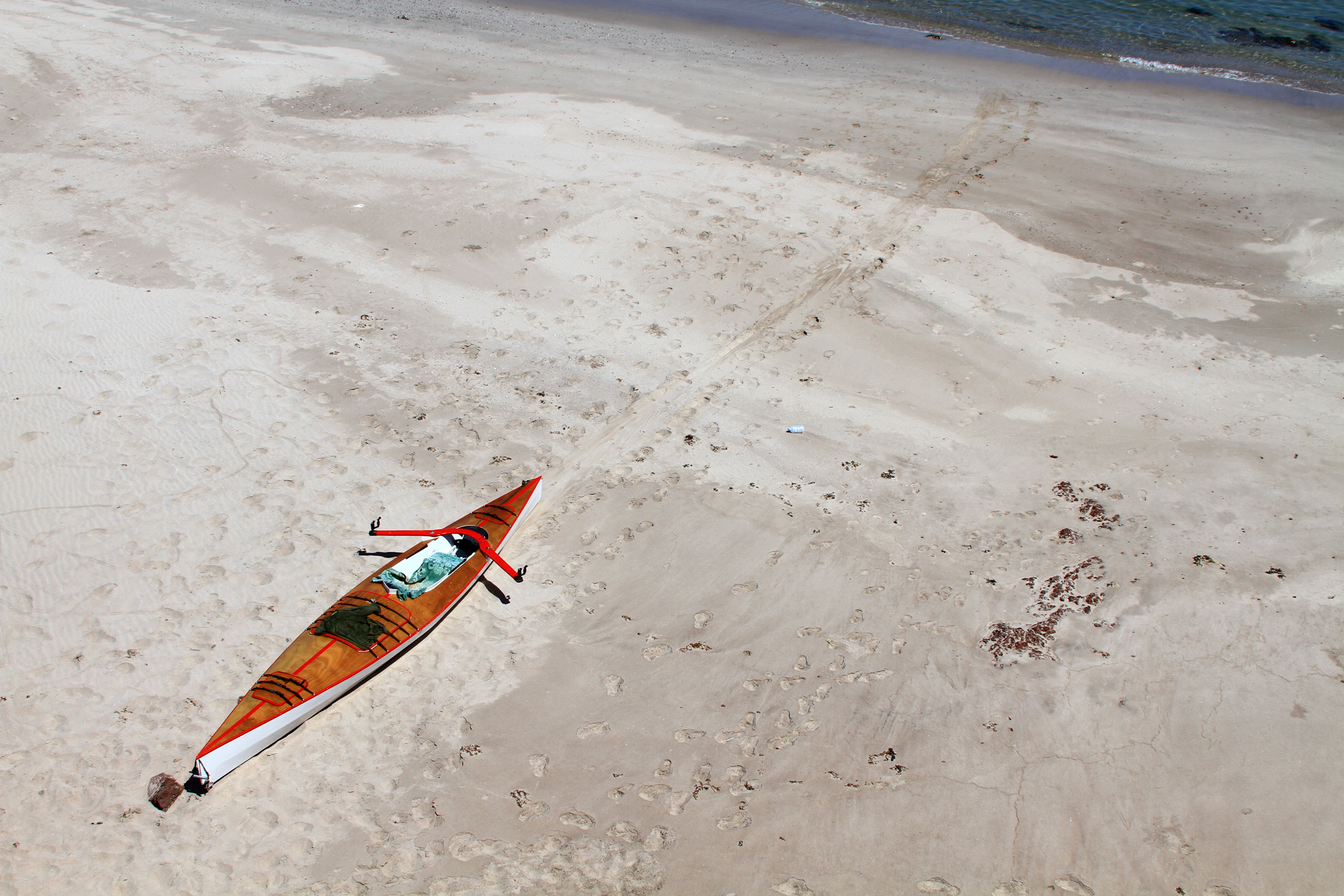
The day after leaving Loreto and just 7 miles farther on from my cobble beach, I spotted this peaceful-looking sandy beach. It was only 8:30 a.m. but I had been making good time and decided to stop and relax there for the day. During the night, I discovered that I was not alone in enjoying the beach—dozens of hermit crabs were burrowing into my gear.
The generosity of locals
In the mornings, as I followed the eastern edge of the peninsula, thin rays of light began to leak into the salty water at around 5 a.m. until, just 12 minutes later, the surface of the water had become a sun-drenched yellow canvas, and it was impossible to distinguish sea from sky. If I was lucky, the silhouette of a fisherman standing tall in his skiff would cross my field of vision to give context to the morning artwork.
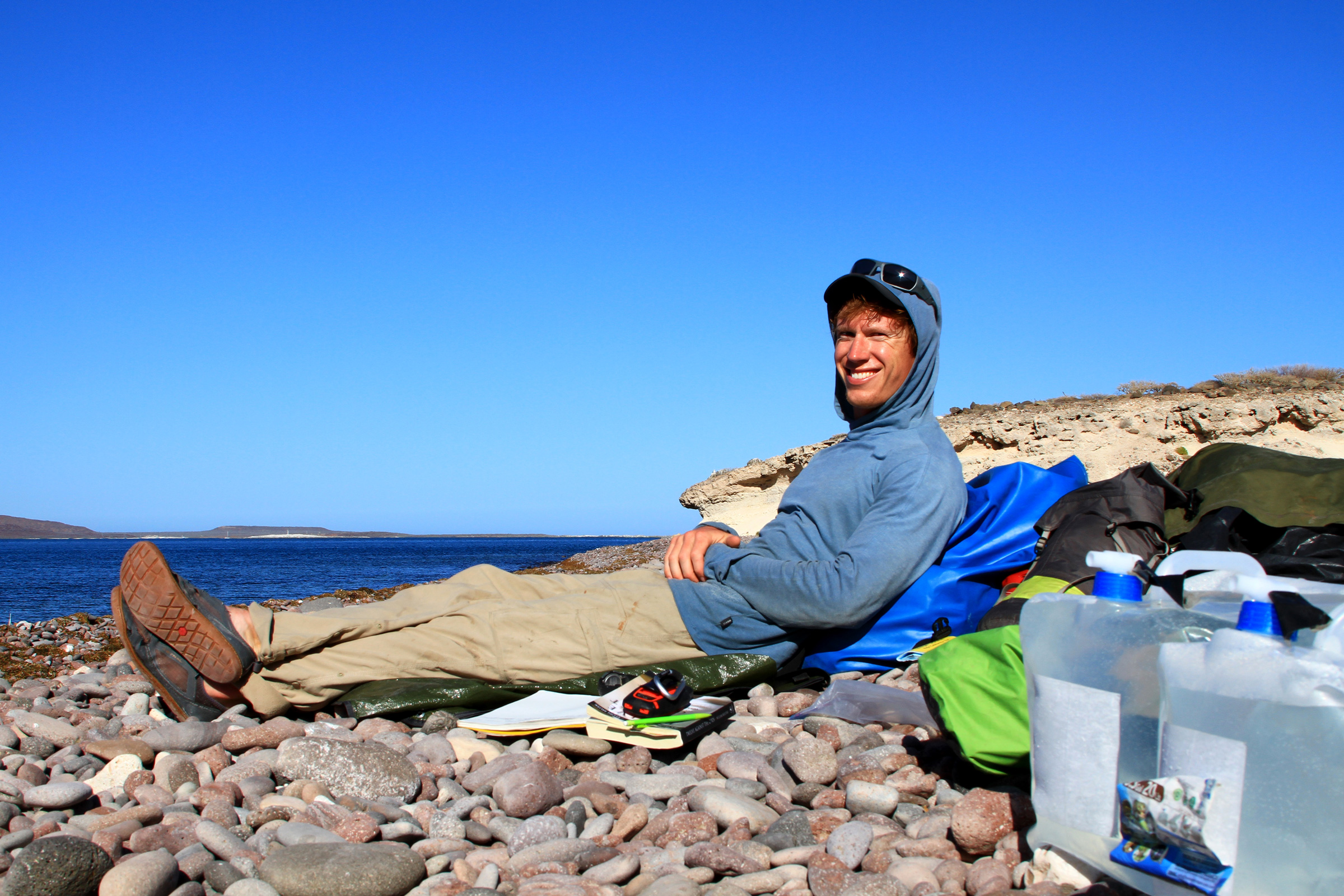
After filling my water jugs in Loreto, the first of three re-supply stops, I stopped to camp on a small cobblestone beach 11 miles north of the town. I spent the rest of the day reading, dozing, and walking along the shoreline.
By 5:30 a.m. each day, the sun had climbed well above the horizon, its heat already palpable on my skin. Even at the beginning of my journey in mid-May, the mid-afternoon temperatures had been close to 100°F; by June, the normal was higher than 100°. On windless days, in an effort to stay cool, I removed my shirt several times an hour, dunked it in the sea, and put it back on.
I had decided not to carry a portable desalination kit due to cost, and one of my biggest concerns was having enough fresh water to stay hydrated through the long days of rowing. Planning to row about 20 miles a day, I had plotted my course to give myself sufficient supply stops—Loreto, Santa Rosalía, Bahía de los Ángeles—that 18 gallons of fresh water would see me through. There were few access roads in Baja California Sur, and I wanted to be sure that I had enough for hydration plus emergencies. I had expected to drink about 2 gallons a day but in the end I drank a little less. For food, I ate oatmeal, peanut butter, coconut oil, Clif bars, and Backpacker Pantry meals—it wasn’t an amazing cuisine, but it was good enough, and when I stopped to resupply, I supplemented my rations with fresh fruit and cookies.

In the fading light of the setting sun, I saw this small fishing boat nosing into the shoreline at the mouth of Concepción Bay. The next day I made the 6-mile crossing of the bay from the tiny village of Concepción to Mulegé.
My first inhabited stop after leaving La Paz was Loreto, a small colonial-style city founded by Jesuit priests in 1697—the first Spanish settlement on the peninsula. Today it is a thriving oasis nestling between the Sea of Cortez and the high Sierra de la Giganta, its streets lined by palm trees and vibrantly colored buildings of rarely more than two or three stories. I had been rowing for eight days and had covered roughly 180 miles; when I pulled into the Bay of Loreto, I had 5 gallons of water in reserve. As I approached the town, my attention was split between looking for a place to land and watching a school of frying-pan-sized stingrays perform front flips, back flips, and side flips before belly-flopping into the water with a plopping sound. Eventually, I focused on finding a landing. AJ and I had driven through Loreto on our way to La Paz, and I knew there was a store near the beach where I could fill my water containers.
At last, I found a suitable spot, nosed GINGER ashore, and unloaded the heaviest items so I could drag her up above the tidal line. As I began the laborious dragging process, a man walked down the beach, grabbed the bow handle, and together we hauled GINGER to safety. Besides some grand waving gestures to fishermen who had passed me by in their boats, this was the first genuine human contact I had had in a week, and it felt good.
The store selling purified water was only a quarter mile away. I filled my containers with 100 lbs of water and began my trudge back to the beach. A boy on a bike—too small to carry a 5-gallon container of water—offered to help, and later, as I was almost at the beach, two men in a truck also offered.

Many of the beaches where I camped overnight looked like this—long deserted stretches of sand. I always tried to bring GINGER above the most-recent looking high-tide mark. However, I never wanted to carry her too high up the beach because the following morning I’d have to haul her, and my gear, all the way back (and farther if there was a falling morning tide).
Kindness and curiosity were common among the people I met on the peninsula. When I resupplied in Santa Rosalía, I had to walk a mile to find drinking water. As I set out to return to the boat with my two 5-gallon jugs of water, a man saw me struggling, and drove me back instead. In Bahia de los Ángeles a team of fatigue-clad soldiers bearing assault rifles walked into my camp at dusk. I thought they were going to arrest me for breaking some unknown law, but instead, the captain only wanted to know what kind of fish I had caught.
Surviving extremes
I could feel my stomach in my chest. Then I could feel my stomach on top of my hips as I rode the massive seas on my way to Calamajué Bay. I had covered roughly 500 miles and had reached a 21-mile stretch of unforgiving coastline: 100’-high cliffs and jagged rocks rose straight up from the water; there was nowhere to land. The swells were monstrous, somewhere between the size of a one- and two-story building. I’m not sure what scared me more: looking up to the top of a powerful wave from the trough far below or watching the endless line swells traveling toward me as I balanced on a wave’s crest.
An hour earlier I had checked my GPS and knew that I was nearing the safety of Calamajué Bay, but the swells were driving me ever nearer to the cliffs and I didn’t dare let go of my oars to check again. I had to focus all my energy on angling GINGER away from the shoreline just enough to keep us from being crushed between water and rock, but not so much that I risked being flipped while crossing the swell.
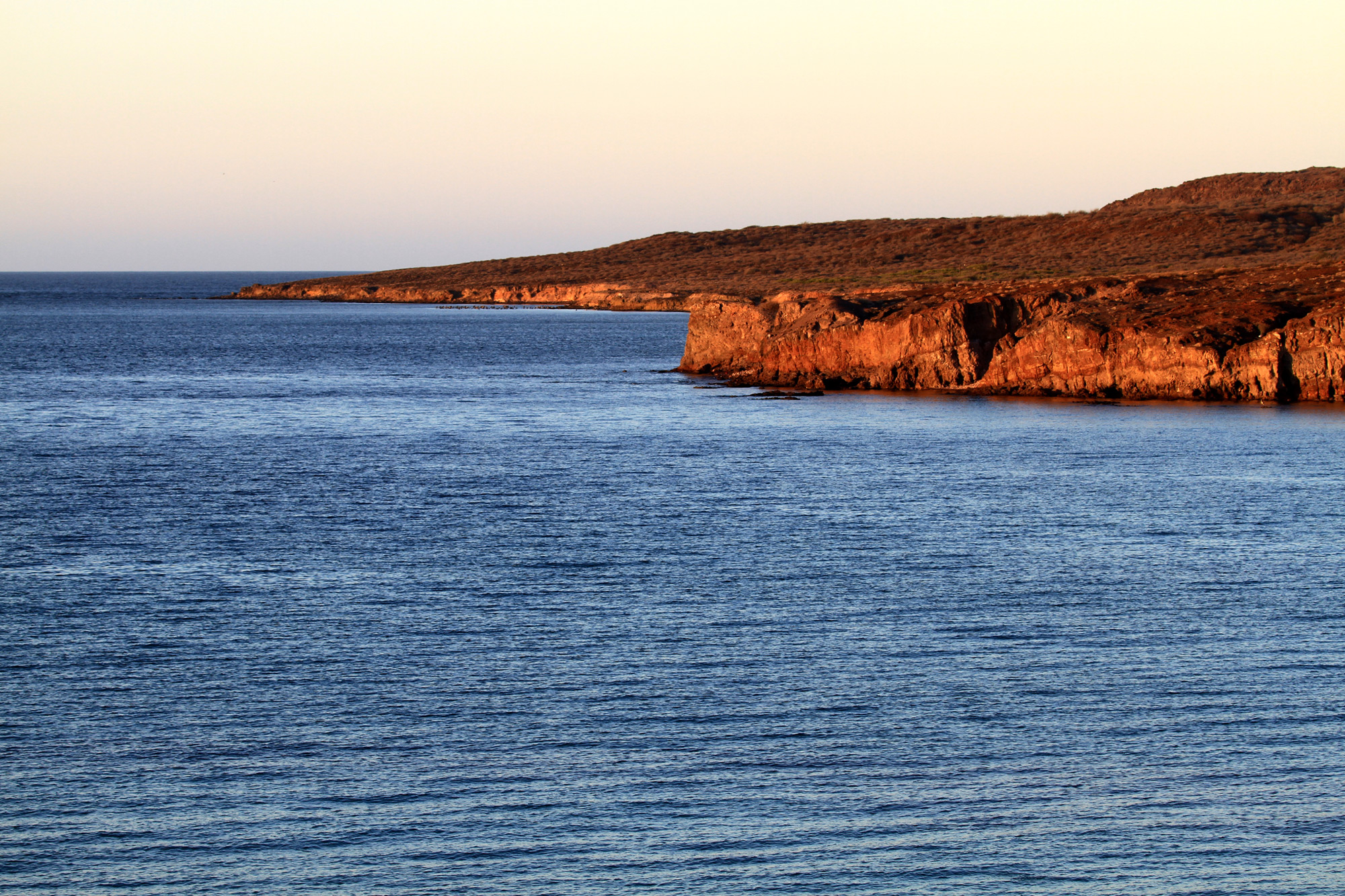
Near Concepción Bay the coastline was marked by cliffs about 50′ to 60′ high. These were later dwarfed by the cliffs to the south of Calamajué Bay, where the sea state was the most challenging of the entire trip.
Another half-hour of white-knuckle rowing, and at last I rounded the high headland that kept the deadly walls of water from the placid surface of Calamajué Bay. In the sudden absence of waves crashing on rocks, I could hear the droplets falling from the blades of my oars into the water below. I stretched out in the cockpit, rested my head in interlaced fingers, and took my first break in several hours, grateful to find this tiny slice of calm amidst a big water wilderness.
From Calamajué to San Felipe
Two days later, I was in despair. The backpack containing my passport, driver’s license, credit cards, cash, cellphone, and spare car keys was gone. The night before, I had misjudged how far the tide would rise and had woken to waves crashing onto the beach only a few feet from my camp. I hurriedly hauled GINGER and my gear higher up the beach, and fell back asleep. But when I began packing up in the morning I discovered my backpack was missing. I believed that I had forgotten it on the beach below the tide line, and the sea had taken it.

I resupplied in Santa Rosalía but didn’t stay. Instead, I camped on a beach 18 miles north of the town and in the morning enjoyed watching this procession of pelicans silhouetted against the rising sun.
I spent the day searching. At around 4 p.m., I went snorkeling through the shallows in the desperate hope that the incoming tide would return my bag. I poked my head out of the water and saw a man walking down the beach toward my camp. I waded out of the sea and waited next to GINGER for him to arrive. His face was obscured by a dark brown balaclava, large circular sunglasses, and a black baseball cap. I waved as he approached, and he pulled the balaclava down around his neck. He smiled and introduced himself in broken English. His name was Adair, and he worked at a fishing camp a mile to the north.
I asked him if he had seen a black backpack. He smiled at me again; did the backpack contain my identification documents? I replied that, yes, it did. Again, he smiled; his friends knew where my backpack was and I should wait here until he returned. Then he spun around and started walking back in the direction from which he had come. Since I had nothing else to do, I waited.
By 10:30 p.m. I had lost hope that Adair would return and was dozing off when the low rumbling sound of an engine jarred me awake. I jumped up from my sleeping bag. A Ford F150 skidded to a halt 60′ in front of me. The truck’s headlights illuminated the foreground as all four doors burst open and four shouting men poured out. Two of them slowly walked in my direction, their bodies silhouetted by the headlights.

In the afternoon of the day before I lost my backpack, I watched two fishermen retrieve their nets near the beach. Pelicans were never far away when fishermen were working.
“This him?”
I grabbed my hatchet, the only weapon I had, and prepared for a fight. A fifth person was being dragged, shrieking from the truck. I tightened my grip on the hatchet. As one of the men wrangling the frightened passenger stepped out in front of the group, a voice rang out. “Owen, Owen…everything is fine!” It was Adair. Still afraid, I watched as the men pulled their squirming prisoner across the sand and flung him to the ground in front of me. He had clearly been beaten. His arms, neck, and face were covered in red, swollen welts. Both his eyes were puffy, and his left eyebrow was bleeding. Pointing at him, Adair said “Owen, this is Pancho. He stole your backpack last night while you were sleeping.”
Pancho immediately began yelling in protest, but was quickly silenced by a flurry of punches from one of his captors, a shirtless man whose torso and arms were covered in tattoos. “You shut up!” he yelled, before turning to me with a smile. He handed me a small purple bag containing my driver’s license and credit cards, but no passport.
Without warning, two of the men lifted GINGER up and loaded her horizontally across the truck bed. “It’s too dangerous here, you need to come with us tonight,” the tattooed man said, “there are too many thieves.” I needed my boat to get home, so I climbed into the rear cab of the truck, and allowed them to drive me to their fishing camp. The tattooed man and Adair stood in the back and held onto GINGER; Pancho was bundled into the front between the two other men.
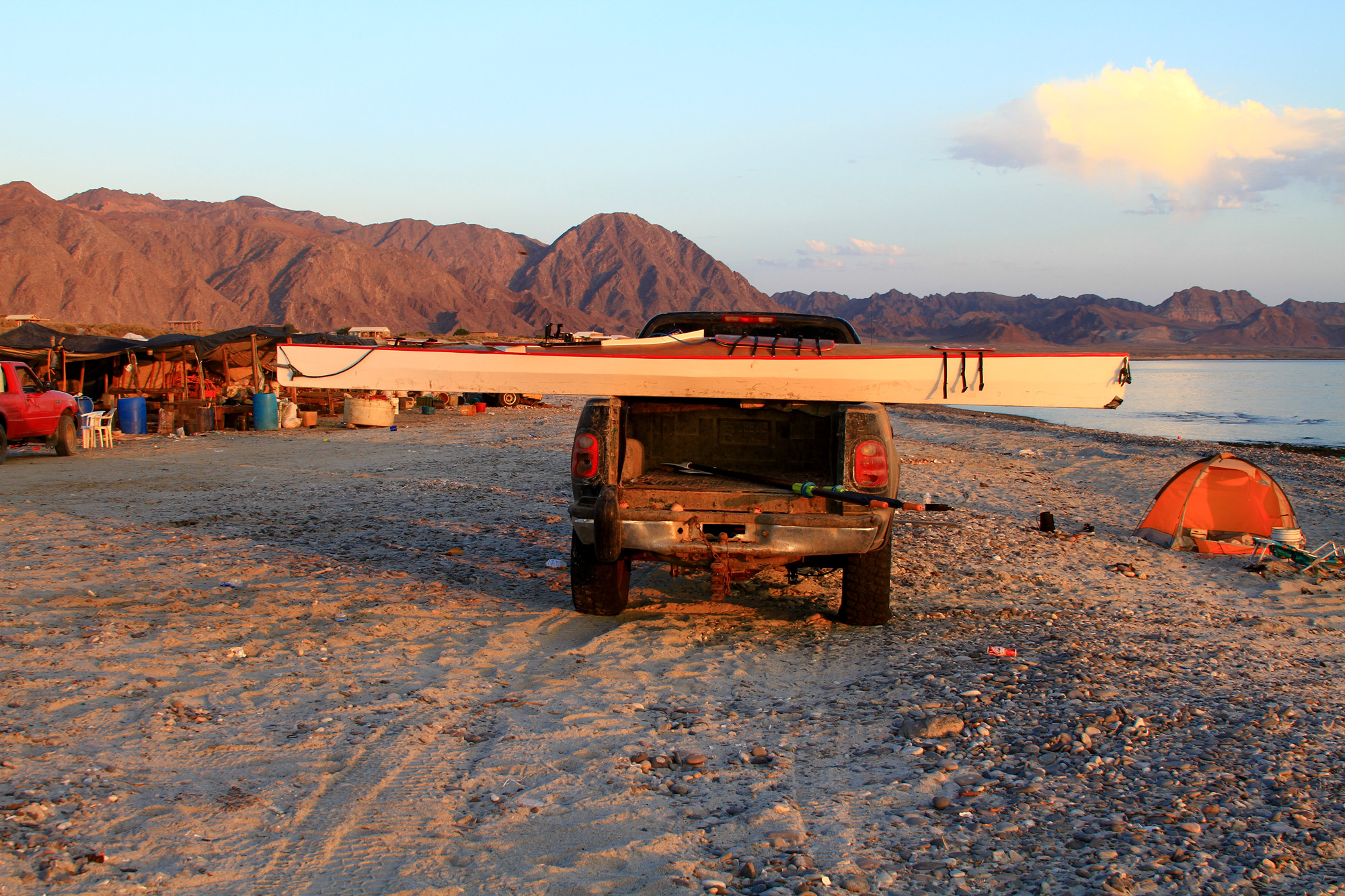
After some of the contents of my backpack had been returned to me, GINGER and I were transported into the fishermen’s camp in the pickup—I sat in the cab, GINGER was balanced precariously across the truck bed. The boat remained on the truck overnight, while I slept on the sand nearby.
When I awoke the next morning—I had slept on the beach near the truck, reluctant to leave GINGER unattended—the tattooed man brought me to a pile of ashes near one of the camp’s ramshackle buildings. I stooped down and lifted my charred car keys from the fire’s remains. I never did get my passport back.
I left the fishermen’s camp the next day, well fed and restocked with water. The men had even taken me fishing on one of their boats. They had offered to drive me and GINGER the final 100 miles to San Felipe, but wanting to complete the trip by boat, I had turned them down. Three days later, I was regretting my decision. The sea floor and shoreline had flattened so that, at low tide, there was a vast expanse of land between the high-water mark and the sea. For the last five days of the trip my mornings began with a two-and-a-half-hour struggle to drag the boat and haul my gear over rock fields and wet sand from campsite to water’s edge.
Eventually, I landed GINGER on the shores of San Felipe. I sat down on the warm sand and waited for Isabel to appear in the red Suburban I had last seen disappearing over the sand dune 33 days earlier and 650 miles away. I felt the wind build and watched the growing waves as they crashed onto the beach, and breathed deep. One month earlier I couldn’t wait to escape from Phoenix; now I couldn’t wait to return. All adventures start by leaving home, but the really good ones end by running back toward it. I was ready to run home.
Owen Alfonso is new to freelance journalism and has degrees in law and philosophy. He is attracted to stories where politics and adventure meet because there is no better way to understand an issue than traveling through it. He fills his free time with martial arts, playing with his kettlebells, and planning the next adventure. He is currently learning Spanish in Mexico City.
If you have an interesting story to tell about your adventures with a small boat, please email us a brief outline and a few photos.


Pretty gutsy endeavor Owen. Well done and well written account. Keep exploring!
Wild adventure, especially the part about the thief…What happened with the passport issue? Are you still in Mexico?
Such an impressive journey. Congratulations!
A great adventure and a great story, Owen, very well written, and the pics are beautiful. Congrats. I’ll look forward to your next one.
A great adventure, Owen, with so much more than the usual struggles with water, weather, and whereabouts. Most of us, on our small boat journeys, don’t have to deal with thieves and big, scary tattooed men. Thanks for sharing; I’m glad you survived.
I have done (with friends) several trips in the area, the most ambitious being a circumnavigation of Isla del Carmen. I found the desert beautiful and the local people to be kind and generous. Never had to deal with theft, though I realize you can run into such people anywhere in the world. Also did several trips into the Espiritu Santos islands. We used folding kayaks–Feathercrafts, both single and double. I prefer my own boat on such trips, as the rentals are usually not in great condition.
About El Norte: we quickly found it’s best to stay on the beach on such days.