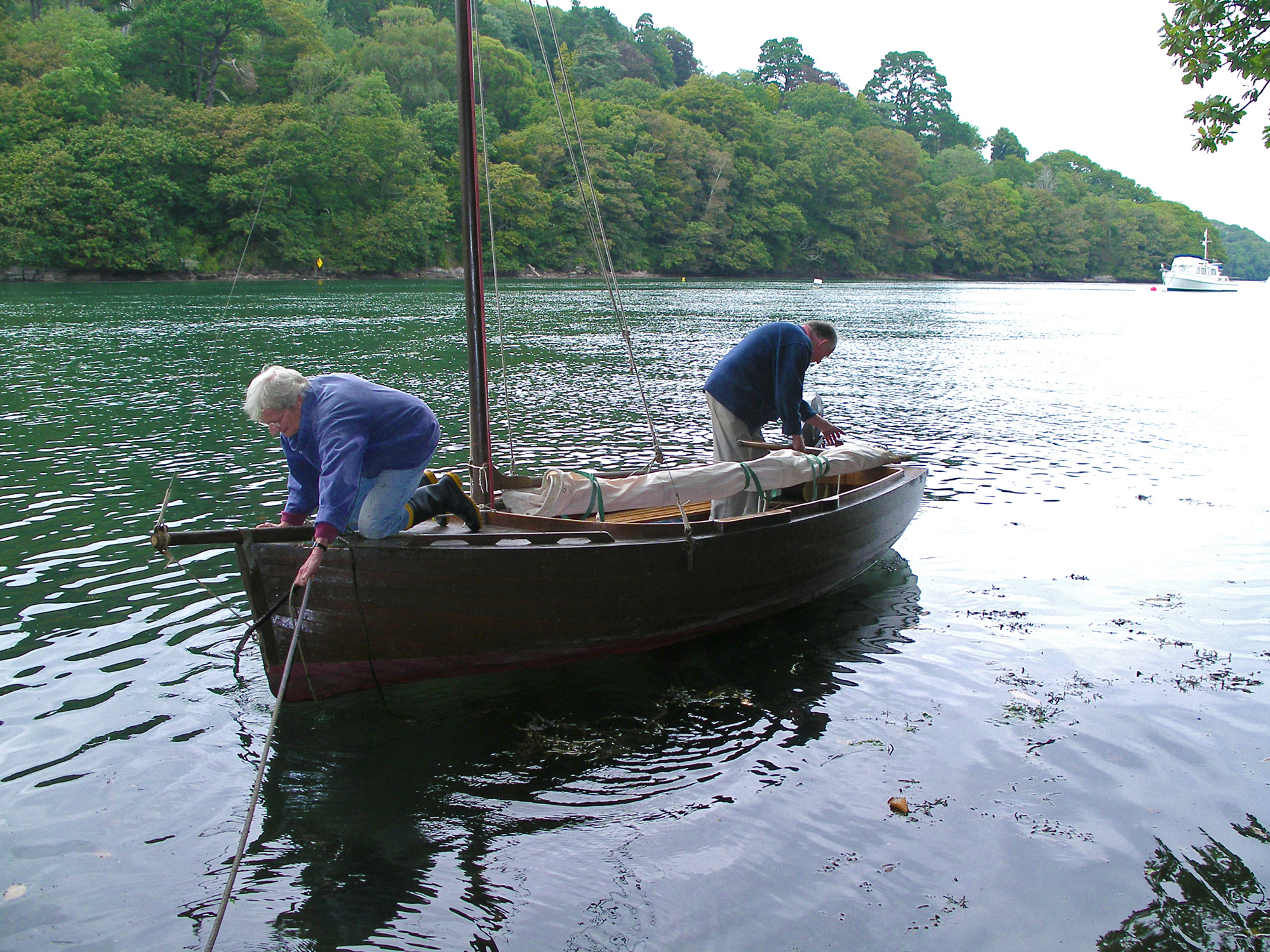
When my father was in his mid-80s and my mother was approaching 80, they made a decision that had been a long time coming: They would give up on the small sailboats that had been a constant joy throughout their married life. It was not an easy choice—for almost 50 years they had never been without some daysailer or other swinging to the outhaul that was tied off to the riverbank below the house. In the winter months, the boat would be hauled out and stored on its trailer in the garage. My father was always busy with multiple projects around the house and yard, so it was Mum who took on the boat’s winter maintenance. But summer sailing was a shared love, and one that was hard for them to give up. Nevertheless, the time had come.
 Jenny Bennett
By the time my mother was nearing her 80s and my father was well into his, their traditional gaff-rigged sailboat, somewhat tippy and with a complicated rig, had become more work than they wanted to handle. Had there been a simpler, affordable alternative on the market, they would have continued sailing for several more years.
There were many aspects to their boating that had, slowly but surely, become too difficult. They had never owned a boat longer than 16′, but all had been traditional, gaff-rigged, wooden boats with heavy hulls and complicated rigs for their size. Each spring, the process of launching at the public ramp, stepping the mast, untangling the rigging, bending on the sail, and getting the two-stroke outboard onto the transom bracket and ensuring that it worked, was anticipated with increasing dread. And even when the boat was finally launched and settled on its mooring, the summer outings became fewer and farther between: pulling the boat in and out and raising the sails had become hard work, and the effort took away much of the pleasure of a gentle afternoon’s sail. When they at last announced to the family that they were selling the current sailboat and buying a fiberglass rowboat with an outboard—so the grandchildren could still get down the river to the bay and the local beach—they did so with heavy hearts.
Remembering my parents and their difficult choice, I was particularly interested when I heard about the Old Salt, which Larry Cheek has reviewed for us in this issue. Some years ago, Josh Colvin and Brandon Davis got together to design a new boat. They had recognized that for many older people stepping a heavy mast or maintaining balance in a tippy boat can be major challenges and can cut short a long and happy relationship with sailing. But they also believed that older age shouldn’t mean having to give up or even settle for second-best or poor performance. Furthermore, they wanted to create a boat that would appeal to more than just the old folk. As they say on their website for Kit Boats Co.: “the best boat is the one you actually use. As we progressed, we realized: everything that makes this boat perfect for older sailors also makes it ideal for kids or new sailors. Who wouldn’t want a boat that’s simple, safe, and ultra-stable? … Simplicity, comfort, and capability appeal across all age groups.”
 Christopher Cunningham
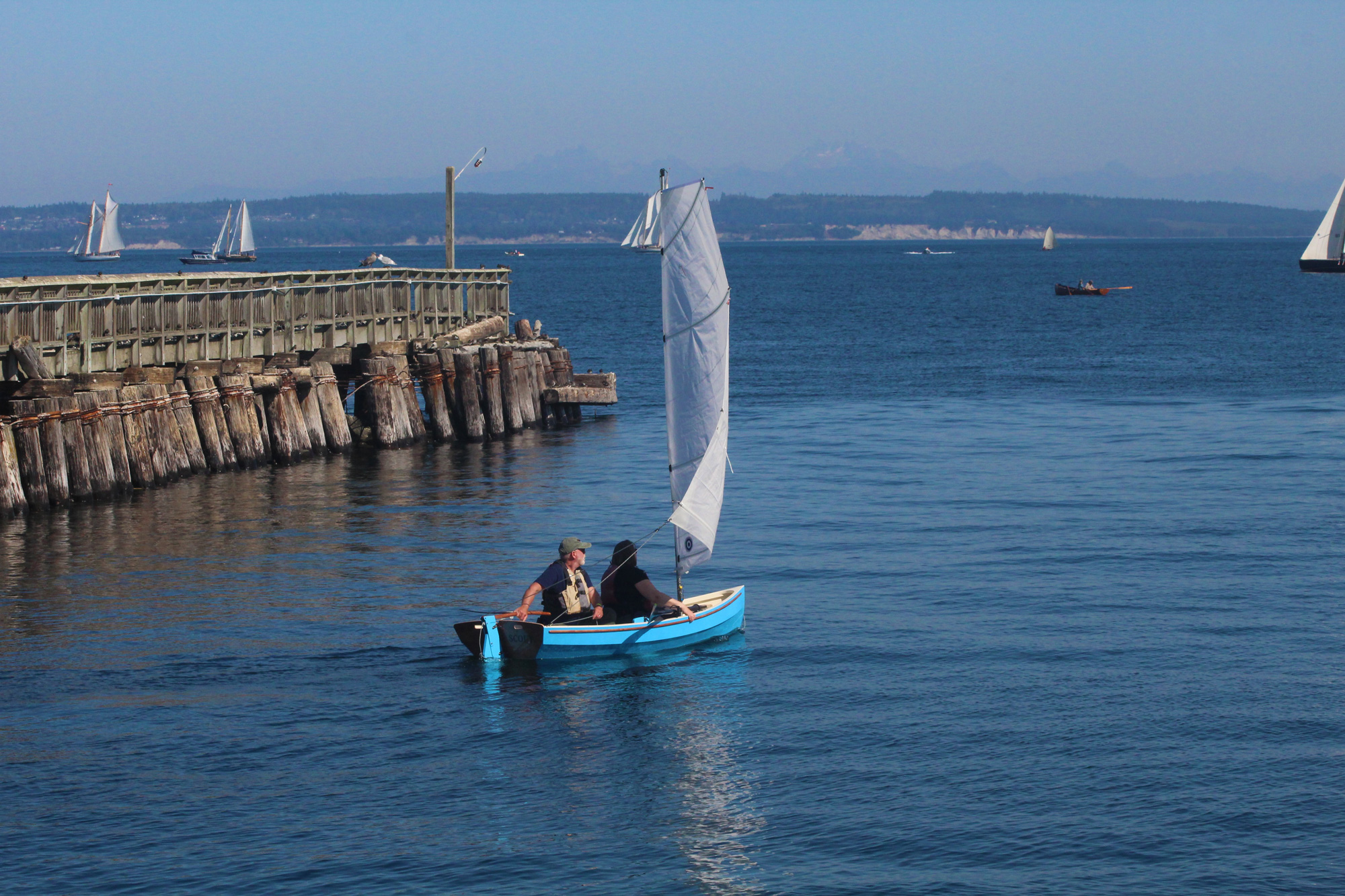
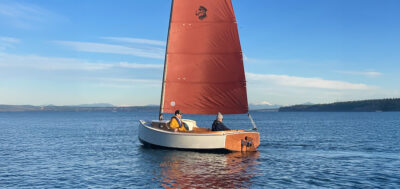
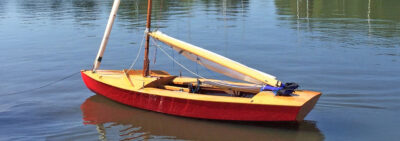
Small sailboats can keep us sailing into older age, especially if the rig is simple and the process of launching and recovering is straightforward. While Brandon Davis’s Scout 10 (seen here) answers the need for simplicity and a light-weight rig, his Old Salt design, conceived in collaboration with Josh Colvin specifically for older sailors, offers the same advantages but in a boat with greater size and stability.
The boat they have come up with is a stable 15′-long catboat with an unstayed rig, lightweight mast, and good performance. And, with an optional asymmetrical spinnaker set to a bowsprit that still doesn’t require any standing rigging, the Old Salt should appeal to a younger crowd, making it the boat that ages with the sailor. Sadly, the Old Salt came along too late for my parents, but I feel sure it would have suited them to a T.
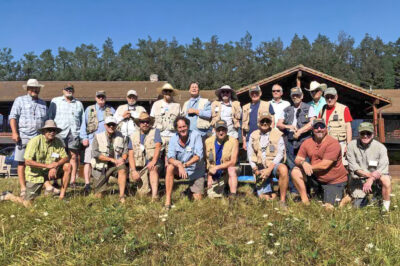
Brandon and Josh are not the only ones looking for ways to help people stay active and doing what they love. Also in this issue we are introduced to an extraordinary organization offering hope through fishing. Also in this issue we are introduced to an extraordinary organization running retreats for men living with cancer. Since 2003, Reel Recovery has been offering hope through fishing. It was founded by Stewart Brown, a fly-fisherman who was, himself, suffering from cancer. He wanted to share with others the “healing serenity that fly-fishing had offered him.” While most of the retreats offer fly-fishing in the shallows (sometimes wearing waders), the retreat described in this issue by Greg Hatten involved getting afloat and fishing from boats. In late August 2025, Greg joined four other volunteer river guides to introduce 11 men affected by cancer of various types and stages to the joy of fly-fishing from a small drift boat. Greg has written for Small Boats before and has shared with our readers his wooden drift boat, PORTOLA, built in 2011–12, a replica of a 1962 Mckenzie River drift boat. For the past 12 years Greg and PORTOLA have run many a river together, starting with the Colorado, but his new article suggests no outing has been more fulfilling than his gentle weekend on the Umpqua River with fishermen Pete and Mike.






Thank you for your insight, Jenny. Our small town on the Ottawa River boasts the oldest average age in the county (48), a yacht club with a waiting list, and a public launch ramp with a rental kayak kiosk. What it doesn’t have is an organized outing structure. The club harbours are filled with sailing and paddling craft but apart from a keen core of racers, the majority of members seldom leave the dock. I’m fortunate to have been a lifelong boatbuilder, sailor and boatman in my 77th year but I can foresee a day when I can no longer trailer launch my 18’ Angus Expedition rowboat for the early-morning 10k pull to the lighthouse and back from the public launch. There isn’t the social structure to keep old boaters on the water. My dear wife no longer has the urge to join me in her kayak, which hangs in the garage rafters, so we have settled on replacing the Expedition’s cargo hatch with a boat seat so I can take her for a cruise on a calm day. She has expressed interest in a small sailboat, something like a Melonseed, but I find I no longer have the time or interest in boatbuilding from scratch or kit. Why, I wonder, isn’t there a social structure for sharing access to watercraft? How do other communities manage this?
I love this idea. But there is also nothing wrong with rowing, perhaps they were even better off from an exercise perspective with the rowing.
Last row of 2025, Oct. 15. The Ottawa is in full flood, so we may not be on the water before mid. May.