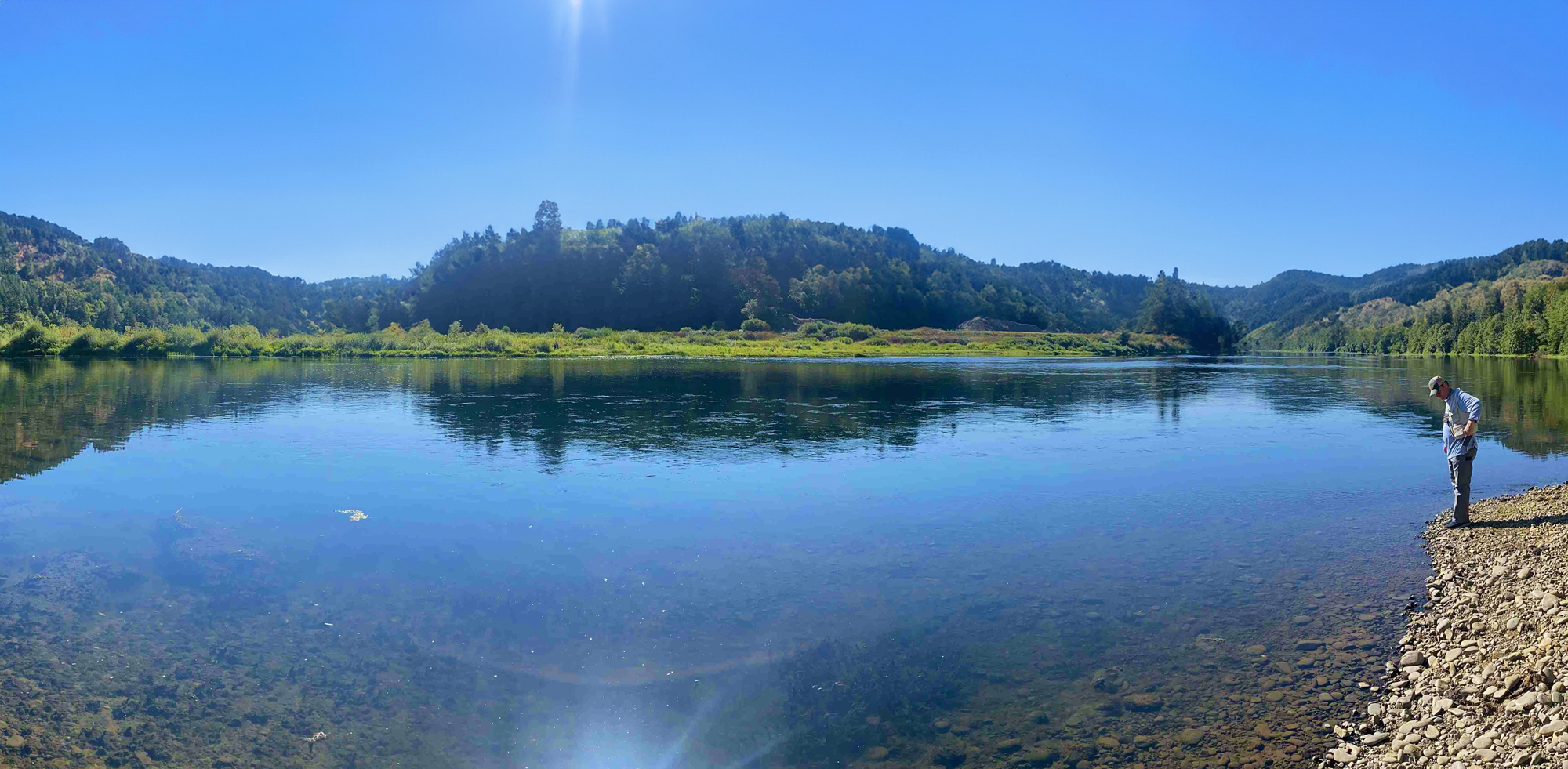
Two men sat side by side on the forward seat of my drift boat, not knowing if this might be their last fly-fishing trip on Earth. We were in the heart of southwestern Oregon, where a river of crystal water tumbles out of the Cascade Mountains, cuts through the greenery of Douglas fir, cedar, and hemlock, and takes on a lake-like quality as it nears the Pacific.
At the Big K Guest Ranch in the Elkton Valley, about 35 miles inland from where the Umpqua River flows into the Pacific Ocean, these men, along with nine others—all with various forms of cancer—had come together from across the Pacific Northwest to fish the river and confront their own mortality. They were taking part in a retreat created by Reel Recovery, a nonprofit organization that supports men battling cancer. Such gatherings have been held across the United States since 2003 and for more than 20 years have helped “men cope with the impact of cancer by introducing them to the healing powers of the sport of fly-fishing.” Like so many before them, these men had come together to bond in a brotherhood that would form around the campfire and on the river as they pursued fish on a fly and escaped, at least for a while, the demons in their bodies and their minds. Along with five other volunteers, I was there to row a boat, help them catch fish, and listen to their stories.
I have rowed thousands of river miles, and can attest to the healing power of moving water. The mind is soothed as the current courses and rolls over the basalt riverbed in a tango of waves and ripples headed out to sea. It’s mesmerizing, and when you’re on the water in a boat that rides the highs and lows of rapids, you can feel the rhythm of the river that’s been flowing for thousands of years—and will continue to do so for thousands more. The realization that the mountains, the rocks, the river, and nature are eternal—and that we are not—is humbling in a most comforting way.
 Greg Hatten
Downstream from the confluence of the upper North and South branches of the Umpqua River, some 35 miles from the Pacific Ocean, the waterway slows and widens and, at times, resembles a calm lake.
The Umpqua River is one of the Pacific Northwest’s most treasured waterways. It’s a river with personality. Here, rugged wilderness, haunting cultural history, and remarkable natural beauty intertwine. Stretching from the high reaches of the Cascade Range to the breakers of the Pacific, the river’s journey creates an ever-changing landscape that feels both timeless and alive. For generations, its forests, canyons, waterfalls, and wildlife have drawn travelers, hikers, anglers, and anyone with a passion for the outdoors, each to discover something personal in the river’s tranquil flow and power. Two separate branches—the North and South Umpqua—carve their own paths through the Cascades of Oregon before coming together to form the main Umpqua.
High in the dramatic upper reaches, cold crystal water rushes over boulders, and mist rises between narrow canyon walls. The scents of wet earth and conifer mingle together as the astonishingly clear water reveals salmon and steelhead on their annual pilgrimage up the river to spawn. The shimmering surface of the river glows with shifting hues of emerald and sapphire, reflecting the dense green canopy above, and in the summer sunsets, the waters turn crimson and burnt orange. At first light of early morning, shafts of sunlight pierce through the trees and illuminate the river in bright streaks, creating an atmosphere both surreal and sacred.
Downstream from the confluence of the north and south “Uppers,” the river widens and slows, revealing a kinder, gentler personality. Winding through rolling foothills, oak-covered plateaus, and fertile valleys, the landscape is dotted with ranches and vineyards. Here there is a mosaic of landscapes where deer, heron, and river otters explore the riverbanks, and ducks dart at breakneck speed above the surface of the water, their momentary presence contributing to the sense of peaceful coexistence that defines the river valley.
Of vests and hope
On the morning of the retreat’s first day, as we drifted downstream aboard PORTOLA, my replica 1962 river dory, my two passengers, Mike and Pete, began to open up. Mike admitted he was so apprehensive about sharing his cancer story with strangers that in the days leading up to the retreat, he had searched for reasons not to come. I asked him if he had run out of reasons or did someone give him a nudge? It was, he said, a combination of both: his wife had supplied just the right encouragement when she suggested “it would be good for me to be with other men suffering from cancer, to hear their stories, listen to their trials and know their fears.” Then there was the chance to fly-fish the Umpqua (Mike had never fly-fished before), which provided just a little more horsepower to the nudge.
Mike surrendered to the call, pulled out of his driveway, and headed south. Now, he was one of the most eager of all the campers. He had even brought along a vintage fly rod, which he described in detail to Pete and me. But, he admitted, he had left it in his cabin, opting instead on this first day to use the “high-end” rod provided by the retreat sponsor, Orvis, a Vermont-based maker of fishing and hunting equipment.
 Greg Hatten
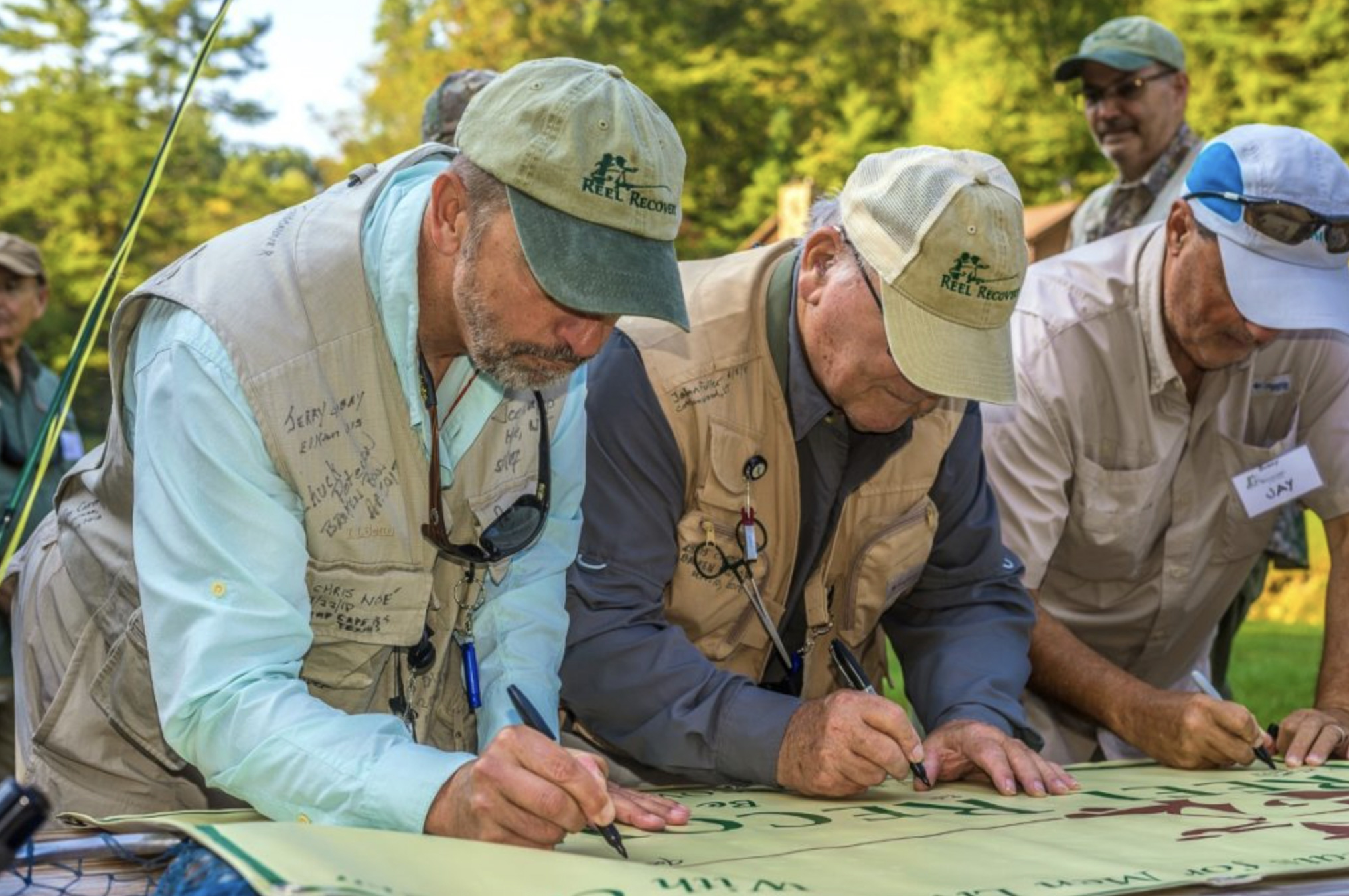
Reel Recovery fosters an atmosphere of sharing, both within the immediate group and with participants past and future. Each of the fishermen wears a vest that has been signed by previous participants, and will be worn by others in the future. Once the men have added their own signatures to the vests, they each sign the Reel Recovery weekend banner.
Pete, on the other hand, was an experienced fly fisherman and this river had been on his bucket list for years. He had just never quite got around to it.
The two had met for the first time that morning, at the pairings party, when they drew my boat.
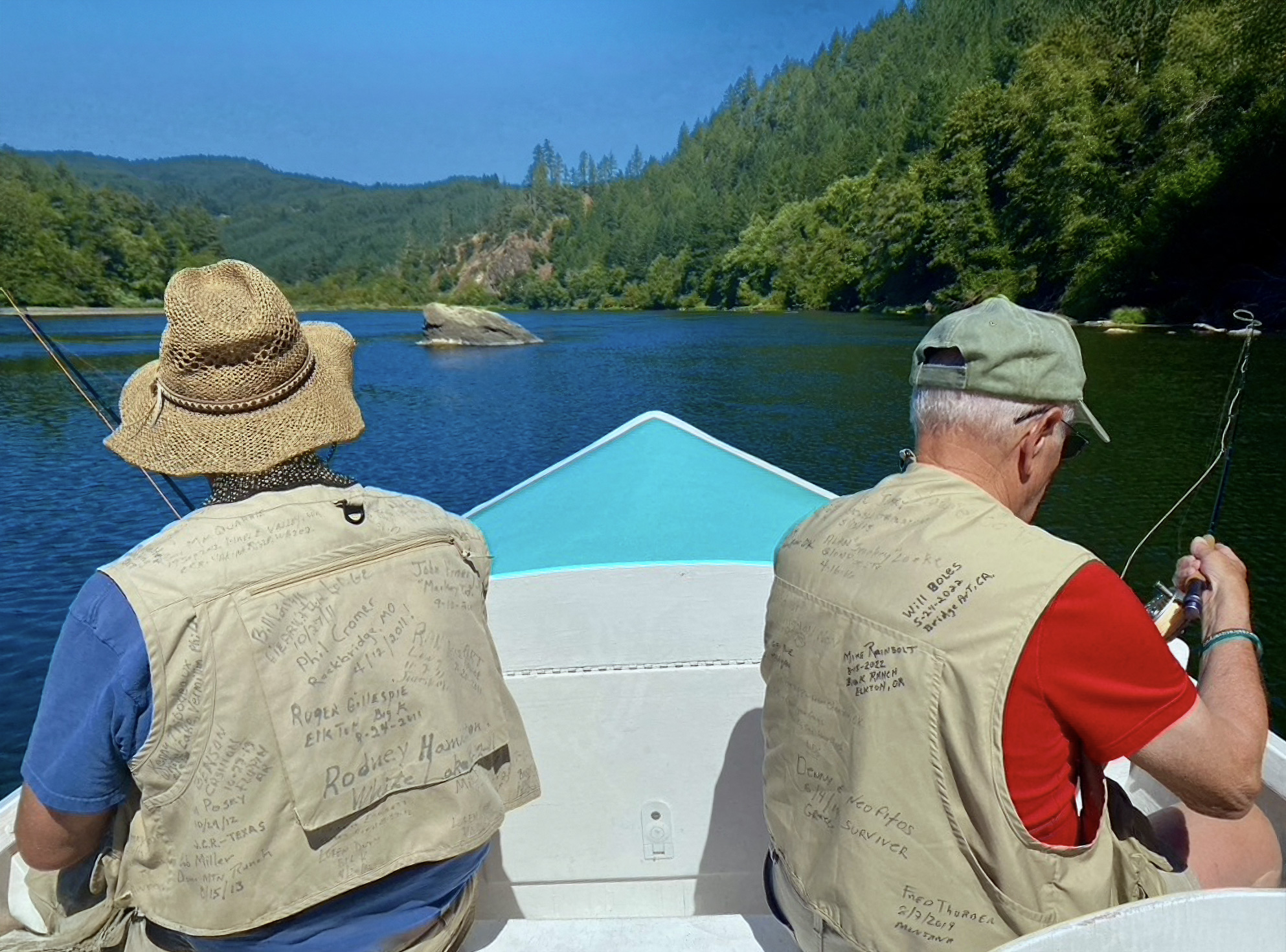
All the men taking part that weekend wore faded Orvis fly-fishing vests, which they neither owned nor would get to keep. Upon their arrival at the lodge they had each picked out a vest from a stack on a table next to the fishing gear they would also borrow. The price for using this loaned gear was to write their name, date, and the location of the retreat on the vest with a black permanent-ink Sharpie. Their inscriptions would join those of all the other cancer patients who had participated in similar retreats over the years and had worn the vests before them. They are known as “legacy vests” and each tells a story of cancer, brotherhood, courage, vulnerability, and mortality—a sobering visual reminder of how many lives cancer continues to affect.
 Greg Hatten
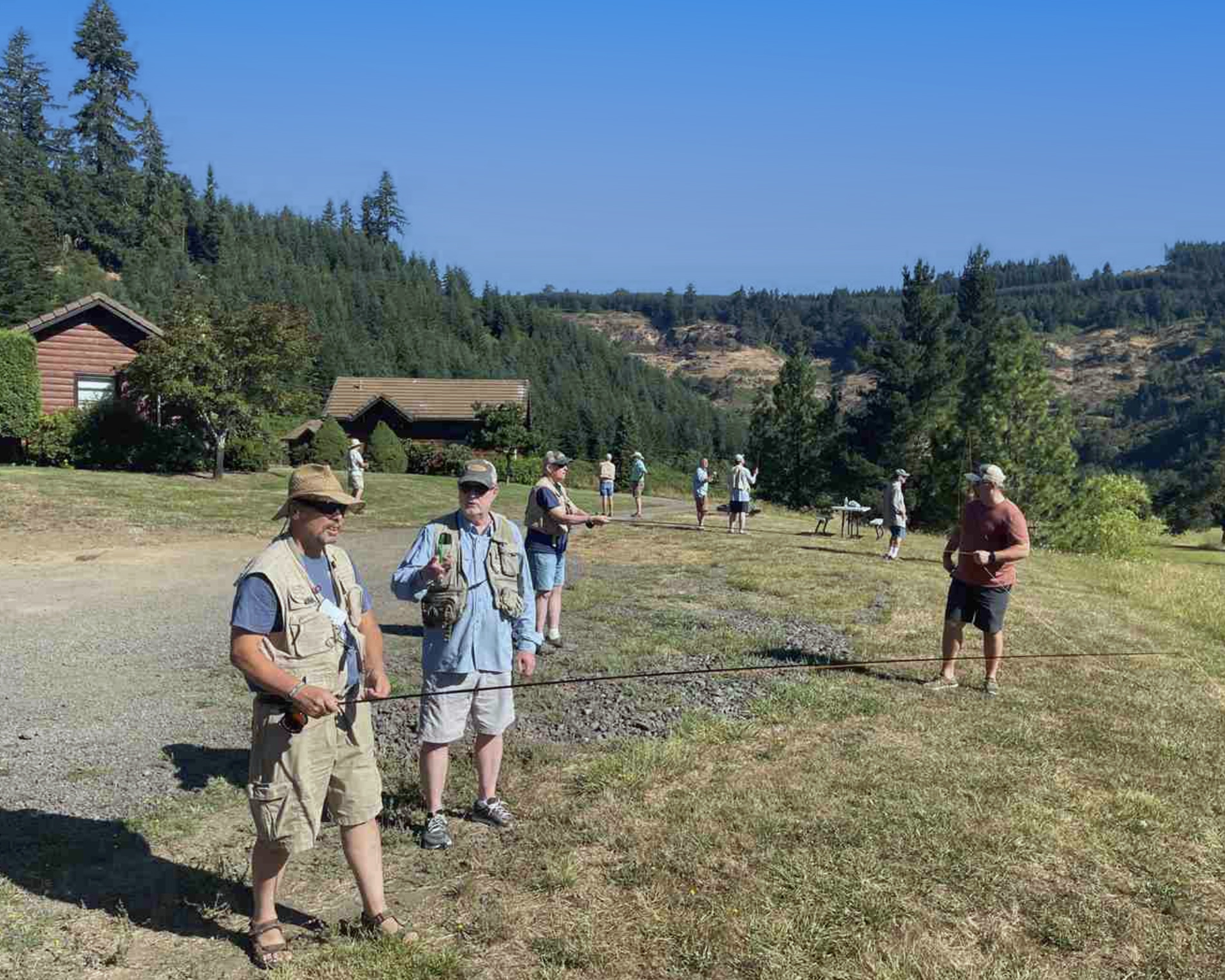
Before heading to the river for their first day of fishing, the men tested their fly-fishing gear and got a few casting tips from the guides.
Hope is one of the primary elements in any fly-fishing experience. There is hope that the river level will be right; hope that a hatch will be in full swing; hope that the man-made flies in the box match the living flies on the surface of the water. With every cast, a fisherman pins his hope on a delicate fly and knows that with the right presentation he might entice a fish to strike so he can actually feel the take, experience the tug, and participate in the struggle of a fish with its life on the line. When things go right, he will bring a wild fish to hand and admire its beauty before releasing it back to the clear, cool water of the river.
The hope Mike and Pete had of catching a fish mirrored their hope of surviving cancer, but on that day, the fishing triumphed. Instead of obsessing over treatments and medications, they were obsessing about flies, casts, mends, and fish. Fishing takes the mind to a peaceful place in a beautiful setting—it’s hard to think of anything else.
 Greg Hatten
They had never met before that morning, but Pete (left) and Mike (right) quickly settled in, familiarized themselves with PORTOLA, and quietly enjoyed the scenery, the fishing, and the companionship.
I had become involved in this weekend’s retreat when a fellow river rat (a good friend of mine) asked me and a few of our mutual river buddies who owned drift boats to volunteer for what he described as a sort of Make-A-Wish event for men with cancer. Most of them had little to no experience in fly-fishing, so we would be called upon to be both patient and knowledgeable and, in a very short window, teach enough of the basics of fly-casting to fool a fish or two. As a long-time licensed Oregon Guide and member of the McKenzie Guide Association—one of the oldest such associations in the Pacific Northwest—I know the drill and gladly volunteered.
What has cancer taken?
Most of the men at this retreat had prostate cancer. Not Mike: he had a rare and aggressive form of skin cancer called Merkel cell carcinoma (there are only about 3,000 cases diagnosed annually in the United States). But, while he may not have shared the same form of cancer as his “retreat brothers,” the experience of diagnosis, needle poking, instrument prodding, multiple surgeries, and countless radiation treatments (in one two-month stretch, Mike had had 25 radiation treatments) was familiar to everyone in the group.
Also familiar to cancer sufferers is the mental aspect of the disease and the things men, in particular, are reluctant to discuss with anyone other than their personal medical teams. Shielding family and friends from some of the harsh side-effects of treatments and mental anxiety is a by-product of the process and the primary focus of “Reel Recovery.”
“What has cancer taken from you?”
 Greg Hatten
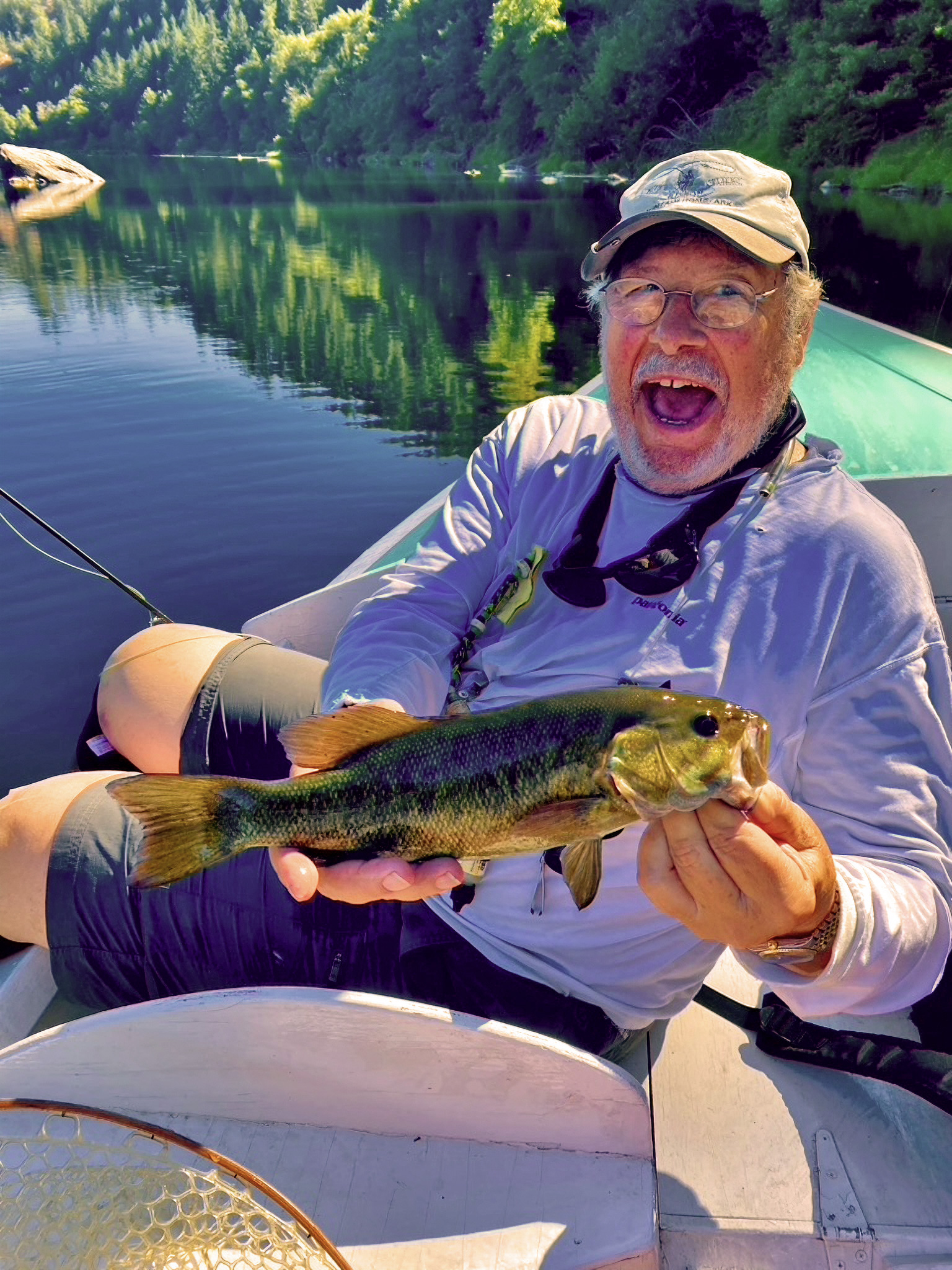
While participants experience tough emotional moments through the course of a Reel Recovery weekend, there are also many moments of sheer joy, like this one, when Pete caught his first fish of the trip. He would go on to catch many more.
This was the ice-breaker question posed by the retreat leader and Director of Reel Recovery Terry Hildebrandt on the morning of the first day. The men were asked to wrestle with the question and be prepared to discuss it that evening. And, after a good first day of fishing when the smallmouth bass were aggressive to the fly, Mike and Pete joined the other men in the lodge.
Pete shared that cancer had taken away his “cockiness” and stripped him of his feeling of invincibility. Others said that cancer and chemotherapy and radiation took away their sense of taste, of smell, and brought about pain, nausea, and congestive issues. Answering the morning’s question caused the men to reveal things they didn’t like to talk about—maybe couldn’t talk about—with family or friends or, in some cases, even spouses.
Speaking up in this small-group setting of men who did not know each other required courage and exposed levels of vulnerability that is rare for men, regardless of whether they know each other or not. There was compassion in the room, and it was powerful. Many were tearful, emotionally moved by their own answers as well as those from others around the circle.
 Greg Hatten
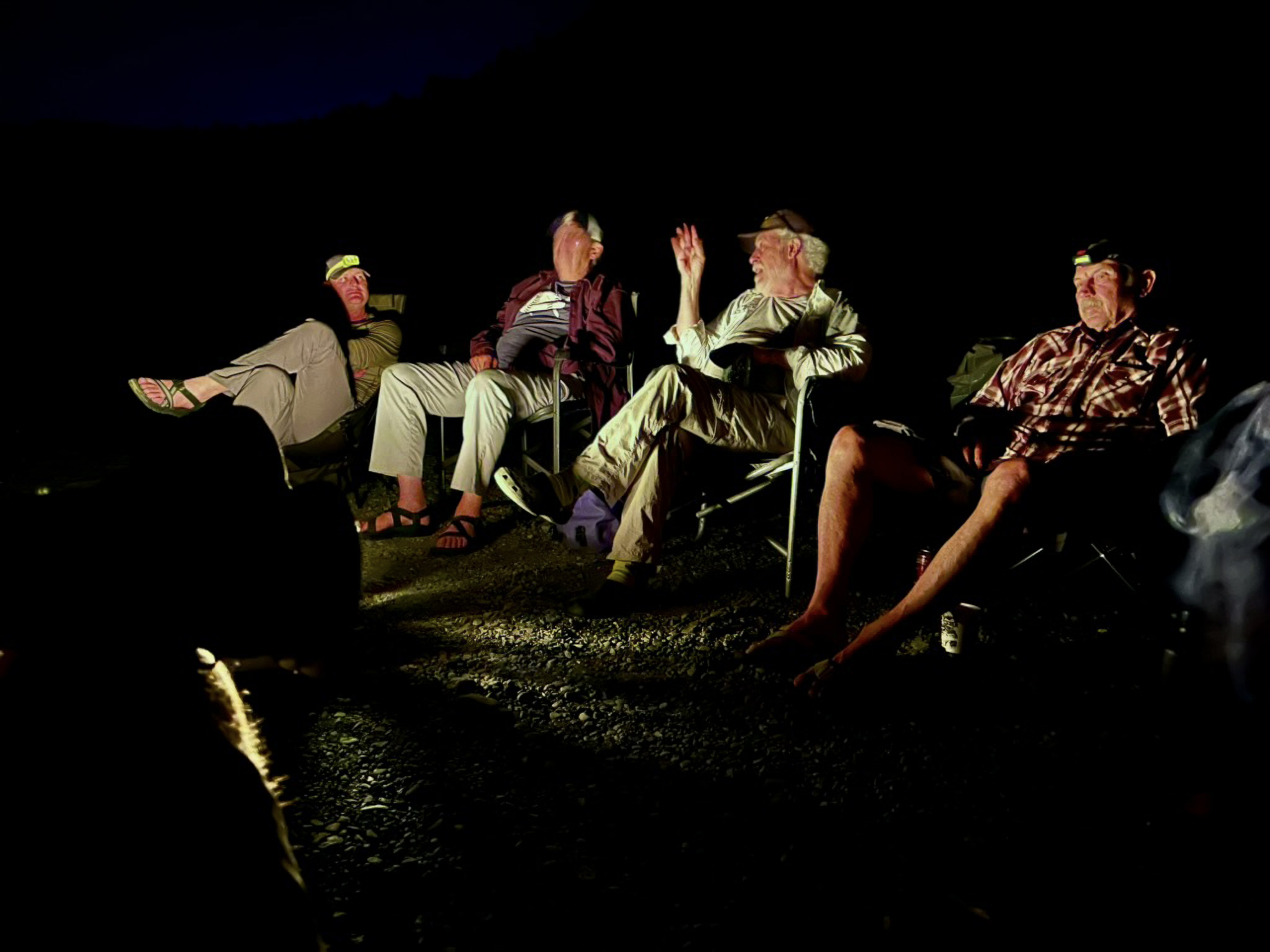
After dinner and the group discussion in the lodge, the participants headed off to sleep in their cabins, while we “river pal” guides gathered around a campfire to catch up on old times.
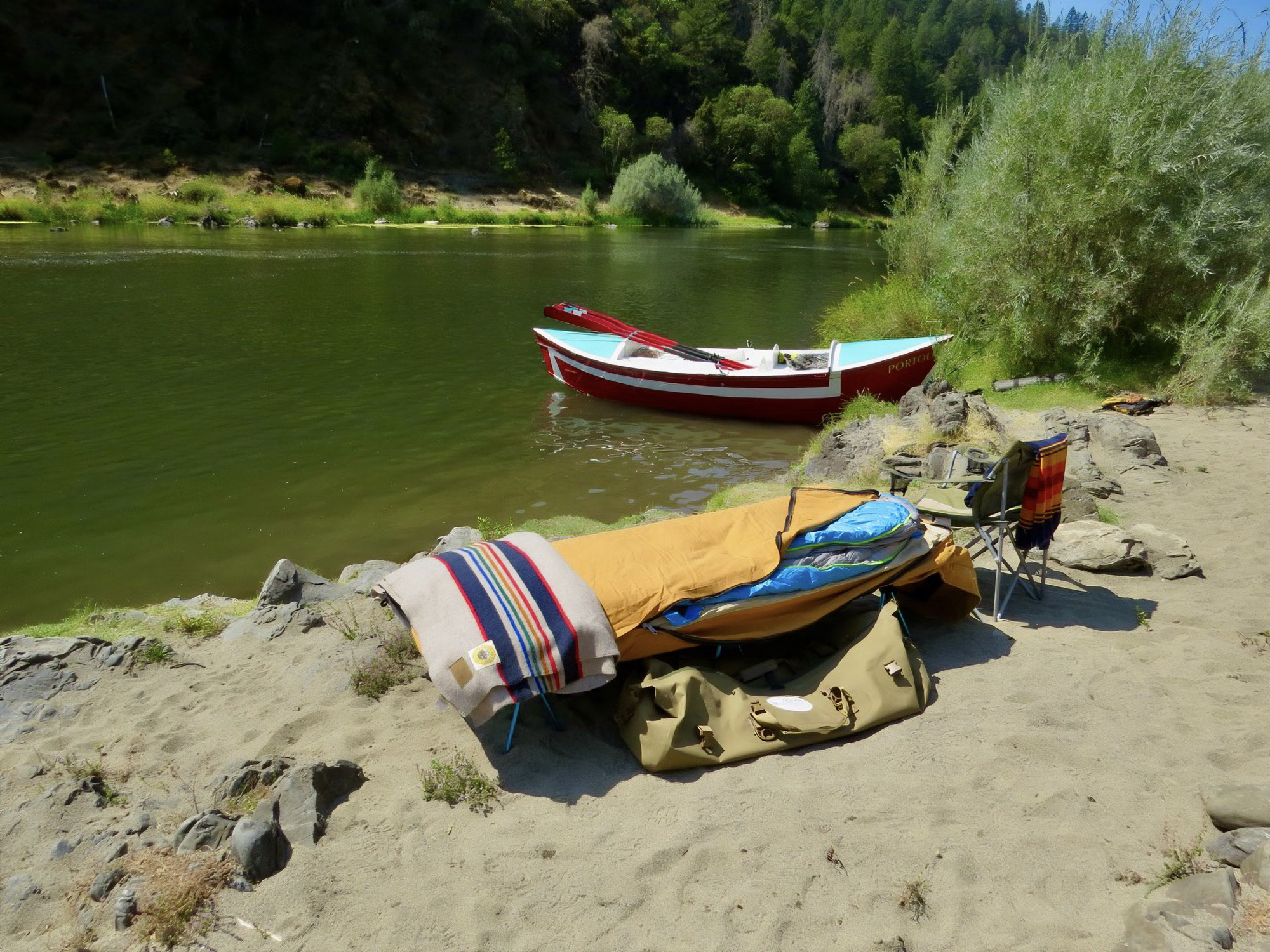
It had been a long first day—physically and mentally. After a quiet walk from the Big K lodge to their rustic pine-log cabins, the men crawled into their cozy bunks and slid beneath their Pendleton wool blankets. They were headed to a good night’s sleep, to dream of big fish, and to look forward to a hearty logger’s breakfast, a new question to ponder, and another day pursuing fish in the waters of the Umpqua. My fellow volunteer guides and I headed back down to the river where we had set up our cots and bedrolls right next to our boats on the sandy-rocky shore. For us, unwinding from a full day of rowing meant comfortable camp chairs around a small campfire, catching up with old friends, and sharing a little bourbon from a bottle passed around from hand to hand, before crawling into our bedrolls under the stars.
What has cancer given?
The morning of the second day was bright and cloudless. I stood in the water beside my boat and bent at the waist so that first Mike, and then Pete, could put a hand on my shoulder to steady himself as he swung his leg over the side of the boat and settled onto the bench seat in the bow, facing downriver. The six boats in the party, all brought along by the guest guides, were drift boats, five with aluminum hulls, mine the only wooden one. Drift boats are the preferred craft of almost all river fishermen in the Pacific Northwest. I had brought my Grand Canyon Dory (a decked drift boat I built in 2011), figuring that a boat that had survived two trips down the Colorado River might be appropriate for the occasion.
On a drift boat, both rower and passengers face downriver as the oarsman pulls hard (back-rows) against the current to maintain a downstream pace slower than that of the river. The technique is called facing danger and is the exact opposite of rowing a boat on a still-water lake where you can only see oncoming obstacles by looking over your shoulder. It’s a style that matched perfectly the challenges the men were here to face. Here they would meet their cancer obstacles head-on and would need courageous hearts, stout constitutions, and iron nerves. In a very real sense, all of them were rowing their own personal cancer drift boats facing forward, tackling whatever obstacle cancer threw at them, one challenge at a time.
 Greg Hatten
My fellow volunteer guides and I bedded down by the river, near our boats. Sleeping under the stars with a cot, a bedroll, and a wool blanket is one of the perks of the job—as is waking up on a clear morning beside a slow-moving body of water.
The stretch of river we were fishing resembled a lake. The current was slow and there were no real obstacles to avoid. We floated slowly downriver, casting toward the shore, and then rowed back upriver in a series of slow, lazy ovals the size of a football field. Each lap took about an hour unless we found a pocket that was particularly productive; then we would pitch the anchor and post up to take several casts in pursuit of Umpqua fish.
Even though the current was slow, it was relentless; and with three men in the boat plus some gear and a couple of coolers, I was pulling about 1,000 lbs. We took a break for lunch and then fished all afternoon with occasional stops ashore so we could stretch our legs and rest our arms. Without even realizing it, we stopped counting fish brought to hand. We were working to a different scorecard… one that measured time relaxing, time spent connecting with nature, and with each other.
“What has cancer given to you?”
That day’s question was another challenge for the men and required deep reflection to look for any kind of silver lining in the cancer that threatened to kill them. The question had been posed at breakfast but the discussion would, again, take place after dinner, giving the men all day to explore its depths and possibly kick it around the boat with their partner or guide.
 Greg Hatten
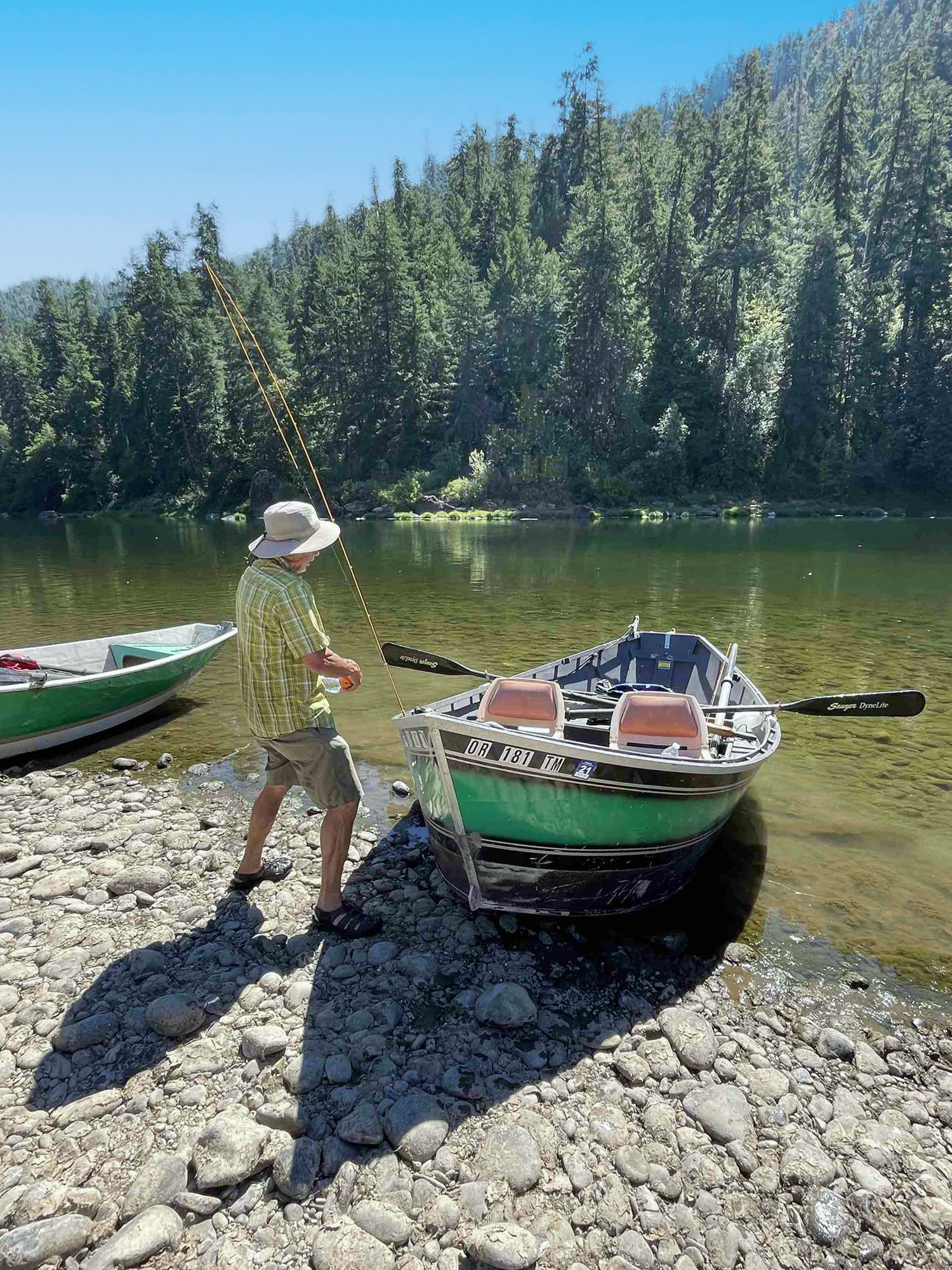
“Downstream Dave” Weiss, one of the guides, readies his drift boat for another day of fishing.
When Mike climbed into my boat on that second day, he wore his signature vest but had left behind the loaned fishing gear in favor of the vintage rod and reel he had brought from home. He said he’d bought it at an estate sale more than 35 years ago with the intention of taking up fly-fishing as a hobby, but he’d never made the time. Following the success of the first day’s fishing, his singular goal for the second day was to catch a fish with that rod and reel. It had been stored away in his attic gathering dust and now seemed to represent the start of a new beginning: to make time for the small things that give us pleasure and make life just a little more fulfilling. I was so glad he’d brought it.
We pushed off from shore and the boat eased forward as it caught the main current of the Umpqua. As I plied the oars and guided the boat across the river to our honey-hole from the day before, both men let out line and dropped their flies into the current in pursuit of a feisty smallmouth. The boat was filled with hope.
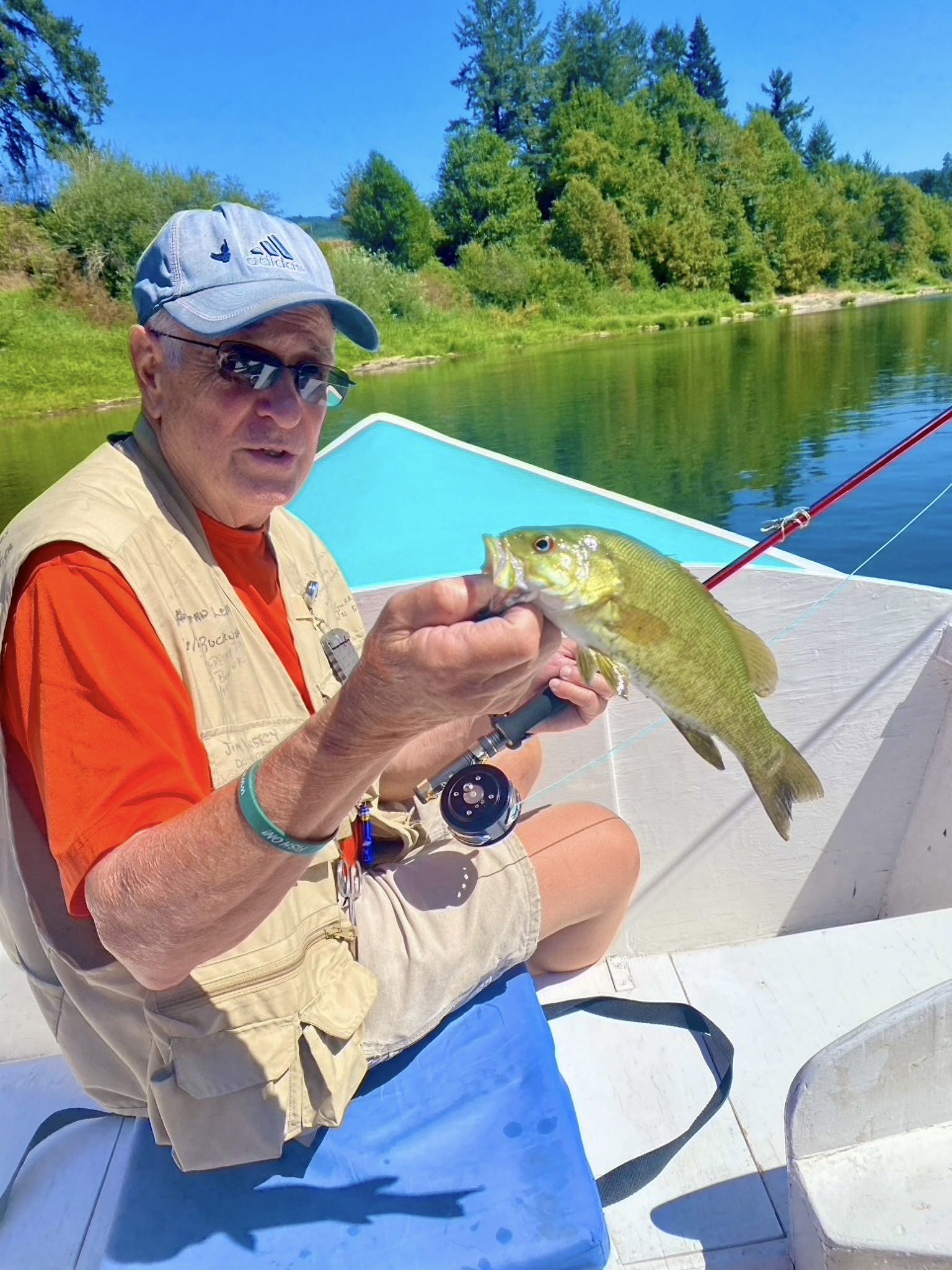
As the flies swung in lazy arcs, Mike felt the tug even before we got to our favorite spot. An aggressive take is always such a startling jolt, comparable to touching an electric fence with just enough shock to instantly get your attention. The fish was hooked tight and the current added a little extra force to the pull. Mike’s antique rod doubled over as he announced, “Fish on!” The smallmouth zigzagged in and out of the current and did its best to find freedom from the hook. At the end of the life-and-death struggle, we slid the net gently under the fish and brought it over the side of the boat. It was healthy and colorful with as many shades of green as the surrounding hills, and after a quick photograph, we slipped it back into the water and watched it swim away.
 Greg Hatten
On the second day, Mike caught several fish—like this Umpqua smallmouth bass—using the vintage gear he had bought many years ago in an estate sale.
Over the years, I have guided fishing trips for all types of folks—men, women, children, fathers, sons, brothers, friends, and even folks who started the trip not knowing each other very well. Sometimes (usually with brothers) there is an element of competition in the boat, sometimes an air of exaggerated expertise, often good-natured banter about first fish, biggest fish, smallest fish. Not on this trip: not in my boat. These men were genuinely rooting for each other; there was no competition, no envy, no attitude, just genuine joy in each other’s fishing success, and it was refreshing.
Both Mike and Pete talked a lot that day about the second question that had been posed to them—almost rehearsing what they would say in the after-dinner circle. I listened in silence, honored to row a boat that provided a safe place in which they could wrestle with their thoughts.
Around the circle that night, almost everyone in the group talked about their own mortality and how cancer had caused them to reflect on their life and evaluate their priorities for what time they might have left.
Mike said, “When my cancer progressed to Stage 4 metastatic, I suddenly faced the fact that I might not be around much longer, and it brought me back to being in the moment…every moment I have left.”
 Scott Vollstedt
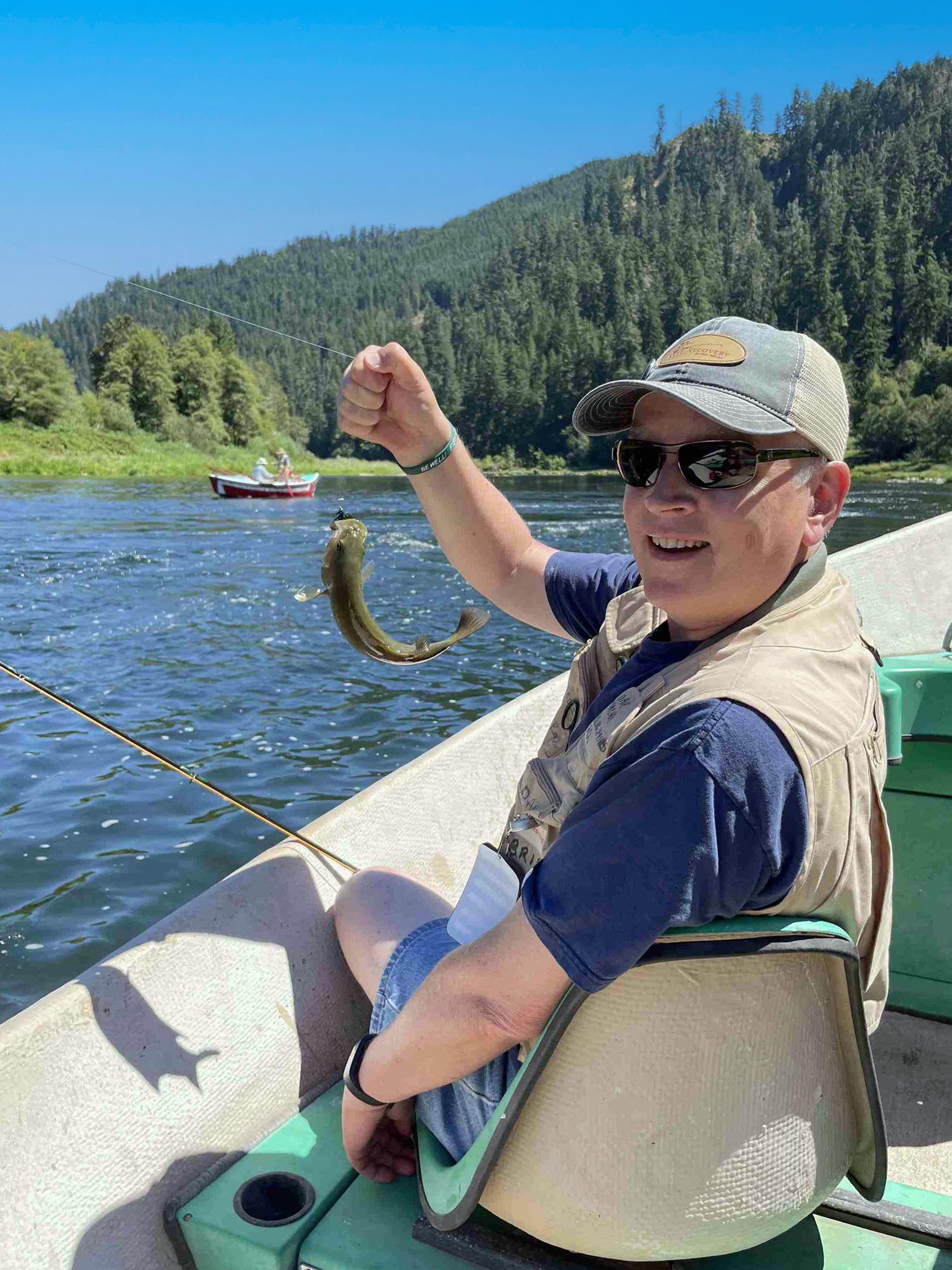
The five drift boats spread out but were never far from each other. Here, one of the participants is landing a tiny smallmouth bass on Scott Vollestedt’s boat, while PORTOLA can be seen farther downriver.
Both Mike and Pete echoed feelings of facing mortality and making the most of the time they had left. Mike said it had given him a better appreciation of and a closer relationship with his wife. He was also amazed by the people who seemed to have entered his life at just the right time, when he’d needed them the most.
Eric, from Washington state, told us his spiritual life and faith had grown stronger. It was a common theme, and many of the men spoke of a peace they hadn’t experienced in a very long time. Their renewed faith, and engagement with prayer, calmed the chaos they felt in their personal battle with cancer. It was another meaningful day, and everyone went to his bunk drained but encouraged by the confessions and conversation.
What will you take with you?
The last day’s breakfast started, as before, with a question, but on this occasion it was for immediate discussion.
“What will you take from this weekend together?”
One of the men spoke up. Dealing with cancer, he said, was like “carrying an invisible backpack that no one else sees. It’s heavy and filled with a lot of stuff that just weighs you down every minute of every day. The Reel Recovery fishing experience has allowed me to take the pack off, set it down in a corner, and take a break from carrying such a heavy load. It’s been a two-day vacation from my problems and has allowed me to enjoy the moment, savor the experience, and appreciate guys who really understand what carrying the cancer pack means.”
Another man summed it up with Tim McGraw’s song—“Live Like You Were Dying”—and many agreed that that was exactly what the experience had encouraged.
 Scott Vollstedt
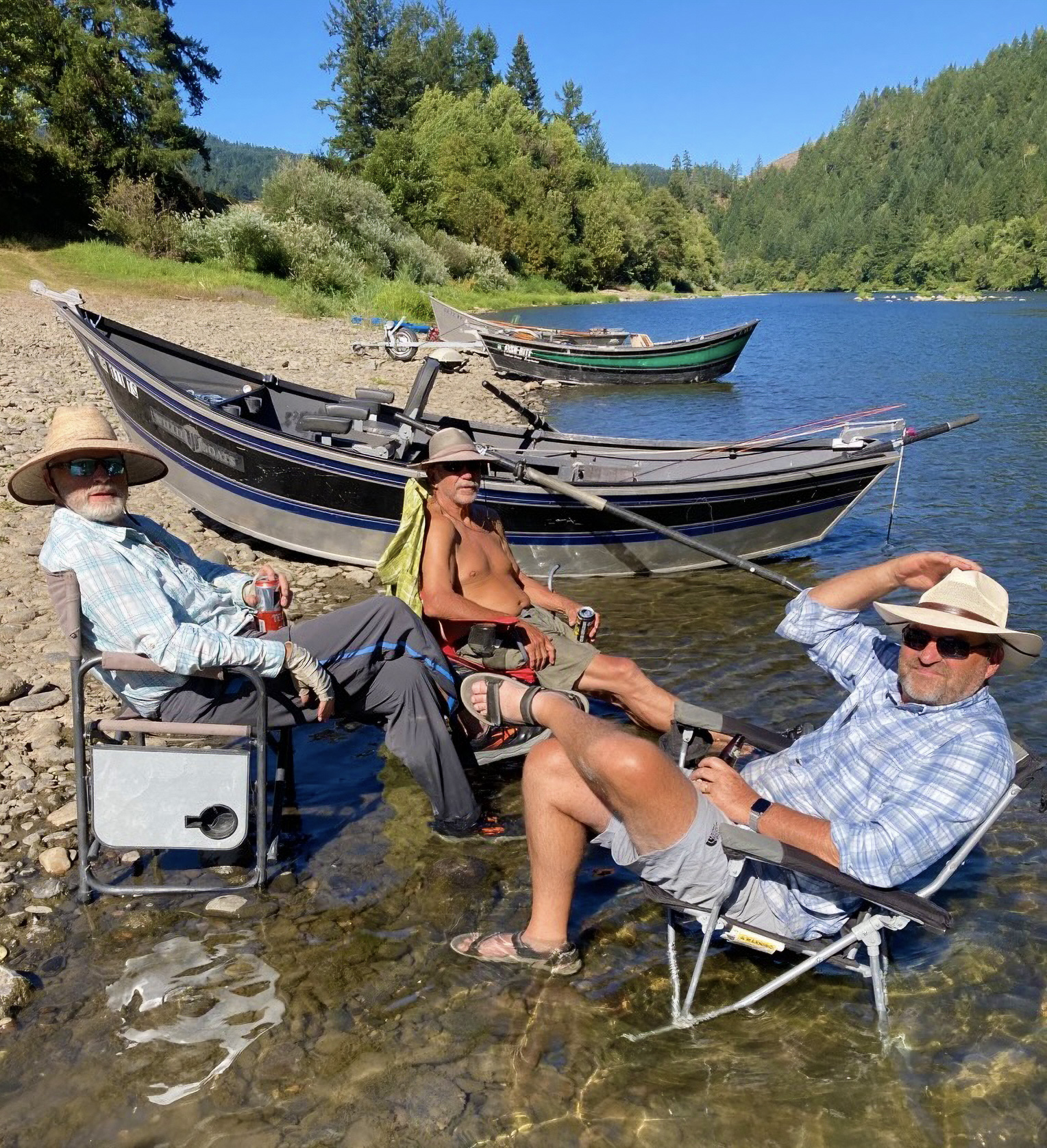
The Umpqua runs slow in this section in late summer, but rowing 1,000 lbs of men and boat for several hours to keep from drifting downstream too fast is tiring. Over a leisurely lunch break, I was happy to relax and cool off in the shallows with fellow guides Jim Whitney (left) and Dave Weiss (center).
In a reflective moment in my boat the day before, Mike had said, “The ability to share my fears and sadness with other survivors who are going through the same or similar thing is priceless. It’s made me a believer in people again.”
All the men spoke of a new band of brothers and close friendships that had developed quickly in the two days of bonding over boating, fly-fishing, and the disease they all shared. Most confided that they had been personally touched by cancer before it attacked them, and they spoke of family members, spouses, friends, and co-workers who had also fought the fight.
For two days, I listened to the men in my boat and around the circle as they shared with each other, and I reflected on my own experience with cancer. In the silent seat of the oarsman, I found myself struggling with the very same questions the guys were answering for themselves. Cancer took my father when I was 15 years old. He was 38 and the father of four. It left a hole in my heart and a void in my life that has never completely healed. He was my coach, my superhero, my example of how to be a man, a husband, and a father, and cancer took him.
In his place, the image of him became larger than life, locked in time and memory. It was a lot to lose at such an early age. While I’ve never wanted to give cancer credit for contributing anything positive to my life, sometimes, when I’m rowing the river alone in my boat, I acknowledge that the disease gave me a desire to live a passionate life, knowing that every day is a gift and every person a blessing. It gave me a perspective on life and death and family that only comes from a personal encounter with mortality in someone you love. Cancer gave me maturity beyond my years and a determination to live life as a grand adventure.
 Courtesy of Reel Recovery
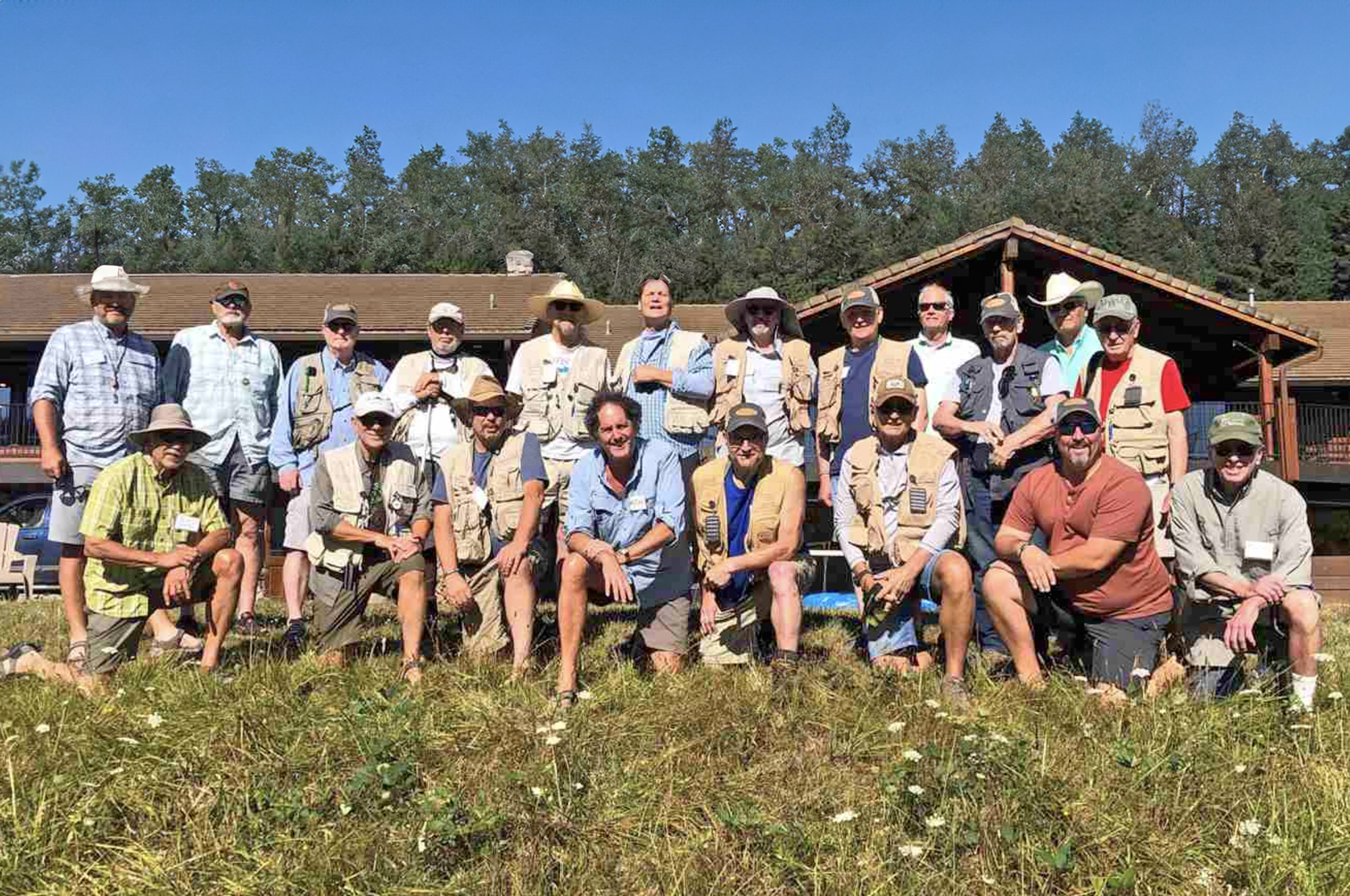
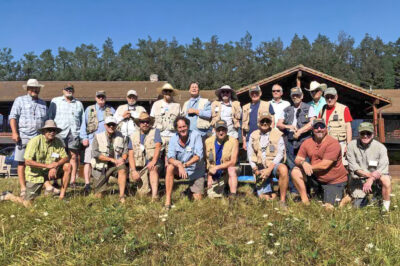
Reel Recovery offers weekends filled with hope and joy and purpose, creating brotherhoods among participants who arrive as strangers and leave as friends.
Spending a couple of days on the river with a group of men who knew their time on Earth might be coming to an end soon was something deeply personal. As the rower of the boat, I took away far more than I gave on that weekend of Reel Recovery. Being able to offer a space in my hand-crafted wooden river dory where, for at least a couple of days, these men could pin their hopes on a fishing fly, instead of focusing solely on their cancer and the treatments that may or may not save them, is something I will never forget.
Greg Hatten is an outdoor writer, a consultant for active-consumer products, and a former Oregon Outfitter and Guide who hosts outdoor river adventures in a hand-crafted wooden drift boat pursuing steelhead on the fly. He is a member of one of the oldest guides associations west of the Mississippi—the McKenzie River Guides Association—and has run more than 100 Wild and Scenic Rivers in the Pacific Northwest.
To learn more about Reel Recovery (sponsored by Orvis) and upcoming fly-fishing retreats, contact the organization through its website.
If you have an interesting story to tell about your adventures with a small boat, please email us a brief outline and a few photos.
For more river-boat adventures with Greg Hatten see:
OBSESSION, building, using and repairing a traditional wooden drift boat.
Rogue River, running one of Oregon’s most challenging waterways.
Dories in the Canyon, honoring the boats and the men who saved the Grand Canyon.

Survivor here of prostate cancer (since 1995, approx.), and skin melanomas (for which I blame X-ray treatments for bad acne at about age 13-14). I don’t let it define my life, though I no longer seek out sun, and cover up when outdoors. Hobbies include sea kayaking (since 1984), at one time cross country skiing, and continuing to ebike ride around Bellingham. At 88, recognize mortality, but don’t fear it. My wife insists I clean up my workshop before I give up the ghost, and I do fear her.