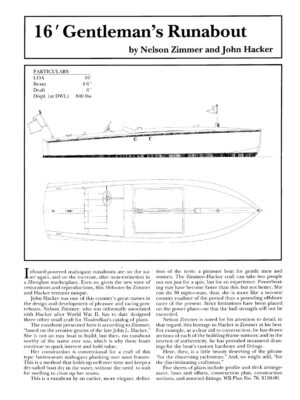
16′ Gentleman’s Runabout
The original print version of this article can be viewed as a PDF or purchased from the WoodenBoat Store.
Join to view PDF Purchase Gentleman's Runabout PlansIInboard-powered mahogany runabouts on the water again, and on the increase, after near-extinction in a fiberglass marketplace. Even so, given the new wave of restorations and reproductions, this 16-footer by Zimmer and Hacker remains unique.
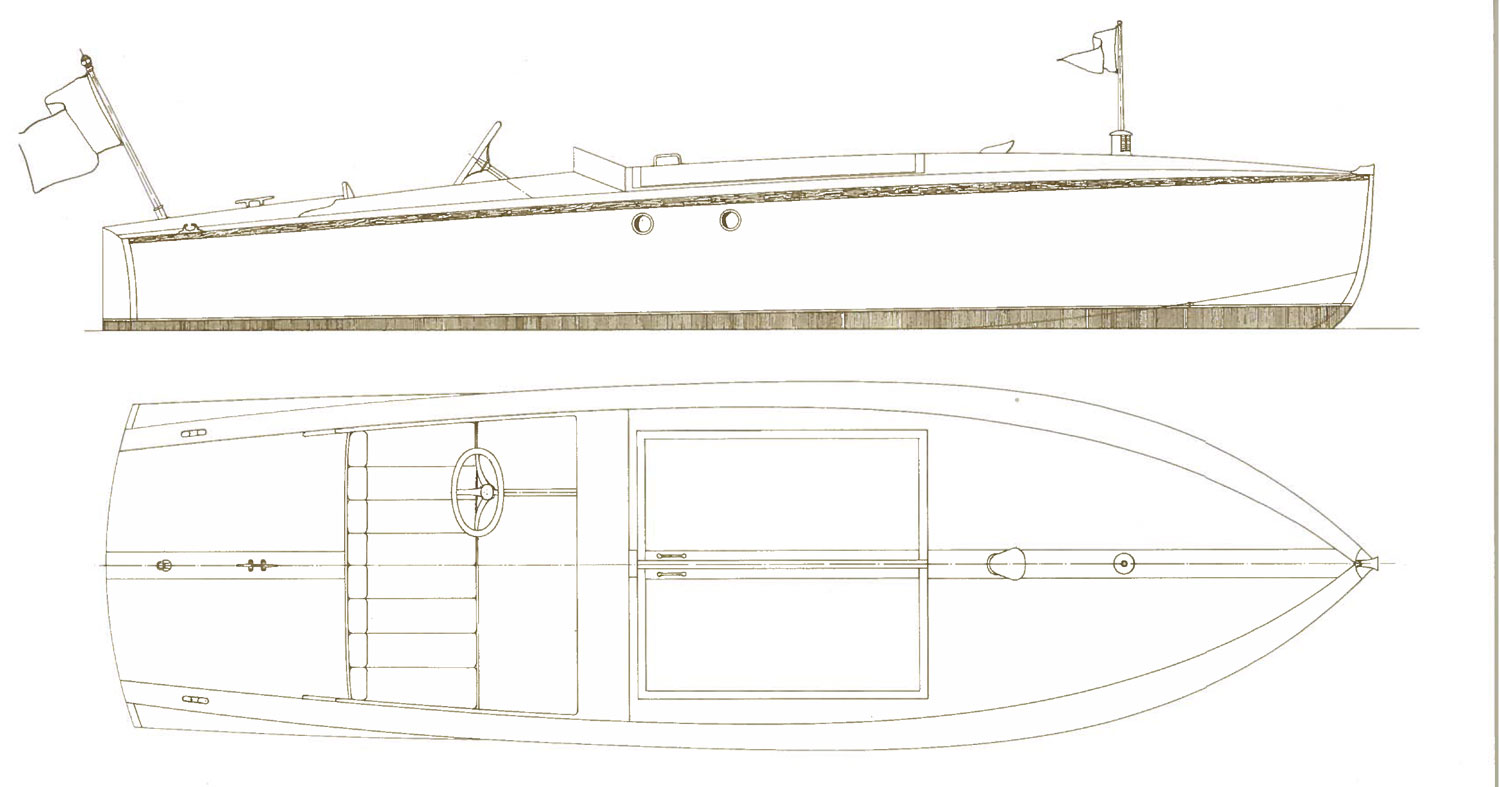
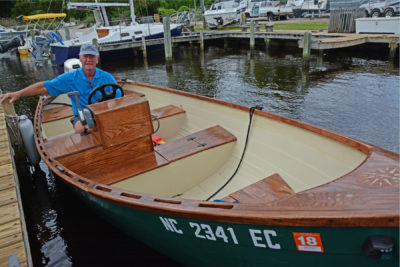
The Gentleman’s Runabout is a low-power, moderate-speed inboard runabout for protected waters.
John Hacker was one of this country’s great names in the design and development of pleasure and racing powerboats. Nelson Zimmer, who was informally associated with Hacker after World War II, has to date designed three other small craft for WoodenBoat’s catalog of plans.
The runabout presented here is according to Zimmer, “based on the creative genius of the late John L. Hacker.” She is not an easy boat to build; but then, no runabout worthy of the name ever was, which is why these boats continue to spark interest and hold value.
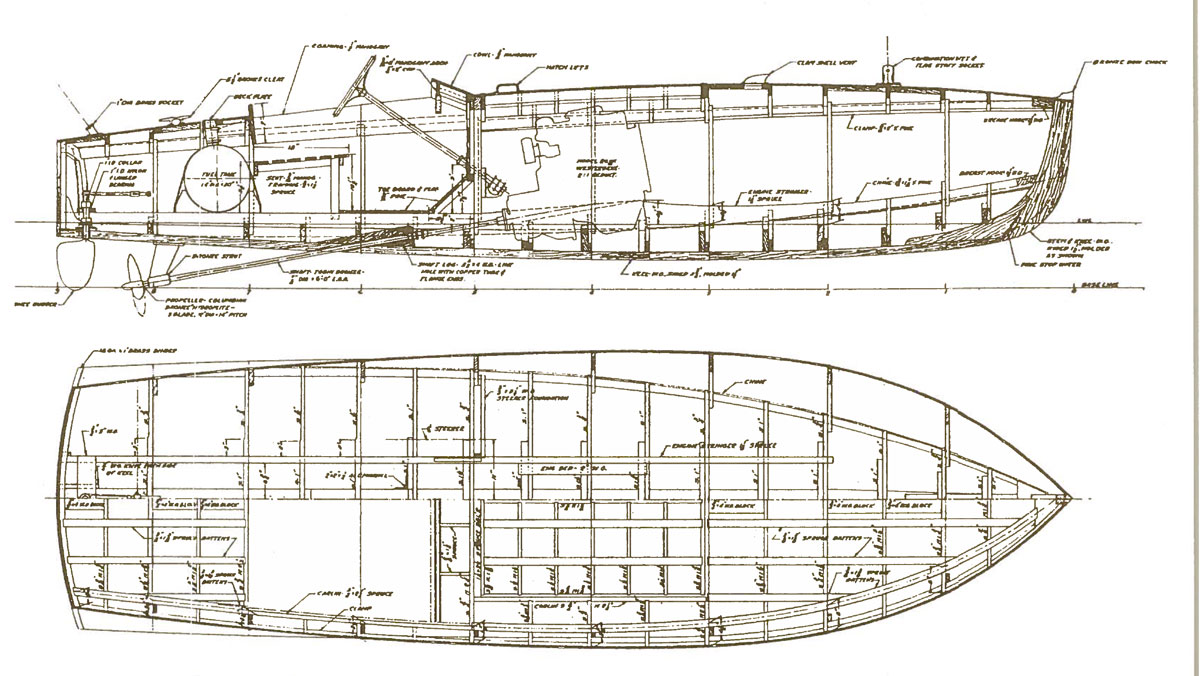
The Gent’s Runabout is designed for sawn frames and batten-seam planking.
Her construction is conventional for a craft of this type: batten-seam mahogany planking over sawn frames. This is a method that holds up well over time and keeps a dry-sailed boat dry in the water, without the need to wait for swelling to close up her seams.
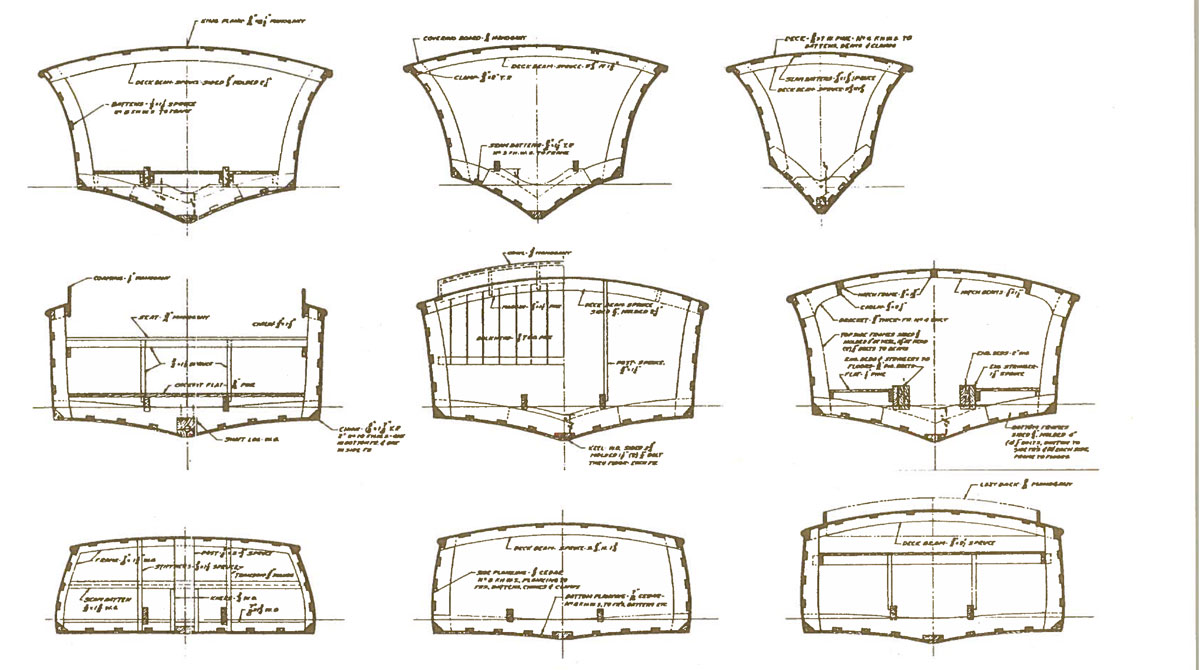
The Gentleman’s lines: considerable shape for a hard-chined hull.
This is a runabout by an earlier, more elegant, definition of the term: a pleasure boat for gentle men and women. The Zimmer-Hacker craft can take two people out not just for a spin, but for an experience. Powerboating may have become faster than this, but not better. She can do 30 mph max; thus, she is more like a two-seat country roadster of the period than a pounding offshore racer of the present. Strict limitations have been placed on the power plant so that the hull strength will not be exceeded.
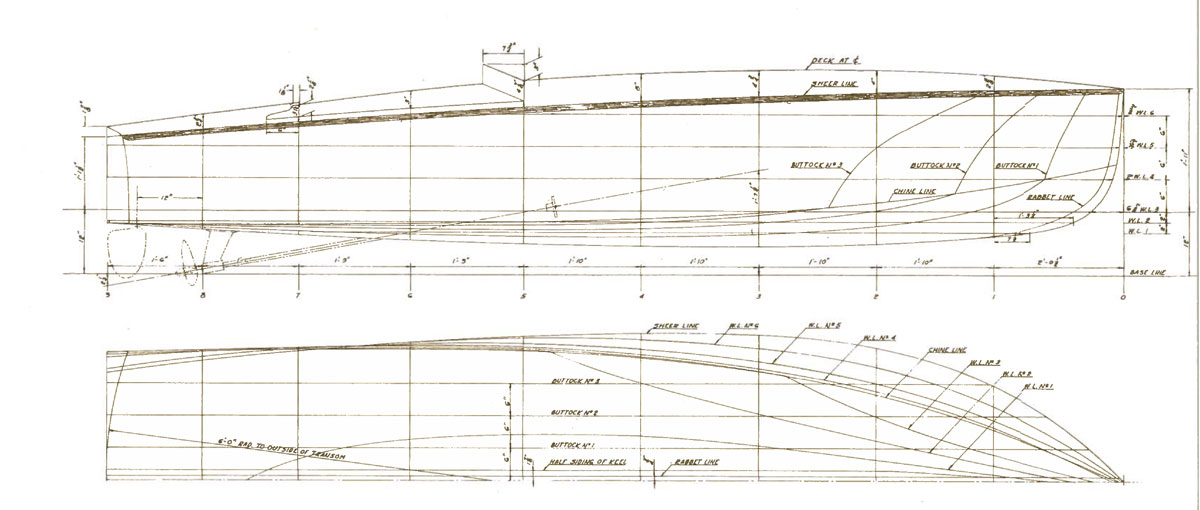
Nelson Zimmer draws details with care.
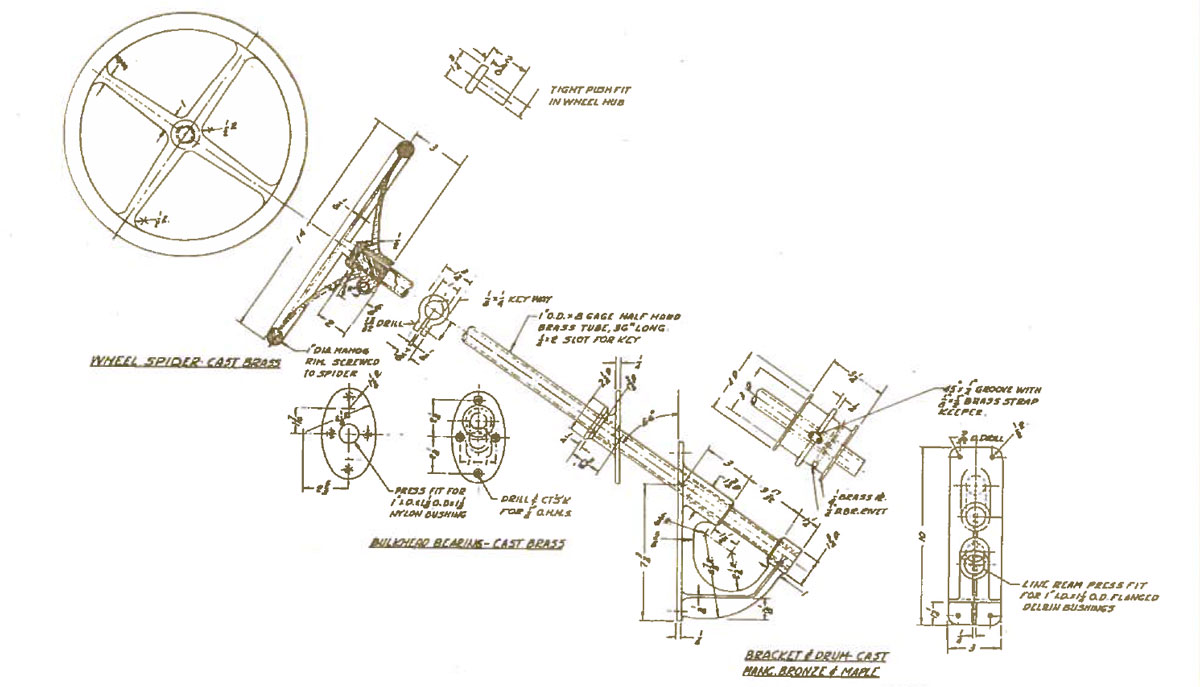
Nelson Zimmer is noted for his attention to detail; in that regard, this homage to Hacker is Zimmer at his best. For example, as a clear aid to construction, he has drawn sections of each of the building-frame stations; and in the interest of authenticity, he has provided measured drawings for the boat’s custom hardware and fittings.
Here, then, is a little beauty deserving of the phrase “for the discerning yachtsman.” And, we might add, “for the discriminating craftsman.”

Please note: the Westerbeke 26G engine specified in the plans is no longer manufactured. Alternatives are to select a similar size from a salvage yard, or with a light-weight Yanmar diesel. You might even try biodiesel for fuel, to save your olfactories.
Five sheets of plans for the Gentleman’s Runabout design include profile and deck arrangement, lines and offsets, construction plan, construction sections, and assorted fittings. WoodenBoat Plan No. 76. $120.00.
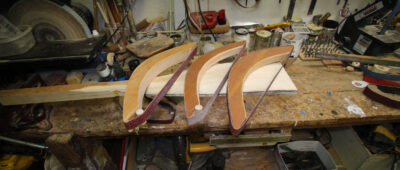
Batten-seam construction: strong, tight, and labor-intensive.
Gentleman’s Runabout Design Details
DESCRIPTION
Hull type: V-bottomed runabout
Construction: Battened-seam planking over sawn frames
PERFORMANCE
* Suitable for: Protected waters
* Intended capacity: 1-2
Trailerable: Yes
Propulsion: Gas inboard engine
Speed: 30 mph
BUILDING DATA
Skill needed: Advanced
Lofting required: Yes
* Alternative construction: None
PLANS DATA
No. of sheets: 5
Level of detail: Average
Cost per set: $120.00
WB Plan No. 76
Particulars
LOA: 16′
Beam: 4′ 6″
Draft: 6″
Displacement (at DWL): 849 lbs
Gentleman’s Runabout was featured in Boat Design Quarterly #23.
Climb Aboard Zimmer’s Utility Launch
Nelson Zimmer designed his Utility Launch to shuttle people between towns and fishing camps in Canada’s North Woods. Like the Gentleman’s Runabout, the Utility Launch might not reach the speeds of modern powerboats. But Zimmer designed her with “an able hull, one which could cope with the chop from a fresh breeze or glide silently through the water to avoid disturbing the fishing grounds.”
Check out our profile of Zimmer’s Utility Launch, and use our study guide when you’re ready to build one of your own.






Join The Conversation
We welcome your comments about this article. To include a photo with your remarks, click Choose File below the Comment box.