It is no secret that 2026 is a special year in American history. The 250th anniversary of the Declaration of Independence is being marked in many and varied ways across the nation—some celebrations are large, if obscure; others smaller but, perhaps, of more relevance. Among the latter can be counted the recent launching of a simple wooden boat at the coastal village of Round Pond, Maine. The double-ended, unpainted, open boat of some 20′ in length had been built by 23 seventh-grade students from the Bristol Consolidated School, with boatbuilder Rob Stevens, ably supported by frequent assistance from Bobby Ives of The Carpenter’s Boat Shop. Other volunteers and teachers—among them Jody Bachelder of the Old Bristol Historical Society and Marshall Flowers, the kids’ social-studies and English teacher—also came on board with the project.
 Courtesy of Jody Bachelder
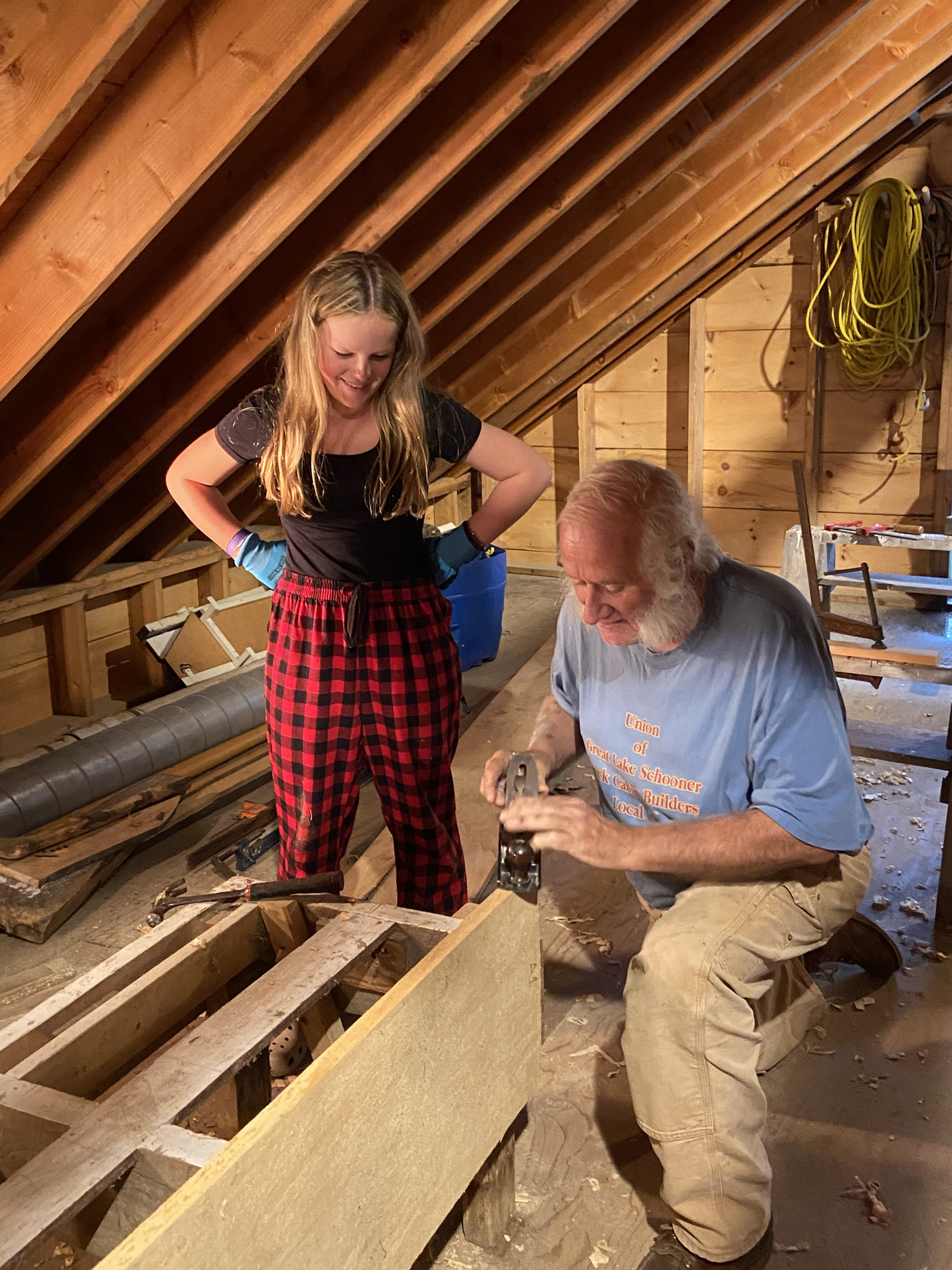
Boatbuilder Rob Stevens shows a seventh-grade student how to use a plane.
It all began in the spring of 2025, when members of the historical society were discussing how they could become involved in the Bristol school’s social-studies classes. When they learned that in the coming school year the seventh-grade class would be studying the American Revolution, they came up with a plan: the students would build a bateau—but not just any bateau. They would build a bateau to replicate those used in Benedict Arnold’s ill-fated 1775 expedition up the Kennebec River to Québec City, then part of the British colony of Québec.
Benedict Arnold is familiar to many modern-day Americans as the man who betrayed the American cause and plotted to surrender West Point in New York to the British in 1780. Less well known are his earlier military achievements and daring deeds. In 1775, when Arnold was a bold militia captain and a strong supporter of the Revolution, he became involved in an ambitious scheme to take Québec City from the British and then persuade the inhabitants of the region known as Canada to become the 14th colony. The plan was to take 1,100 men up the Kennebec River to the St. Lawrence River, and into Québec City—a journey of some 350 miles. The expedition would be supported by 200 bateaux carrying food and equipment. The men who conceived the plan were General Washington, who had the experience to pull it together; Reuben Colburn of Pittston, in the District of Maine, who could supply the boats; and Arnold, who had the drive to lead the expedition.
 Courtesy of Jody Bachelder
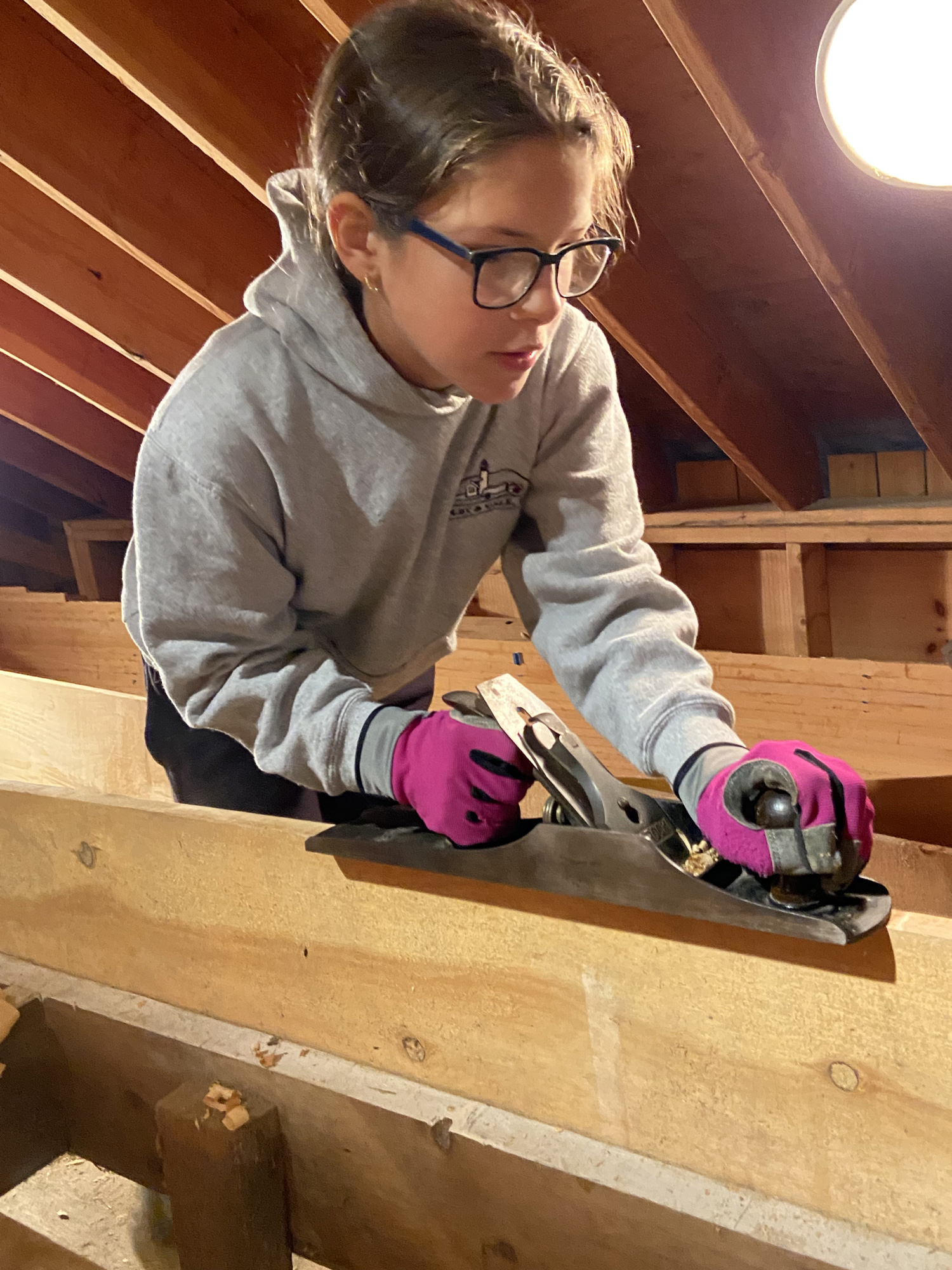
The seventh graders were all given the opportunity to work with the tools—both traditional hand tools and power tools.
At that time, bateaux (known then as battoes) were the rough-and-ready pickup truck of the Northeast. Built by eye of whatever local materials were to hand, and hard used, they often had a life expectancy of no more than one to two years. Flat-bottomed, double-ended, ranging in length from less than 20′ to more than 30′, the smaller boats were typically poled and carried by two men traveling along the region’s extensive waterways.
The bateaux of Arnold’s expedition were around 20′ in length and are thought to have weighed around 400 lbs, to be portaged around rapids by four men. Anecdotal reporting claims that the original flotilla of 200 boats was built in just 14 days, but more reasonable evidence suggests that while many of the boats were indeed built for purpose, many others would have been requisitioned from local families. When Arnold arrived to take command of the boats, he ordered a further 20 to be built over just six days.
 Courtesy of Jody Bachelder
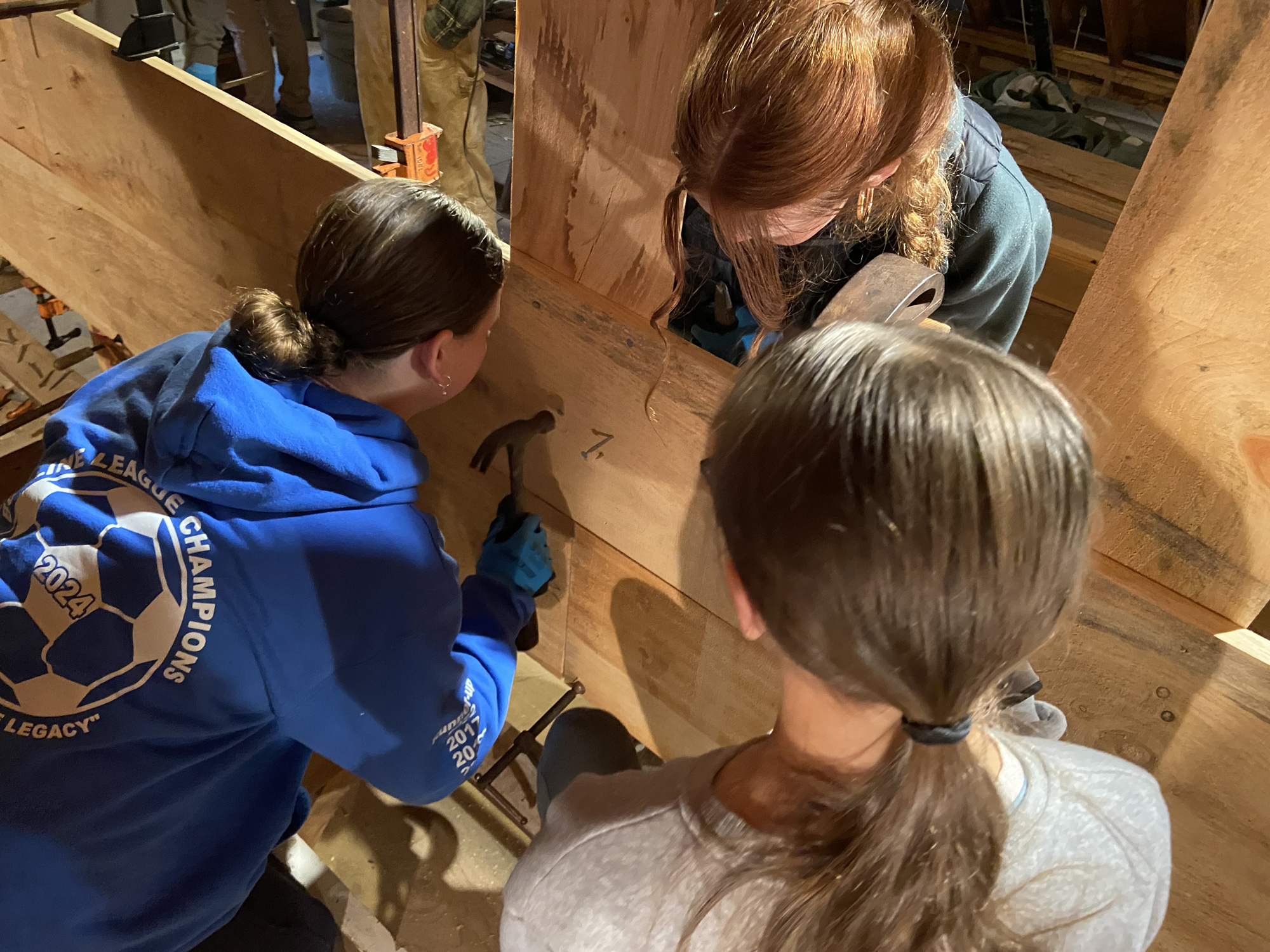
The bottom was assembled while on edge with the planks clamped to vertical posts and students working in pairs on either side of the structure. The 1 1⁄4″-thick pine bottom planks were fastened to the cross braces—1″ × 10″ pine boards—with nails hammered through from the bottom.
It was perhaps inevitable that boatbuilder Rob Stevens, a native of New England with a keen interest in history, would one day build an Arnold bateau and follow the route of the 1775 expedition from Pittston to Québec. This he did, some eight years ago, in the company of adventurer Hodding Carter. Since then Rob has been involved in the building of six more bateaux—some with members of the Arnold Expedition Historical Society, some with interested volunteers, some with schools, and most recently with the seventh graders of Bristol, Maine.
“Rob was the obvious person to lead the project,” says Jody Bachelder, “and The Carpenter’s Boat Shop in Bristol lent us the workshop space. We started in September, just after the new school year began. Rob brought a finished bateau to the school to show the kids what they were going to build and to talk about the Benedict Arnold expedition. By mid-September we were in the shop and the build had begun.”
 Courtesy of Jody Bachelder
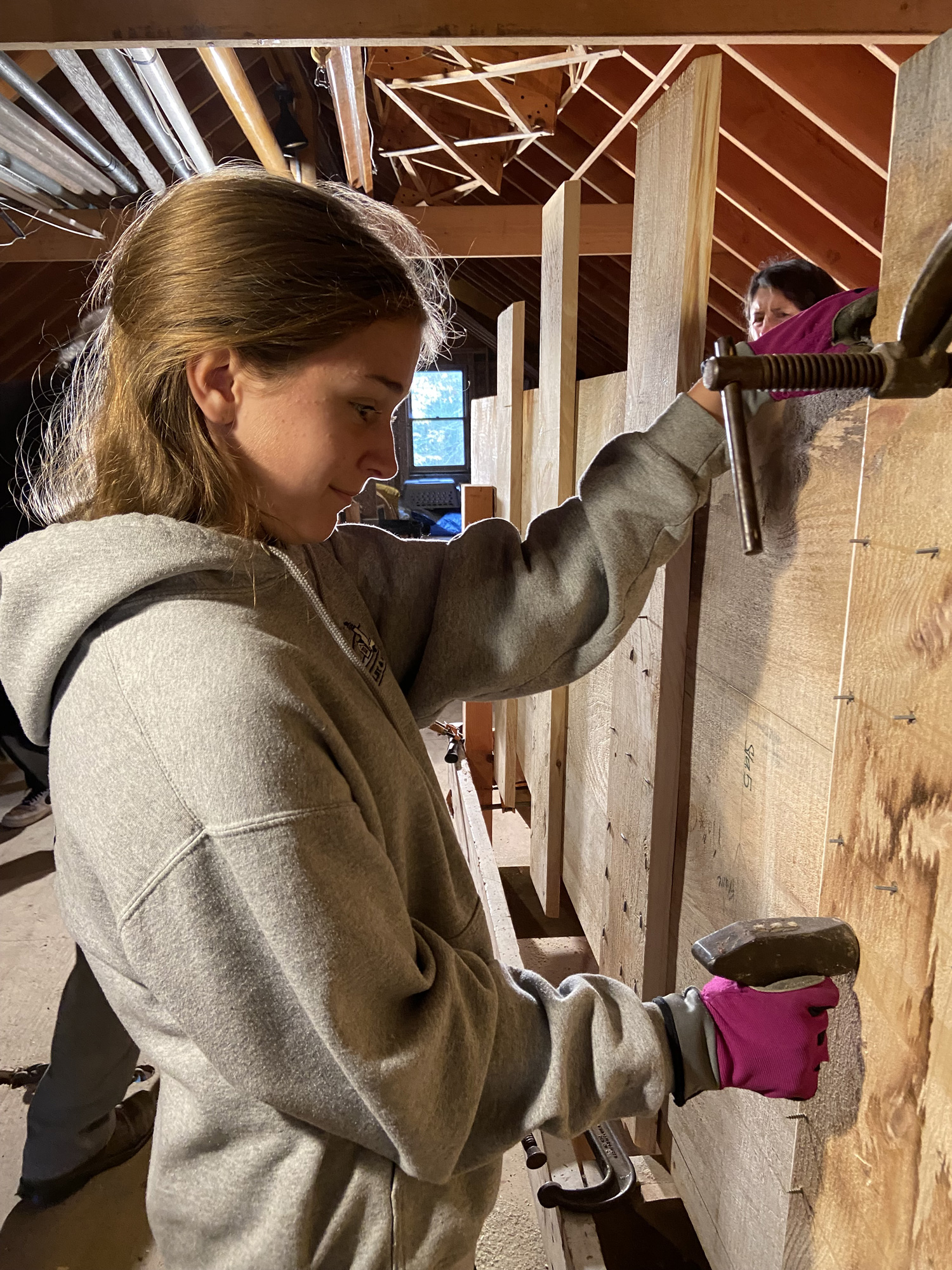
While nails were hammered through from the underside of the plank and into the cross braces, a short-handled blacksmith hammer served as a backing iron to absorb the impact of the hammer blows. The protruding nail tips will be hammered over and pounded flat into the cross braces.
The 23 students came to the shop, just a mile from the school, once a week in two groups, each working for 90 minutes, in back-to-back classes. “To some extent, it meant Rob had to explain everything twice, but it also meant that all the children were involved in every stage.”
The original goal was to finish the boat in late November, and launch in early December. “Looking back,” says Jody, “it was a crazy idea… it would have been so cold, but somewhat historically correct as Arnold’s expedition experienced freezing weather.” But even though the boat was sufficiently complete to launch in December, the Maine weather had other ideas. “There was a huge snowstorm the day before, and school was canceled, so that took care of that!” says Jody. Nevertheless, the project had largely gone to plan.
The boat, as described by Rob, is “around 20′ long, with a 4′ 6″ beam and about 21″ depth admidships. The bateaux were among the world’s simplest boats. They were just thrown together; you didn’t need to be a specialist boatbuilder. Their number-one function was to carry the most weight possible in the least amount of water. The bottom was flat fore-and-aft as well as athwartships, except maybe in the last 3′ at either end, where it curled up just a little.”
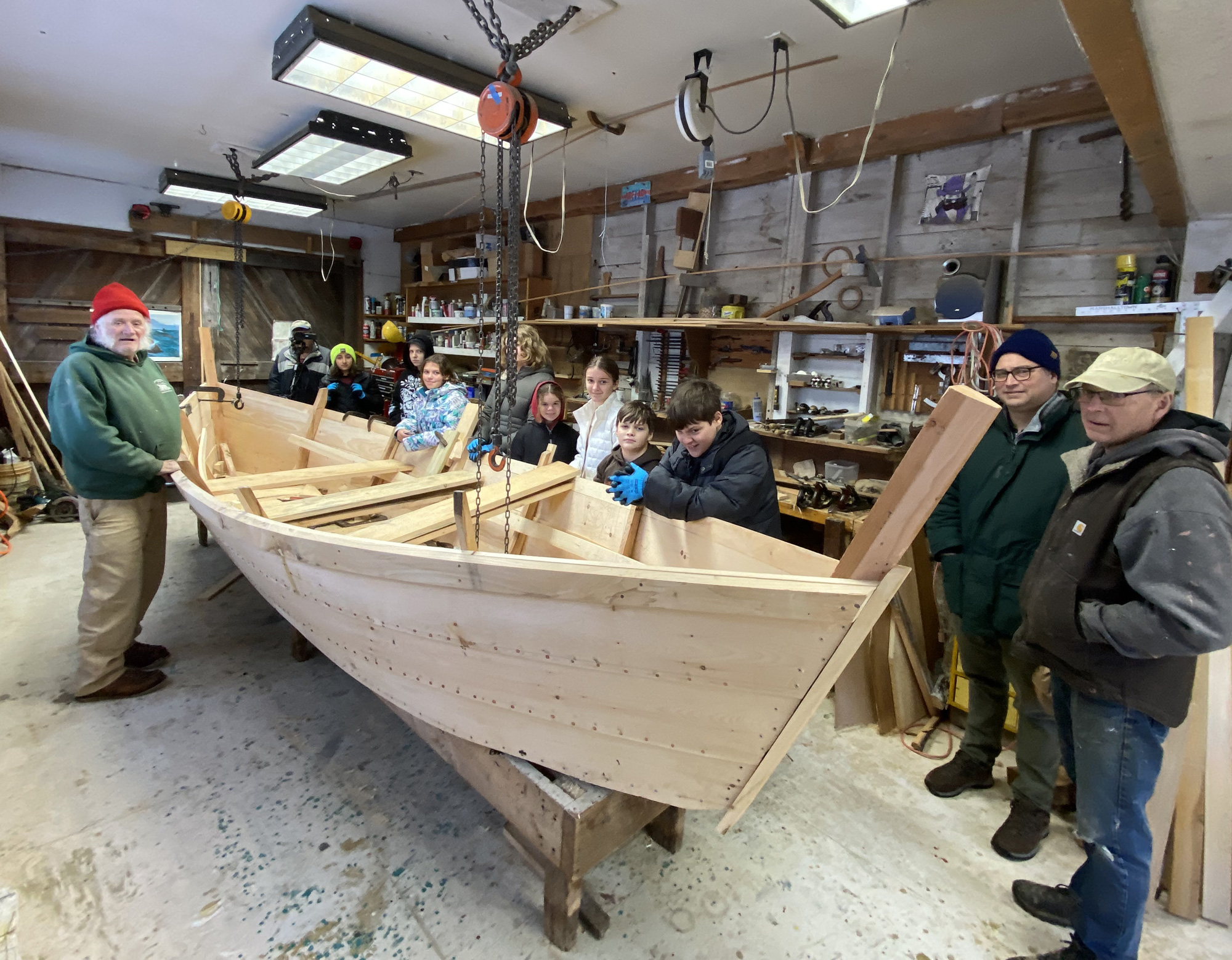 Courtesy of Jody Bachelder
Thanks to many willing hands and its simple construction, the bateau quickly took shape. Here, the stem (and outer stem) and sternpost await trimming, and the thwarts are soon to be installed.
The construction of the Bristol bateau followed Rob’s previous six, all based on archaeological evidence. The bottom planks—of 1 1⁄4″ thick pine—run fore and aft, braced by 1″ by 10″ flat pine boards running athwartships. Built right-side up from the bottom up, once the bottom was complete, the stem, sternpost, and frames were attached.
“The frames are essentially knees,” says Rob. “They don’t span the whole boat and, like everything else in the bateaux, historically the builders would have used whatever grown knees they could find. The shape of those knees would determine the shape of the boat itself. The wider the angle of the knee, the nearer the center of the boat it’d be positioned. In the Bristol boat we used hackmatack knees that I happened to have. The ’midship knees have an angle of about 120 degrees.”
The bateaux were, essentially, built by eye, but as Rob puts it, “It’s not like building some nice round-bottomed boat. You set up the stem and sternpost and angle them out so they look right. When I was building one bateau, I set up the stem and sternpost and then realized I didn’t have a long enough plank to accommodate the angle, so I brought them both closer to plumb and we were good to go.”
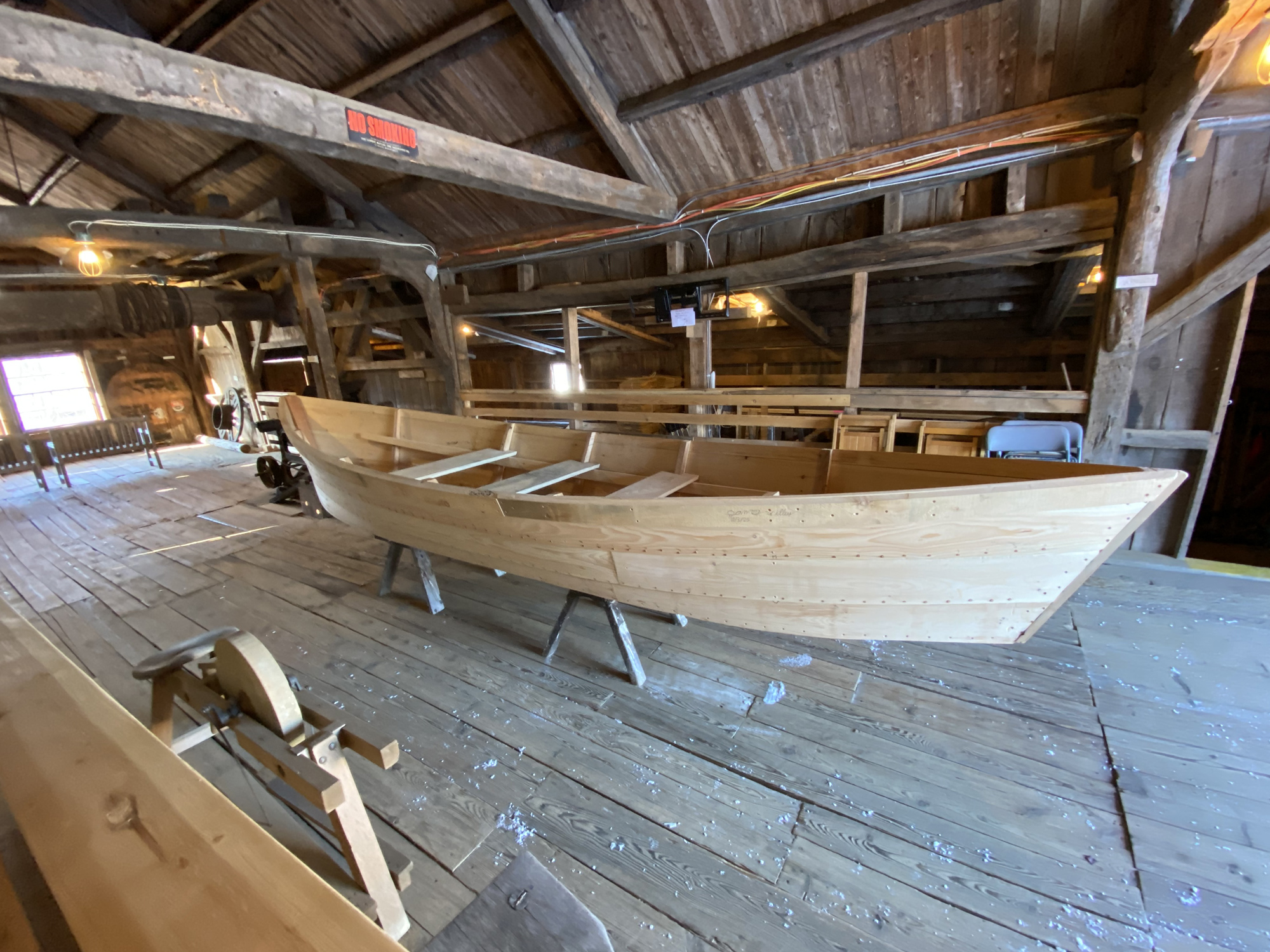 Courtesy of Jody Bachelder
By December, the bateau was complete, although the seams still needed to be caulked. The planned December launch was put off because of bad weather, and the bateau would not be launched until the following May.
Stem and sternpost in the Bristol boat were of Douglas fir. The stem was rabbeted—“I suppose for a guy used to working with a chisel, it was no big deal,” says Rob—while the sternpost was simply a V-sectioned post. The side planks were lapped 5⁄8″-thick pine, fastened with traditional cut copper clench nails from Strawbery Banke in Portsmouth, New Hampshire. In the bow, the planks were run into the stem, but at the stern “they just run wild and there’s no outer piece protecting the ends,” Rob says; “we just cut them off like they used to do.” The seams were caulked with sisal.
While Rob was there to oversee everything that happened, this was a hands-on project for the students. “I was really impressed by their work ethic,” Jody says. “They came to work, and some of them really did work very hard. Some of them had skills before they got there, some didn’t. But they were all quick to jump in and do things that were unfamiliar to them.” For the most part hand tools were used throughout—from planes to spokeshaves to Japanese saws—but power tools had their place and the kids used them all.
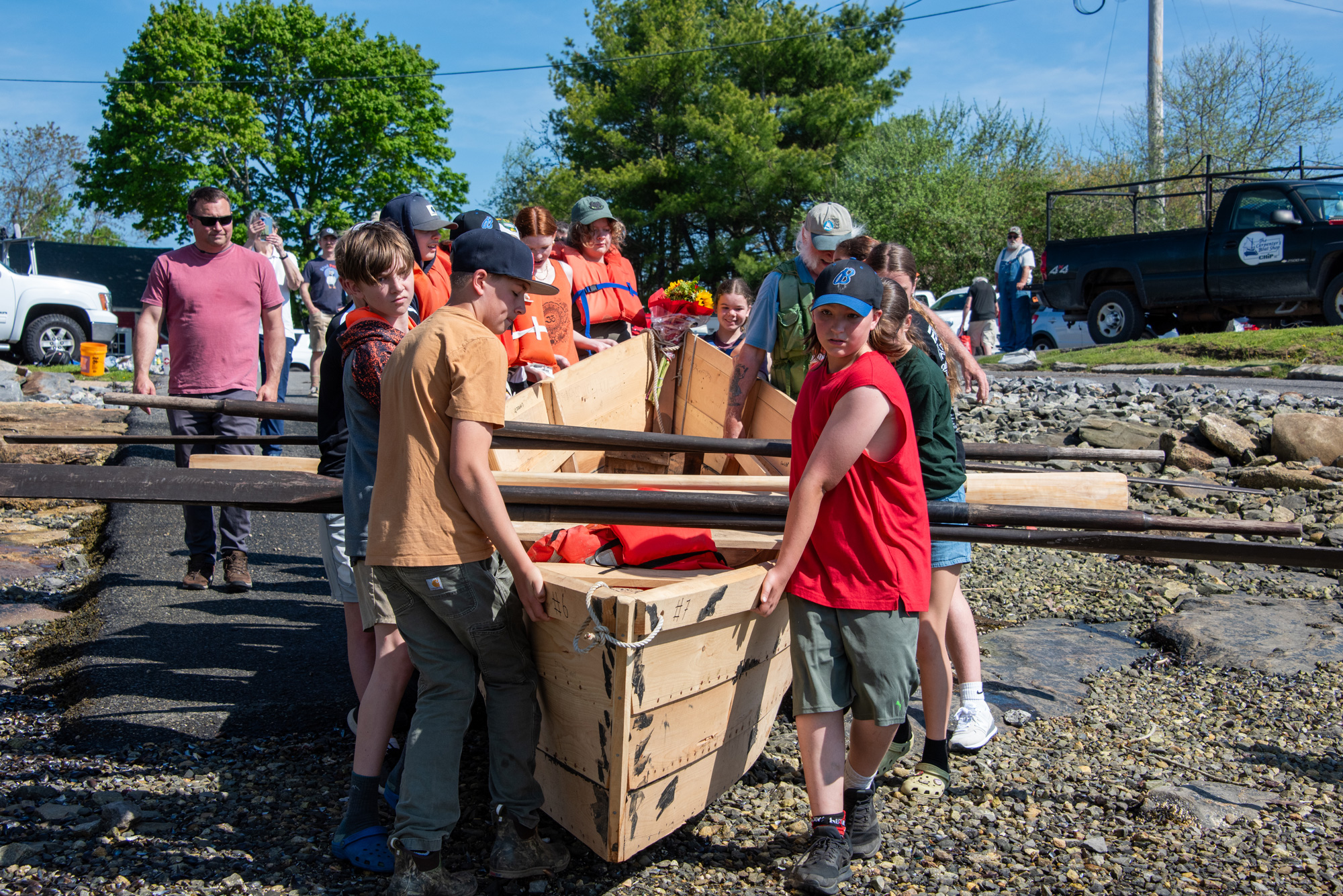 Courtesy of Luke O’Neill
Rob Stevens, here second from the back on the right, helps the seventh-grade students carry the bateau to the water for its maiden voyage. The more-modern screw fastenings at the stem ends of the planks and elsewhere were daubed with roofing tar, both to give them a protective coating and to add a look of authenticity—traditionally, vulnerable parts of the “battoes” would have been similarly daubed with pitch.
“Rob, Bobby, and several volunteers worked with the kids and shared their skills,” Jody says. “They wanted them to understand how the entire process works, why each step is important. They talked the kids through it, explaining ‘we’re going to do this, this is why, this is how…’ They described and demonstrated and then handed it over to the kids.”
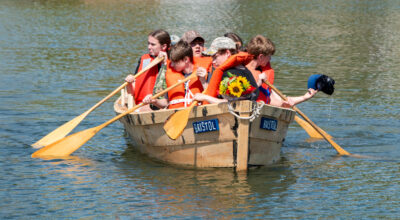
The bateau, appropriately named BRISTOL, was launched at Round Pond’s harbor in late May. The student builders had reconvened for one last session to help Rob with final tweaking and caulking, and then it was all hands on deck to get the boat down to the town landing and into the water.
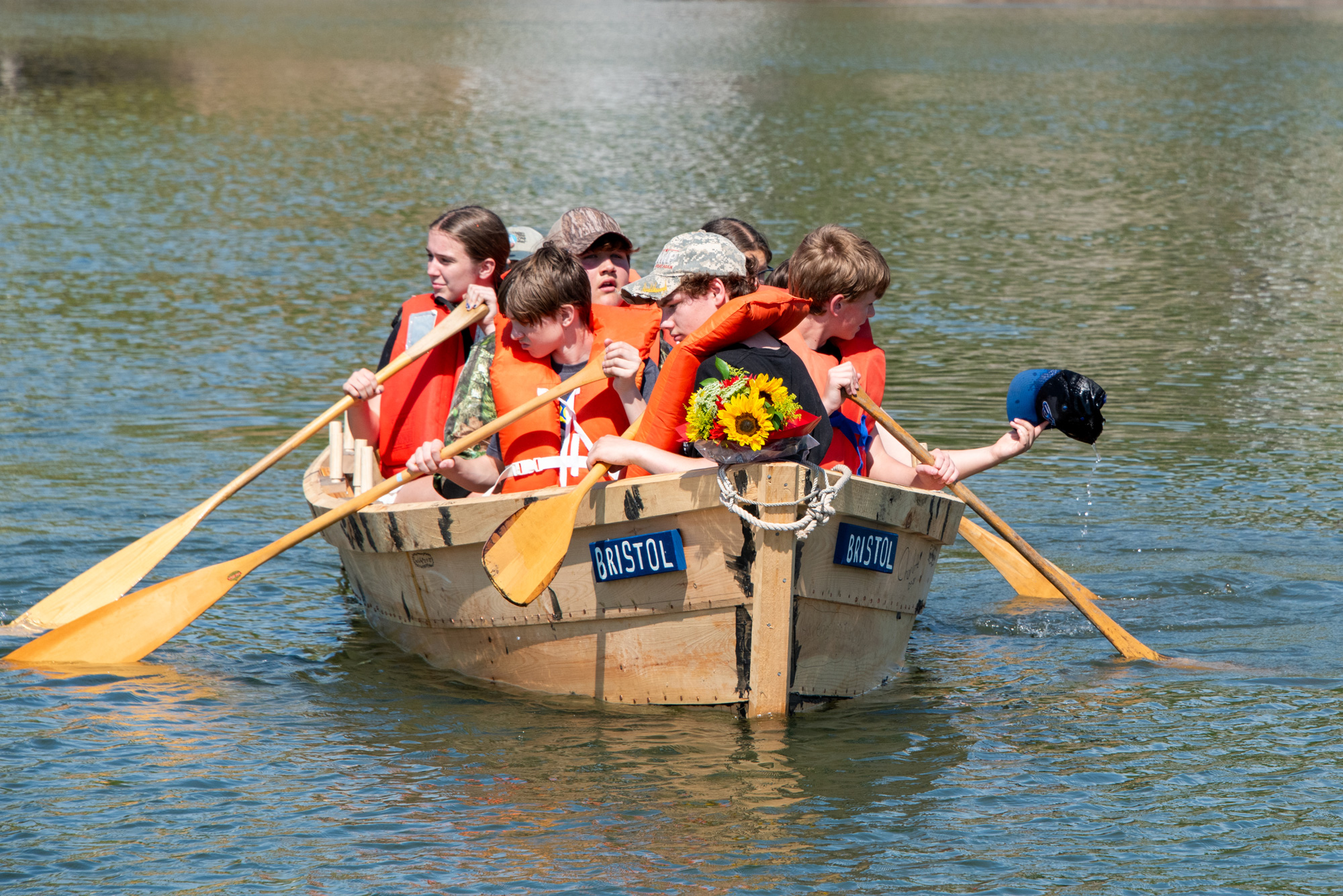 Courtesy of Luke O’Neill
BRISTOL, fully laden with some of her seventh-grade builders, takes to the water for the first time in the harbor in Round Pond, Maine.
It was a beautiful Maine day, and the BRISTOL floated well. The kids took turns rowing around the harbor, and even Rob had a go.
“For three months,” he says, building the bateau “was the highlight of my week, and it was a pleasure to share it with the kids. I hope they learned that they can actually make things with their hands. It doesn’t have to be boatbuilding, or even wood, just something.”
And, says Jody, “Who knows? Maybe it will have sparked a small interest in history. After all, people were doing interesting things in the past, and what these kids are doing today will be history tomorrow.”
Jenny Bennett is editor of Small Boats.
Do you have a boat with an interesting story? Please email us. We’d like to hear about it and share it with other Small Boats readers.
Further Reading
The story of the Benedict Arnold expedition from Maine to Québec City, is told in the novel Arundel by Kenneth Roberts, published by Down East Books, price $19.95.
Join The Conversation
We welcome your comments about this article. To include a photo with your remarks, click Choose File below the Comment box.