In 2018, after a visit to The Wooden Boat Show at Mystic Seaport, Connecticut, I was inspired to build a sailboat. I had built a Malahini runabout by Glen-L and had enjoyed the experience, so naturally reached for the Glen-L catalog. There I found a listing for the Glen-L 19: a 19′ sloop with a spacious cockpit and good-sized cabin, complete with a generous V-berth. It would, I thought, lend itself to some fun weekend boating.
The finished boat would be trailerable, quickly rigged, and simple to launch, with a pivoting centerboard and an easily stepped mast. It was also a project that would fit in my workshop. I ordered the plans, which included a 13-page instruction manual with complete fastening schedule and materials list, and a 12-page booklet covering the general building method. The plans came as six sheets of 12:1 scaled drawings, and two sheets of full-sized patterns for the transom, frames, stem, breasthook, centerboard trunk, and centerboard. I had previously found Glen-L plans to be complete, informative, and easy to follow, and was not to be disappointed by the Glen-L 19 plans.
Building the Glen-L 19
The project began with cutting out the pieces for the hull’s framework: 4/4 mahogany frames, notched to accept the oak keel, chines, sheer clamps, and bottom battens; 3⁄8″ plywood gussets and bulkheads; and a stem and breasthook comprising two layers of 3⁄4″ marine plywood. Each of these components was represented in the full-sized patterns. Once these parts were created, I mounted them, upside down, on a level building form as detailed in the plans.
Next came the centerboard trunk, which had to be built and installed before the keel could be fitted. This was a fairly involved task, requiring care and accuracy. Following the directions, I cut out a plywood template of the centerboard, which is used to check its dimensions and ultimate operation within the trunk (after some fine-tuning the template is used again, when making the steel centerboard).
The 2″-thick side panels of the centerboard trunk are built of two layers of white oak with a 3⁄8″ plywood and fiberglass lining. The holes for the pivot pin are drilled into the panels before they are fastened to the trunk’s frames.
 Photographs by the author
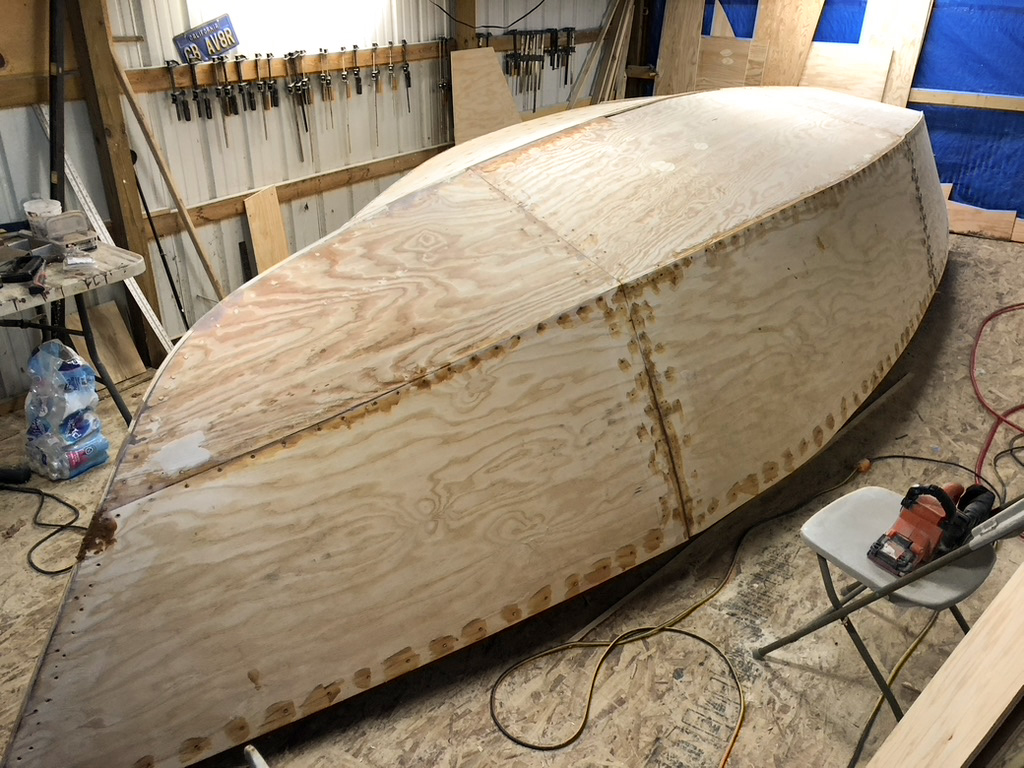
The 19′-long hull is built using three plywood panels per side and a further three for each side of the bottom. Glen-L suggests two different techniques to get each trio joined to achieve the required overall length: the butt joint and the scarf joint. I chose the former as the simpler of the two, knowing that the backing blocks would be hidden once I had fitted out the interior and the cockpit.
With the hull’s framework glued and fastened in place, I faired everything in preparation for receiving the 3⁄8″ marine-plywood side and bottom panels. All the hull panels need to be scarfed to provide the necessary lengths for the construction. The Glen-L instruction manual offers two methods for this—a scarf joint and a simple butt joint—and I chose the latter, reinforced with 8″-wide plywood butt blocks.
The instructions suggest installing the sides before the bottom, but I began with the bottom panels as I found it easier to seat the bottom battens and to manage their tight bends in the bow before fitting the sides. Attaching the side panels later caused no problems.
The basic hull now complete, there was much sanding and fairing required before I could apply the sheathing of 6-oz fiberglass cloth and epoxy, followed by primer, more filling and fairing, and then paint. To strike the waterline, I used a laser level.
Once the exterior of the hull was complete, I turned it over—using the gantry I had made—so that I could move onto the decks and interior. Before I continued the build, however, I made the centerboard. The plans call for a 200-lb board cut from 1″-thick steel plate. I found a piece at a scrapyard that was about twice the size I needed (I would later use the offcuts as ballast).
Using the template, I traced the shape of the centerboard onto the steel and then cut it out with an angle grinder and many discs. After rounding the edges and carefully boring through the holes for the pivot hinge pin and lifting mechanism attachment, I coated the steel with a protective layer of cold-galvanizing paint. I installed the centerboard later by lowering it through the companionway hatch and into the trunk (I again used the gantry to turn over the hull). Once the centerboard is installed—with the stainless-steel cable led to a winch that is operated from the cockpit—the trunk is sealed with a top plate of 1″ white oak.
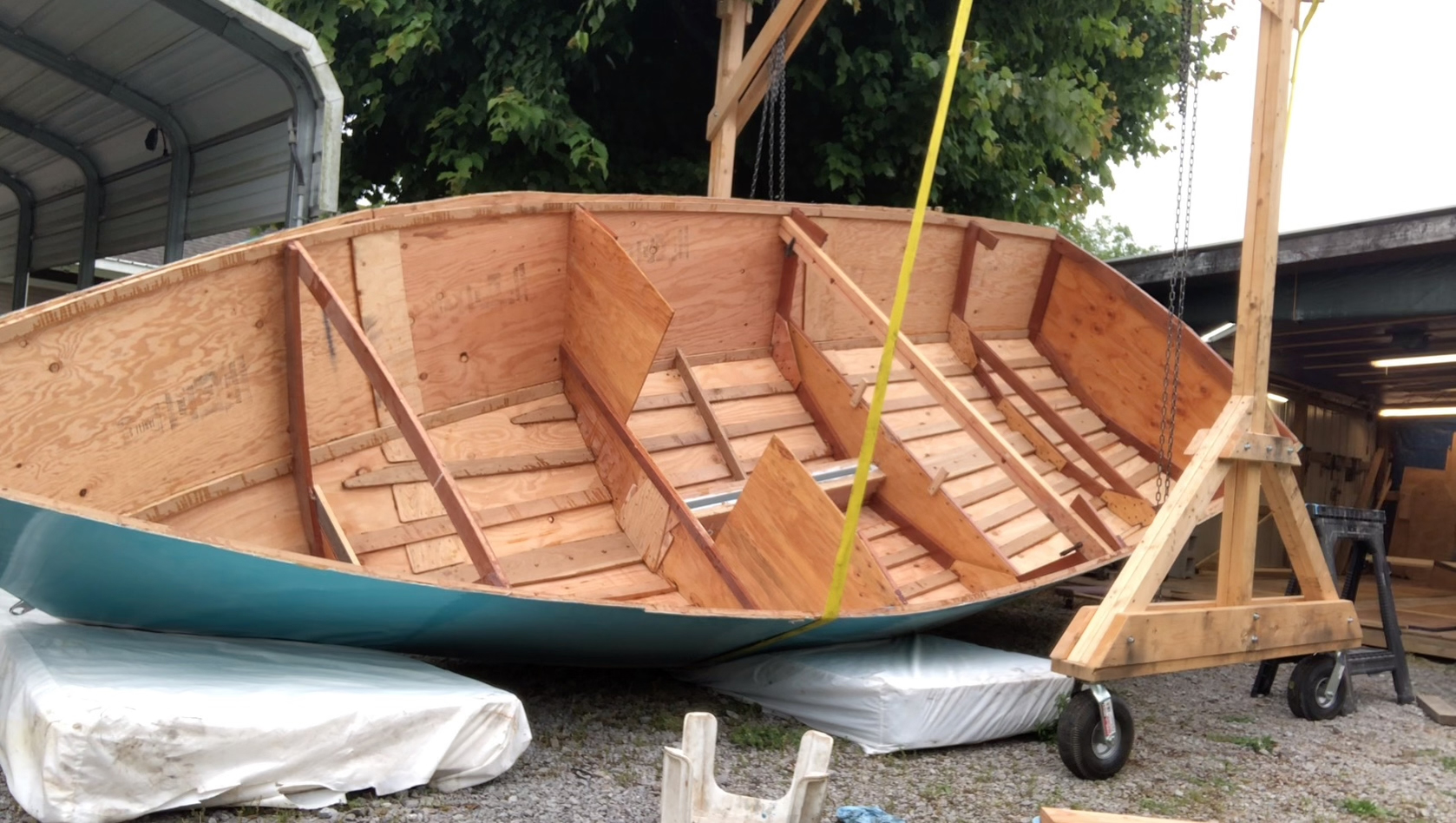
I constructed a simple but sturdy wooden gantry so that I could lift and rotate the hull on my own. While it worked, in hindsight I would have had more control if I had built two gantries. Thanks to the frames, bulkhead, transom, and temporary cross braces, the hull was remarkably stiff even at this early stage.
Building the Glen-L 19’s decks and interior
My next task was to seal and prime the inside of the hull. Then, after framing and installing the plywood decks as described in the plans, I installed the sole boards and built out the cockpit benches. Perhaps the hardest part of the build is installing the cockpit and cabin superstructure. Both the coaming and the coach-roof beams are in 5/4 mahogany and require copious bending to achieve the desired shape and dimensions. With hindsight, I would recommend a steambox, but I was ultimately able to accomplish all the bends with some creative bracing, clamping, and leverage.
All the exposed plywood surfaces were sheathed with fiberglass and epoxy prior to being finished. The plans show one long portlight on each cabin side. I chose to install three smaller acrylic portlights set in rabbets routed into the coach roof’s wooden frames. Glen-L suggests bedding and sealing with mastic and aluminum strips, but instead I used 3M VHB foam tape and then sealed them with the recommended silicone caulk.
For the interior layout, I followed the Glen-L plans: a forward V-berth, aft of which are open cabinets to port and starboard with worktops above, two seats either side of the companionway, and two 6′-long but narrow quarter berths beneath the cockpit side benches. The quarter berths would be suitable for a child or pet, but I use them for extra storage and a place to keep a Porta Potti.
Beneath all the berths are sizable lockers accessed by simple lifting hatches, and similar hatches in the cabin sole provide easy access to the bilge. In the open cabinet to port I installed a sink with hand-pump faucet. There is good headroom when seated in the cabin, and the deck-stepped mast is supported by a reinforced frame built into the coach roof so there is no need for a mast post below; this greatly improves the available cabin space. Thanks to the large portlights, the cabin has plenty of natural light.
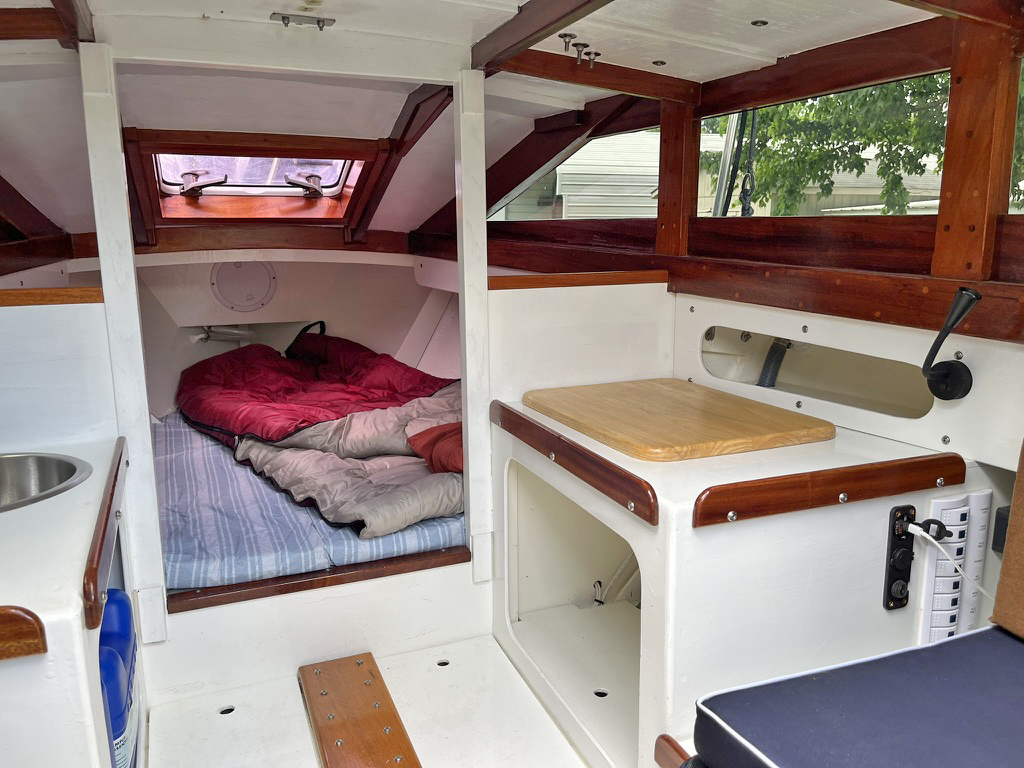
The cabin is light and airy and, with no mast post, remarkably spacious. To port, I added a sink with hand-pump faucet, but as I cook on a portable camping propane stove out in the cockpit, the starboard countertop is free for meal prep and other work.
The self-draining cockpit is 5′ 6″ wide by 6′ long. The benches slope down to the cockpit sides, making seating comfortable, and there is room for four adults at a pinch, or two with ample space. There is more storage beneath the cockpit seats—accessed through sealed hatches in the seat tops—and the mechanism for the centerboard is mounted through the cabin bulkhead, so that it can be reached by the person on the helm without releasing the tiller.
The Glen-L 19 on the water
Initially I “splashed” the boat with no rigging or mast. I wanted to see how it maneuvered and if my 3.5-hp four-stroke Mercury outboard would have sufficient power. I was pleasantly pleased on both counts. At half throttle we cruised at 2.5 knots and at full throttle achieved 5 knots. The boat was very responsive to the rudder.
But I was eager to go sailing, and so continued with the construction of the wooden spars according to the Glen-L plans. For reasons of cost, I used cypress rather than the recommended Sitka spruce or Douglas fir. The 22′-long mast (which I extended to 22′ 8″ to give greater headroom beneath the boom) is box-sectioned, while the 8′ boom is solid.
I dry-sail the Glen-L 19, often launching singlehandedly from a trailer. My original standing rigging was steel cable—as suggested in the plans—but with the frequent stepping and unstepping of the mast, I found this material hard on the boat’s and spars’ finishes, as well as being difficult to stow. After one season, I switched to Dyneema for all the standing rigging and have been delighted with the change. It is easy to splice—with no special tools needed—and extremely manageable. When the mast is lowered, I simply wrap the shrouds around it. I bought stock sails from Rolly Tasker Sails, available in the U.S. through The Sail Warehouse.
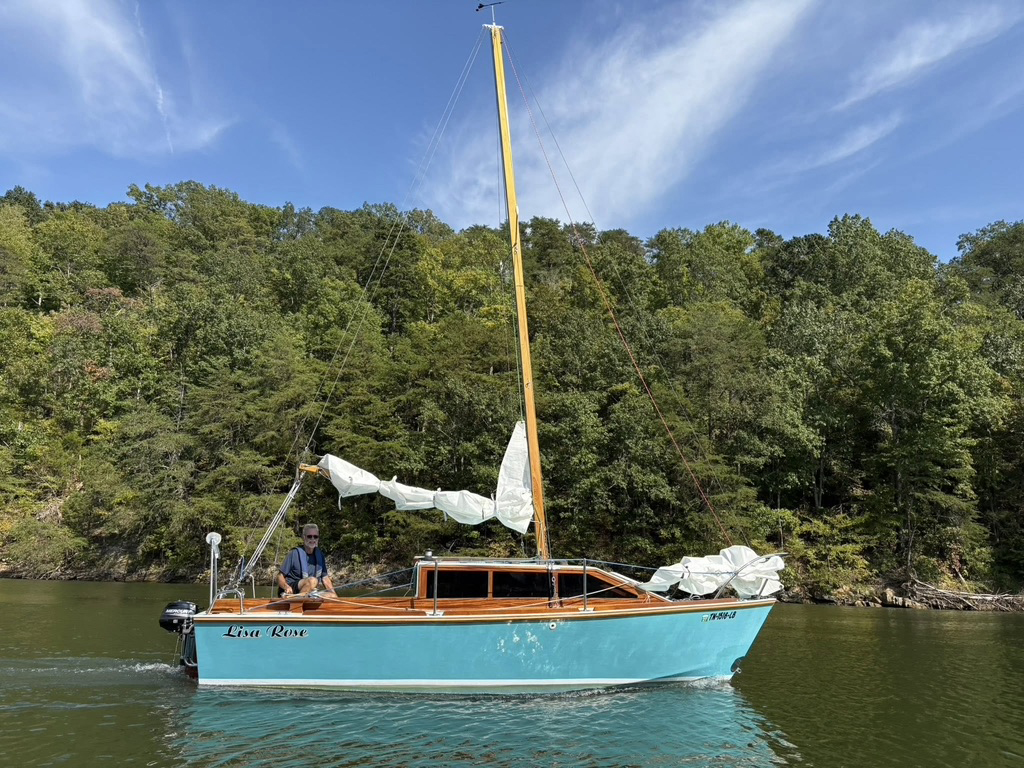 Chris Atwood
The Glen-L will cruise at 2.5 knots with the transom-mounted 3.5-hp four-stroke outboard at half throttle; at full throttle the speed rises to 5 knots.
When stepping aboard the Glen-L 19, the boat heels to the weight but does not feel tippy, and once on board—whether at anchor or underway—it feels stable. The maximum wind strength I’ve been out in is 15 knots with strong gusts, and on that occasion my wife and I sailed under full main with no jib. The boat handled the conditions well with no excessive heeling, and maneuvered without difficulty on all points of sail. In lighter airs, under main and jib, it is very responsive, coming about easily and smoothly, and carrying its way through head-to-wind. There is a reassuring amount of weather helm, and in a slight chop there is little spray. I added a topping lift to support the boom when the mainsail is lowered. As a boat for singlehanded sailing, the Glen-L 19 is excellent.
When seated in the cockpit the boom is several inches above my head. Because of the height of the coach roof, visibility is somewhat restricted—not unsafe, but a little awkward. I replaced the designed hinged companionway hatch with a sliding one so that I can sail (and see) with the hatch open, and I am experimenting with raising the jib tack so I can see beneath it.
The jib is hanked to the forestay but its halyard and downhaul are led aft to the cockpit, so once the sail is bent on there is rarely a need to go forward. However, if I do need to go up to the foredeck, there are a number of handholds—I added stanchions and lifelines for additional safety—and the boat is reassuringly stable, even when I’m up in the bow.
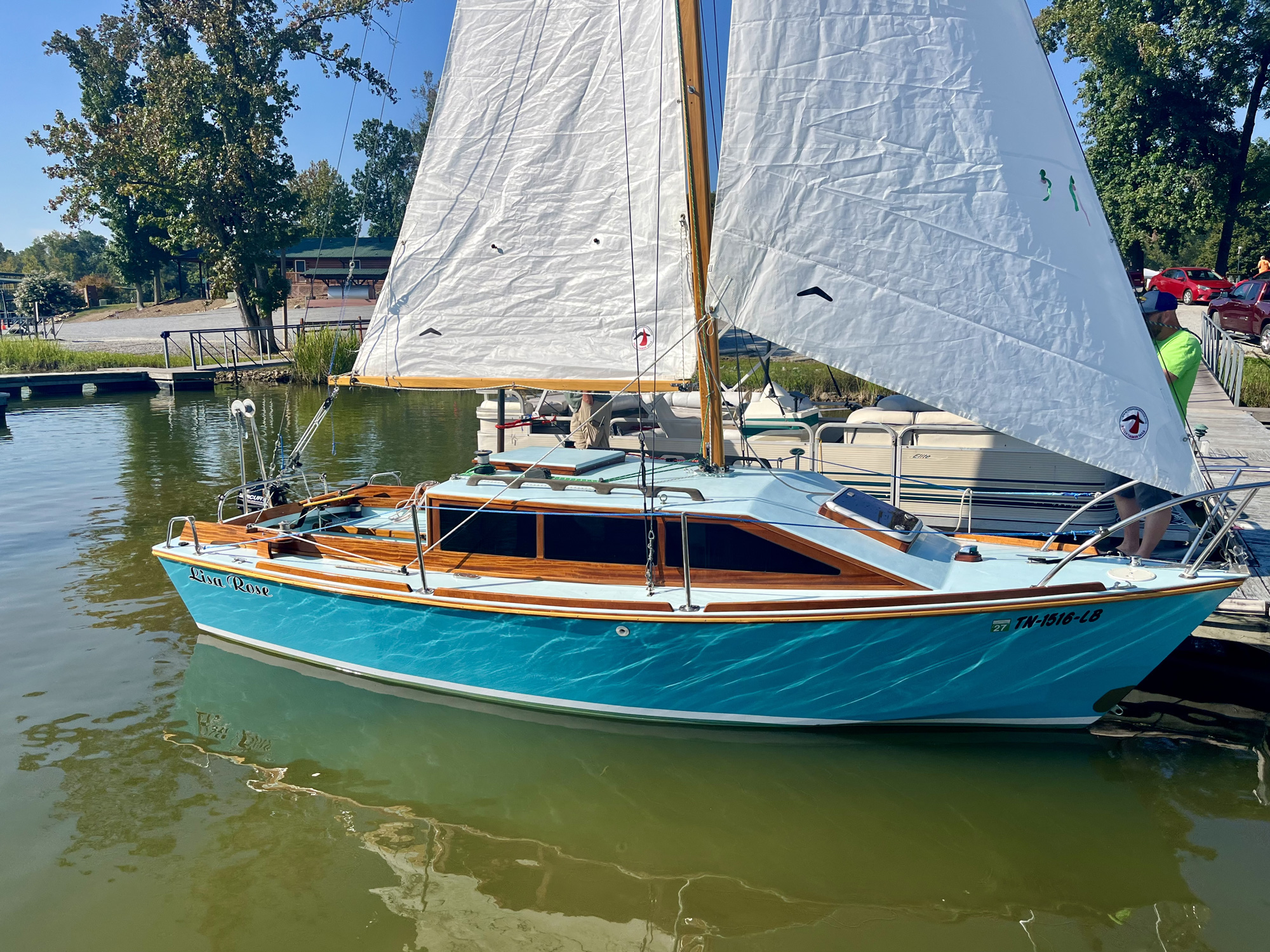
I raised the boom some 5″ to give more headroom and better visibility from the cockpit. The pulpit and guardrails are not standard, but I added them for safety.
There is no anchor locker specified in the plans. I added a chain/rope locker forward of and above the V-berth. It is accessed through a circular hatch in the foredeck and via another hatch in the forepeak bulkhead. The locker has through-hull drainage. I stow the anchor either in a bilge locker or a bracket mounted on the pulpit.
Whenever I launch the boat and, indeed, when out on the water, it always gets plenty of attention, often coupled with questions and compliments. Overall, I am very happy with my Glen-L 19, and I’m looking forward to many sailing adventures.
Simon Foord is a retired IT systems engineer, born and raised in England. He moved to California almost 40 years ago and now lives in Tennessee. Simon has owned and built several boats over the years and has a special passion for wooden boats; he is currently building a Glen-L Console Skiff. He enjoys sailing the Glen-L 19 sloop and running about in his Glen-L Malahini on Percy Priest Lake near Nashville, Tennessee.
Glen-L 19 Particulars
Length overall: 19′ 3″
Waterline length: 16′ 8″
Beam: 7′ 9″
Draft (board up/board down): 20″/3′ 10″
Displacement: 1,900 lbs
Hull weight (approx.): 600 lbs
Ballast weight: 400 lbs
Cabin headroom: 3′ 7 1⁄2″
Sail area: 165/211 sq ft (mainsail 82 sq ft; jib 83 sq ft; genoa 129 sq ft)
Power: Short- or long-shaft outboard motor to 10 hp
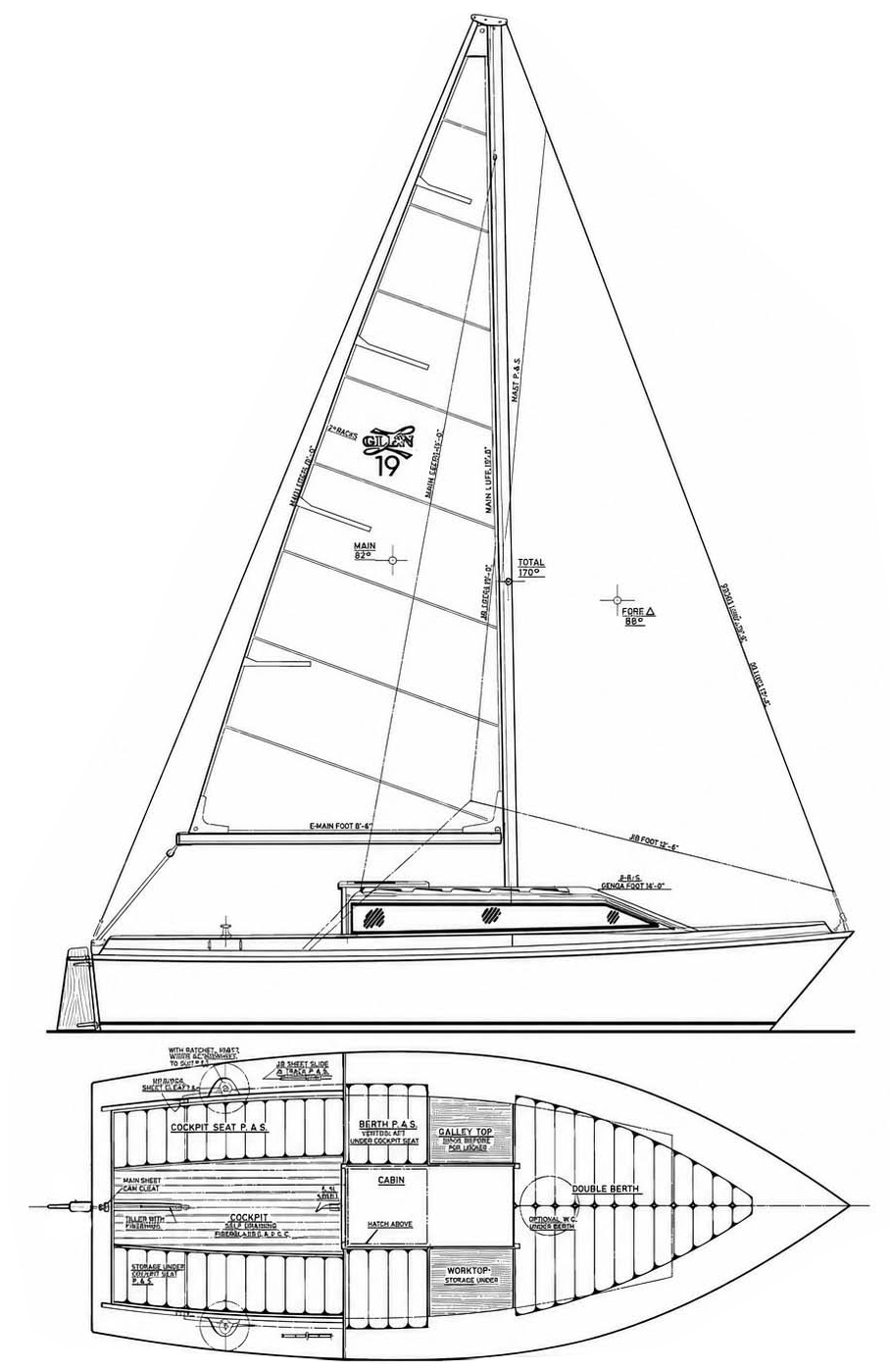
Plans for the Glen-L 19 are available from Glen-L Marine, $206 plus shipping for plans and patterns.
Is there a boat you’d like to know more about? Have you built one that you think other Small Boats readers would enjoy? Please email us your suggestions.
For more reviews of Glen-L Marine designs, see:
Glen-L 15, a day-sailer with style
Malahini, a 16′ runabout with classic style
Glen-L Bo-Jest, an accommodating 18-footer with tugboat lines


Nice work!
Your article gave me fond memories of my first build, a Glen-L Topper.
Thanks! The Topper is a cool little dinghy. May have to build one