Boatbuilders are occasionally faced with tasks that require shaping wood into complex, often decorative, shapes that require taking up the skills and tools of sculptors. Rasps are essential for shaping things like stemheads, tillers, oars, paddles, rudder blades, and centerboards. These simple tools haven’t changed much over the centuries—Michelangelo would have used something similar—but recently there have been a few interesting departures from the norm, such as the American-made Wood Shaping Rasps from Kutzall.
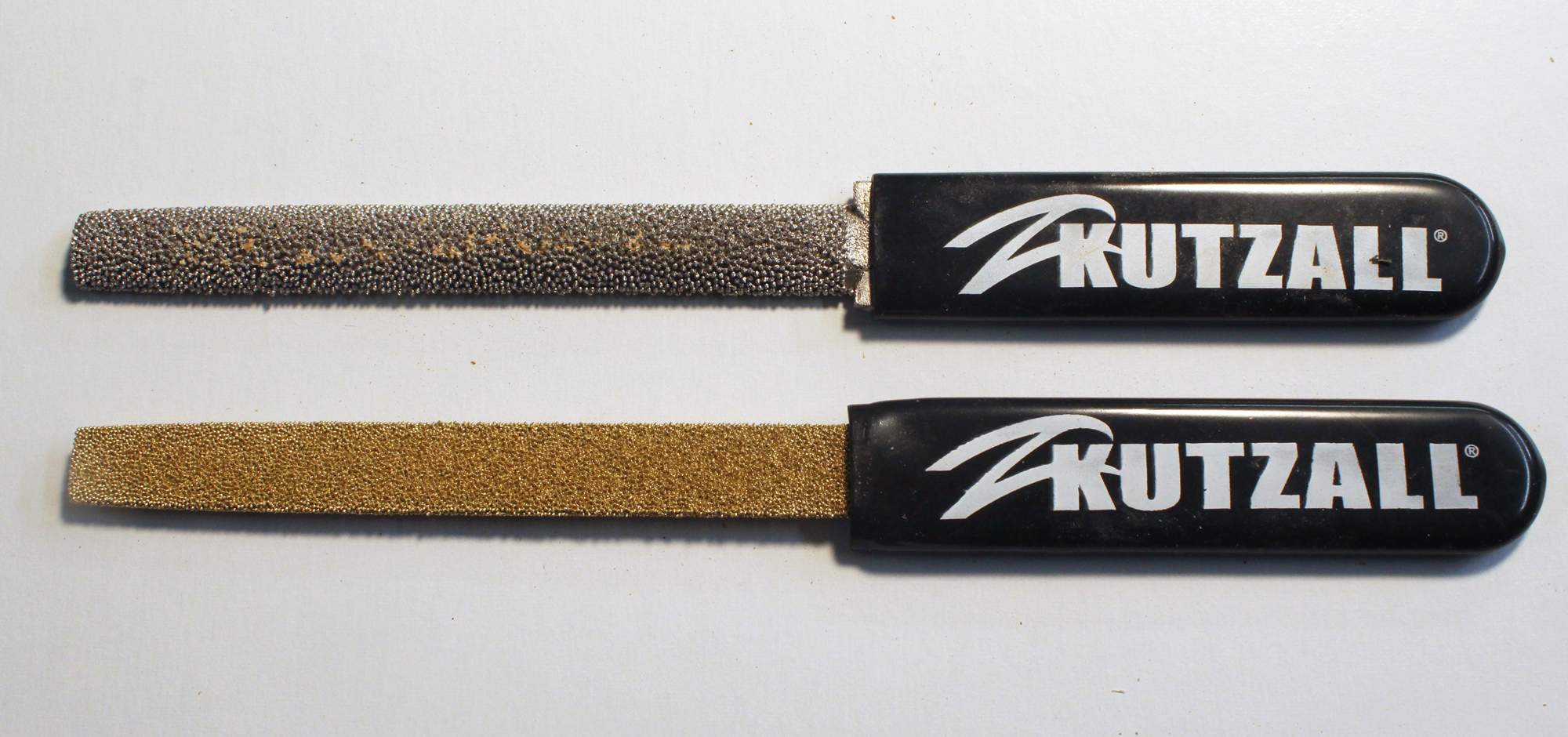
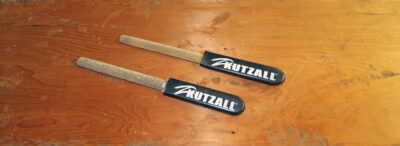
Available in two sizes—8″ and 6″—the Kutzall wood rasps are available in coarse and fine finishes. They are half rounds. The 6″ rasps, seen here, are 11″ long overall, 5⁄8″ wide, and 1⁄4″ thick. Each has a soft plastic grip 5″ long, and a cutting surface that is 5 7⁄8″ long. The coarse Kutzall weighs 6.8 ounces, the fine 6.3 ounces. I could find no information about the material used in the core of the rasps, but a magnet indicates some kind of steel.
 Photographs by the author
Both 6″ Kutzall rasps—coarse above and fine below—have teeth made of tungsten carbide, a compound that may not be as hard as a diamond but is much tougher.
The Kutzall rasps’ teeth are tungsten carbide applied in a random pattern. Each tooth is shaped like an onion, with a spherical base and a jagged point for an apex. The coarse rasp has, by my count, about 24 teeth per inch (tpi), while the fine has about 36. By comparison, my conventional 12″ half-round rasp has 6 tpi, an 8″ version has 8 tpi, and the ends of my 10″ four-in-one hand rasp have 13. Unlike the teeth on those rasps, the Kutzalls’ teeth aren’t angled in one direction, and can cut forward, backward, and even laterally.
I put the rasps to work on several wood samples—spruce, pine, Port Orford cedar, western red cedar, ash, oak, locust, and ipe (a Brazilian hardwood)—and test projects, two oars and a horn cleat. The soft handles provided a comfortable grip, and the teeth cut both soft and hard wood effectively without excessive clogging. When using a rasp I often put my left hand on the business end and apply a few wraps of tape around the teeth to protect my fingertips. Tape is not necessary with either Kutzall rasp, which both offer a comfortable non-slip grip for my left hand.
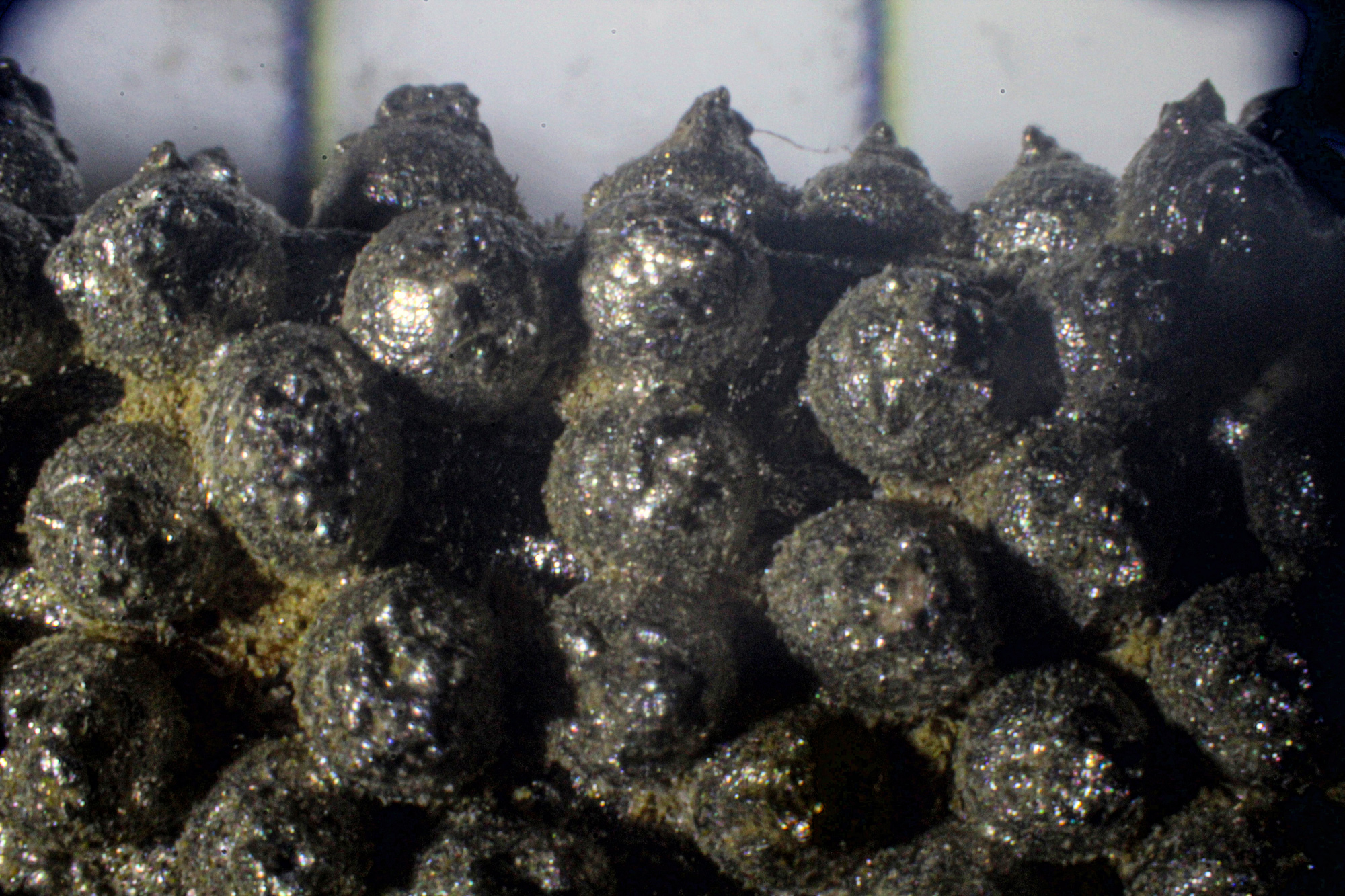
On the coarse Kutzall rasp, the random placement of the teeth leaves some gaps, but these do not affect performance. On the top row, the jagged points on top of the spheres are visible. The lines in the background are 5mm apart.
Compared to my conventional rasps, the Kutzall coarse rasp would be considered a medium. It didn’t cut as fast as my 8″ or 12″ rasp, but neither did it fray the wood as rasps tend to do. The Kutzall has a few slightly taller teeth that make a slightly deeper cut than those adjacent, but following up with the fine rasp leaves a uniform cut with no noticeable grooves.
I had to remind myself that the teeth cut in all directions, and that I could maintain firm pressure on both push and pull strokes. I counted strokes and examined depths of cut, and—maintaining constant pressure—cut twice as fast as when I worked in just one direction.
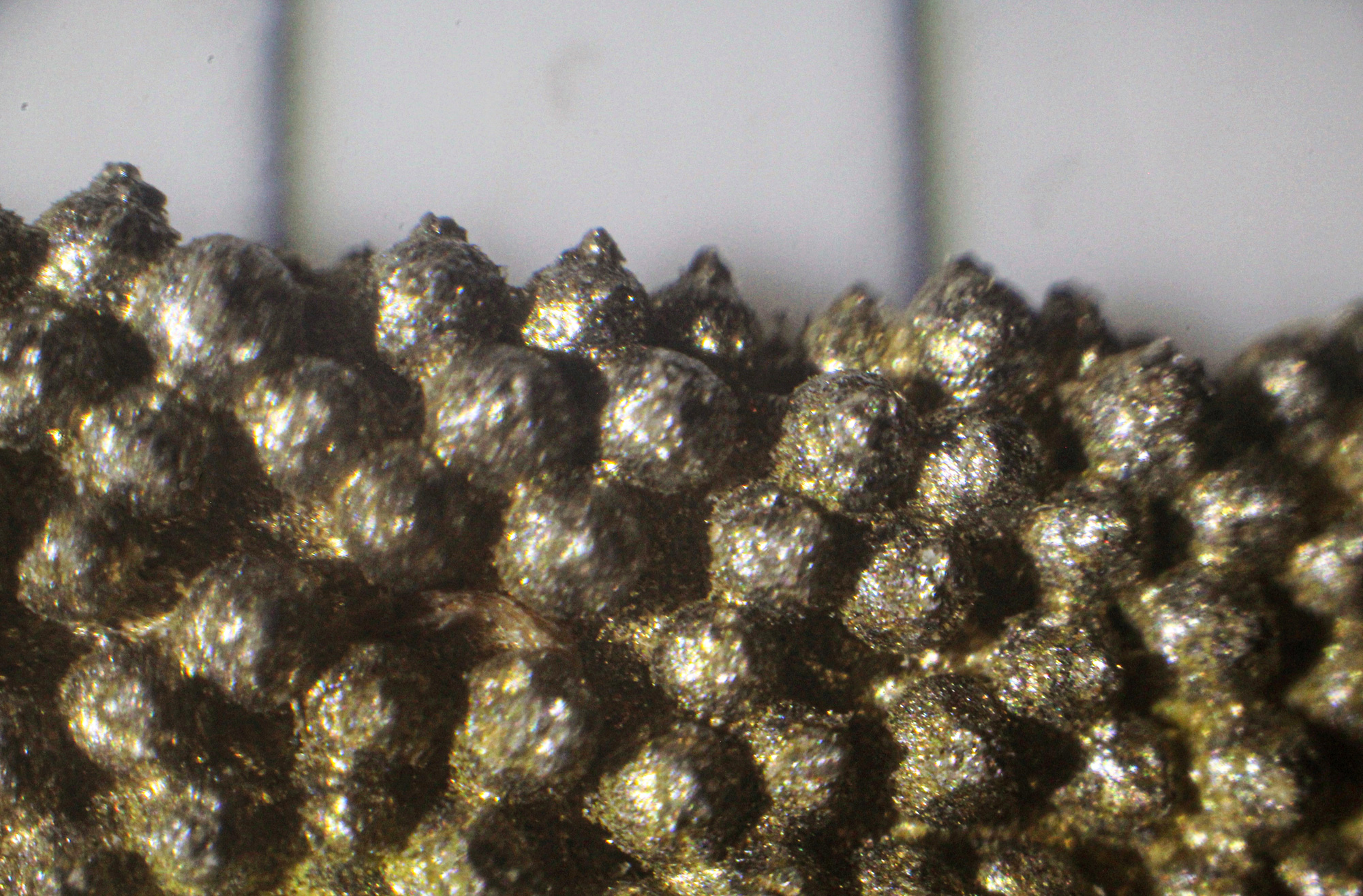
The fine Kutzall rasp has closely spaced teeth with points at slightly inconsistent heights, but despite this, the tool cuts a fairly smooth surface. The lines in the background are 5mm apart.
Kutzall says that the two rasps are “Made of tungsten-carbide for incredible durability,” and that “they will outlast 100× conventional abrasives.” That seems reasonable. My tablesaw blades with tungsten-carbide teeth seem to last forever. With either Kutzall rasp, I was able to press as hard as I could while working ipe—near the top of the Janka wood hardness scale, and the hardest wood I have in the shop—with no ill effect on the teeth.
Like any tool, the Kutzall rasps will have their best chance at a long and productive life if treated well. In my shop, unfortunately, tools do get dropped on occasion, sometimes onto the concrete floor. To see how well the new rasps would hold up to such a fumble, I dropped the coarse one, twice, from chest height. I let it fall at an angle so that it hit tip-first, where the teeth are most vulnerable. Each impact detached a single carbide tooth. Because of the random distribution of the teeth there were already a few gaps in the rasp’s surface, so a single missing tooth isn’t an issue. For best performance, rasps and files should never be stored loose and in contact with each other or other tools.
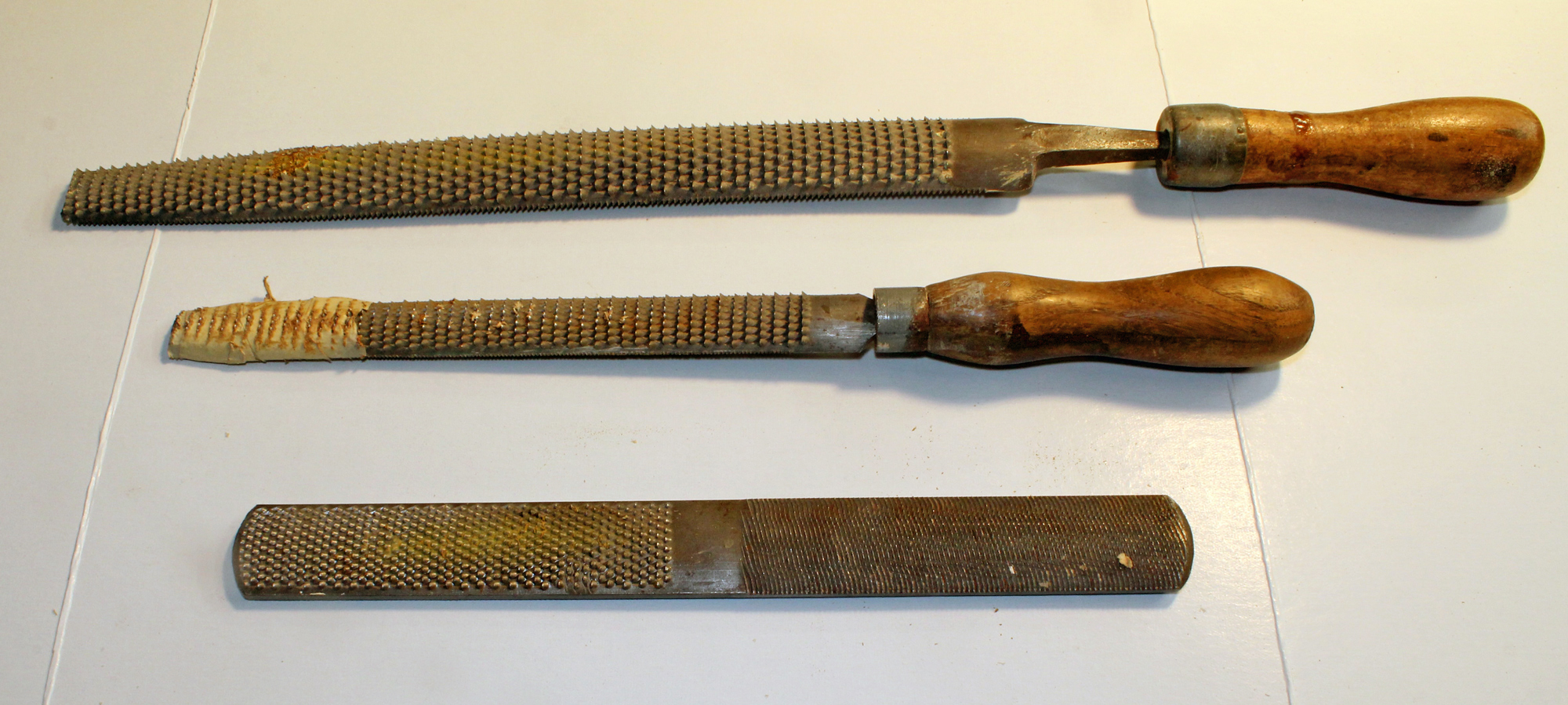
My conventional half-round rasps are decades old and showing some wear on the teeth. I often wrap tape around the working end to protect my fingers while using one with both hands.
Kutzall lists three methods for cleaning the rasps. For the work I’ve been doing with them, using a wire brush—brass is okay, steel is better—was the most effective and quickest method. A file card, with its very stiff bristles, worked well too. Kutzall also recommends soaking overnight in “solvent capable of breaking down your clogged material (mineral spirits, turpentine, or acetone work well).” I’ve been working with wood alone (except for some epoxy-glue lines and squeeze-out) so have had no need for soaking and prefer the immediacy of a wire brush. I was intrigued by the third recommendation—using a propane torch to burn away clogged material—but it wasn’t an effective method for me. While the myriad spiky carbide teeth can tolerate the heat, they make the rasp a very effective heat sink. I played the torch flame over some blonde spruce fibers and they didn’t even scorch to brunette, let alone char to a raven black. Yet the rasp’s business end was made too hot to touch and had to be dipped in water to cool down before I could use the tool again. I’m happy to continue using a wire brush.
I’ve been impressed by the Kutzall rasps. The durability of the tungsten-carbide and omni-directional cutting action are a significant development for these age-old shaping tools.
Christopher Cunningham is the Small Boats editor-at-large.
The fine and coarse 6″ (11″ overall) Wood Shaping Rasps by Kutzall are available from the manufacturer as well as The WoodenBoat Store for $46.95; 8″ versions are available for $57.95.
Is there a product that might be useful for boatbuilding, cruising, or shore-side camping that you’d like us to review? Please email your suggestions.
Further reading
For a different type of rasp, see Christopher Cunningham’s review of Shinto Rasps.
and for tips on how to sharpen rasps and files see how Christopher Cunningham uses acid with success in Sharpening Files.






Thanks Chris.
I’ve seen them advertised but never knew anyone who had used one, so this review is welcome.
Alex