One of the most memorable moments of the 2025 Challenge Naviguer Léger (CNL) on the north coast of France came at the very beginning of the event. It was a gray morning without much wind as the fleet of 14 boats headed out of the L’Aberwrac’h estuary and negotiated the rocky coastline leading to the dramatic lighthouse on the Île Vierge. It was a slow start and none of the boats was going particularly well when suddenly, out of nowhere, Emmanuel Conrath appeared in his prototype Grand Silmaril. For several minutes it seemed as if he had magicked his own personal breeze, as he sailed up and down the fleet, passing us first one way and then the other.
It was a remarkable performance, which left me scratching my head. I assumed that Emmanuel was managing it because he was singlehanding a big two-person boat with empty water ballast tanks and maximum sail set. Or perhaps, I considered, the Grand Silmaril is a deceptively fast boat.
 Photographs by the author
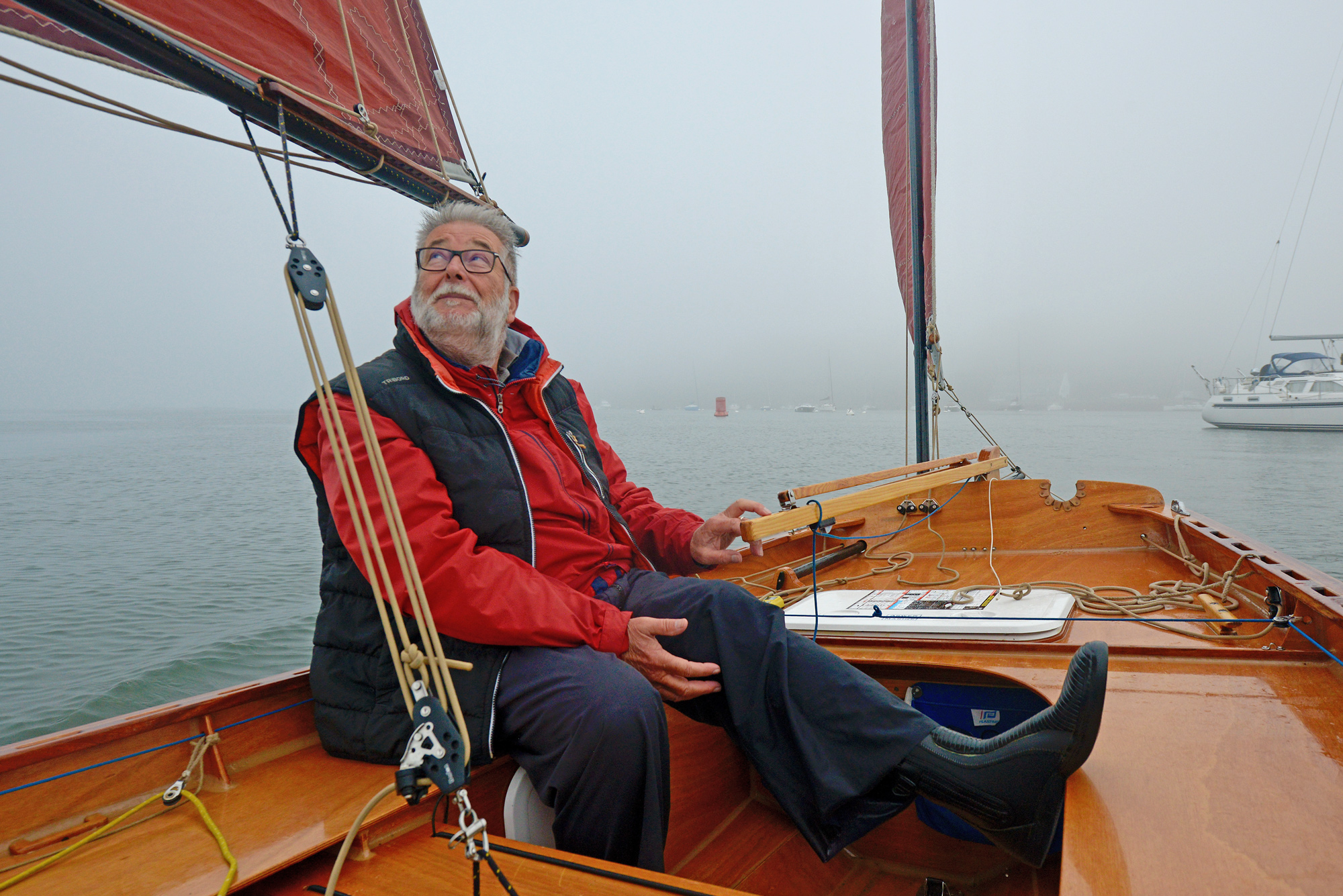
The Grand Silmaril needs only a light touch on the helm with, or without, the optional mizzen as seen here. The after deck has a large hatch giving access to the dry storage beneath.
I had sailed the boat the previous year in the Golfe du Morbihan, and even then its light-air performance had surprised me. Emmanuel’s prototype Grand Silmaril is finished in traditional colors, with a black hull, varnished sheerstrake, and mostly tan sails. At first glance, it looks like a pirate’s boat straight out of the 17th century. Only the black spars—unmistakably carbon fiber—give the game away. Yet, despite these traditional looks, the design is a thoroughly modern concept and possibly one of the best raid boats ever devised.
The evolution of the Grand Silmaril
For Emmanuel, the Grand Silmaril is the culmination of 15 years of building and sailing small wooden boats. In 2007, after half a lifetime working in IT, he chucked it all in and set up a boatbuilding business near Paris, France. Under the banner of Arwen Marine, he soon teamed up with John Harris of Chesapeake Light Craft (CLC) in Maryland, U.S., and started building Harris’s boats under license for the French market. The voile-aviron (sail-oar) scene has taken off in France in recent years, and Emmanuel is an enthusiastic promoter of the cause. When I first met him in 2024, he was already on his 10th CNL raid and had taken part in many others in France and The Netherlands.
To date, Emmanuel’s most successful build is Harris’s 15′ Skerry, of which he sold 40 in seven years, and which he scaled up by 20% to create the 18′ Gandalf design, launched in 2012. Much as he loved those boats, however, he knew they weren’t quite rugged enough for coastal cruising, particularly when the coast borders the eastern fringes of the North Atlantic. Influenced by designs from the U.S.—in particular the Whitehall type, and the Penobscot 17 designed by Arch Davis—he approached French small-craft designer François Vivier and commissioned him to design a lightweight, modern sailboat that could be easily trailered and yet would be steady enough to cruise in safety.
 Courtesy of Emmanuel Conrath
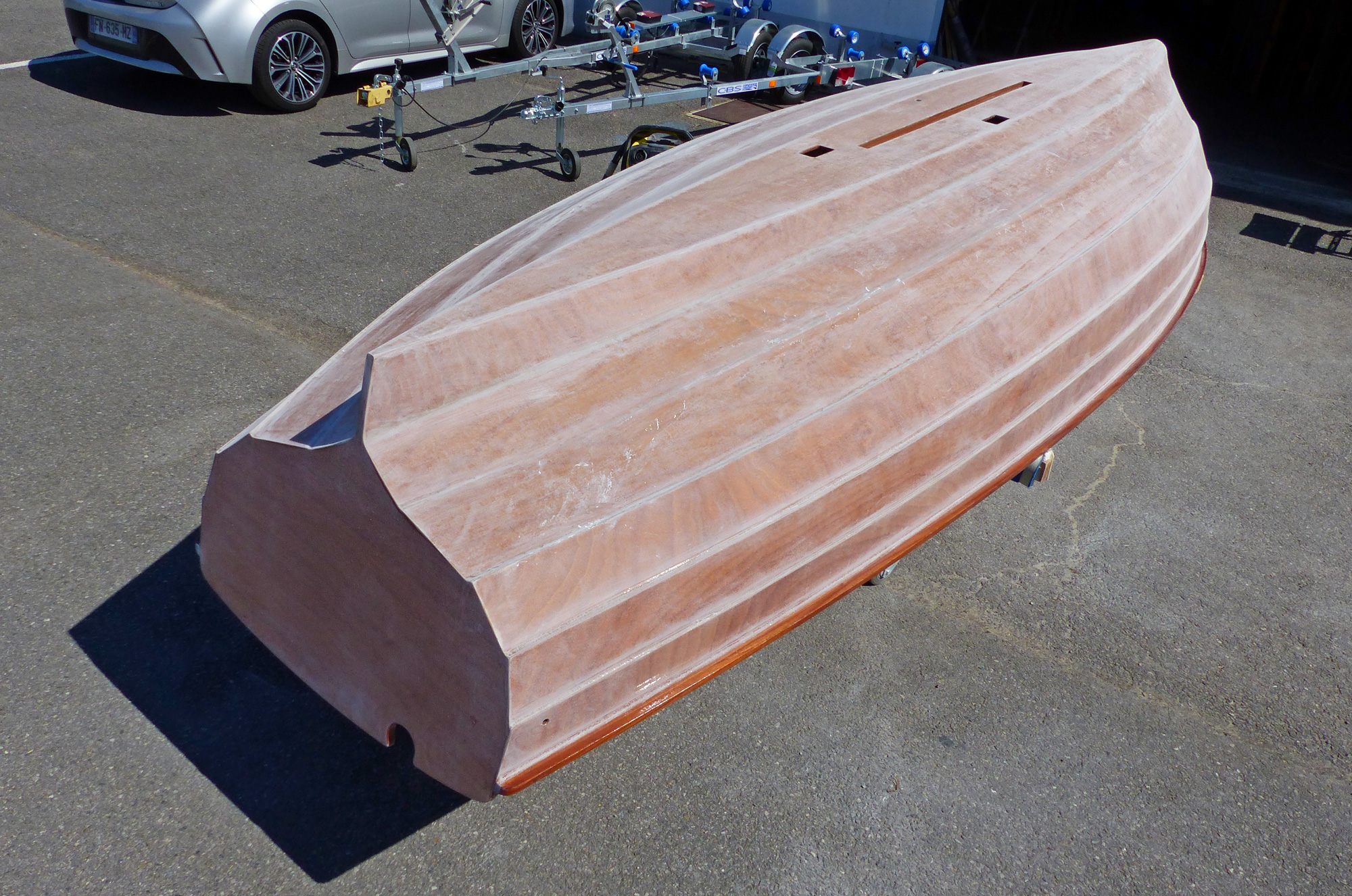
The underside of the Grand Silmaril reveals how the boat can sit upright, unsupported, on land. In place of a conventional keel, there is a flat, single-plank bottom on which the boat sits when beached. The centerboard can be lifted out, like a daggerboard, so that stones are unlikely to get stuck in the trunk, and with the boxed garboards tapering into a sharp skeg aft the boat tracks well when being rowed.
“I wanted six strakes per side, a narrow flat bottom, all plywood to save weight, water ballast, and 15′ maximum length,” he says. “I wanted the boat to be as narrow as possible, so that it would row well, but sufficiently beamy to sail well, too. Dinghy cruising is the thing to do with these boats. You sail to a nice beach, you pull the boat out of the water, and you sit there a while. You can travel rather far; you just have to find a reasonably sheltered beach every few miles.”
The resulting boat was the 15′ × 4′ 9″ Silmaril, and after five years of sailing the prototype (and building 12 more for clients), Emmanuel was keen to enlarge the design by 20%, as he had done before with the CLC Skerry. But this would have effectively increased the boat’s volume by 73%, which Vivier thought excessive. They settled on 10%, giving a 33% increase in volume, and the prototype 16′ 7″ Grand Silmaril was launched in September 2022.
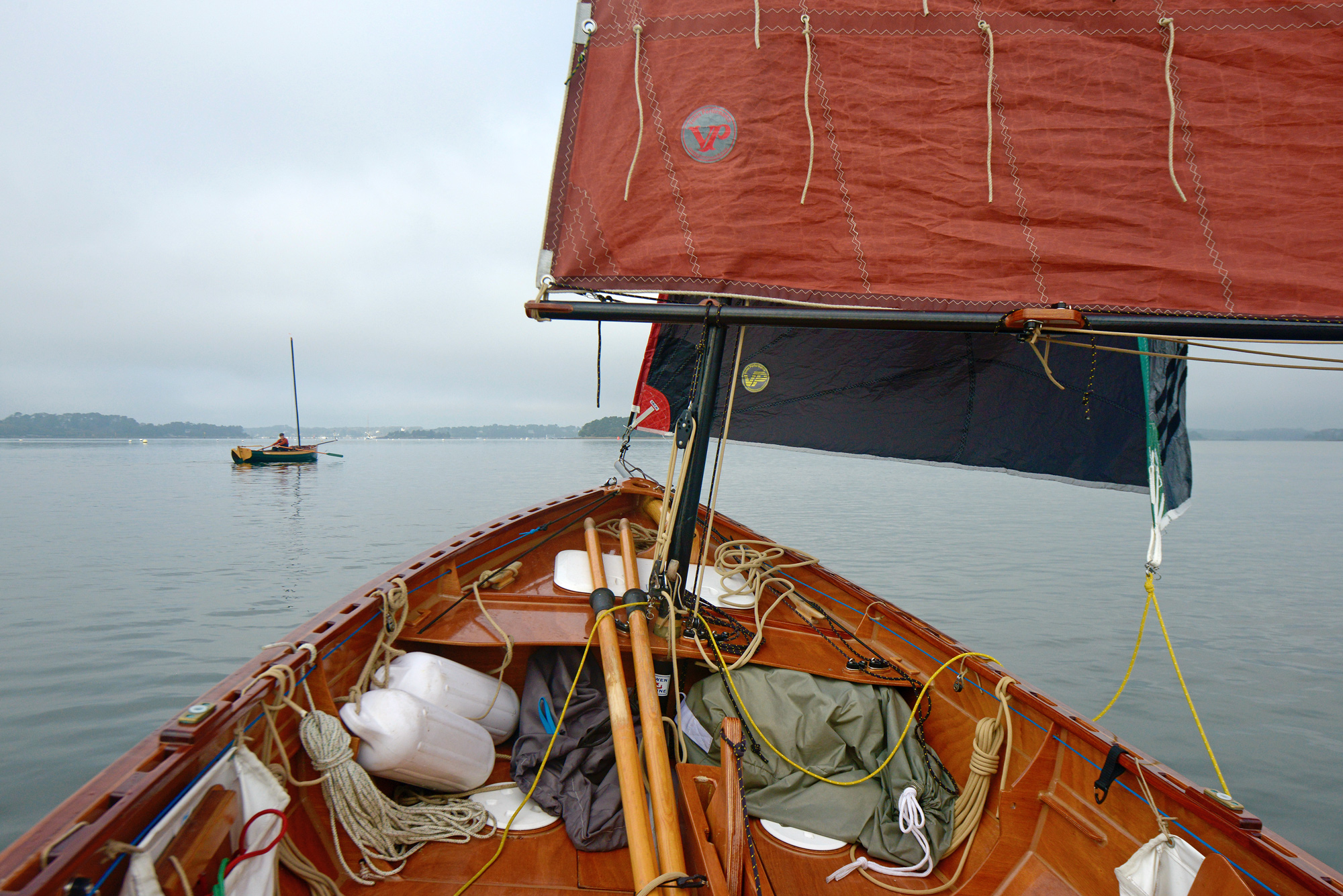
With its scuppered gunwales, the Grand Silmaril has plenty of places where lines and fenders can be tied off. Forward there is some open space beneath the mast thwart and more closed storage beneath the foredeck. Here, ghosting along in light airs, the Grand Silmaril chases the smaller Silmaril, under oars, off her port bow.
My first encounter with the boat was two years later, when I joined Emmanuel and friends for a mini-expedition in the Golfe du Morbihan. The Grand Silmaril is comfortable and fast. Part of the design’s secret is its light plywood construction. The boat’s total weight, including sails, carbon-fiber spars, and oars, comes to just 350 lbs. Not only that, but because of its buoyant shape, it sits high in the water, so that at times it appears to be barely touching the surface. Like its smaller predecessor, the Grand Silmaril has water-filled ballast tanks, one on either side of the centerboard trunk below the waterline. These can be filled while underway and add 308 lbs of weight, greatly increasing the boat’s stability. However, if the boat does capsize—even with filled tanks—it is easy to right, thanks to the considerable internal buoyancy above the water. Emmanuel told me that during capsize trials he has found that if he releases the main halyard before righting the boat, not only does the sail not work against the righting motion, but also it stays in the water after the boat is righted, to act as a sea anchor. After a capsize, the Grand Silmaril comes up with a maximum of about 50 gallons of water in the cockpit, but with so much enclosed space that the boat still floats high with the crew safely on board.
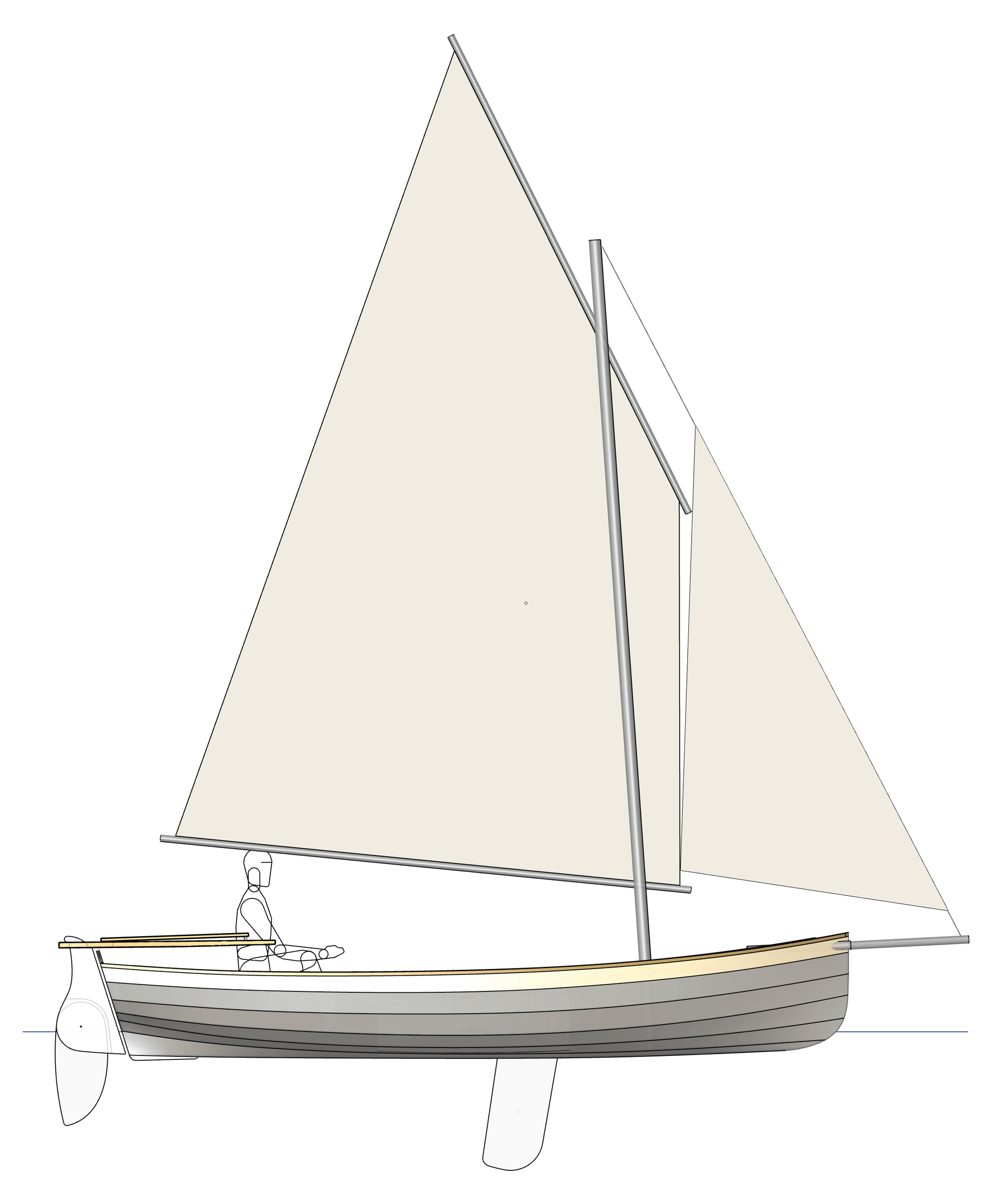
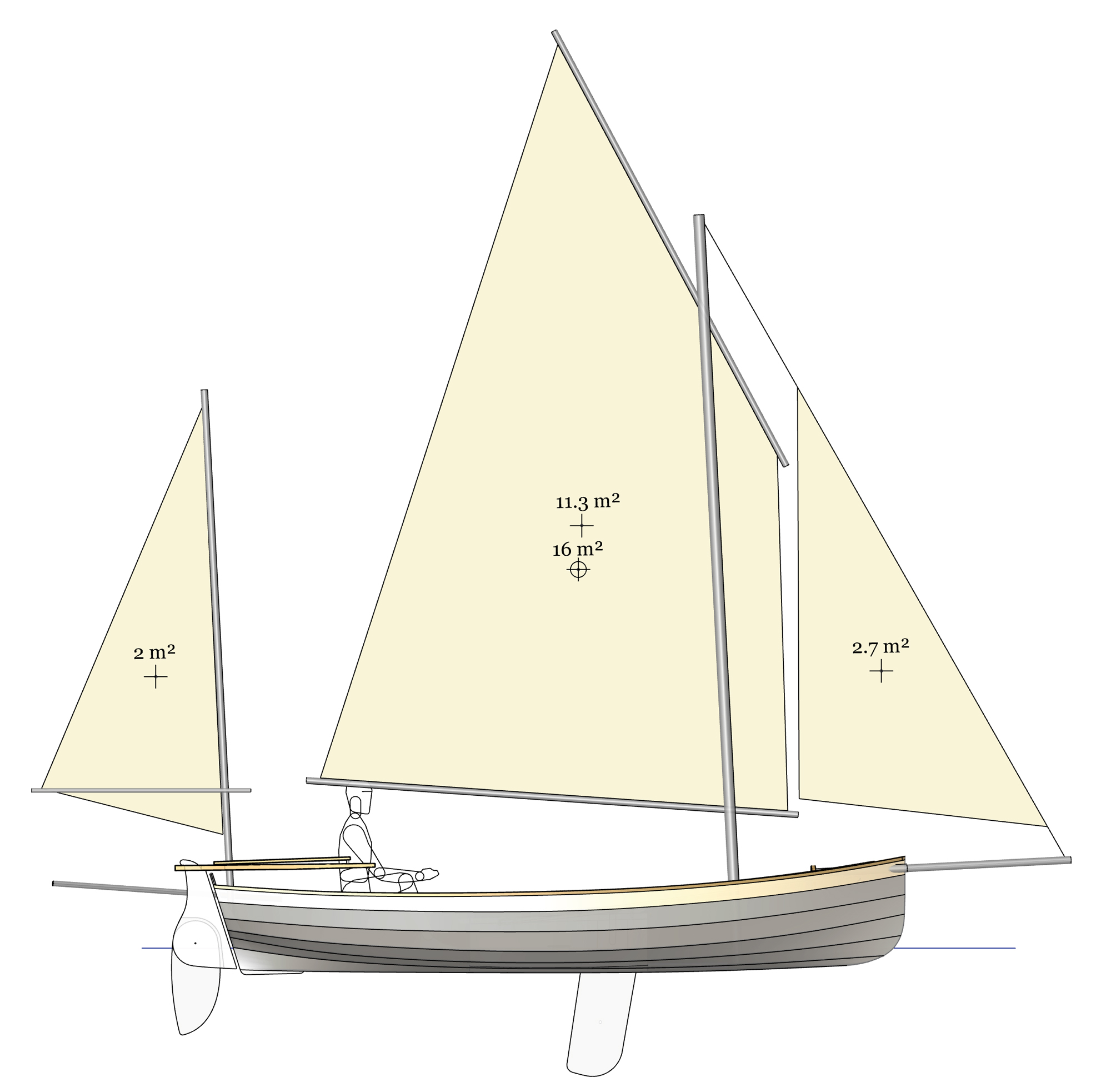
The Grand Silmaril’s rig has been through several incarnations that have included a mizzen, two foresails, and even a jackyard topsail. Emmanuel has continued to sail with a mizzen on the prototype, and Vivier has drawn three optional sail plans ranging from a single-sail balance lugsail, to a jib-mainsail-and-mizzen configuration. The middle-range main-and-jib plan works efficiently in most conditions. The mainsail is sheeted through a block mounted on the centerboard trunk, which means you don’t have that awkward tiller/sheet dance every time you go about. It also means the sheet stays clear of the helmsman when jibing. Unusually in a boat of this size, the sail has three rows of reef points, and Emmanuel says the Grand Silmaril can handle up to 25 knots of wind—which was proven during the 2025 CNL when the fleet was hit by a sudden squall of at least that strength.
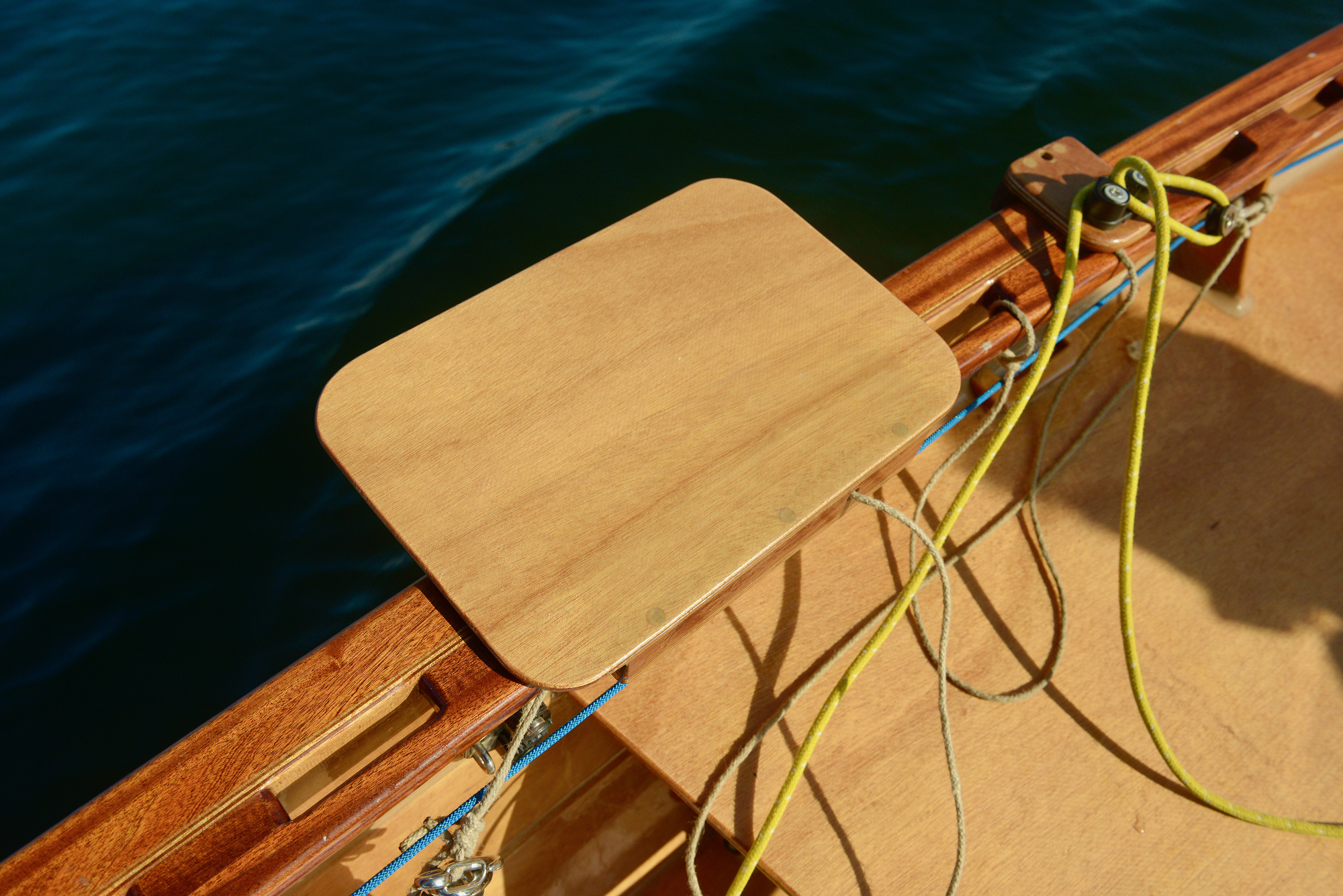
The hiking seats are an option but make sitting on the rail more comfortable in heavy winds. Using a simple block that fits snugly into the gunwale scuppers, the seats can be swiftly placed or relocated according to need.
Emmanuel and François’s combined knowledge is phenomenal, and there are countless nice details on the Grand Silmaril. Take the centerboard (or is it a daggerboard?), which has been designed so it pivots like a centerboard, but once raised high enough, can slide out like a daggerboard so that it’s almost impossible for stones to get jammed in the centerboard case when beaching the boat.
The boat’s construction is stitch-and-glue lapstrake plywood with fiberglass sheathing inside and out. Traditional in appearance, the hull has six strakes per side, including the “rolled-box” garboards, which are almost vertical at the stern, like a skeg. A single-plank flat bottom allows the boat to sit upright, unsupported, on land.
The Grand Silmaril features eight watertight compartments, all of which can be used for storage. The compartments are spaced throughout the boat: beneath the foredeck (where Emmanuel stores his boat tent and bedding when cruising); one either side of the anchor locker—between the maststep and the centerboard trunk—and two more beneath the floor outboard of the ballast tanks; a generous locker beneath each of the side benches aft of the ’midship thwart, and a large lazarette beneath the aft deck. All are accessed through large locking hatches. Emmanuel told me that some clients prefer not to seal the bench lockers and, he says, there’s still plenty of buoyancy if these are left open. It’s an impressive amount of storage in a 16′ 7″-long boat, and I commented as much to Emmanuel. “There’s easily enough storage for two people to cruise for a week,” he responded. “My problem is that I regularly forget where I’ve put things and only find them after I get home.”
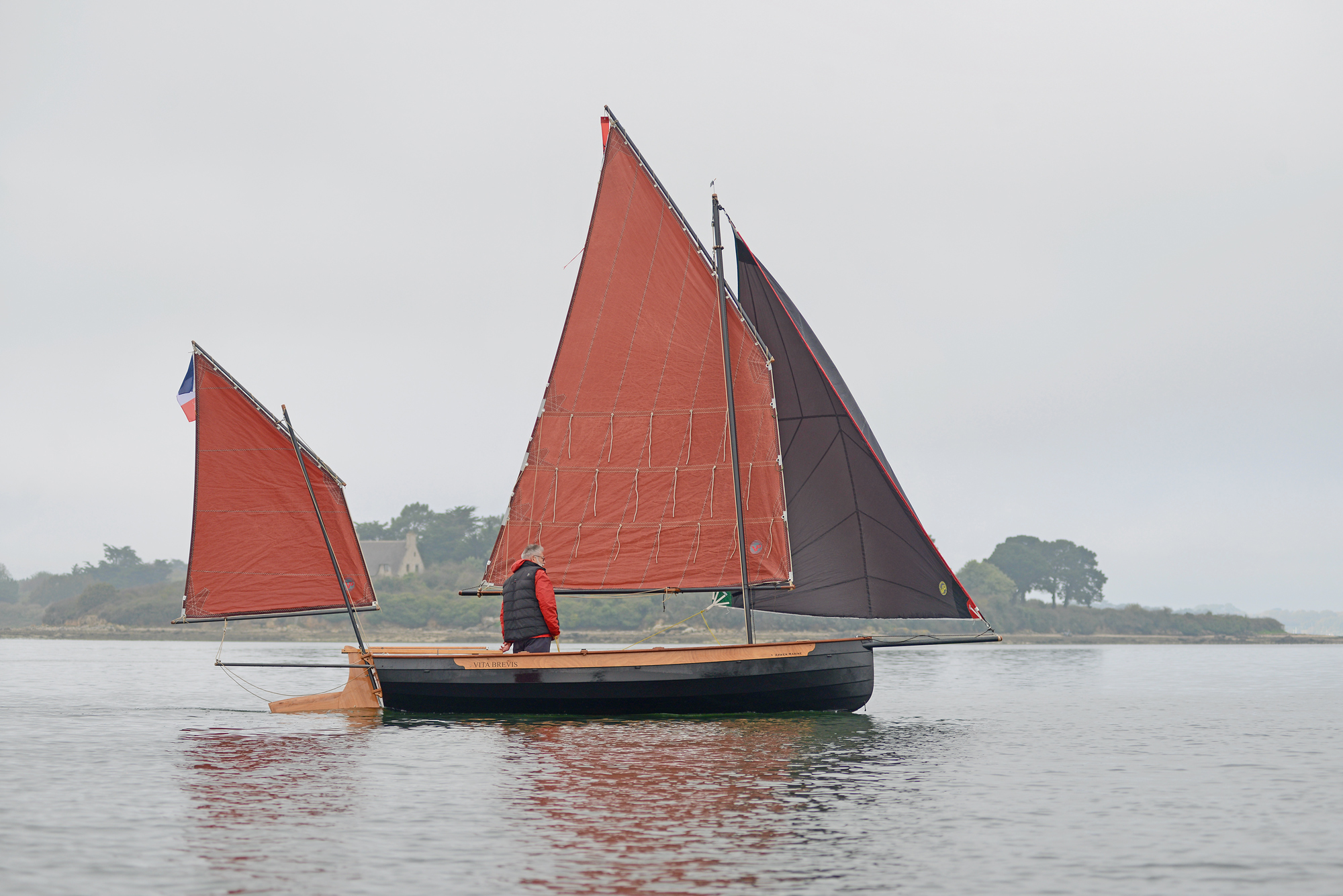
The standard sail plan for the Grand Silmaril is a balance lug and jib, with an optional mizzen. Here, the boat is seen under an earlier sail plan that included a balance lugsail, genoa, and mizzen. The rudder blade is here fully raised as the boat prepares to come in for a beach landing.
At first glance the internal layout of the Grand Silmaril seems to favor singlehanded sailing with generous seating aft, but only short side benches that barely extend forward of amidships. Nevertheless, as I was to find out, there are good options for a crew: the forward end of those side benches gives ample seating for an adult crew to sit up but still within the confines of the cockpit, and in calmer conditions I settled comfortably on the floor leaning on the side of the boat with my legs stretched out in front of the centerboard trunk. When the wind picked up, we made full use of Emmanuel’s hiking seats—simple wood seats that slot into the gunwale scuppers and prevent the pain of a narrow rail digging into the backs of your legs.
As the day wore on in the Golfe du Morbihan, we found a sheltered beach and went ashore to enjoy an impromptu lunch of bread, cheese, and wine (we were in France after all) before heading back to Arradon. The wind died about a mile from the slip, and I volunteered to row us to shore—the Grand Silmaril is designed for two people to row with two oars each, but we only had a single pair of oars on board that day. There is a removable thwart for the forward rowing position, but Emmanuel told me he tends to leave it and the second pair of oars behind as he is typically singlehanded and prefers to have the space. I rowed from the ’midship thwart and Emmanuel moved forward to trim the boat, sitting on the centerboard trunk. Having made the offer to row, I was secretly concerned that I might run out of puff, but the boat proved an absolute pleasure under oar, and thanks to the narrow waterline aft and the deep skeg, it tracked well and moved along with ease.
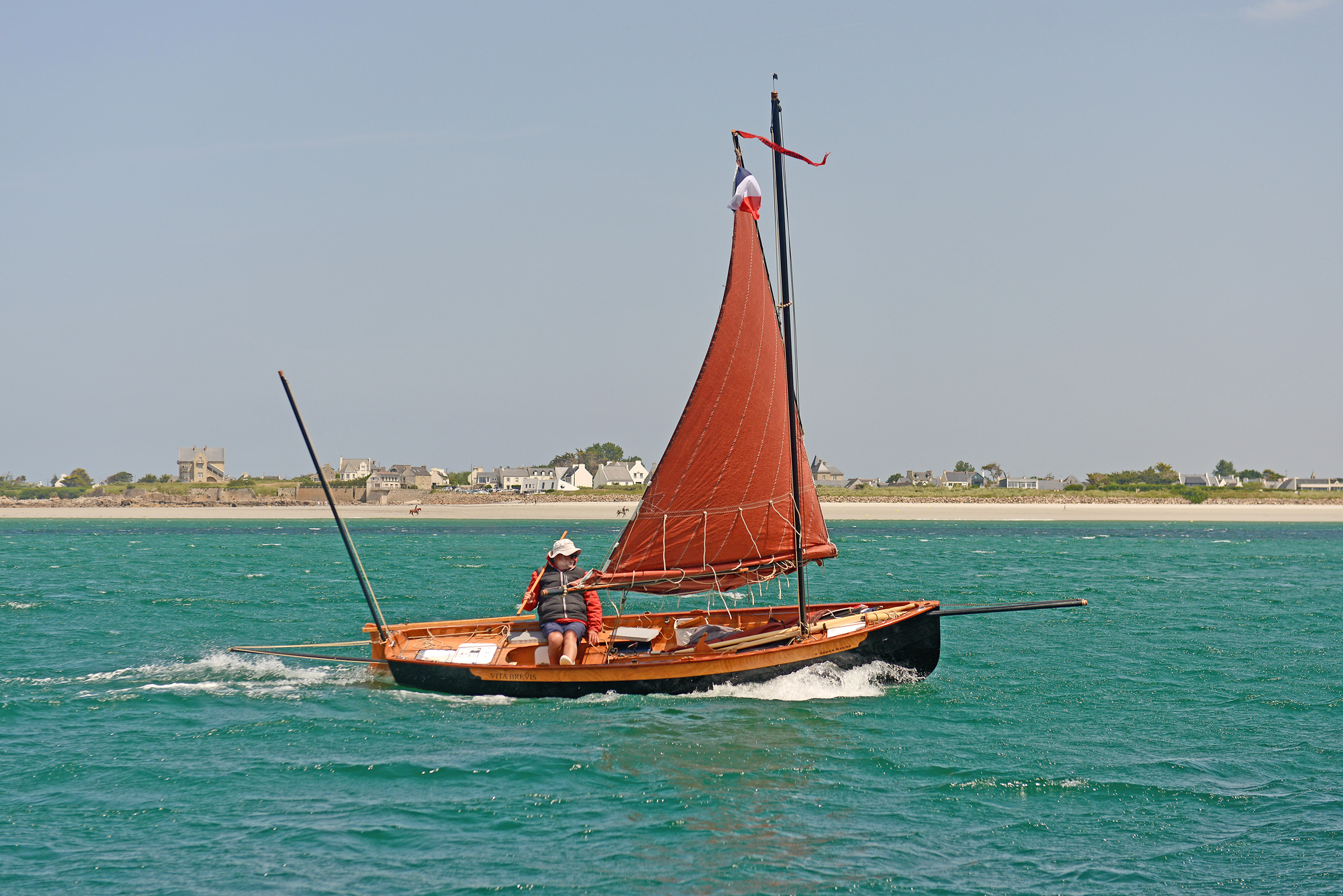
With three reefs in the main, the Grand Silmaril’s sail plan can be greatly reduced to cope with increasing winds. Here, in gusts of 25 knots, the boat is being easily controlled under just the main with two reefs.
I left the boat feeling that Emmanuel had found the perfect combination of size and performance: big enough for two, light enough to trail, steady enough for coastal sailing. But I should have known it wouldn’t be enough for the constantly curious Frenchman. Soon after I got home, I heard he had started building his next boat: a Mega Silmaril, 20% bigger than the original. What’s more, he’s asked me to try it out once it’s been launched… it would be rude to say non.
Nic Compton is a regular contributor to Small Boats.
Grand Silmaril Particulars
LOA: 16′ 8″ (5.08m)
Beam: 5′ 3″ (1.6m)
Hull weight: 283 lbs (128 kg)
Liquid ballast: 37 US gallons (140 litres)
Sail area: 121.6/150.7/172.2 sq.ft (11.3/14/16 sq.m)
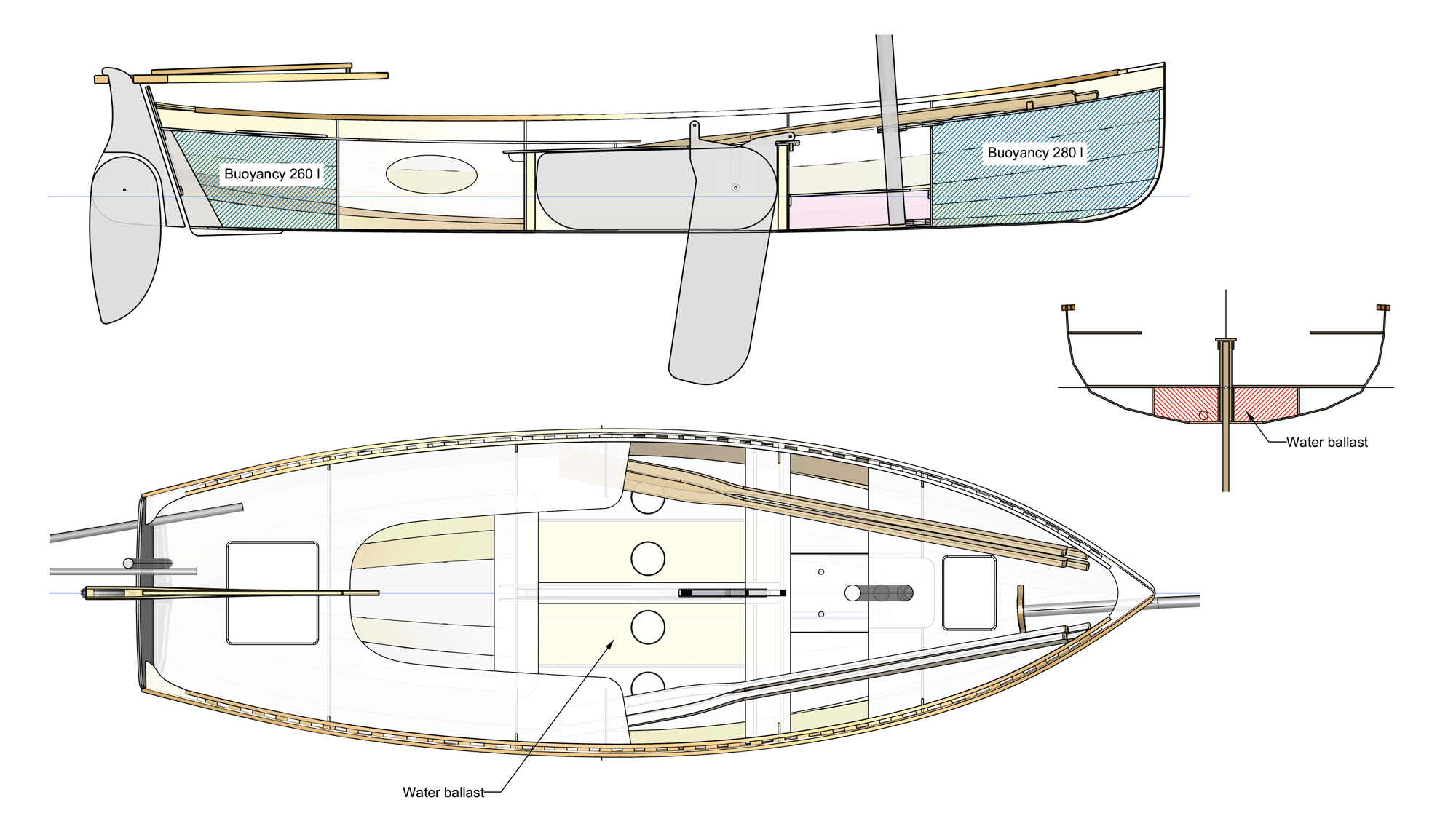
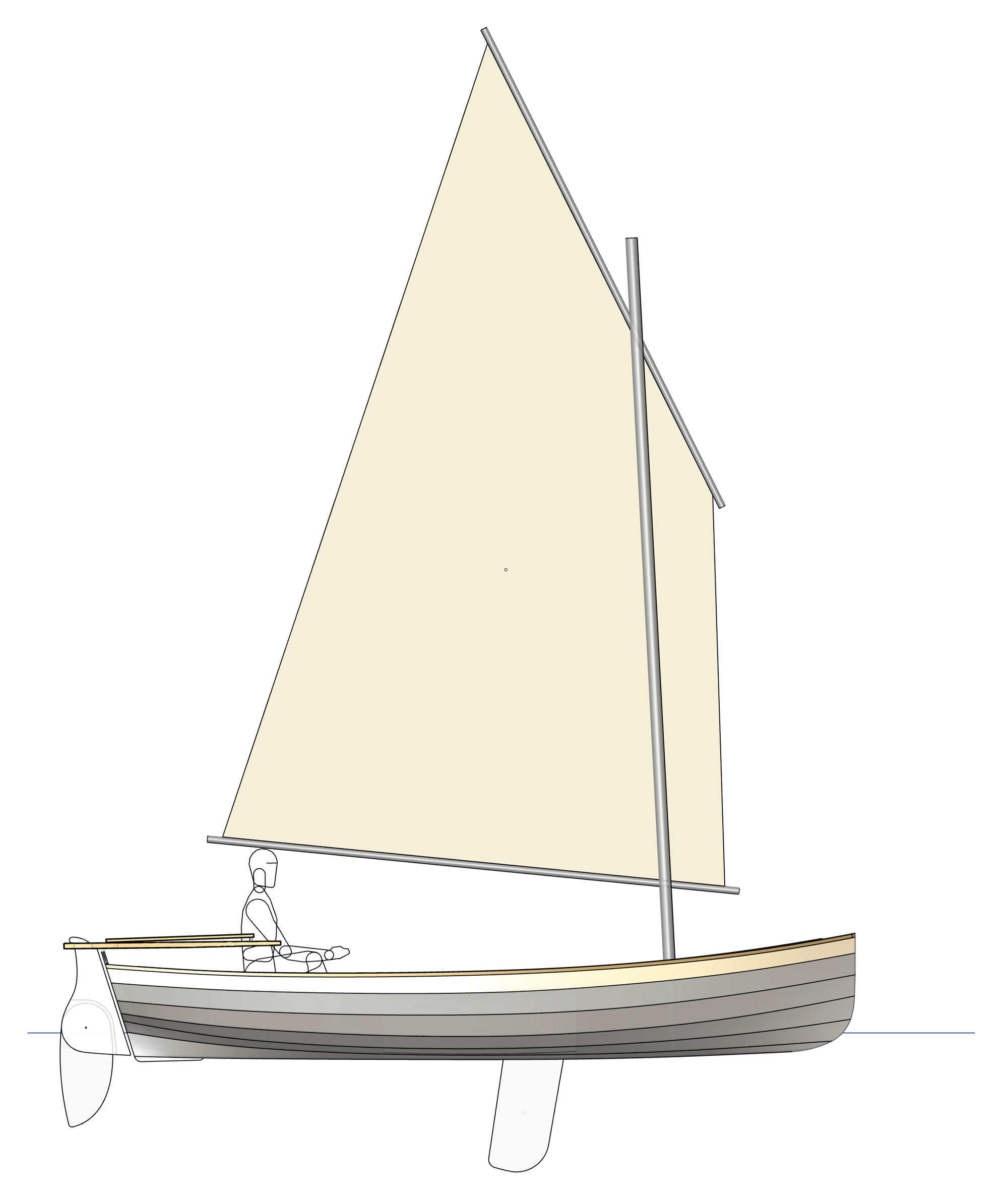
Plans and more information about the Grand Silmaril are available from François Vivier Architecte Naval.
Kits are available in the E.U. from Grand Largue, and will be available later in the year in the U.S. from Chase Small Craft, and in the U.K. from Fyne Boat Kits.
Is there a boat you’d like to know more about? Have you built one that you think other Small Boats readers would enjoy? Please email us your suggestions.
For more sailboat designs from François Vivier, see:
Pen-Hir, a modern classic pocket cruiser, reviewed by Kathy Mansfield
Stir-Ven 19, a water-ballasted daysailer, reviewed by Mark Gallo
Ilur, one of the most popular voile-aviron boats, reviewed by John Hartmann



Lovely boat, the kind that makes me think maybe I’m not too old to build and sail her. (Then good sense takes over. C’est dommage.)
Beautiful. How would one go about commissioning a build from a professional shop? I do not have the time or space to undertake this project on my own.
The bottom of this boat is very similar to various wherry types such as the Newfoundland Trap Skiff, and other wherry designs by Walt Simmons of DuckTrap Woodworking and others.
That’s an attractive boat. The hull reminds me of the Sea Bright skiff with it’s flat-bottomed box keel. Did Vivier come across the idea independently, I wonder, or was the Sea Bright the source of the shape?
A very capable and good looking boat. I had the chance to see it, when I picked up my carbon mast for the Goat at Emanuels old wortkshop near Paris. Out of the water, the size is impressive and gives the feeling of absolute seaworthiness. And it’s a beauty! No wonder, Silmaril and Grand Silmaril conquer the french dinghy scene at the moment.
I’d be interested to see the an in depth look at the centerboard. Also it looks like the beam is listed wrong on the imperial measurement in the “grand silmaril particulars.”
Thanks for the correction Jeff, you were absolutely right, but we have now amended the text.